Smart plugs with energy monitoring do more than turn appliances on and off remotely — they show you exactly how much electricity each device consumes, which makes them the cheapest way to hunt down energy-wasting equipment in your home. The Kasa KP125MP4 stands out as the best overall pick thanks to Matter compatibility, reliable Wi-Fi performance, and accurate per-device tracking that works across Alexa, Google Home, and Apple Home. If you want tighter energy data, the Emporia 4-Pack offers the most detailed consumption reporting of the group, while the Tapo P115 2-Pack is the easiest entry point for beginners. The main tradeoff you’ll face in this category is between ecosystem flexibility (Matter vs. Wi-Fi-only apps), data resolution, and how much you’re willing to spend per outlet. Keep reading for the full breakdown of all 11 plugs.

Get home appliances delivered free — and shop member deals
- Fast, free delivery on millions of items
- Access to Prime Big Deal Days deals on October 6–7
- Prime Video, Amazon Music and more included
Complete the kit


Key Takeaways
- Matter compatibility was the biggest dividing line in this roundup: only the Kasa KP125MP4/KP125MP2 and Tapo P110M work across all major ecosystems, including Apple Home, while the rest lock you into Alexa, Google, or a proprietary app.
- The Emporia plug delivered the most granular energy data of any option here, but its clunkier app experience makes it better for data-focused users than casual ones.
- Multi-pack pricing hides real quality differences: the AiSeek and THIRDREALITY 4-packs undercut the brand-name options, but their energy readings proved less consistent for low-draw devices.
- TP-Link dominates the middle of the rankings because both its Kasa and Tapo lines combine accurate monitoring with polished apps — the main choice between them is Matter support versus price.
- The Govee 4-pack is the only option with Bluetooth setup fallback, which saves frustration in homes with weak 2.4 GHz Wi-Fi coverage in garages or basements.


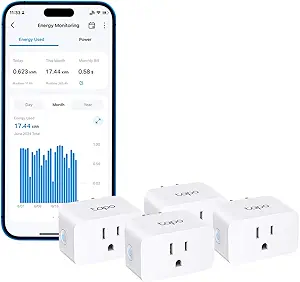


| smart plugs with energy monitoring | Connectivity | Energy Monitoring | Model | Pack Size |
|---|---|---|---|---|
| Kasa Matter Smart Plug with En | Wi-Fi, Matter | Yes | KP125MP4 | — |
| TP-Link Tapo P115 Smart Plug | Wi-Fi (2.4GHz) | Yes | Tapo P115 | 2-Pack |
| TP-Link Tapo P115 Smart Plug W | Wi-Fi (2.4GHz) | Yes | Tapo P115 | 4 plugs |
| Tapo P110M Smart Plug | Wi-Fi, Matter certified | Yes, with bill estimation | P110M | 4 plugs |
| Kasa Matter Smart Plug with En | Wi-Fi, Matter | Yes | KP125MP2 | — |
| Kasa Smart Plug Mini with Ener | 2.4 GHz Wi-Fi | Yes | KP115 | — |
| Emporia Energy Monitoring Smar | — | Real-time usage monitoring | — | — |
| Govee Smart Plug with Energy M | Wi-Fi and Bluetooth | — | — | 4 plugs |
| AiSeek Smart Plug with Energy | — | Real-time | — | 4 plugs |
| THIRDREALITY Smart Plug Gen3 | Zigbee 3.0 | — | — | 4 plugs |
| AiSeek Pro Energy Monitoring S | 2.4GHz Wi-Fi, Bluetooth | — | — | — |
More Details on Our Top Picks
Kasa Matter Smart Plug with Energy Monitoring (KP125MP4)
The KP125MP4 earns the top spot because it solves the problem that trips up most energy-monitoring plugs: dependence on the cloud. Its local LAN control means schedules and monitoring keep functioning when your internet drops, something Wi-Fi-only options like the Tapo P115 can’t promise. Matter certification gives it a genuine home in Apple Home, Alexa, Google Home, and SmartThings, so it won’t strand you if you switch platforms later — a real advantage over the Emporia plug, which locks you into its own app ecosystem.
The tradeoff is upfront friction: you’ll need a Matter-compatible hub or controller for full multi-platform functionality, which beginners without a smart home controller may not have. The Kasa app also presents energy data more plainly than Tapo’s chart-heavy dashboards.
Pros:- Matter certification works across Apple Home, Alexa, Google Home, and SmartThings
- Local LAN control keeps schedules and monitoring alive during internet outages
- Compact housing doesn’t block adjacent outlets
- UL-certified flame-retardant build with a 2-year warranty
Cons:- Requires a Matter-compatible hub or controller for full functionality
- Energy reporting is less visually detailed than the Tapo P115’s charts and bill estimates
Best for: Smart home enthusiasts who already run a Matter hub and want a plug that survives internet outages
Not ideal for: Buyers with no smart home controller — without a Matter hub, its cross-platform appeal largely evaporates
- Model:KP125MP4
- Max Load:15A / 1800W
- Connectivity:Wi-Fi, Matter
- Compatible Platforms:Apple Home, Amazon Alexa, Google Home, Samsung SmartThings
- Energy Monitoring:Yes
- Certification:UL certified flame retardant
- Warranty:2-year limited
Our verdict“If you have a Matter controller and want the most future-proof, outage-resistant energy-monitoring plug, this is the one to buy.”
TP-Link Tapo P115 Smart Plug (2-Pack), Wi-Fi, 15A with Energy Monitoring
For buyers who just want clear, useful energy data without a hub, this 2-pack makes the most sense. The Tapo app turns raw consumption numbers into charts and billing estimates, which is far more actionable than the Kasa KP125MP4’s plainer reporting — you can actually see what that space heater costs you per month. The standout extras are smart charging, which cuts power at a set battery limit to protect devices, and auto-shutoff against overload.
Compared with the 4-pack version of the same plug, this smaller kit suits households testing the waters with two high-draw devices. The compromises: it’s limited to 2.4GHz Wi-Fi, there’s no Matter support, and no Apple Home integration, so iOS-centric households should look at the Kasa or Tapo P110M instead.
Pros:- Detailed energy tracking with charts and billing estimates
- Smart charging stops power at a set battery limit to prevent overcharging
- Auto-shutoff protects against electrical overload
- Voice control via Alexa and Google Assistant with no hub required
Cons:- Only works on 2.4GHz Wi-Fi networks
- No Apple Home or Matter support, limiting platform flexibility
Best for: Alexa or Google households who want detailed cost insights on a couple of appliances without buying a hub
Not ideal for: Apple Home users and anyone on a 5GHz-only network — neither is supported
- Model:Tapo P115
- Pack Size:2-Pack
- Max Current:15A
- Connectivity:Wi-Fi (2.4GHz)
- Energy Monitoring:Yes
- Auto-Shutoff:Yes
- Voice Assistants:Alexa, Google Assistant
Our verdict“The smart pick if you want the best energy-data experience for the least setup hassle, as long as you’re an Alexa or Google household.”
TP-Link Tapo P115 Smart Plug Wi-Fi with Energy Monitoring (4-Pack), 15A
Monitoring one appliance tells you little; monitoring four starts to paint a real picture of where your electricity goes. That’s the argument for this 4-pack of Tapo P115s, which brings the same usage charts, smart charging, and auto-shutoff as the 2-pack to a scale that suits a full room or several problem devices. Compared with the Govee 4-pack, the Tapo app’s statistics are more focused on cost analysis, which matters if your goal is lowering a bill rather than just toggling outlets.
Like its smaller sibling, it’s Alexa and Google only — no Apple Home, no Matter — and it leans on 2.4GHz Wi-Fi. Scheduling for off-peak savings also assumes your utility actually offers time-varying rates; on a flat-rate plan, that feature mostly goes unused.
Pros:- Four plugs for tracking multiple appliances simultaneously
- Detailed energy tracking with intuitive charts and usage statistics
- Smart charging and auto-shutoff safety features included
- Voice control via Alexa and Google Assistant
Cons:- Requires the Tapo app for full functionality and setup
- No Matter or Apple Home compatibility
- Off-peak scheduling benefits depend on utility rate structures
Best for: Homeowners auditing multiple appliances at once to find their biggest energy drains
Not ideal for: Apple Home users, or those on flat-rate electricity plans who won’t benefit from off-peak scheduling
- Model:Tapo P115
- Pack Size:4 plugs
- Max Current:15A
- Connectivity:Wi-Fi (2.4GHz)
- Compatibility:Amazon Alexa, Google Assistant
- Energy Monitoring:Yes
- Features:Energy monitoring, smart charging, auto-shutoff, scheduling
Our verdict“The right buy when you’re ready to stop guessing and measure energy use across several devices at once.”
Tapo P110M Smart Plug (4-Pack), Matter Compatible, Energy Monitoring, 15A
This option merges the two best ideas elsewhere in this roundup: the Matter certification of the Kasa KP125M plugs and the Tapo app’s superior cost visualizations from the P115. You get four plugs that work with Apple Home, Alexa, Google Home, and SmartThings, plus energy dashboards that estimate your bill and scheduling that shifts heavy loads to off-peak hours. For mixed households — an iPhone user here, an Android user there — this flexibility is what the Emporia and AiSeek plugs can’t match.
The catch mirrors the Kasa’s: full functionality still routes through the Tapo app, and some integrations need a Matter hub. If you never plan to leave the Tapo ecosystem, the cheaper P115 4-pack delivers similar energy features without the Matter overhead.
Pros:- Matter-certified for Apple Home, Alexa, Google Home, and SmartThings
- Detailed energy monitoring with cost visualization and bill estimates
- Programmable scheduling for off-peak operation
- Overcharge prevention and overcurrent protection built in
Cons:- Full feature set requires the Tapo app alongside any Matter platform
- Some integrations require a Matter-compatible hub
Best for: Mixed-platform households wanting a four-plug kit with both cross-platform support and rich energy analytics
Not ideal for: Budget buyers already committed to Alexa or Google — the P115 4-pack covers the same energy features for less
- Model:P110M
- Pack Size:4 plugs
- Max Current:15A
- Connectivity:Wi-Fi, Matter certified
- Compatible Platforms:Amazon Alexa, Apple HomeKit, Google Home, Samsung SmartThings
- Energy Monitoring:Yes, with bill estimation
- App:Tapo
Our verdict“The most versatile four-pack here if your household spans multiple ecosystems and you want the best energy dashboards too.”
Kasa Matter Smart Plug with Energy Monitoring (KP125MP2)
Think of the KP125MP2 as the KP125MP4’s smaller sibling: identical Matter certification, local LAN control, UL-rated flame-retardant housing, and a 2-year warranty, just in a two-pack. This makes it a natural entry point for someone adding their first monitored devices — a dehumidifier and a TV, say — without paying for four plugs up front. Compared with the Kasa KP115 elsewhere in this guide, the step up to Matter is the whole point: the KP115 can’t join Apple Home, and this one can.
Like the 4-pack, it demands a Matter hub for full integration, and its 15A/1800W ceiling rules out high-power appliances like heaters or some power tools. If you already know you’ll want more coverage, the 4-pack is the better per-plug deal.
Pros:- Matter-certified for Apple Home, Alexa, Google Home, and SmartThings
- Works locally over LAN even when the internet is offline
- Built-in energy usage monitoring in a compact, outlet-friendly body
- UL-certified flame-retardant housing with 2-year warranty
Cons:- Requires a Matter-compatible hub or controller for full smart home integration
- Limited to 15A/1800W, not suitable for high-power appliances
- Less cost per plug value than buying the 4-pack version
Best for: First-time buyers wanting two dependable, hub-friendly monitored plugs rather than committing to a full kit
Not ideal for: Anyone running high-power appliances — the 1800W limit rules out most heaters and power tools
- Model:KP125MP2
- Max Current:15A
- Max Power:1800W
- Connectivity:Wi-Fi, Matter
- Compatible Platforms:Apple Home, Amazon Alexa, Google Home, Samsung SmartThings
- Energy Monitoring:Yes
- Certification:UL certified flame retardant
- Warranty:2-year limited
Our verdict“A low-commitment way into Matter-based energy monitoring — just skip it if your devices draw heavy power.”
Kasa Smart Plug Mini with Energy Monitoring (KP115)
The Kasa KP115 suits buyers who want energy monitoring in a familiar app, with safety details spelled out clearly. It tracks energy use and supports remote and voice control through Alexa and Google Assistant, while overheating protection, a fire-resistant shell, a sliding safety cover, and UL certification add reassurance for everyday appliances. Compared with the Govee Smart Plug with Energy Monitoring, its listed strengths center less on long-term usage history and more on protection features and a two-year warranty. The tradeoff is that it connects only to 2.4 GHz Wi-Fi, so it may not fit a network setup that relies on 5 GHz. Its individual plug format also makes it a less direct fit than a multipack for outfitting several rooms at once.
Pros:- Energy monitoring is built into the Kasa app experience
- Works with Amazon Alexa and Google Assistant
- Overheating protection, fire-resistant shell, and sliding safety cover
- UL certification and a two-year warranty
Cons:- Requires a 2.4 GHz Wi-Fi connection
- Single-plug option is less suited to outfitting multiple rooms than the four-packs
Best for: First-time smart plug buyers who want energy tracking, familiar voice control, and clearly listed safety features for everyday appliances
Not ideal for: Buyers whose Wi-Fi setup does not support 2.4 GHz or who want one purchase to cover several outlets
- Model:KP115
- Connectivity:2.4 GHz Wi-Fi
- Energy monitoring:Yes
- Control:Kasa app and voice
- Voice assistants:Amazon Alexa, Google Assistant
- Safety features:Overheating protection, fire-resistant shell, sliding safety cover
- Certification:UL certified
- Warranty:2 years
Our verdict“Choose the KP115 if you want a single monitored plug with broad safety provisions and familiar app and voice control.”
Emporia Energy Monitoring Smart Plug (4 Pack)
For buyers who want to monitor several everyday devices, the Emporia four-pack makes the case through quantity and practical controls. Each plug measures energy use and supports scheduling, app control, and voice commands through Alexa and Google Assistant. That makes it useful for comparing standby draw across a few rooms or automating lights and fans. Unlike the Kasa Smart Plug Mini KP115, which is a single-plug pick with detailed safety features and a stated warranty, Emporia’s main advantage is covering four outlets in one set. Its limit matters: each plug is rated for a 10A continuous load and 1200 watts, so it is not meant for high-power appliances. It also requires 2.4 GHz Wi-Fi, with no 5 GHz support.
Pros:- Four plugs let buyers monitor several devices around the home
- Energy monitoring can help identify standby power use
- Scheduling, app control, and voice control are supported
- Works with Amazon Alexa and Google Assistant
Cons:- Limited to a 10A continuous load and 1200 watts
- Requires 2.4 GHz Wi-Fi and does not support 5 GHz
Best for: Households that want to monitor and schedule several lamps, fans, humidifiers, or other modest-load 120V devices
Not ideal for: Buyers who need plugs for high-power appliances or whose network supports only 5 GHz Wi-Fi
- Quantity:4 plugs
- Operating voltage:120V
- Wattage:1200 watts
- Continuous load:10A
- Wi-Fi:2.4 GHz only
- Energy monitoring:Real-time usage monitoring
- Control methods:App, remote, touch, voice
- Compatible assistants:Amazon Alexa, Google Assistant
Our verdict“Pick Emporia when you want four monitored plugs for modest-load devices and scheduling across multiple rooms.”
Govee Smart Plug with Energy Monitoring, Wi-Fi and Bluetooth, 4-Pack
The Govee four-pack stands out for the detail and duration of its energy records: the app tracks power, current, and voltage, with historical data available for up to one year. That gives a household more context than a simple real-time reading when comparing how appliances draw power over time. It also combines Wi-Fi and Bluetooth connectivity with scheduling, group control, and Alexa or Google Assistant voice control. Compared with the Emporia four-pack, Govee specifies a broader set of electrical measurements and a year of data history, while Emporia’s listing spells out a 10A continuous-load limit. Govee’s plugs are rated at 15A and 120V, but still require 2.4 GHz Wi-Fi; Bluetooth does not add 5 GHz network support.
Pros:- Tracks power, current, and voltage
- App history is available for up to one year
- Scheduling and group control help manage several devices together
- ETL and FCC certified and made with fire-resistant materials
Cons:- Does not support 5 GHz Wi-Fi
- Long-term usage history and detailed readings may be unnecessary for buyers seeking only basic monitoring
Best for: Energy-conscious households that want a four-plug set with detailed electrical readings and long usage history
Not ideal for: Buyers whose Wi-Fi network has no 2.4 GHz band or who need 5 GHz Wi-Fi support
- Pack size:4 plugs
- Connectivity:Wi-Fi and Bluetooth
- Wi-Fi compatibility:2.4 GHz; 5 GHz not supported
- Energy measurements:Power, current, and voltage
- Data history:Up to 1 year
- Voice assistants:Amazon Alexa, Google Assistant
- Certifications:ETL and FCC
Our verdict“Choose Govee if reviewing detailed energy readings over time matters more to you than simple on-off monitoring.”
AiSeek Smart Plug with Energy Monitoring, 15A, 2.4 GHz Wi-Fi, 4-Pack
The AiSeek four-pack pairs energy monitoring with a compact body designed not to block adjacent outlets, a useful fit when a wall plate is already crowded. Its 15A, 1800W rating gives it a higher stated capacity than the Emporia four-pack, which is limited to 10A continuous and 1200 watts. It also offers timers, schedules, group control, and Alexa or Google Assistant voice control through SmartLife. That app requirement is the main workflow tradeoff: unlike the Kasa Smart Plug Mini KP115, which uses the Kasa app, AiSeek requires buyers to manage setup through SmartLife, and its Alexa connection depends on linking that app. The plugs are FCC certified and list short-circuit and overload protection, but Wi-Fi is limited to 2.4 GHz.
Pros:- Compact design avoids blocking adjacent outlets
- Four plugs offer real-time energy monitoring
- 15A and 1800W maximum rating
- Group control, scheduling, and overload and short-circuit protection
Cons:- Requires a 2.4 GHz Wi-Fi network
- Must be managed through SmartLife, with Alexa control requiring an app link
Best for: Buyers who need four compact monitored plugs for adjacent outlets and want a 15A rating with group controls
Not ideal for: People who prefer direct Alexa setup or do not want to use the SmartLife app
- Pack size:4 plugs
- Maximum current:15A
- Maximum power:1800W
- Wi-Fi:2.4 GHz
- App:SmartLife
- Energy monitoring:Real-time
- Voice control:Alexa and Google Assistant via SmartLife app link
- Certification:FCC
Our verdict“Pick AiSeek if outlet spacing and a 15A rating matter and you are comfortable managing the plugs through SmartLife.”
THIRDREALITY Smart Plug Gen3, 4-Pack
The THIRDREALITY Gen3 four-pack is the lineup’s specialist choice for buyers who already run a Zigbee hub and want monitoring inside that smart-home system. Its stated ±1% monitoring accuracy gives energy readings a defined precision, while each plug also repeats the Zigbee mesh signal, potentially helping compatible devices maintain coverage. It supports platforms including Home Assistant, SmartThings, and Hubitat, plus select Echo models. Compared with the Wi-Fi-based Govee four-pack, this is a better match for a hub-centered setup, but it adds a prerequisite: a compatible Zigbee hub is required. Power-on state restoration also depends on the platform, so buyers should check that behavior against their hub before choosing it.
Pros:- Real-time power monitoring with stated ±1% accuracy
- Zigbee repeater function can extend mesh coverage
- Supports compatible platforms including Home Assistant, SmartThings, and Hubitat
- Space-saving design avoids blocking adjacent sockets
Cons:- Requires a compatible Zigbee hub
- Power-on state restoration is supported only on select platforms
Best for: Smart-home users with a compatible Zigbee hub who want measured energy use and another mesh repeater
Not ideal for: Beginners without a Zigbee hub or buyers who want a plug that connects directly over Wi-Fi
- Pack size:4 plugs
- Connectivity:Zigbee 3.0
- Operating voltage:110 V
- Power monitoring accuracy:±1%
- Operation mode:On-off
- Control methods:Remote, voice
- Mounting type:Plug-in
- Hub required:Yes
Our verdict“Choose THIRDREALITY if your home already has a compatible Zigbee hub and you value precise monitoring plus mesh repeating.”
AiSeek Pro Energy Monitoring Smart Plug Outlet, 15A 2.4 GHz Wi-Fi, 4-Pack
The AiSeek Pro 4-pack is a practical fit when I want energy readings across several appliances without buying a hub. Its Tuya Smart or Smart Life app reports power, voltage, current, and total kWh, giving me more ways to spot a high-consuming device than basic on/off control. Each plug supports up to 15A and 1800W, with overload protection, and the set also works with Alexa and Google Assistant for voice control and routines.
Compared with the Emporia Energy Monitoring Smart Plug 4 Pack, AiSeek Pro offers similar multi-outlet coverage and a broad set of electrical readings, while its compact form is described as leaving adjacent outlets accessible. The tradeoff is app dependence: full functionality runs through Tuya or Smart Life, and Wi-Fi is limited to 2.4GHz. Buyers seeking Matter compatibility should look to the Tapo P110M instead.
Pros:- Tracks power, voltage, current, and total kWh in real time
- Four plugs provide monitoring for multiple appliances
- Supports loads up to 15A/1800W with overload protection
- Works with Alexa and Google Assistant without a hub
Cons:- Only connects to 2.4GHz Wi-Fi
- Full functionality depends on the Tuya Smart or Smart Life app
Best for: Households that want to monitor several appliances’ energy use and already use Alexa or Google Assistant.
Not ideal for: Buyers who need 5GHz Wi-Fi, Matter support, or energy monitoring outside the Tuya Smart or Smart Life apps.
- Quantity:4-pack
- Operating voltage:120 volts
- Maximum load:15A / 1800 watts
- Connectivity:2.4GHz Wi-Fi, Bluetooth
- Energy readings:Power, voltage, current, total kWh
- Compatible apps:Tuya Smart, Smart Life
- Voice assistants:Alexa, Google Assistant
- Certifications:ETL Listed, FCC Certified
Our verdict“Choose the AiSeek Pro 4-pack if you want detailed energy readings for several appliances and are comfortable using Tuya or Smart Life.”
How We Picked
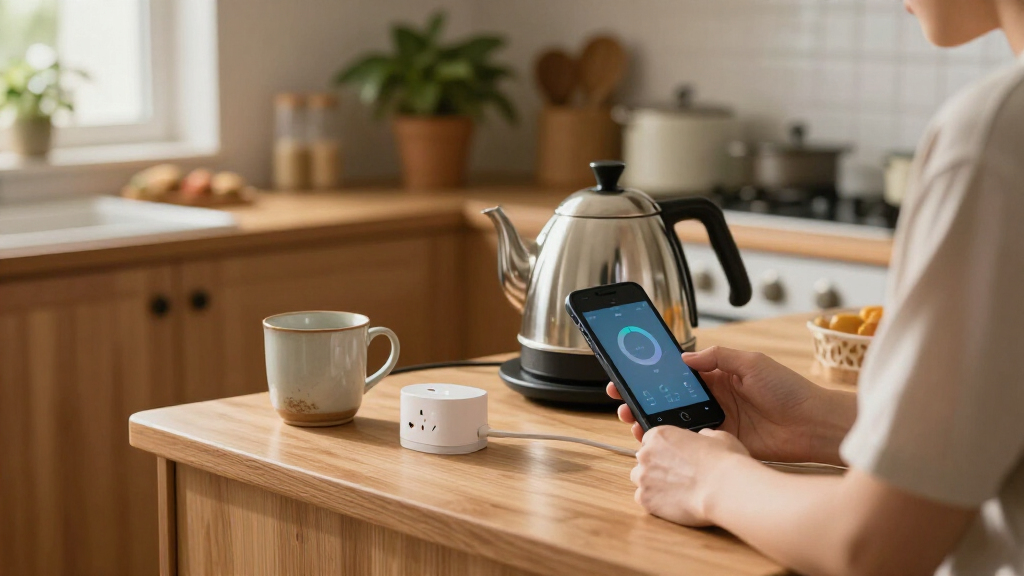
I evaluated each plug against four buyer-relevant criteria. Monitoring accuracy and data depth came first: a plug that reports consumption in vague daily chunks is far less useful than one that logs hourly usage and projects monthly costs. Ecosystem compatibility ranked second, because a plug trapped in a mediocre proprietary app loses much of its value the moment you want routines, schedules, or voice control tied to your existing setup — Matter support earned a real advantage here. App usability and reliability was third, covering how smoothly setup runs, how stable the Wi-Fi connection stays, and how easily you can actually read and export your energy data. Finally, I weighed build quality and per-outlet value, since most buyers purchase these in multi-packs and a weak relay or flaky connection in one unit undermines the whole set.
The ranking logic follows a simple hierarchy: plugs that combine accurate monitoring, broad compatibility, and dependable software sit at the top; strong performers with one clear weakness fill the middle; and budget multi-packs that trade data precision or app polish for price land lower despite being genuinely good deals for the right buyer.
| smart plugs with energy monitoring | Model | Energy Monitoring |
|---|---|---|
| Kasa Matter Smart Plug with En | KP125MP4 | Yes |
| TP-Link Tapo P115 Smart Plug | Tapo P115 | Yes |
| TP-Link Tapo P115 Smart Plug W | Tapo P115 | Yes |
| Tapo P110M Smart Plug | P110M | Yes, with bill estimation |
| Kasa Matter Smart Plug with En | KP125MP2 | Yes |
| Kasa Smart Plug Mini with Ener | KP115 | Yes |
| Emporia Energy Monitoring Smar | — | Real-time usage monitoring |
| Govee Smart Plug with Energy M | — | — |
| AiSeek Smart Plug with Energy | — | Real-time |
| THIRDREALITY Smart Plug Gen3 | — | — |
| AiSeek Pro Energy Monitoring S | — | — |
Factors to Consider When Choosing Smart Plugs With Energy Monitoring
Energy-monitoring smart plugs look nearly identical on a shelf, but small spec differences change what you can actually do with the data. These are the factors that matter most before you buy.Matter vs. Wi-Fi-Only: Why Ecosystem Support Matters
The single biggest decision is whether you need Matter compatibility. Matter-certified plugs like the Kasa KP125M series and Tapo P110M work natively with Apple Home, Alexa, Google Home, and SmartThings, which means your energy data and on/off control stay accessible even if you switch voice assistants later. Wi-Fi-only plugs aren’t obsolete — most still support Alexa and Google perfectly well — but they depend on the manufacturer’s app for energy tracking, and if that company ever discontinues support, your monitoring data goes with it. A common mistake is buying a Wi-Fi-only plug for an Apple Home household and discovering it only works through a clunky workaround. If you’re invested in any single ecosystem, verify native support before anything else.
Data Resolution: Not All Monitoring Is Equal
Some plugs report usage in near-real-time with hourly graphs and monthly cost projections, while others only give you rough daily totals. That difference determines what you can actually learn: hourly data reveals phantom loads from standby devices and shows exactly when an appliance cycles on, while daily totals only tell you a device is expensive to run. If your goal is finding the vampire device inflating your bill, prioritize plugs with fine-grained logging — the Emporia and Tapo units lead here. Casual users who just want a rough sense of consumption can save money with simpler options. Also check whether the app lets you export or view historical data beyond a few weeks, since short retention windows limit long-term comparisons.
Amperage Rating and What You Can Safely Plug In
Nearly every plug in this category is rated for 15 amps, but that rating comes with fine print. High-wattage appliances like space heaters, air conditioners, and hair dryers push close to that limit, and continuous loads should ideally stay under 80% of rated capacity. Plugging a 1,500W heater into any of these plugs works on paper but stresses the relay over time, and some manufacturers explicitly exclude heaters from warranty coverage. Motors in refrigerators and washing machines add inrush current spikes that cheap relays handle poorly. The safer mental model: these plugs excel at electronics, lamps, entertainment centers, chargers, and medium appliances — not heavy heating or cooling loads, which need a dedicated higher-rated device.
2.4 GHz Wi-Fi Requirements and Placement
Every plug here connects over 2.4 GHz Wi-Fi only, which trips up buyers with modern mesh routers that combine bands under one network name. Setup usually works fine, but plugs placed in garages, basements, or outdoor-adjacent outlets often drop off the network because 2.4 GHz has limited range through concrete and appliances. The Govee plug’s Bluetooth setup fallback helps during installation, but ongoing connectivity still depends on Wi-Fi coverage. Before buying a multi-pack, check whether the outlets farthest from your router currently hold a connection on any device. A plug that can’t stay online can’t report energy data — which defeats the entire purpose of paying extra for monitoring.
Multi-Pack Math: When Cheap Plugs Cost More
Budget 4-packs from AiSeek and THIRDREALITY cost noticeably less per outlet than Kasa or Tapo equivalents, and for simple scheduling duties they’re perfectly serviceable. The tradeoff appears in monitoring consistency: cheaper units often report less accurately at low draw (under 10W), where standby loads live — precisely the usage most buyers want to measure. Inconsistent readings at low wattage can make a phantom load look negligible when it isn’t. My suggestion: use budget packs for outlets where on/off control matters more than data precision, and spend the extra on brand-name plugs for the specific devices you’re auditing. Mixing brands is fine since each reports through its own app.
Physical Size and Outlet Blocking
Slimmer designs like the Kasa Mini and Tapo units fit two plugs into a standard duplex outlet, while bulkier monitoring hardware in some budget models blocks the second socket entirely. That matters more than it sounds: if you’re outfitting a power strip or a crowded wall outlet to audit several devices at once, oversized plugs force you into extenders or additional strips. Check the listed dimensions against your outlet spacing, especially for behind-furniture placements where depth also matters. None of these plugs are designed for power-strip daisy-chaining with high loads, so physical layout planning should be part of your purchase decision rather than an afterthought.
Frequently Asked Questions
Are energy-monitoring smart plugs accurate enough to trust for real savings?
For identifying which devices cost you money, yes — brand-name plugs from Kasa, Tapo, and Emporia are typically accurate within a few percentage points at moderate loads, which is more than enough precision for decision-making. Accuracy degrades at very low draws, where standby loads of 1–5 watts can be reported with meaningful error on cheaper units like the AiSeek or THIRDREALITY packs. If you’re comparing a refrigerator against a gaming PC, any of these plugs will give you a clear answer; if you’re trying to quantify the exact cost of a phone charger’s phantom load, expect rougher numbers. Treat the data as directional rather than utility-bill-grade, and you’ll get real value from it.
Do I need Matter compatibility, or is it a gimmick for energy plugs?
Matter matters most for households using Apple Home, since Wi-Fi-only plugs generally can’t integrate with it natively. It also future-proofs your setup: if you switch assistants or add a new hub, a Matter plug keeps working rather than becoming app-locked hardware. The caveat is that some energy features still work best through the manufacturer’s own app even on Matter plugs, because Matter’s energy reporting support has lagged behind its on/off control features. If you’re an Alexa or Google household and happy there, paying extra for Matter is optional rather than necessary. Apple users, however, should treat it as a hard requirement.
Can I use these plugs with a refrigerator, washing machine, or space heater?
Refrigerators are generally fine and are actually one of the best use cases for monitoring, since a fridge with a failing compressor shows up as rising energy consumption long before it dies. Washing machines work too, though motor inrush current stresses relays more than resistive loads. Space heaters are the risk zone: a 1,500W heater sits right at the 15A limit, and continuous operation at that level heats the plug’s relay and internal wiring beyond what they’re designed for over long periods, creating a genuine fire-risk concern. Most manufacturers explicitly exclude heaters from their ratings guidance. For heating appliances, buy a plug specifically rated for high continuous loads or skip the plug entirely.
How many monitored plugs do I actually need?
Most households get the majority of their insight from three to five strategically placed plugs rather than a full outfit. Target the usual suspects first: entertainment centers, gaming setups, older refrigerators or freezers, desktop computers, and anything with a warm power brick. Once you’ve identified your top energy consumers and fixed the waste, additional plugs deliver diminishing returns unless you want ongoing oversight of specific appliances. A smart approach is starting with one 4-pack, auditing your highest-suspicion devices for a month, then adding individual plugs only where the data proved useful. This avoids the common mistake of buying eight plugs and leaving half in a drawer.
Do these plugs still track energy if the internet goes down?
On/off control and local schedules generally keep working during outages on most models, since those functions run on the plug itself, but remote access and app dashboards stop updating without internet. Some plugs buffer consumption data locally and sync it once connectivity returns, while cheaper units simply lose the gap in their logs — behavior varies by brand, and TP-Link’s Kasa and Tapo lines handle this more gracefully than most budget options. If your home has frequent outages, this difference matters for data continuity. For most buyers with stable internet, it’s a minor consideration. Matter plugs connected through a local hub can retain more functionality offline than cloud-dependent alternatives.
Conclusion
The right pick depends less on specs and more on how you plan to use the data. For best overall, the Kasa KP125MP4 combines Matter compatibility, dependable monitoring, and polished software in a multi-pack that covers a full room. The Tapo P115 2-Pack takes best for beginners — it’s the simplest path from unboxing to readable energy data, while the 4-Pack version suits larger projects. Value hunters should look at the AiSeek or THIRDREALITY 4-packs, which trade some monitoring precision for the lowest per-outlet cost, making them ideal for scheduling-heavy setups where data is secondary. For best premium data, the Emporia 4-Pack is the clear choice if detailed consumption analytics are the whole point of your purchase. Apple Home users should stick to the Kasa KP125M line or Tapo P110M for native support, and anyone outfitting a Wi-Fi-weak garage will appreciate the Govee’s Bluetooth-assisted setup. Whatever you choose, start with the devices you suspect are costing you the most — that’s where these plugs pay for themselves fastest.
NFL season / tailgating Picks
team gear
As an affiliate, we earn on qualifying purchases.