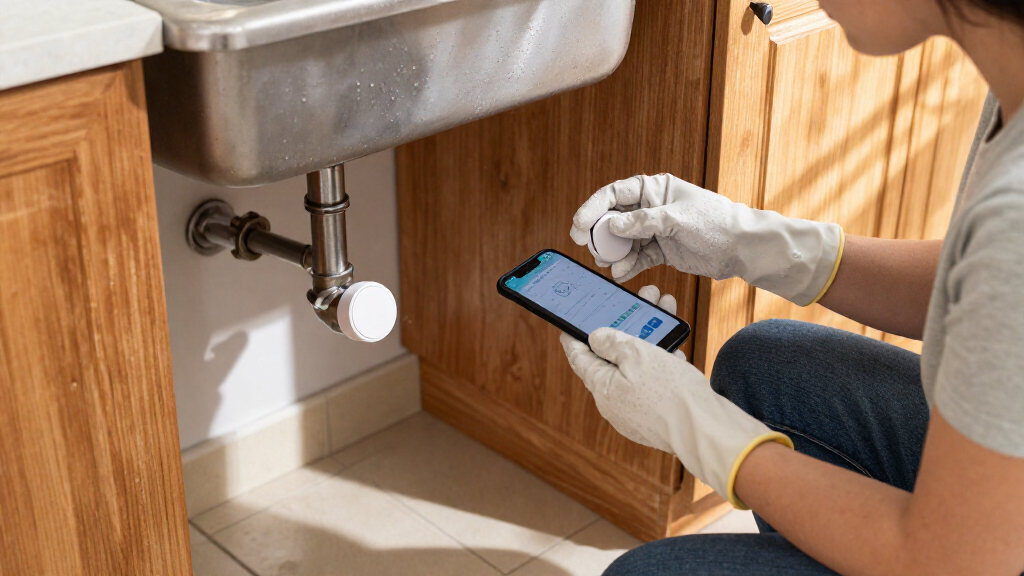
The best smart leak detector overall in this roundup is the YoLink Water Leak Sensor 1 Kit with six sensors and a hub, a strong fit for covering several vulnerable spots from one setup. For a lower-cost way to place sensors around the home, the GoveeLife six-pack stands out, while the Moen Flo monitor and automatic shutoff is the more ambitious choice for whole-home pipe monitoring. The main tradeoffs are how many areas you can cover, whether alerts rely on Wi-Fi or a hub, and whether you want detection alone or automatic water shutoff. Sensor shape, alarm loudness, and cable reach also affect where each device can work well. Read on for the full comparison and guidance on choosing the right setup.

Get home appliances delivered free with Prime
- Fast, free delivery on millions of items
- Prime Video, Amazon Music and more included
- Member-only deals all year
Complete the kit


Key Takeaways
- YoLink leads for multi-room coverage: The six-sensor Sensor 1 kit includes a hub, making it the most balanced choice here for placing several detectors across a home.
- GoveeLife offers the broadest range of pack sizes and formats: The lineup includes three-, four-, five-, and six-packs, plus a cable sensor and high-alarm models, so buyers can match coverage to their layout.
- Range is a meaningful differentiator: YoLink and the GoveeLife Water Leak Detector 2 emphasize long-range connectivity, which can matter in detached spaces or areas with weak Wi-Fi coverage.
- Moen Flo serves a different job from spot sensors: Its pipe-mounted monitor and automatic shutoff are aimed at limiting whole-home water damage, while the Moen three-pack detects leaks at selected locations.
- Sensor placement can matter as much as sensor count: X-Sense offers an ultra-slim model for tight spaces, while GoveeLife’s cable sensor can reach areas where a flat sensor cannot sit directly.
| YoLink Water Leak Sensor 1 Kit – 6 Pack + Hub |  | Best for Whole-Home Coverage | Included: Six sensors and one hub | Wireless protocol: LoRa | Maximum range: Up to 2,034 feet in open air | VIEW LATEST PRICE | See Our Full Breakdown |
| GoveeLife Smart Water Leak Detector, 6-Pack |  | Best for Built-In Audible Alerts | Quantity: Six detectors | Wireless range: Up to 1,804 feet | Wireless connection: Sub-1G wireless | VIEW LATEST PRICE | See Our Full Breakdown |
| X-Sense Wi-Fi Water Leak Detector Kit, 120 dB, 3 Sensors + Base (SWS54) | 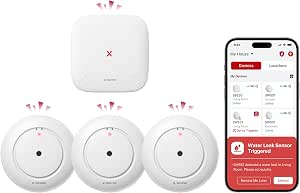 | Best for Detecting Drips and Shallow Pooling | Sensors included: Three | Probes: Six total: two upper and four lower | Water detection depth: As shallow as 0.4 mm | VIEW LATEST PRICE | See Our Full Breakdown |
| X-Sense Ultra-Slim Wi-Fi Water Leak Detector with Base Station, 4 Sensors, SWS0A41 |  | Best for Tight Spaces | Included components: One base station and four detectors | Sensor thickness: 0.7 inches (17 mm) | Sensor diameter: 3 inches (77 mm) | VIEW LATEST PRICE | See Our Full Breakdown |
| YoLink Water Leak Sensor Kit with Hub, 4 Sensors and 105 dB Alarms |  | Best for Local Alarms and Outage Resilience | Included: One YoLink Hub and four leak sensors | Wireless protocol: LoRa | Maximum range: Up to 2,034 feet in open air | VIEW LATEST PRICE | See Our Full Breakdown |
| GoveeLife Smart Water Leak Detector, 5-Pack |  | Best for Whole-Home Coverage | Pack size: 5 sensors | Wireless range: Up to 1,804 ft (550 m) | Alarm: Up to 105 dB; four adjustable levels | VIEW LATEST PRICE | See Our Full Breakdown |
| GoveeLife Smart Water Leak Detector with 4.92 ft Cable |  | Best for Hard-to-Reach Leaks | Cable length: 4.92 ft | Detection modes: Water alarm detection and water-level detection | Wireless range: Up to 550 m | VIEW LATEST PRICE | See Our Full Breakdown |
| GoveeLife Smart Water Leak Detector 2 – 1968 ft Ultra-Long Range, 4-Pack |  | Best for Long-Range Coverage | Pack size: 4 sensors | Wireless technology: LoRa | Maximum range: Up to 1,968.5 ft | VIEW LATEST PRICE | See Our Full Breakdown |
| GoveeLife Smart Water Leak Detector with High Alarm, 4-Pack |  | Best for a Loud Local Alarm | Pack size: 4 sensors | Wireless technology: 915 MHz Sub-1G | Wireless range: Up to 1,804 ft | VIEW LATEST PRICE | See Our Full Breakdown |
| Moen Flo Smart Water Monitor and Automatic Shutoff, Wi-Fi Connected, for 1-Inch to 1-1/4-Inch Pipes |  | Best for Whole-Home Monitoring and Shutoff | Model: 900-006 | Pipe compatibility: 1-inch to 1-1/4-inch diameter | Sensor technology: Flow sensor | VIEW LATEST PRICE | See Our Full Breakdown |
| YoLink Water Leak Sensor 4 Alarm Kit with Hub, 6 Sensors |  | Best for Local Backup Alerts | Included items: 1 hub and 6 leak sensors | Wireless protocol: LoRa | Maximum range: 2,034 ft. open air | VIEW LATEST PRICE | See Our Full Breakdown |
| Moen Flo Smart Water Leak Detectors, 3-Pack |  | Best for Temperature and Humidity Monitoring | Model: 920-005 | Quantity: 3 sensors | Power source: Battery powered | VIEW LATEST PRICE | See Our Full Breakdown |
| GoveeLife Smart Water Leak Detector, 3-Pack |  | Best for Adjustable Local Alarms | Pack size: 3 detectors | Wireless range: Up to 1,804 ft. (550 m) | Alarm volume: Up to 105 dB; four levels | VIEW LATEST PRICE | See Our Full Breakdown |
| GoveeLife Upgraded Smart Water Leak Detector Sensors with High Alarm, 2-Pack |  | Best Compact Two-Sensor Set | Pack size: 2 sensors | Wireless technology: 915 MHz Sub-1GHz | Maximum range: 1,804 ft. | VIEW LATEST PRICE | See Our Full Breakdown |
| GoveeLife Smart Water Leak Detector 2, 6-Pack |  | Best for Whole-Home Sensor Coverage | Pack contents: 6 sensors and 1 gateway | Connectivity: LoRa sensors; gateway uses 2.4 GHz Wi-Fi | Maximum range: 1,968 ft. | VIEW LATEST PRICE | See Our Full Breakdown |
More Details on Our Top Picks
YoLink Water Leak Sensor 1 Kit – 6 Pack + Hub
For buyers who want to cover several water-risk areas at once, this kit pairs six sensors with a hub and a platform that can grow beyond leak detection. Its LoRa connection reaches up to 2,034 feet in open air, making it a stronger fit than the X-Sense SWS54 when sensors need to reach detached or Wi-Fi-challenged areas. YoLink’s local D2D control can also trigger compatible sirens or shutoff valves without internet, but the included sensors do not have built-in audible alarms; the X-Sense kit provides its own loud alarm. The long battery life and support for 300+ devices suit buyers planning a broader system. The tradeoff is managing twelve AAA batteries across the kit, even though they are included, and adding a separate sounder if app alerts are not enough.
Pros:- Six sensors and a hub cover multiple leak-prone locations in one kit.
- Long-range LoRa supports placement where Wi-Fi coverage is weak.
- Local D2D actions can trigger compatible devices during internet outages.
- Battery life is rated up to five years, and the hub supports 300+ YoLink devices.
Cons:- Sensors have no built-in audible alarm; a compatible siren or SpeakerHub is needed for sound alerts.
- The kit uses twelve AAA batteries, which will need replacement over time.
Best for: Homeowners who want six leak-monitoring points, long-range coverage, and room to add YoLink valves or other devices later.
Not ideal for: Buyers who want an audible alarm from every sensor without adding equipment, or who prefer a kit with a smaller battery footprint.
- Included:Six sensors and one hub
- Wireless protocol:LoRa
- Maximum range:Up to 2,034 feet in open air
- Battery:12 AAA batteries included
- Battery life:Up to five years
- Hub capacity:300+ YoLink devices
- Compatible devices:Android or Apple smartphones, Alexa, IFTTT, and Home Assistant
- Control method:App
Our verdict“Choose this kit for broad, expandable coverage and local automation, but pick the X-Sense SWS54 if built-in loud alarms matter more.”
GoveeLife Smart Water Leak Detector, 6-Pack
This six-detector GoveeLife kit stands out for people who want a nearby warning as well as phone notifications: its detectors offer an adjustable alarm up to 105 dB, plus app, SMS, and email alerts. That built-in sound is a practical advantage over the six-sensor YoLink Water Leak Sensor 1 Kit, whose sensors need an added siren for audible alerts. With a stated 1,804-foot wireless range and an IP67 rating, the GoveeLife set can suit spread-out locations and damp areas. The tradeoff is a more closed setup: the gateway requires 2.4 GHz Wi-Fi and pairs only with GoveeLife H5059 or H5830 sensors. Buyers seeking offline local actions such as the YoLink kit offers should look elsewhere, and anyone expanding a mixed-brand sensor setup may find this compatibility limit restrictive.
Pros:- Six detectors provide coverage across multiple appliances and plumbing areas.
- Built-in alarm reaches up to 105 dB and has four app-adjustable levels.
- Notifications are available by app, SMS, and email.
- IP67 rating and up to five years of battery life suit utility and damp locations.
Cons:- Gateway requires a 2.4 GHz Wi-Fi connection.
- Gateway is limited to GoveeLife H5059 and H5830 sensors.
- Unlike the YoLink kit, the supplied details do not describe local leak-triggered control during internet outages.
Best for: Households that want several leak points monitored with loud local alarms and app, SMS, and email notifications.
Not ideal for: Buyers who need internet-independent automation or want a gateway that works with sensors outside the H5059 and H5830 models.
- Quantity:Six detectors
- Wireless range:Up to 1,804 feet
- Wireless connection:Sub-1G wireless
- Gateway Wi-Fi:2.4 GHz
- Alarm volume:Up to 105 dB, with four app-adjustable levels
- Notifications:App, SMS, and email
- Water resistance:IP67
- Battery:12 AAA batteries included; up to five years of battery life
- Compatible sensors:GoveeLife H5059 and H5830
Our verdict“Pick this set for loud built-in alarms and multiple notification channels, provided its Wi-Fi and sensor compatibility limits fit your setup.”
X-Sense Wi-Fi Water Leak Detector Kit, 120 dB, 3 Sensors + Base (SWS54)
The SWS54 is a focused choice when early detection matters more than covering every room: its six probes across three sensors are designed to catch drips and water as shallow as 0.4 mm. The dual 120 dB alarms also make it a more forceful local-warning option than the X-Sense SWS0A41, whose base station alarm reaches 100 dB. App alerts can be shared with up to 12 users, which helps households spread response duties. Its stated 1,804-foot wireless range gives placement flexibility, but this kit includes only three sensors, fewer than either six-sensor YoLink or GoveeLife kit in this roundup. It also depends on 2.4 GHz Wi-Fi for the connected experience, so it is a weaker fit for homes that rely on 5 GHz networks or want alerts without using a smartphone app.
Pros:- Six probes across three sensors detect drips and shallow pooling down to 0.4 mm.
- Dual 120 dB alarms provide a loud local warning.
- App alerts can be shared with up to 12 users.
- Wireless range is specified up to 1,804 feet.
Cons:- The kit includes only three sensors, fewer than the six-sensor YoLink and GoveeLife kits.
- Works with 2.4 GHz Wi-Fi only and does not support 5 GHz.
- App-based notifications require a smartphone.
Best for: Households that want sensitive drip and shallow-water detection, very loud alarms, and alerts shared with several people.
Not ideal for: Buyers who need more than three sensor locations in the box or whose Wi-Fi setup uses only 5 GHz.
- Sensors included:Three
- Probes:Six total: two upper and four lower
- Water detection depth:As shallow as 0.4 mm
- Alarm:Dual alarms, up to 120 dB
- Wireless range:Up to 1,804 feet (550 m)
- Wi-Fi band:2.4 GHz only
- App sharing:Alerts for up to 12 users
Our verdict“Choose the SWS54 when probe coverage and a powerful alarm outweigh having fewer sensors and a 2.4 GHz Wi-Fi requirement.”
X-Sense Ultra-Slim Wi-Fi Water Leak Detector with Base Station, 4 Sensors, SWS0A41
With four detectors measuring just 0.7 inches thick, the SWS0A41 is the most space-conscious pick here for narrow gaps near appliances or under cabinets. It detects water as shallow as 0.4 mm, including drips from above, while its base station supplies an alarm of up to 100 dB and the app adds history, testing, and low-battery alerts. Compared with the X-Sense SWS54, it trades the latter’s dual 120 dB alarms and six probes for a slimmer sensor profile and one more included detector. Its 1,700-foot range is an open-area figure, so walls and the home layout may reduce practical reach. The phone-dependent controls also make it less suitable for people who want a self-contained system with straightforward local sound at each sensor.
Pros:- Slim 0.7-inch-thick sensors fit tighter spaces than bulkier detector designs.
- Four detectors and a base station are included.
- Detects water as shallow as 0.4 mm, including drips from above.
- App offers alarm controls, history, testing, low-battery alerts, and sensor sharing.
Cons:- Base station alarm reaches 100 dB, below the SWS54’s 120 dB dual alarms.
- The 1,700-foot range applies to open areas and may be shorter indoors.
- App controls and alerts require a compatible phone.
Best for: Homeowners who need leak sensors to fit in narrow appliance gaps or under low-clearance fixtures and want app-based monitoring.
Not ideal for: Buyers prioritizing the loudest alarm, wider stated range, or monitoring that does not depend on a compatible smartphone.
- Included components:One base station and four detectors
- Sensor thickness:0.7 inches (17 mm)
- Sensor diameter:3 inches (77 mm)
- Water detection depth:0.4 mm
- Wireless range:Up to 1,700 feet (500 m) in open areas
- Base station alarm:Up to 100 dB
- Power:Eight AAA batteries included
- Compatible devices:iPad and iPhone
Our verdict“Pick the SWS0A41 for its slim four-sensor design in cramped locations, but choose the SWS54 for a louder alarm and greater stated range.”
YoLink Water Leak Sensor Kit with Hub, 4 Sensors and 105 dB Alarms
This four-sensor YoLink kit combines a feature the six-sensor YoLink Water Leak Sensor 1 Kit lacks—a built-in 105 dB alarm on each leak sensor—with long-range LoRa connectivity and local D2D actions. That makes it a better match for buyers who want a sound at the leak site and the option to trigger compatible valves or sirens when the internet is down. Its 2,034-foot open-air range is also longer on paper than the GoveeLife six-pack’s 1,804 feet. The main compromise is coverage: four sensors leave fewer locations protected than either six-sensor kit. It also requires its hub and uses replaceable AAA batteries, despite a typical battery life of up to five years. Choose it for alarm and outage resilience, not maximum sensor count.
Pros:- Each sensor has a built-in alarm rated up to 105 dB.
- LoRa supports a stated open-air range of up to 2,034 feet.
- Local D2D control can trigger compatible devices during internet outages.
- IP67 water resistance and up to five years of typical battery life.
Cons:- Four sensors cover fewer locations than the six-sensor YoLink and GoveeLife kits.
- Requires the included YoLink Hub for the system.
- AAA batteries are replaceable and will need changing over time.
Best for: Homeowners who want built-in audible alerts at four leak points and local control of compatible YoLink devices during internet outages.
Not ideal for: Buyers who need six or more sensor locations covered from one kit or want a detector system without a separate hub.
- Included:One YoLink Hub and four leak sensors
- Wireless protocol:LoRa
- Maximum range:Up to 2,034 feet in open air
- Alarm volume:Up to 105 dB
- Battery:Eight AAA batteries included
- Typical battery life:Up to five years
- Water resistance:IP67
- Hub capacity:300+ YoLink devices
- Model number:YS1603+4YS7906
Our verdict“Choose this YoLink kit for built-in alarms and local outage actions, or the six-sensor YoLink kit if broader coverage matters more.”
GoveeLife Smart Water Leak Detector, 5-Pack
I’d choose this five-sensor kit for spreading leak alerts across several rooms without giving up remote notifications. It sends app, SMS, and email alerts, while each sensor adds an adjustable alarm up to 105 dB and a flashing red light—useful when someone is home to hear or see it. The stated 1,804-foot wireless range helps reach distant areas, and IP67 protection suits damp locations. Compared with the GoveeLife four-pack with high alarm, this kit adds another sensor, though both share the same 2.4 GHz gateway limitation and narrow compatibility with specified GoveeLife sensors. Its main compromise is that it detects water at the sensor rather than shutting off the supply, unlike the Moen Flo. The five-year battery claim is useful, but actual battery life can vary.
Pros:- Five sensors make it easier to cover multiple leak-prone areas.
- Sends app, SMS, and email alerts for remote awareness.
- Adjustable alarm up to 105 dB plus a flashing red light.
- IP67 rating and stated battery life of up to five years.
Cons:- Gateway supports only 2.4 GHz Wi-Fi.
- Gateway pairing is limited to compatible GoveeLife H5059/H5830 sensors.
- Detects water but does not automatically shut off the home’s supply.
Best for: Homeowners who want to place sensors in several leak-prone rooms and receive alerts while away.
Not ideal for: Buyers seeking automatic water shutoff, broad third-party sensor compatibility, or a gateway that connects to 5 GHz Wi-Fi.
- Pack size:5 sensors
- Wireless range:Up to 1,804 ft (550 m)
- Alarm:Up to 105 dB; four adjustable levels
- Battery life:Stated up to 5 years
- Batteries included:10 AAA
- Gateway Wi-Fi:2.4 GHz
- Compatible sensors:GoveeLife H5059/H5830
Our verdict“Choose this kit for multi-room coverage and layered alerts, but pick the Moen Flo if automatic shutoff matters more than individual sensors.”
GoveeLife Smart Water Leak Detector with 4.92 ft Cable
The 4.92-foot cable probe is the reason I’d pick this model over the standard GoveeLife Smart Water Leak Detector, 5-Pack: the sensor body can stay accessible while the probe reaches under an appliance or into a tight spot. It also offers water alarm and water-level detection modes, giving it a job beyond simply sounding when water reaches a floor sensor. App, SMS, and email alerts pair with a 105 dB alarm, and the stated battery life is up to five years. The tradeoffs are worth checking before buying: a compatible gateway is required, and the listing gives conflicting IP66 and IP67 waterproof ratings. Like the other GoveeLife kits, its gateway is limited to 2.4 GHz Wi-Fi and specified sensor models; it also cannot shut off the water like the Moen Flo.
Pros:- 4.92-foot cable reaches areas a compact floor sensor may not.
- Offers both leak alarm and water-level detection modes.
- Provides app, SMS, and email alerts plus a 105 dB alarm.
- Includes six AAA batteries and states up to five years of battery life.
Cons:- Requires a compatible gateway with 2.4 GHz Wi-Fi.
- Product information conflicts between IP66 and IP67 waterproof ratings.
- Does not provide automatic shutoff.
Best for: Homeowners who need to position a probe beneath or behind an appliance while keeping the detector body within reach.
Not ideal for: Buyers who need a clear, consistent waterproof rating, a gateway-free setup, or automatic shutoff.
- Cable length:4.92 ft
- Detection modes:Water alarm detection and water-level detection
- Wireless range:Up to 550 m
- Alerts:SMS, app, and email notifications; 105 dB audible alarm
- Batteries included:6 AAA alkaline
- Stated battery life:Up to 5 years
- Gateway Wi-Fi:2.4 GHz
- Compatible sensors:GoveeLife H5059/H5830
Our verdict“Pick this cable-probe model for awkwardly placed leak points, but choose the standard five-pack if you need more simple floor sensors.”
GoveeLife Smart Water Leak Detector 2 – 1968 ft Ultra-Long Range, 4-Pack
For a detached garage, far end of a basement, or another spot beyond ordinary indoor reach, this four-pack stands out for its stated 1,968.5-foot LoRa range. That gives it a range advantage over the GoveeLife Smart Water Leak Detector, 5-Pack, whose stated wireless range is 1,804 feet, though real-world signal reach depends on walls and other obstacles. The kit adds app, SMS, and email alerts, voice-assistant compatibility, IP66 protection, and a 100 dB alarm. Its alarm is slightly less powerful on paper than the 105 dB GoveeLife high-alarm model, and the IP66 rating is below IP67 on some alternatives. Eight AAA batteries are included, with battery life stated as over five years. This is a coverage-first choice, not a water shutoff system, and the gateway still requires 2.4 GHz Wi-Fi.
Pros:- Stated LoRa range reaches up to 1,968.5 feet.
- App, SMS, and email alerts support remote monitoring.
- Works with Alexa, Google Assistant, and IFTTT.
- Includes eight AAA batteries and states over five years of battery life.
Cons:- IP66 rating is lower than the IP67 rating on several other GoveeLife options.
- 100 dB alarm is less powerful on paper than the 105 dB models.
- Gateway supports only 2.4 GHz Wi-Fi, and the sensors do not shut off water.
Best for: Owners of larger homes or outbuildings who need leak sensors to communicate over a long distance.
Not ideal for: Buyers prioritizing an IP67 rating, the loudest listed GoveeLife alarm, or automatic water shutoff.
- Pack size:4 sensors
- Wireless technology:LoRa
- Maximum range:Up to 1,968.5 ft
- Audible alarm:100 dB
- Batteries included:8 AAA alkaline
- Battery life:Stated over 5 years
- Smart-home compatibility:Alexa, Google Assistant, and IFTTT
Our verdict“Choose this four-pack when long-range sensor communication is your priority; pick the GoveeLife high-alarm four-pack for a louder alarm and IP67 rating.”
GoveeLife Smart Water Leak Detector with High Alarm, 4-Pack
If a nearby audible warning matters as much as phone alerts, this four-pack puts a 105 dB adjustable alarm on each sensor, with four volume levels to tailor the sound. It also sends app, SMS, and email alerts, so a leak can still reach you away from home. Compared with the GoveeLife Smart Water Leak Detector 2, this model trades some stated reach—1,804 feet versus 1,968.5 feet—for an IP67 rating and a louder alarm. Four sensors suit coverage of several rooms, but the gateway supports only 2.4 GHz Wi-Fi and pairs with the specified GoveeLife H5059/H5830 sensors. Its stated five-year battery life reduces expected maintenance, though batteries eventually need replacing. Like the other point sensors here, it warns about water at the sensor; it cannot prevent continued flow the way the Moen Flo can.
Pros:- Four sensors provide coverage for multiple rooms.
- Adjustable alarm reaches up to 105 dB.
- Sends app, SMS, and email alerts.
- IP67 rating and stated battery life of up to five years.
Cons:- Gateway supports only 2.4 GHz Wi-Fi.
- Gateway pairs with specified GoveeLife H5059/H5830 sensors only.
- Does not shut off water automatically.
Best for: Households that want a loud, adjustable in-room alarm alongside phone alerts across four leak-prone areas.
Not ideal for: Buyers who need the longest stated wireless range, 5 GHz gateway support, or automatic water shutoff.
- Pack size:4 sensors
- Wireless technology:915 MHz Sub-1G
- Wireless range:Up to 1,804 ft
- Alerts:App push notifications, SMS, and email
- Alarm:Up to 105 dB; four volume levels
- Battery life:Stated up to 5 years
- Batteries included:8 AAA
- Gateway Wi-Fi:2.4 GHz
Our verdict“Choose this kit for loud, adjustable local alerts and IP67 protection; opt for the GoveeLife Detector 2 if its longer stated range matters more.”
Moen Flo Smart Water Monitor and Automatic Shutoff, Wi-Fi Connected, for 1-Inch to 1-1/4-Inch Pipes
The Moen Flo takes a different approach from the GoveeLife point sensors: it installs on the main supply line and monitors flow, pressure, and temperature, so it can flag unusual water use, high pressure, and freezing risks as well as leaks. Its standout advantage is automatic or remote shutoff, which can limit damage if a leak happens while nobody is home. Alerts arrive through the app, phone calls, or email, and locally stored settings can keep protection running during a Wi-Fi outage. Compared with the GoveeLife Smart Water Leak Detector, 5-Pack, this is a system-level safeguard rather than a set of room-by-room sensors. The tradeoff is a more involved installation: professional installation is recommended, and the unit needs AC power. It also fits only 1-inch to 1-1/4-inch pipes.
Pros:- Monitors flow, pressure, and temperature for several types of water risk.
- Can automatically or remotely shut off the water supply.
- Sends alerts through the app, phone calls, and email.
- Locally stored settings can continue protection during Wi-Fi outages.
Cons:- Professional installation is recommended and may take a few hours.
- Requires AC power.
- Fits only 1-inch to 1-1/4-inch pipes.
Best for: Homeowners seeking main-line monitoring and automatic shutoff, especially those willing to arrange a compatible installation.
Not ideal for: Renters, buyers who cannot modify the main water line, or homes with incompatible pipe sizes or no suitable AC power.
- Model:900-006
- Pipe compatibility:1-inch to 1-1/4-inch diameter
- Sensor technology:Flow sensor
- Power:AC, 12 volts
- Installation:Main water supply line; professional installation recommended
- Alerts:App, phone calls, and email
- Smart-home compatibility:Alarm.com, Ring, Google Assistant, NICE
- Dimensions:5.9 × 2.6 × 8.58 inches
Our verdict“Choose the Moen Flo for main-line monitoring and automatic shutoff; choose GoveeLife sensors for simpler placement in specific leak-prone rooms.”
YoLink Water Leak Sensor 4 Alarm Kit with Hub, 6 Sensors
For buyers who want broad leak coverage plus a way to trigger compatible devices without relying on internet access, this six-sensor YoLink kit is the standout choice. Its included hub and LoRa connectivity reach farther than many Wi-Fi-dependent setups, while YoLink Control-D2D can activate compatible devices locally during an outage. Each sensor also has a 105 dB alarm, with app, email, and SMS notifications for remote awareness. Compared with the GoveeLife Smart Water Leak Detector 2, 6-Pack, this kit is a stronger fit when local device-to-device control matters; GoveeLife instead lists voice-assistant support and IP66 protection. The tradeoff is that smart features depend on the YoLink hub, and the stated range applies to open-air conditions, not a typical house. Six sensors also mean more placements and batteries to maintain.
Pros:- Includes a hub and six sensors for coverage across multiple rooms.
- Local YoLink Control-D2D triggers can work during internet outages.
- Each sensor has a 105 dB alarm, with app, email, and SMS alerts.
- LoRa connectivity and a stated typical battery life of up to five years reduce frequent upkeep.
Cons:- Smart features require the included compatible YoLink hub.
- The 2,034-foot range is specified for open-air conditions and may not reflect indoor performance.
- Six sensors require placement planning and eventual battery replacements.
Best for: Homeowners covering several leak-prone areas who want long-range alerts and local triggers for compatible YoLink devices during internet outages.
Not ideal for: Buyers who want sensors that work with a different smart-home hub, or who need a stated range that reflects performance through walls.
- Included items:1 hub and 6 leak sensors
- Wireless protocol:LoRa
- Maximum range:2,034 ft. open air
- Alarm volume:105 dB
- Power:12 included AAA batteries
- Typical battery life:Up to 5 years
- Compatible devices:Over 300 YoLink devices
- Dimensions:3.5 × 8 × 6 in.
Our verdict“Choose this kit if you want six long-range sensors and local YoLink device triggers, and can accept hub dependence.”
Moen Flo Smart Water Leak Detectors, 3-Pack
These Moen sensors make sense for buyers who want more than a simple wet-floor alarm: they also detect excess humidity and extreme temperatures. That extra monitoring can help flag conditions around a washing machine, under a sink, or in a space that may be vulnerable to freezing. Each unit pairs app notifications with audible and LED alerts, and its remote sensing disc reaches up to 48 inches, giving you more placement flexibility than a sensor that must sit directly under the suspected leak point. Compared with the GoveeLife Smart Water Leak Detector, 3-Pack, Moen emphasizes environmental readings and its Flo ecosystem rather than a stated long wireless range and multi-channel SMS and email alerts. These sensors can operate alone, but the Flo water monitor and shutoff is sold separately. The required CR123A batteries are another ongoing dependency.
Pros:- Detects leaks, excess humidity, and extreme temperatures.
- Remote sensing disc provides up to 48 inches of placement reach.
- Combines app notifications with audible and LED alerts.
- Can be used independently or connected to a Flo Smart Water Monitor and Shutoff.
Cons:- The Flo Smart Water Monitor and Shutoff is sold separately.
- Requires three CR123A batteries.
- The listed feature set focuses on app and local alerts rather than SMS or email notifications.
Best for: Homeowners who want leak alerts plus humidity and temperature monitoring near appliances, plumbing, or cold-prone areas.
Not ideal for: Buyers seeking a complete whole-home shutoff setup in one purchase, or those who prefer sensors with common AAA batteries.
- Model:920-005
- Quantity:3 sensors
- Power source:Battery powered
- Batteries required:3 CR123A batteries
- Maximum sensing range:48 inches
- Control method:App
- Compatible device:Washing machine
- Dimensions:2.63 × 1.5 × 3.25 inches
Our verdict“Pick Moen if environmental monitoring and a remote sensing disc matter more to you than long-range connectivity or included shutoff hardware.”
GoveeLife Smart Water Leak Detector, 3-Pack
For buyers who want a loud alarm they can tailor to the room, this three-pack pairs a 105 dB alert with four volume levels and app-based silencing. That flexibility is useful when a sensor sits near a bedroom or in a space where a full-volume alarm may be disruptive. Remote alerts can arrive by SMS, email, or app push, and the IP67 rating adds protection if a sensor is exposed to water. Compared with the Moen Flo Smart Water Leak Detectors, 3-Pack, GoveeLife offers a more explicit mix of remote notification channels and adjustable alarm settings; Moen adds humidity and temperature detection instead. The main catch is the required compatible GoveeLife gateway, which needs 2.4 GHz Wi-Fi. Its long stated range also depends on the gateway and signal conditions, so it should not be read as guaranteed indoor coverage.
Pros:- Sends SMS, email, and app push notifications through a compatible gateway.
- 105 dB alarm has four volume levels and can be silenced in the app.
- IP67 rating offers strong water protection for the sensor.
- Includes three detectors and six AAA alkaline batteries.
Cons:- Requires a compatible H5059 or H5830 gateway.
- The gateway requires 2.4 GHz Wi-Fi.
- Up to five years of battery life is a claim, not a reason to skip periodic battery checks.
Best for: Households that want adjustable audible alerts, several remote notification channels, and water-resistant sensors for multiple spots.
Not ideal for: Buyers who do not already have, or do not want to add, a compatible GoveeLife gateway with 2.4 GHz Wi-Fi.
- Pack size:3 detectors
- Wireless range:Up to 1,804 ft. (550 m)
- Alarm volume:Up to 105 dB; four levels
- Water resistance:IP67
- Battery life:Up to 5 years
- Power:6 included AAA alkaline batteries
- Connectivity:915 MHz sensors; gateway requires 2.4 GHz Wi-Fi
- Notifications:SMS, email, and app push
Our verdict“Choose this GoveeLife pack if adjustable alarm volume and varied remote alerts matter more than Moen-style humidity and temperature sensing.”
GoveeLife Upgraded Smart Water Leak Detector Sensors with High Alarm, 2-Pack
This two-sensor set suits buyers who need alerts in a couple of specific places rather than coverage across a whole house. Its 105 dB alarm, red flashing light, and SMS, app, and email alerts give leaks several ways to get noticed, while app controls let you locate a sensor, adjust volume, or silence it. The IP67 rating is useful for damp or splash-prone locations such as basements and garages. Compared with the GoveeLife Smart Water Leak Detector, 3-Pack, this model offers the same listed long-range ceiling and a five-year battery-life claim, but provides one fewer sensor; the three-pack also specifies four alarm levels. Both rely on compatible GoveeLife gateways, so this is not a standalone option. The stated 1,804-foot range is not a promise of the same reach through a home’s walls.
Pros:- Includes two sensors with SMS, app push, and email alerts.
- 105 dB alarm and red flashing light provide local warnings.
- IP67 rating suits damp and spill-prone locations.
- App offers device locating, volume control, and one-tap silence.
Cons:- Requires a compatible GoveeLife H5059 or H5830 gateway with 2.4 GHz Wi-Fi.
- Two sensors provide less coverage than the three- and six-sensor kits in this lineup.
- The stated range may not translate to the same performance through multiple indoor walls.
Best for: GoveeLife users who need just two sensors for targeted spots such as a basement and a vacation-home utility area.
Not ideal for: Buyers who need broad multi-room coverage, want to avoid a compatible gateway, or prefer a larger sensor pack.
- Pack size:2 sensors
- Wireless technology:915 MHz Sub-1GHz
- Maximum range:1,804 ft.
- Audible alarm:105 dB
- Water resistance:IP67
- Power:4 included AAA alkaline batteries
- Battery life:Up to 5 years
- Dimensions:5.05 × 3.58 × 2.51 in.
Our verdict“Choose this set for two targeted leak zones in a GoveeLife setup; choose the three-pack if you need wider coverage or more alarm-level options.”
GoveeLife Smart Water Leak Detector 2, 6-Pack
With six sensors and a gateway included, this kit is the clearest fit for buyers who want to monitor several leak-prone areas at once, from laundry spaces to basement corners. LoRa links the sensors to the gateway across a stated range of up to 1,968 feet, while top and bottom probes can detect water from more than one contact point. The 100 dB alarm, IP66 water resistance, and app, SMS, email, and voice-assistant alerts give it a practical mix of local and remote warnings. Compared with the YoLink Water Leak Sensor 4 Alarm Kit with Hub, 6 Sensors, GoveeLife lists voice-assistant and IFTTT support, while YoLink specifies local device-to-device triggering during internet outages. GoveeLife’s tradeoffs include a quieter listed alarm than YoLink’s 105 dB sensors and a gateway limited to 2.4 GHz Wi-Fi.
Pros:- Includes six sensors and a gateway for broad coverage.
- LoRa sensors have a stated range of up to 1,968 feet.
- Top and bottom probes and IP66 water resistance suit varied leak locations.
- Supports app, SMS, email, Alexa, Google Assistant, and IFTTT alerts.
Cons:- The gateway supports only 2.4 GHz Wi-Fi.
- Its 100 dB alarm is less loud on paper than the 105 dB YoLink kit.
- Battery life depends on use, despite the stated figure of over five years under normal conditions.
Best for: Homeowners who want six sensors, top-and-bottom water detection, and voice-assistant reminders across multiple rooms.
Not ideal for: Buyers who need local device triggers during an internet outage or whose Wi-Fi setup does not support 2.4 GHz.
- Pack contents:6 sensors and 1 gateway
- Connectivity:LoRa sensors; gateway uses 2.4 GHz Wi-Fi
- Maximum range:1,968 ft.
- Alarm volume:100 dB
- Water resistance:IP66
- Battery life:Over 5 years under normal use
- Power:12 included AAA batteries
- Compatible assistants:Alexa, Google Assistant, IFTTT
Our verdict“Choose this kit for six-sensor coverage and voice-assistant support, but prefer YoLink if local outage-time triggers are your priority.”
How We Picked
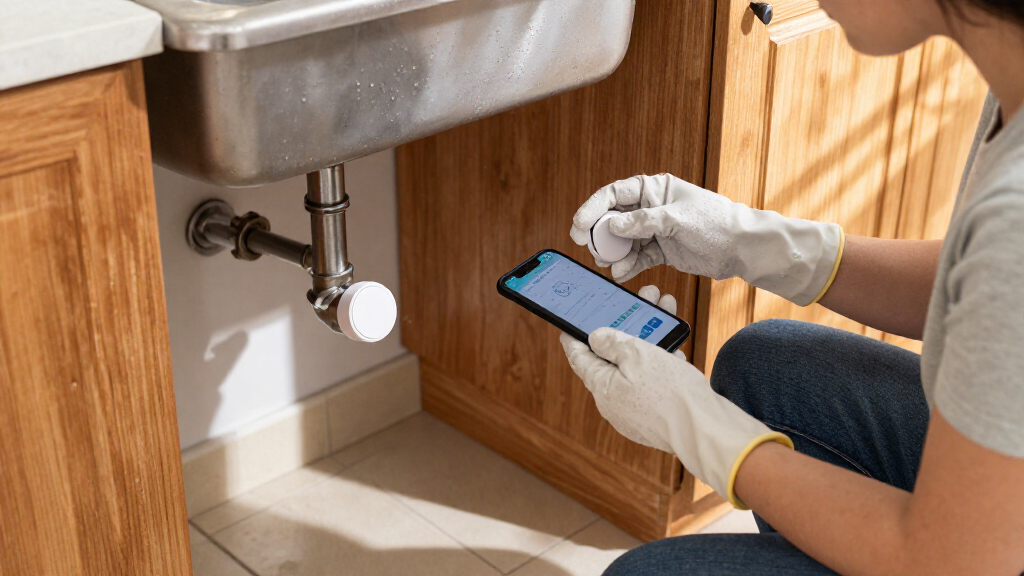
I compared these smart leak detectors by the decisions that shape everyday usefulness: where each sensor can be placed, how it connects, the scale of coverage in each kit, and what happens when it detects water. Kits with a hub or base station may suit homes where sensor-to-router reach is a concern; Wi-Fi-connected options can be simpler for buyers who want fewer components. I also weighed alarm and sensor design, including high-volume alerts, slim profiles, and cable probes, because a detector needs to fit the leak-prone spot to be useful.
The order reflects coverage, flexibility, and the level of protection each option offers—not pack size alone. YoLink’s six-sensor kit ranks first as a balanced choice for several locations, while the GoveeLife models rank by the needs their formats serve rather than by small differences in count. Moen Flo’s automatic shutoff gives it a distinct premium role, but it is not a like-for-like substitute for placing sensors under appliances. I also accounted for tradeoffs: more sensors can mean broader coverage, but only if their connectivity, placement, and alert setup suit the home.
Factors to Consider When Choosing Smart Leak Detectors
Before choosing a kit, map the places water could escape and decide whether you want an alert, an automatic response, or both. These decisions help avoid paying for features that do not fit your home—or leaving an important leak-prone spot uncovered.
Match Sensor Style to the Leak-Prone Spot
A flat contact sensor works well under sinks, near washing machines, and beside water heaters when it can rest directly on the floor. A cable probe can reach along a wider area or into a narrow gap where the sensor body will not fit. Slim designs can be easier to place beneath appliances, but confirm that the sensing points will still touch the surface where water is likely to collect. A common mistake is choosing by pack size before checking the clearance beneath cabinets or appliances. Sketch out each location and note whether it needs a compact sensor, an extension cable, or more than one detection point. That small planning step often improves coverage more than adding another sensor to a poorly placed kit.
Check the Connection Path, Not Just the App
Smart detectors need a reliable route from the sensor to your phone, and the path can depend on a hub, a base station, or direct Wi-Fi. A hub-based kit may be a better fit when sensors sit far from the router or in a basement, but it adds another device to install and power. Direct Wi-Fi models can simplify setup, though walls, metal appliances, and distance may affect signal quality. Do not assume that a long advertised range means the signal will perform the same way inside every house. Check what network bands and hub requirements the manufacturer specifies, then test the intended locations before relying on alerts. For a detached garage or distant utility room, prioritize the connection design and range over a larger sensor count.
Decide Whether You Need Detection or Shutoff
Most spot detectors tell you that water has reached a sensor; they do not stop the flow. A whole-home monitor with an automatic shutoff valve can respond to plumbing problems beyond the exact spots where a sensor sits, but it involves pipe compatibility, installation, and a larger commitment. That does not make a shutoff system a replacement for spot sensors: a leak under a sink may still benefit from a detector placed nearby. Think about the likely damage, how quickly someone can respond to an alert, and whether shutting off water automatically would disrupt occupants or equipment. Buyers with a second home or frequent travel may value automatic action more than someone who is usually nearby. Compare the scope of protection, not just the number of smart features.
Plan Coverage Around Risk, Not Pack Count
Start with the highest-risk locations: areas near plumbing joints, appliances that use water, and places where a leak could spread unnoticed. A six-pack can cover more spots than a smaller kit, but only if you have suitable locations and a dependable signal at each one. Conversely, a compact kit may be enough for a small apartment with a few clear risk points. Leave room in your plan for less obvious areas such as a basement utility corner or a refrigerator connection if your layout includes one. Avoid placing every sensor in the same room simply because setup is convenient. Prioritizing likely leak sources helps you choose a pack size that fits your home rather than buying by count alone.
Compare Alert Types and Who Will Hear Them
A loud local alarm can help someone at home notice a leak even if a phone is muted, while app notifications can reach someone away from the property. These alert paths solve different problems, so check whether the model offers both and how its sound level fits the intended location. A sensor beside a noisy appliance or in a utility room may need a particularly audible alarm or dependable remote notifications. For a home with multiple occupants, look at how alerts are shared and whether more than one person can receive them. Do not treat a high-decibel figure as a guarantee that every room will hear the alarm; doors, floors, and distance affect sound. Choose a notification setup that matches who is likely to be home and able to act.
Account for Maintenance and Long-Term Readiness
Leak detectors only help when their sensors, batteries, network connection, and notifications remain ready. Before buying, check the battery type, whether batteries are replaceable, and how the device signals low power or lost connectivity. Test each sensor after installation and repeat checks on a schedule that fits your household. A hub or base station adds another component to keep powered and connected, while a direct-connect model may reduce setup parts. Consider whether you can easily reach sensors for testing, especially when they sit behind appliances. A kit that is simple to maintain is more dependable than one with extra capabilities that are difficult to monitor.
Frequently Asked Questions
Should I choose a hub-based leak detector kit or a Wi-Fi-only model?
Choose based on the distance and obstacles between the sensors and your router, not on the connection label alone. A hub-based system can make sense when detectors need to reach a basement, utility room, or other distant area, though it adds a device that must stay powered and online. Wi-Fi-only models may involve fewer components and suit homes where the router already reaches every sensor location. Walls, appliances, and building materials can change real-world performance, so check the maker’s compatibility details and test placement. If an alert route is unreliable, even a feature-rich detector may not serve its purpose.
Is a six-sensor kit better than buying a smaller pack?
Not automatically: six sensors are useful only if you can place them at separate, meaningful risk points and maintain a connection at each location. A smaller pack may cover the main leak sources in an apartment or compact home without leaving unused devices in a drawer. Before selecting a pack, list the appliances and plumbing areas you want to protect, then account for any spots that need a cable probe or slim sensor instead of a standard contact unit. More sensors also mean more batteries and devices to test. Choose the count that fits your layout, with a little room for a future risk point if needed.
Can a pipe-mounted monitor replace leak sensors under sinks and appliances?
A pipe-mounted monitor and spot sensors watch for different kinds of problems. A whole-home monitor can track water use and, on models with a shutoff valve, may stop water flowing through the main line; a spot sensor detects water at the place where it is installed. A leak beneath an appliance may be easier to catch with a detector placed nearby, while a plumbing issue elsewhere may call for whole-home monitoring. Some homes may benefit from using both approaches, but the added installation and system complexity may not suit every buyer. Choose according to the type of leak you most want to catch and how you want the system to respond.
When is a cable-probe detector a better choice than a standard sensor?
A cable-probe model can help when the likely leak area is longer than the sensor body or difficult to reach directly, such as beneath an appliance or along a narrow edge. A standard contact sensor is often simpler when water is likely to pool in one accessible spot. Check the cable length against the actual route and make sure the sensing section can lie where water would reach it first. A cable can improve placement flexibility, but it does not remove the need for a reliable connection and reachable maintenance. If the sensor fits directly in the risk area, a standard model may be the neater option.
What should I prioritize for a second home or a house with frequent travel?
For a home that may be empty, prioritize alerts that reach someone reliably and consider whether automatic shutoff would reduce the damage before anyone can arrive. A local alarm alone may go unheard when the property is vacant, so review app notifications, connectivity needs, and how additional household members can receive alerts. Whole-home shutoff systems can offer a stronger response to some plumbing events, but they require compatible plumbing and careful setup. Spot sensors still matter in locations where leaks may collect, especially around appliances and fixtures. Check the system periodically while the home is occupied so a network or battery issue does not go unnoticed during an absence.
Conclusion
For the best overall balance of multi-spot coverage and a hub-based setup, I would start with the YoLink Water Leak Sensor 1 Kit, 6 Pack + Hub. The best value choice for buyers who want broad spot coverage without moving to a whole-home shutoff system is the GoveeLife Smart Water Leak Detector, 6-Pack; compare its connection requirements with your layout before choosing. For the best premium approach, Moen Flo Smart Water Monitor and Automatic Shutoff is the standout when pipe monitoring and automatic shutoff matter more than adding another set of floor sensors. Beginners who want a straightforward spot-sensor setup can start with a GoveeLife multi-pack sized to their home, while buyers who need a compact fit should look at the X-Sense Ultra-Slim model and those with awkward placements should consider GoveeLife’s cable sensor. In short, choose by the protection you need: spot alerts, flexible sensor placement, long-range connectivity, or whole-home water control.
Halloween Picks

15-Foot Halloween Pumpkin Inflatable with LED Lights and Air Blower

Spirit Halloween 54-Inch Sitting Scarecrow Animatronic

Thuodo 8 FT Tall Halloween Inflatable Three-Headed Dragon with Built-in LEDs
As an affiliate, we earn on qualifying purchases.