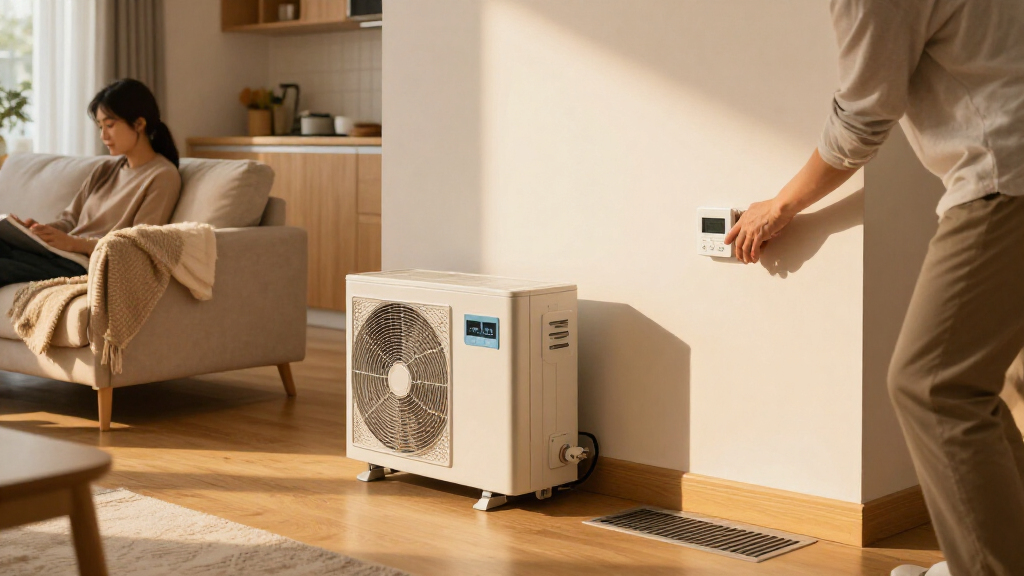
Choosing the best all-electric home heating systems requires balancing raw heating power against installation complexity and energy efficiency. My analysis identifies the Revolv 17 kW Downflow Electric Furnace as the standout choice for whole-home forced-air upgrades, offering robust heat distribution without gas lines. For those targeting specific comfort zones, the LuxHeat Radiant Floor System provides superior localized warmth and efficiency, while the YITAHOME Ductless Mini Split excels in homes lacking ductwork by combining heating and cooling in one unit. The primary tradeoff remains between the high upfront installation cost of ducted systems and the ongoing operational efficiency of heat pumps versus resistance heating. Continue reading to see how these options compare in capacity, compatibility, and long-term value.

Get home appliances delivered free with Prime
- Fast, free delivery on millions of items
- Prime Video, Amazon Music and more included
- Member-only deals all year
Complete the kit



Key Takeaways
- Ducted electric furnaces like the Revolv models offer the most seamless integration for existing HVAC setups but require significant electrical panel upgrades.
- Heat pumps, such as the YITAHOME mini-split, deliver higher efficiency ratings (SEER2) than resistance heaters but perform less consistently in extreme cold.
- Radiant floor systems like LuxHeat provide the most even heat distribution but are impractical for retrofitting into finished floors with standard joist spacing.
- Mobile home-specific furnaces require precise downflow or upflow orientations that differ from standard residential units, making compatibility checks mandatory.
- Electrical load management is the biggest hidden cost; many high-kW units necessitate dedicated 240V circuits that older homes may not support without rewiring.


| all-electric home heating system | Model | Heating capacity | Heat output | Dimensions |
|---|---|---|---|---|
| Revolv 17 kW Downflow Electric | E7ED-B017K1 | 17 kW | 51,000 BTU | 24.5 × 20 × 60.75 in |
| LuxHeat 150 sq. ft. Electric R | — | — | 1,800 W | — |
| Revolv 68,000 BTU 23kW Mobile | E7EU-B023K1 | 23 kW | 68,000 BTU | 24.5 × 20 × 60.75 in |
| Revolv 31,000 BTU 10 kW Upflow | E7EU-B010K1 | 10 kW | 31,000 BTU | 24.5 × 20 × 60.75 in |
| YITAHOME 12,000 BTU Ductless M | — | — | — | — |
| Revolv E7ED-B015K1 15kW 47,000 | E7ED-B015K1 | 47,000 BTU | — | 60.63 in H × 20 in W × 24.6 in D |
More Details on Our Top Picks
Revolv 17 kW Downflow Electric Furnace with Coil Cabinet
The Revolv 17 kW is a ducted heating choice for manufactured homes with underfloor ductwork: its downflow layout sends heated air toward ducts below the furnace, rather than requiring an upflow arrangement like the Revolv 23 kW Upflow. Its 51,000 BTU output sits between that larger 68,000 BTU unit and the 10 kW Revolv, making this a middle-capacity option in the lineup. Electric operation avoids combustion venting and on-site fuel storage, while the included coil cabinet supports an integrated system setup. The tradeoff is a specific installation fit: downflow is not interchangeable with upflow, and the unit requires a 240 V supply. I’d match its configuration and capacity to the home and existing ductwork before choosing it.
Pros:- Downflow configuration suits ductwork routed beneath the floor.
- 51,000 BTU output offers more capacity than the 10 kW Revolv model.
- Electric heat requires no gas line, fuel storage, or combustion venting.
- Included coil cabinet supports an integrated heating and cooling setup.
Cons:- Downflow layout limits compatibility with homes designed for upflow systems.
- Requires a 240 V electrical supply.
- At 120 lb, it may require professional handling and installation.
Best for: Owners of mobile or manufactured homes with existing underfloor ductwork who need a mid-capacity electric furnace.
Not ideal for: Homes with upflow or other duct configurations, or buyers without the required 240 V electrical supply.
- Model:E7ED-B017K1
- Heating capacity:17 kW
- Heat output:51,000 BTU
- Configuration:Downflow, forced air
- Power:Electric, 240 V
- Dimensions:24.5 × 20 × 60.75 in
- Weight:120 lb
- Included component:Coil cabinet
- Warranty:10-year manufacturer warranty if registered
Our verdict“Choose this Revolv when a manufactured home needs a 51,000 BTU downflow furnace and its ductwork and electrical supply match.”
LuxHeat 150 sq. ft. Electric Radiant Floor Heating System with Programmable Thermostat
Unlike the Revolv furnaces, the LuxHeat kit warms a specific floor area rather than distributing heat through a home’s ductwork. That makes it a targeted choice for a tile bathroom or similar renovation, not a replacement for whole-home heating. The kit pairs cable with an uncoupling membrane designed for tile installation, with crack prevention, waterproofing, and load support, and includes a programmable thermostat with dual air and floor sensing plus integrated GFCI protection. Its 120 V connection may suit projects where a 240 V furnace supply is not the right fit, but the coverage is capped at 150 sq. ft. Installation also takes planning: the cable must be embedded in self-leveler or thinset and cannot be cut or shortened. I’d pick it for a floor-heating project, not as an alternative to the Revolv whole-home systems.
Pros:- Heating cable and uncoupling membrane are suited to tile-floor installations.
- Programmable thermostat offers a 7-day, 4-event schedule and dual air/floor sensing.
- Integrated Class A GFCI provides ground-fault protection.
- Cable is listed for wet locations and uses an aluminum shield.
Cons:- Covers only up to 150 sq. ft., so it is not a whole-home heating system.
- Cable cannot be cut or shortened, limiting layout flexibility.
- Wire must be covered with self-leveler or thinset during installation.
Best for: Homeowners renovating up to 150 sq. ft. of tile flooring who want scheduled radiant comfort and a matching membrane.
Not ideal for: Buyers seeking whole-home heating, or projects where the cable layout cannot accommodate its fixed, uncut wire length.
- Heating coverage:Up to 150 sq. ft.
- Voltage and amperage:120 V, 15 A
- Heat output:1,800 W
- Power density:12 W/sq. ft.
- Cable:600 linear ft.; 3 in. spacing
- Thermostat:Programmable touchscreen, dual air/floor sensing, integrated Class A GFCI
- Membrane:173 sq. ft.; 0.26 in. thick
- Certifications:Cable cULus certified; membrane ANSI and TCNA approved
- Warranty:LuxHeat 25 years; Prova 50 years; thermostat 3 years
Our verdict“Choose LuxHeat for scheduled radiant warmth under a compatible tile floor, not for ducted whole-home heating.”
Revolv 68,000 BTU 23kW Mobile Home Upflow Electric Furnace with Coil Cabinet
Among the ducted options here, the Revolv 23 kW offers the largest stated heat output: 68,000 BTU in an upflow configuration. That makes it the capacity-led choice for a manufactured home with compatible upward-flow ductwork, while the 10 kW Revolv Upflow is better suited to a lower-output requirement and the 17 kW Revolv serves downflow layouts. The electric design avoids fuel storage and combustion venting, and its coil cabinet allows an integrated heating and cooling arrangement. The larger output is not a universal advantage: suitability depends on the home’s heating needs and duct system, and a 240 V supply is required. At 120 lb, moving and installing it can also call for professional help. I’d choose it over the smaller upflow unit only when the home calls for its greater capacity.
Pros:- 68,000 BTU output is the highest stated capacity among these furnace picks.
- Upflow airflow suits compatible ductwork in manufactured homes.
- Electric operation avoids gas lines, stored fuel, and combustion venting.
- Included coil cabinet supports an integrated heating and cooling system.
Cons:- Requires a dedicated 240 V electrical supply.
- Its upflow configuration is unsuitable for downflow duct systems.
- The 120 lb unit may need professional handling and installation.
Best for: Owners of mobile or manufactured homes with upflow ductwork who need the lineup’s highest listed furnace output.
Not ideal for: Homes with downflow ductwork or modest heating requirements better matched to the 10 kW or 17 kW options.
- Model:E7EU-B023K1
- Heating capacity:23 kW
- Heat output:68,000 BTU
- Configuration:Upflow
- Power:Electric, 240 V
- Dimensions:24.5 × 20 × 60.75 in
- Weight:120 lb
- Included component:Coil cabinet
- Warranty:10-year manufacturer warranty if registered
Our verdict“Choose this model when a manufactured home has upflow ductwork and needs more output than the smaller Revolv furnaces provide.”
Revolv 31,000 BTU 10 kW Upflow Electric Furnace with Coil Cabinet for Mobile Homes
The 10 kW Revolv is the lower-output upflow furnace in this group, with 31,000 BTU compared with 68,000 BTU from the Revolv 23 kW Upflow. That distinction matters for buyers matching a furnace to a smaller or lower-demand manufactured home; choosing the larger model simply because it produces more heat would not be a sound substitute for sizing to the home. Like its Revolv counterparts, this indoor unit uses electric forced-air heating and includes a coil cabinet, while avoiding gas lines and combustion venting. Its upflow design requires compatible ductwork, and the unit still needs a 240 V supply. The 120 lb weight is another practical installation hurdle. I’d favor it over the 17 kW downflow model when the home needs less output and sends air upward, but skip it if either condition does not fit.
Pros:- 31,000 BTU output provides a lower-capacity choice than the 23 kW Revolv Upflow.
- Upflow design works with compatible manufactured-home ductwork.
- Electric heat avoids stored fuel and combustion venting.
- Includes a coil cabinet for an integrated heating and cooling setup.
Cons:- Lower heat output may not suit homes with greater heating demands.
- Upflow configuration does not fit downflow duct systems.
- Requires 240 V power and weighs 120 lb, complicating installation.
Best for: Manufactured-home owners with upflow ductwork and a heating requirement suited to a 31,000 BTU electric furnace.
Not ideal for: Homes needing higher furnace output, using downflow ductwork, or lacking a compatible 240 V electrical supply.
- Model:E7EU-B010K1
- Heating capacity:10 kW
- Heat output:31,000 BTU
- Airflow design:Upflow
- Power:Electric, 240 V
- Usage:Indoor
- Dimensions:24.5 × 20 × 60.75 in
- Weight:120 lb
- Warranty:10-year manufacturer warranty if registered
Our verdict“Choose this Revolv when a manufactured home needs a lower-output upflow furnace and has the required ductwork and 240 V supply.”
YITAHOME 12,000 BTU Ductless Mini Split Air Conditioner and Heat Pump, 220V, 17.5 SEER2
Unlike the Revolv furnaces, the YITAHOME is a ductless heat pump that also provides air conditioning, making it the most versatile choice here for a single space rather than a manufactured home’s existing duct system. It is listed for areas up to 750 sq. ft. and offers Wi-Fi and remote control, several operating modes, automatic defrosting, and a washable filter. Its inverter design and stated 17.5 SEER2 efficiency distinguish it from the furnace products, while quiet operation below 41 dB may suit a living area or bedroom. This flexibility comes with a different installation burden: it is a split system that requires a licensed HVAC professional, and the package ships in two cartons, both needed for assembly. I’d choose it over a Revolv furnace for a ductless space needing both heating and cooling, not as a direct replacement for whole-home ducted heat.
Pros:- Provides both heating and cooling in one ductless system.
- Wi-Fi, remote control, and multiple modes allow flexible operation.
- Listed noise level below 41 dB suits spaces where quieter operation matters.
- Washable filter and automatic defrosting support routine operation.
Cons:- Requires installation by a licensed HVAC professional.
- Does not replace a ducted whole-home furnace without a suitable system redesign.
- Ships in two cartons, and both are needed before assembly.
Best for: Homeowners seeking ductless heating and cooling for a single room or open area up to 750 sq. ft., with access to professional installation.
Not ideal for: Buyers needing a furnace for existing whole-home ductwork or those unable to arrange licensed HVAC installation.
- Cooling capacity:12,000 BTU
- Coverage area:Up to 750 sq. ft.
- Voltage:220 V
- Efficiency:17.5 SEER2
- Power consumption:1,040 W
- Refrigerant:R-32
- Noise level:Below 41 dB
- Temperature range:Operating: 5°F to 118°F; setting: 60°F to 90°F
- Controls and modes:Wi-Fi and remote; auto, cooling, drying, heating, and fan
Our verdict“Choose the YITAHOME when you want professional-installed, ductless heating and cooling for a defined area rather than a ducted furnace.”
Revolv E7ED-B015K1 15kW 47,000 BTU Mobile Home Downflow Electric Furnace with AC Coil Cabinet
The Revolv E7ED-B015K1 is a strong fit for a medium-sized manufactured home with existing downflow ductwork and a need for central electric heat. Its 15 kW output delivers 47,000 BTU, placing it between the 10 kW Revolv upflow furnace and the 23 kW model: more heating capacity than the smaller unit, without stepping up to the larger furnace. The included AC coil cabinet also supports a combined heating and cooling setup, unlike a standalone heating appliance.
A multi-speed ECM blower rated up to 1,600 CFM helps distribute air through the home, while built-in circuit breakers add an installation safety feature. The tradeoffs are substantial electrical demand—82–90 amps—and a configuration that only suits compatible downflow duct layouts. Product data also gives conflicting weights of 86 and 118 pounds, so shipping and handling plans may need confirmation. I’d favor this over the 23 kW Revolv when the home needs a middle-capacity system, but skip it if the panel or ductwork cannot support it.
Pros:- 15 kW capacity provides a middle ground between the 10 kW and 23 kW Revolv furnace options.
- Included AC coil cabinet supports integration with a compatible central cooling system.
- Multi-speed ECM blower provides up to 1,600 CFM airflow for distributing heat through ductwork.
- Built-in circuit breakers add a safety feature within the furnace.
Cons:- The 82–90 amp requirement may call for electrical service or panel upgrades.
- Downflow configuration limits installation to compatible ductwork layouts.
- Listed weight conflicts between 86 and 118 pounds, complicating shipping and handling estimates.
Best for: Owners of medium-sized mobile or manufactured homes with compatible downflow ductwork, adequate electrical service, and plans to pair central heating with AC.
Not ideal for: Owners of homes with upflow or ductless layouts, or electrical panels that cannot accommodate its 82–90 amp draw without costly upgrades.
- Model:E7ED-B015K1
- Heating capacity:47,000 BTU
- Power output:15 kW
- Voltage:208/230V single phase
- Amperage:82–90 amps
- Airflow:Up to 1,600 CFM
- Configuration and blower:Downflow; multi-speed ECM
- Dimensions:60.63 in H × 20 in W × 24.6 in D
- Included components:AC coil cabinet and built-in circuit breakers
Our verdict“Choose this Revolv for a medium-sized manufactured home with downflow ducts and sufficient electrical capacity; choose another configuration if either requirement is missing.”
How We Picked
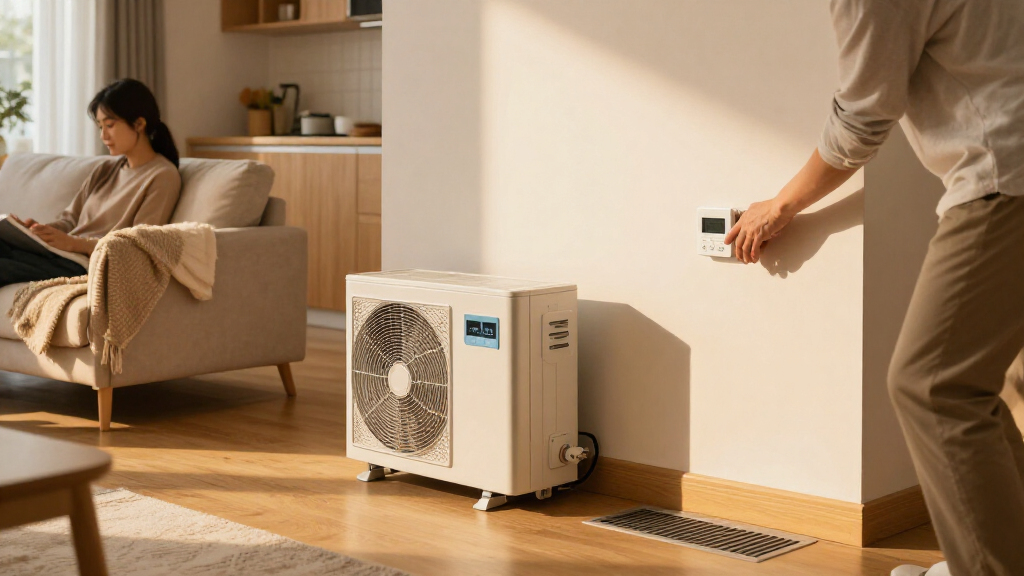
I evaluated these systems based on three core pillars: heating capacity efficiency, installation compatibility, and operational versatility. Rather than just looking at BTU output, I analyzed how each unit distributes heat—whether through forced air, radiant emission, or heat exchange—as this dictates comfort levels and energy bills. I also prioritized models with clear electrical requirements and thermostat integration, as smart control compatibility significantly impacts daily usability.
The ranking reflects a hierarchy of whole-home applicability. Ducted furnaces rank higher for comprehensive home coverage, while zone-specific solutions like radiant floors and mini-splits are ranked based on their niche effectiveness. I excluded units with ambiguous electrical specs or poor thermal management features, ensuring every pick represents a viable, long-term solution for modern electric homes.
| all-electric home heating system | Model |
|---|---|
| Revolv 17 kW Downflow Electric | E7ED-B017K1 |
| LuxHeat 150 sq. ft. Electric R | — |
| Revolv 68,000 BTU 23kW Mobile | E7EU-B023K1 |
| Revolv 31,000 BTU 10 kW Upflow | E7EU-B010K1 |
| YITAHOME 12,000 BTU Ductless M | — |
| Revolv E7ED-B015K1 15kW 47,000 | E7ED-B015K1 |
Factors to Consider When Choosing Best All-electric Home Heating Systems
Selecting the right electric heating system involves more than matching BTUs to square footage. These factors determine whether your new system will operate efficiently or become a source of frustration and high utility costs.Electrical Capacity and Panel Upgrades
Most high-output electric heating systems require 240-volt dedicated circuits that draw substantial amperage. Before purchasing a 17 kW or 23 kW furnace, you must verify that your main electrical panel can handle the additional load without tripping breakers. A common mistake is ignoring the ampacity requirements of the furnace coil cabinet, which often necessitates upgrading from a 100-amp to a 200-amp service. If your home lacks this capacity, the cost of electrical upgrades can exceed the price of the heating unit itself. Always consult a licensed electrician to audit your panel before committing to a high-kW resistance heater.
Ductwork Compatibility and Flow Direction
Forced-air electric furnaces are strictly categorized by upflow or downflow configurations, which must match your existing ductwork layout. Installing a downflow unit in a space designed for upflow airflow results in poor circulation and uneven heating. Mobile homes often use specific compact furnace models that differ in dimension from standard residential units, requiring careful measurement of the furnace closet. Verify the cabinet dimensions and plenum orientation against your current setup to avoid costly modifications. Mismatched flow directions can reduce system efficiency by up to 30% due to increased static pressure on the blower motor.
Heat Pump Efficiency vs. Resistance Heating
Understanding the difference between heat pumps and resistance heaters is vital for long-term cost savings. Heat pumps, like the YITAHOME mini-split, move heat rather than generating it, often achieving efficiencies of 300% or more. In contrast, electric resistance furnaces convert electricity to heat at a 1:1 ratio, which is less efficient but provides consistent warmth in extreme cold. If you live in a region with mild winters, a heat pump system will lower your annual energy bills significantly. However, in areas with prolonged sub-freezing temperatures, resistance heating may offer more reliable performance despite higher operating costs.
Thermostat Integration and Smart Controls
Modern electric heating systems rely heavily on precise thermostat control to manage cycling and prevent overheating. Look for units that support programmable or smart thermostats with learning algorithms, which adjust heating patterns based on occupancy. The LuxHeat system, for example, includes a programmable thermostat that prevents the floor from overheating, a critical safety and efficiency feature. Ensure the furnace’s control board is compatible with your preferred smart home ecosystem, as proprietary controllers can limit your ability to monitor energy usage remotely. Inadequate control logic leads to short-cycling, which wears out components faster and wastes electricity.
Frequently Asked Questions
Can I replace my gas furnace with an electric furnace without changing my ductwork?
Yes, in most cases, you can replace a gas furnace with an electric model using the existing ductwork, provided the airflow direction matches. If your current system is upflow, you must choose an upflow electric furnace; similarly, downflow systems require downflow units. However, you will likely need to install new, larger electrical wiring to support the high amperage draw of the electric element. The blower motor may also need replacement if it is not compatible with the new control board. Always have an HVAC professional verify that the static pressure of your ducts matches the new furnace’s blower capacity to ensure efficient air distribution.
Are electric radiant floor heating systems suitable for primary home heating?
Electric radiant floor heating is generally not recommended as the sole primary heat source for entire homes due to high operating costs and slow response times. It is most effective as a supplemental system for specific areas like bathrooms, kitchens, or sunrooms where comfort is prioritized over efficiency. Because electric resistance heating is expensive to run continuously, using it for whole-home heating can lead to substantially higher utility bills compared to heat pumps or gas systems. It works best in well-insulated spaces with low heat loss, where the floor can maintain a consistent temperature without frequent cycling.
How do I determine the correct kW size for my electric furnace?
Sizing an electric furnace requires calculating your home’s heat loss, not just its square footage. Factors such as insulation quality, window efficiency, ceiling height, and local climate zones significantly impact the required capacity. A general rule of thumb is 30-60 BTUs per square foot, but this varies widely. For example, a 1,500-square-foot home might need 10-15 kW, while a poorly insulated home of the same size might require 20 kW or more. Over-sizing leads to short-cycling and humidity issues, while under-sizing results in an inability to reach the desired temperature during cold snaps.
What are the main maintenance requirements for electric heating systems?
Electric heating systems require less maintenance than gas or oil systems, but they are not maintenance-free. You should replace air filters every 1-3 months to prevent restricted airflow, which can cause the heating elements to overheat and fail. Inspect the heating elements annually for signs of corrosion or breakage, as these are the primary wear items in resistance furnaces. For heat pumps, clean the outdoor condenser coil to remove debris and ensure proper heat exchange. Unlike gas furnaces, there are no burners to clean or heat exchangers to check for carbon monoxide leaks, simplifying routine upkeep.
Is a ductless mini-split a better option than an electric furnace for a mobile home?
For mobile homes, a ductless mini-split is often a better option than a central electric furnace if you want to avoid ductwork modifications and achieve higher efficiency. Mini-splits provide zoned heating and cooling, allowing you to heat only the rooms you use, which reduces energy waste. However, they require mounting indoor units on walls, which may not suit your aesthetic preferences. Electric furnaces integrate with existing mobile home ducts but often struggle with humidity control and may require significant electrical upgrades. If your mobile home already has functional ducts, a furnace is easier to install; if not, mini-splits offer a cleaner, more efficient retrofit solution.
Conclusion
Choosing the best all-electric home heating systems depends entirely on your home’s infrastructure and your comfort priorities. The Revolv 17 kW Downflow Electric Furnace stands out as the best overall for whole-home forced-air replacements, offering reliable performance and easy integration with existing ducts. For those seeking best value and targeted comfort, the LuxHeat Radiant Floor System is an excellent choice for specific zones, though it requires careful installation. The YITAHOME Ductless Mini Split is the best for beginners or homeowners without ductwork, providing efficient heating and cooling with minimal structural changes. If you live in a mobile home, the Revolv 68,000 BTU Upflow Electric Furnace is the best for specific needs, designed to fit compact spaces and standard mobile home configurations. Evaluate your electrical capacity and ductwork before making your final decision to ensure a smooth installation and efficient operation.