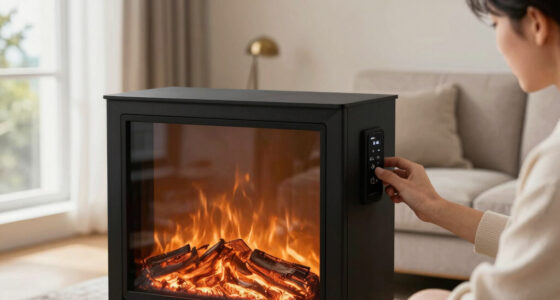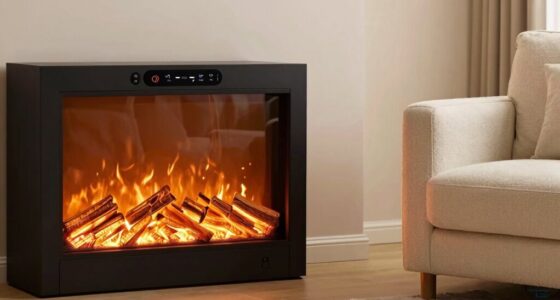

No, electric fireplaces don’t need ventilation or a chimney because they generate heat using electricity and produce no combustion gases. They use LED or LCD screens to create the visual effect of flames, making them safer and easier to install than gas models. Since there’s no actual burning involved, you don’t have to worry about venting or exhaust systems. Keep exploring to discover more about their safety and benefits.

Get home appliances delivered free with Prime
- Fast, free delivery on millions of items
- Prime Video, Amazon Music and more included
- Member-only deals all year
Key Takeaways
- Electric fireplaces do not produce combustion gases, so they do not require ventilation or chimneys.
- They generate heat via electrical resistance and visual effects with LED or LCD screens.
- No emissions or harmful byproducts are created, eliminating the need for venting.
- Unlike gas fireplaces, electric models pose no risks of carbon monoxide buildup.
- Proper electrical wiring is essential, but no venting or chimney is necessary for operation.

Electric fireplaces have gained popularity because they offer the cozy look of a traditional fire without the need for venting or chimneys. This convenience makes them a practical choice for many homes, especially where installing a chimney isn’t feasible. But if you’re considering an electric fireplace, you might wonder how it compares to gas fireplaces, especially regarding safety considerations and whether ventilation is necessary.
Unlike gas fireplaces, electric models produce heat through electrical resistance and visual effects through LED or LCD screens. Gas fireplaces burn natural gas or propane, creating real flames and heat, but they also produce byproducts like carbon monoxide and other combustion gases. This difference is vital when considering safety. Electric fireplaces eliminate the risk of carbon monoxide leaks, which can be deadly if ventilation isn’t adequate. With gas fireplaces, proper venting is essential to safely exhaust combustion gases outside, preventing dangerous build-up indoors.
Electric fireplaces avoid dangerous carbon monoxide emissions, unlike gas models that require proper venting to ensure safety.
When it comes to safety considerations, electric fireplaces are generally safer because they don’t involve open flames or combustible fuels. You don’t have to worry about sparks, falling logs, or accidental fires caused by gas leaks. Electric units are designed with safety features like automatic shut-offs, cool-touch exteriors, and child safety locks. However, you still need to follow basic safety precautions, such as keeping the unit away from water and ensuring the electrical wiring is up to code. Additionally, understanding the ventilation requirements for different fireplace types helps ensure safe operation and proper indoor air quality.
In contrast, gas fireplaces require regular maintenance, inspection, and proper installation to guarantee safety. They need proper ventilation systems to expel combustion byproducts outdoors. Without adequate ventilation, you risk carbon monoxide poisoning, which can be fatal. Even with venting, leaks or blockages can pose hazards. Consequently, if safety considerations are your top priority, electric fireplaces present a clear advantage—they are cleaner, easier to operate, and pose fewer risks indoors.
Products Worth Considering

Levoit Core 600S-P Smart Air Purifier for Large Rooms

Philips Hue Festavia Globe Outdoor String Lights, 32 Bulbs, 91 ft

Shark Navigator Robot Vacuum with 30-Day Self-Empty Base, White (AV2110S)
As an affiliate, we earn on qualifying purchases.
Frequently Asked Questions
Are Electric Fireplaces Safe for Outdoor Use?
Yes, electric fireplaces are safe for outdoor use if you follow indoor safety and installation requirements. Make certain the unit is weatherproof and rated for outdoor environments to prevent damage from moisture or debris. You should also keep electrical connections protected from the elements. Proper installation, including using the right outlet and securing the unit, guarantees safe operation, making outdoor use both convenient and secure.
Can Electric Fireplaces Be Used in Bathrooms?
Hold onto your bonnet—electric fireplaces can be used in bathrooms, but you must prioritize bathroom safety. Make sure the unit is specifically designed for damp environments and install it away from water sources. Moisture concerns are real; high humidity can damage electrical parts or pose safety risks. Always follow manufacturer instructions and consider professional installation to keep your space both cozy and safe.
Do Electric Fireplaces Generate Any Emissions?
Electric fireplaces do not generate emissions, so they won’t impact your indoor air quality or raise emissions concerns. Since they operate using electricity, they produce no smoke, gases, or particulates. This makes them a safe, eco-friendly option for maintaining good indoor air quality. You can enjoy the ambiance without worrying about harmful emissions or the need for ventilation, making electric fireplaces a convenient and healthy heating choice.
Are There Size Restrictions for Installing Electric Fireplaces?
You can install electric fireplaces in various sizes, but you need to follow installation regulations and size limitations. Large units might require more space and proper clearance to guarantee safety and efficiency. Check your local codes and manufacturer guidelines to determine the best fit for your area. Properly sizing your electric fireplace ensures it operates safely and looks great in your space, without risking overheating or installation issues.
How Energy-Efficient Are Electric Fireplaces Compared to Traditional Ones?
Electric fireplaces are a shining star when it comes to energy efficiency, often saving you money on heating costs. They convert almost all the electricity they use into heat, making them more efficient than traditional fireplaces. Plus, their insulation benefits help retain warmth, reducing energy waste. Imagine wrapping your home in a cozy blanket—electric fireplaces do that with less energy, so you stay warm while saving on your utility bills.
Conclusion
So, with an electric fireplace, you’re lighting a cozy campfire in your living room—without the smoke or ashes. No chimney or ventilation needed, just the warm glow of safety and simplicity. It’s like having a flickering fire trapped inside your home’s heartbeat, casting a comforting glow without the fuss. Enjoy the warmth and ambiance without worry, knowing your electric fireplace is a safe, effortless flame dancing in your space, brightening your days and nights.