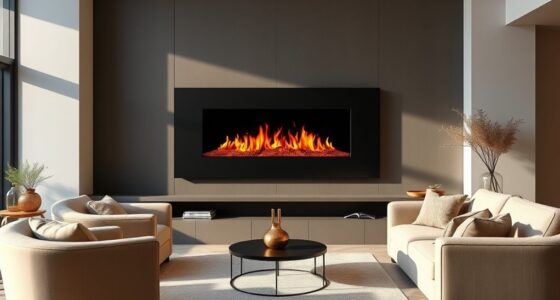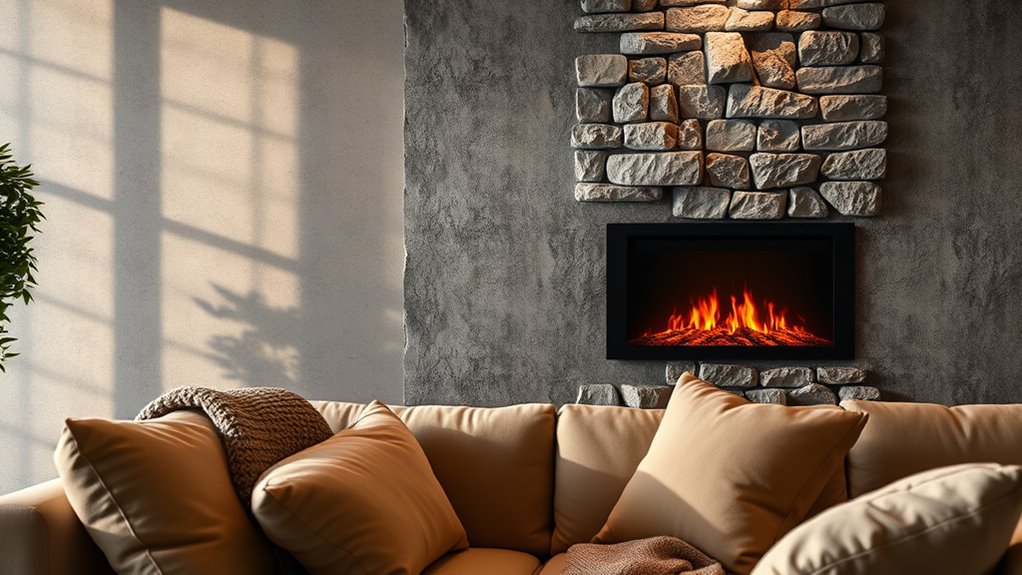
Using an electric fireplace as a supplemental heat source can help you save energy and reduce heating costs. Place it in a frequently used, well-insulated room, and use the thermostat and timer features to maximize efficiency. Seal drafts and insulate your space to keep heat in, which boosts the fireplace’s effectiveness. By combining these measures, you create a cozy, energy-efficient environment—discover how to optimize your setup for even better results.

Get home appliances delivered free — and shop member deals
- Fast, free delivery on millions of items
- Access to Prime Big Deal Days deals on October 6–7
- Prime Video, Amazon Music and more included
Key Takeaways
- Use electric fireplaces in high-traffic rooms to reduce reliance on central heating and improve energy efficiency.
- Set the fireplace’s thermostat to a comfortable temperature to supplement, not replace, your central heating system.
- Seal drafts and insulate your space to retain heat, maximizing the combined efficiency of both heating sources.
- Utilize timers and zone heating to operate the electric fireplace only when needed, reducing overall energy consumption.
- Position the electric fireplace strategically to enhance warmth and ambiance without overburdening your central heating system.

When your main heating system isn’t enough to keep your space comfortable, supplemental heating can provide an efficient solution. Electric fireplaces are a popular choice because they add warmth and ambiance without the need for venting or extensive installation. However, as you incorporate an electric fireplace into your home, it’s vital to prioritize electric fireplace safety. Make sure the unit is placed on a flat, stable surface away from combustible materials like curtains, furniture, or paper. Keep cords organized and away from foot traffic to prevent tripping or accidental damage. Regularly inspect the power cord and plug for damage, and always follow the manufacturer’s instructions for safe operation. Using an electric fireplace safely ensures you enjoy the warmth without risking fire hazards or electrical issues.
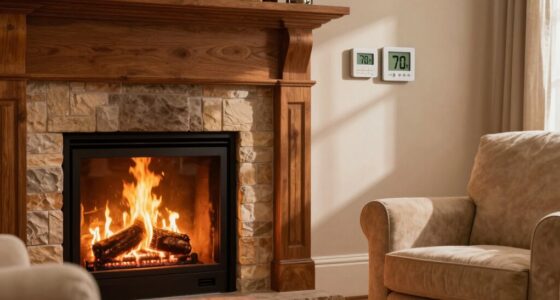
To maximize energy efficiency tips with supplemental electric heating, consider strategic placement. Position the electric fireplace in the room where you spend the most time, so you can reduce reliance on your central heating system. Use the fireplace’s thermostat if available; setting it to a comfortable yet energy-efficient temperature prevents unnecessary energy consumption. Additionally, take advantage of features like programmable timers to turn the unit off when it’s not needed, further conserving energy. Combining these tips helps you heat only the spaces you occupy, lowering your overall heating costs.
A refined appearance can also make your space feel more luxurious and inviting, enhancing your overall comfort.
Another way to improve energy efficiency is by sealing drafts around windows and doors, which prevents heat loss and allows your electric fireplace to work more effectively. Using draft stoppers or weather stripping can make a significant difference. Layering your approach by insulating walls or adding heavy curtains can also help retain heat, reducing the workload on both your electric fireplace and central heating system. These measures ensure that your supplemental heating remains an energy-efficient option, providing warmth without excessive electricity use.
Frequently Asked Questions
Can Electric Fireplaces Be Used as the Primary Heating Source?
You can use electric fireplaces as your primary heating source, but it’s generally not recommended for whole-home warmth. They’re best for supplemental warmth and cozy ambiance in a specific room. Electric fireplaces are energy-efficient for spot heating, but relying solely on them may lead to higher utility bills and inconsistent comfort. If you want reliable, whole-house heating, consider central heating systems alongside your electric fireplace.
Are Electric Fireplaces Energy-Efficient Compared to Central Heating?
Electric fireplaces are generally more energy-efficient than central heating because they convert almost all the electricity they use into heat, leading to better cost savings. You’ll notice lower energy bills and a smaller environmental impact, especially if you use the fireplace to heat only the room you’re in. This targeted heating reduces unnecessary energy consumption, helping you save money and cut down on your carbon footprint.
How Safe Are Electric Fireplaces to Operate Alongside Central Heating?
Electric fireplaces are generally safe to operate alongside central heating if you follow fire safety guidelines and make certain electrical considerations. You should keep flammable materials away and avoid overloading circuits. Always use a properly grounded outlet and check that your electric fireplace’s voltage matches your home’s electrical system. By taking these precautions, you minimize risks and enjoy both heating options safely and efficiently.
Do Electric Fireplaces Require Special Electrical Wiring or Outlets?
Electric fireplaces typically don’t require special electrical wiring, but you should check your outlet compatibility. Most models plug into standard outlets, yet high-wattage units might need dedicated circuits or upgraded wiring to handle the load safely. Always read the manufacturer’s instructions to make certain your electrical wiring and outlets meet the fireplace’s requirements. If unsure, consulting an electrician guarantees safe installation and maximum performance.
Can Electric Fireplaces Be Controlled Remotely or Integrated Into Smart Home Systems?
Did you know that over 60% of modern electric fireplaces offer remote control and smart integration features? You can easily adjust the flames, heat, and even set schedules from your smartphone or with a simple remote control. These features make electric fireplaces incredibly convenient, allowing you to control your ambiance effortlessly. With smart integration, you can synchronize your fireplace with your home automation system for seamless, hands-free comfort and control.
Conclusion
Adding an electric fireplace as supplemental heat can make your space cozy and energy-efficient. Imagine you’re relaxing in your living room on a chilly evening, feeling warm and comfortable thanks to the gentle glow of your fireplace. For example, Sarah installed one in her apartment and reduced her central heating use by 20%, saving money while staying warm. With the right setup, you can enjoy these benefits too, creating a warm sanctuary all winter long.
Fall Picks
fall essentials
As an affiliate, we earn on qualifying purchases.