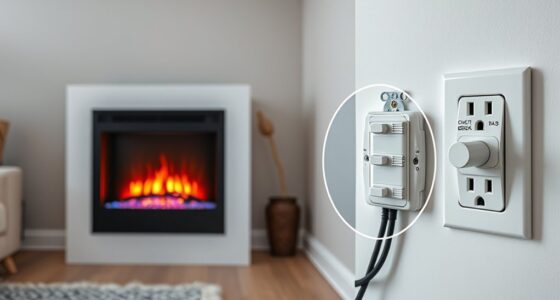
When using heaters, it’s safest to plug them directly into a wall outlet that can handle the high wattage, as outlets are designed for such loads and reduce fire risks. Power strips with surge protection and high capacity may seem convenient, but they can be overloaded if not rated for high power devices. To avoid hazards, follow manufacturer guidelines carefully. To discover key safety tips and proper setup techniques, keep exploring further.
Key Takeaways
- Use dedicated wall outlets for high-wattage heaters to reduce overload and fire risks.
- Ensure power strips are rated for high loads and include surge protection before connecting heaters.
- Prefer wall outlets over power strips for safety and to minimize clutter and tripping hazards.
- Avoid plugging heaters into power strips without proper surge protection or high power ratings.
- Use appropriate cord lengths and placement to ensure safety and efficient heater operation.
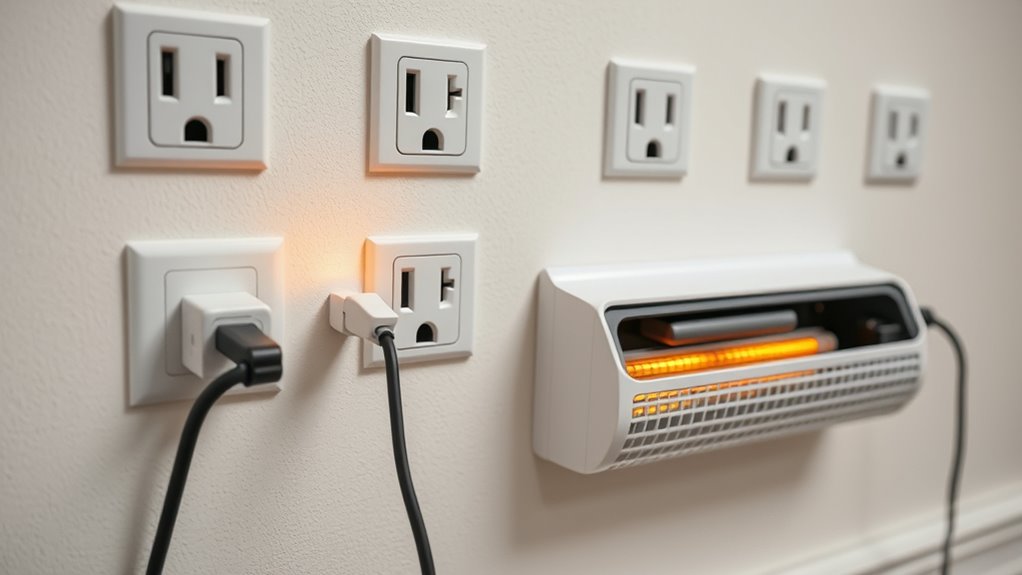
When it comes to powering your devices, understanding the difference between power strips and wall outlets is vital. This is especially true when it comes to heaters, which draw a significant amount of electricity and can pose safety risks if not used properly. Power strips often come with surge protection, which is an essential feature for safeguarding your devices against power spikes or sudden surges, particularly in areas prone to voltage fluctuations. However, not all power strips include surge protection, so you need to check the specifications before plugging in a heater. Relying solely on wall outlets might seem straightforward, but they don’t offer built-in surge protection, leaving your expensive appliances vulnerable to electrical damage.
Another key factor to take into account is cord length. Heaters typically require a certain amount of flexibility in placement, so having a power source within reach is important. Power strips usually come with varying cord lengths, allowing you to position your heater safely away from walls or furniture, reducing fire hazards or tripping risks. When using a power strip, make sure the cord length is sufficient to reach your desired location comfortably, but not so long that it becomes a tripping hazard or causes unnecessary clutter. On the other hand, wall outlets are fixed, so your placement options depend on the location of the outlets in your room. If the nearest outlet is far from where you want to place the heater, using an extension cord or a power strip with adequate length can be a better choice, provided it’s rated for high wattage devices.
Additionally, it’s important to remember that power load capacity varies between devices and fixtures, and exceeding these limits can cause electrical hazards. While power strips with surge protection and appropriate cord lengths offer convenience and safety, you should also keep in mind their limitations. For instance, plugging a high-wattage heater into a power strip not rated for such use can overload the strip, potentially causing a fire or damaging your device. In contrast, plugging directly into a wall outlet reduces the risk of overload, but it may limit flexibility in placement. Ultimately, for heaters, it’s safest to use a dedicated wall outlet. If you must use a power strip, ensure it’s rated for high power loads, includes surge protection, and has a cord length that lets you position your heater safely and conveniently. Always follow manufacturer guidelines and safety recommendations to prevent accidents and ensure your heating setup is secure.

CCCEI Heavy Duty Power Strip Surge Protector 20 AMP Switch, 12 Gauge Extension Cord with Multiple Outlets, Industrial, Shop, Garage High Amp Wall Mount Electric Extender. 6FT, Grey.
Grey heavy duty power strip 20 amp switch with 8 outlets, overload and grounding protection. It comes standard…
As an affiliate, we earn on qualifying purchases.
As an affiliate, we earn on qualifying purchases.
Frequently Asked Questions
Can I Plug a Heater Into a Power Strip Safely?
You should avoid plugging a heater into a power strip because it can jeopardize electrical wiring and circuit safety. Heaters draw high current, risking overload and potential fires. Instead, plug the heater directly into a wall outlet designed to handle such loads. Always check your circuit’s capacity, and never overload it, to ensure safe operation and prevent electrical hazards. Your safety depends on proper use and understanding of electrical wiring limits.
What Is the Maximum Wattage for Wall Outlets?
Most standard wall outlets can handle up to 15-20 amps, which equals roughly 1,800 to 2,400 watts. Your outlet’s electrical capacity depends on its rating, so always check the outlet rating before plugging in high-wattage devices like heaters. Exceeding this limit can cause overheating or electrical fires. To stay safe, do not surpass the maximum wattage specified for your outlet, and avoid overloading circuits.
Are Extension Cords Safe for Heaters?
Extension cords are generally unsafe for heaters because they can cause outlet overload and pose fire risks. If you must use a cord extension, choose one rated for high wattage and make certain it’s designed for appliances like heaters. Always check the cord’s capacity and avoid daisy-chaining multiple cords. Remember, using a dedicated wall outlet is safest to prevent overload and reduce fire hazards.
How Do I Prevent Overloading Outlets When Using Heaters?
Imagine your home’s circuit capacity as a busy highway, with each outlet as a lane. To prevent overloading, you manage power carefully, avoiding plugging multiple high-wattage devices into one outlet. Use power management by spreading heaters across different outlets and checking your circuit’s limits. This sustains your electrical system safe, prevents tripped breakers, and ensures your heater keeps you warm without risking overload.
What Safety Features Should I Look for in Power Strips?
You should look for power strips with surge protection to guard your devices against voltage spikes. Make certain it has a long enough cord length to reach outlets comfortably without stretching, which can cause damage or hazards. Additionally, choose strips with built-in circuit breakers for overload protection. These safety features help prevent electrical fires and equipment damage, giving you peace of mind when using your heater through a power strip.
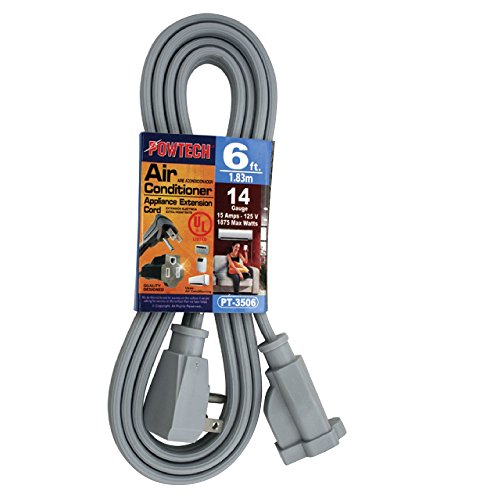
POWTECH Heavy duty 6 FT Air Conditioner and Major Appliance Extension Cord UL Listed 14 Gauge, 125V, 15 Amps, 1875 Watts GROUNDED 3-PRONGED CORD
Air Conditioner and Major Appliance Extension Cord UL Listed. Sturdy cord Ideal for plugging in large appliances such…
As an affiliate, we earn on qualifying purchases.
As an affiliate, we earn on qualifying purchases.
Conclusion
Remember, using a wall outlet for your heater is the safest choice—over 70% of electrical fires start from overloaded power strips. While power strips might seem convenient, they can’t always handle the high current your heater needs, increasing the risk of overheating. So, for your safety and peace of mind, always plug your heater directly into a wall outlet. It’s a simple step that keeps your home safer and your mind at ease.

Power Gear Child Safety Electrical Outlet Covers, Tamper‑Resistant Plug Protectors for Standard Wall Outlets, Baby‑Proof & Child‑Proof Safety Caps, Clear, 30 Pack, 51175
CHILD SAFETY PROTECTION — Covers unused electrical outlets to help babyproof living rooms, bedrooms, kitchens and play areas…
As an affiliate, we earn on qualifying purchases.
As an affiliate, we earn on qualifying purchases.

Ontel Handy Heater Turbo Wall Outlet Plug In Heater – Portable Indoor Ceramic Space Heater w/Adjustable Thermostat, 12-Hour Timer, Auto Shut Off, Quiet – Plug In Wall for Office, Bedroom, Camping
Compact & Powerful Plug In Heater: The Ontel Handy Heater Turbo is a small plug in space heater…
As an affiliate, we earn on qualifying purchases.
As an affiliate, we earn on qualifying purchases.