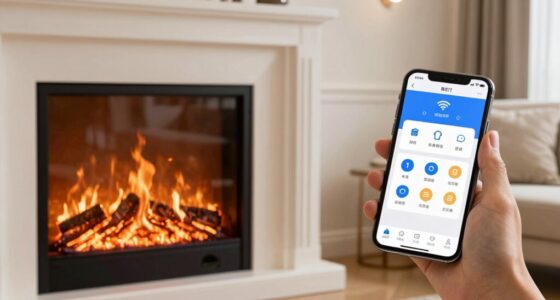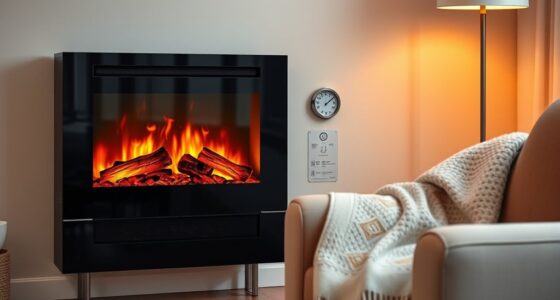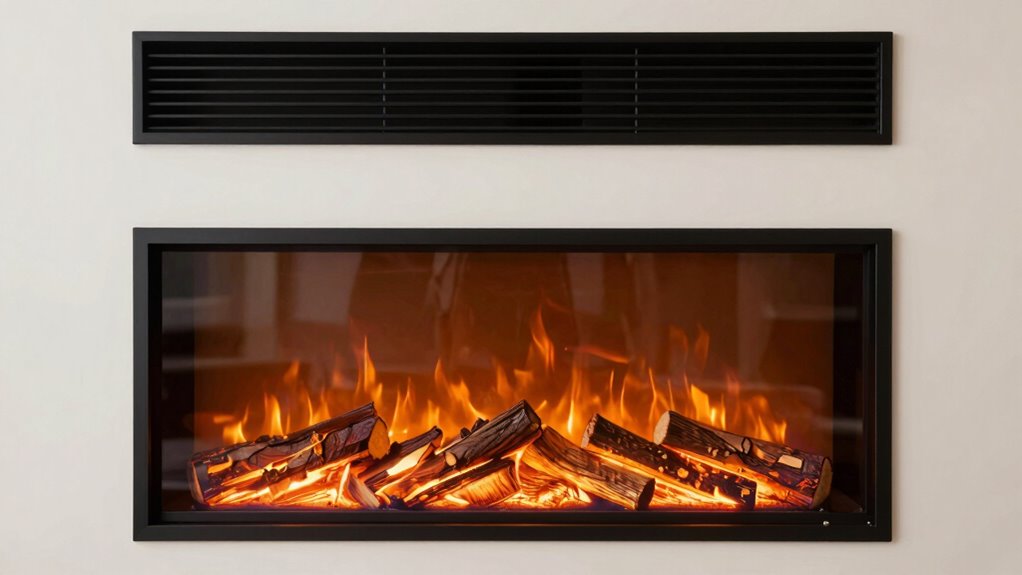

Front vent electric fireplaces offer a more authentic look with flames visible from the front and are great for larger spaces, but they require more complex installation and dedicated venting. Top vent models are easier to install, often more flexible to fit in limited spaces, and work well as supplemental heat sources. They may have slightly less heating power for large areas, but both types are energy-efficient options. Keep exploring to find out which style suits your needs best.
Key Takeaways
- Front vent fireplaces provide more efficient heating and realistic flames by using larger blowers to push warm air directly into the room.
- Top vent models are easier to install, often fitting into existing spaces with minimal modifications.
- Front vent units typically require more space and dedicated venting, suitable for new construction or major remodels.
- Top vent fireplaces are versatile, often recessed or wall-mounted, ideal for limited spaces or quick installations.
- Both types are energy-efficient and serve as effective supplemental heating options, with performance influenced by venting method.
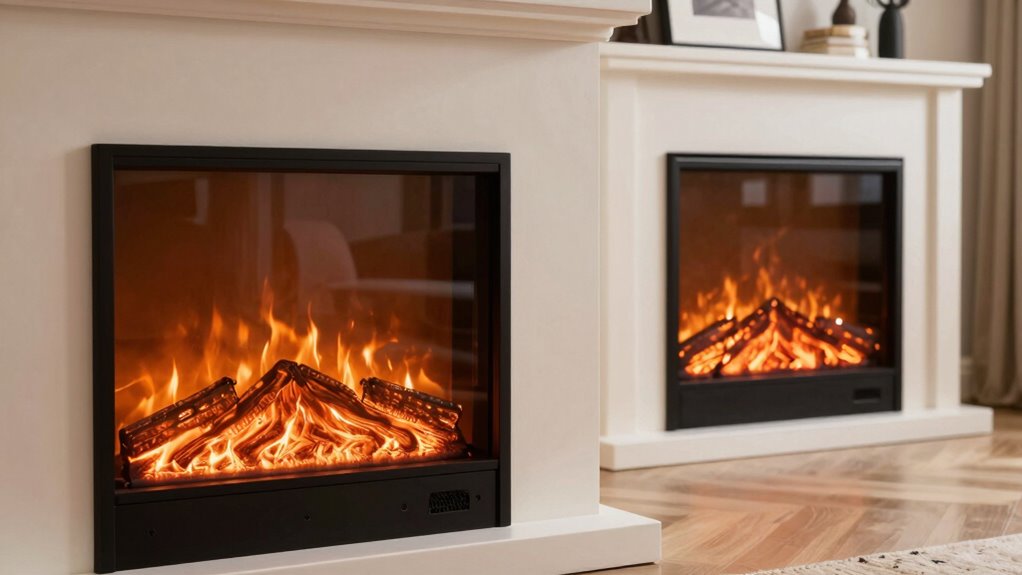
Ever wonder what sets front vent and top vent electric fireplaces apart? Well, understanding their differences can help you choose the right one for your home. One of the first things to weigh is energy efficiency. Both types are designed to mimic real fireplaces without the need for wood or gas, which means they use electricity efficiently. However, the way they distribute heat can impact overall efficiency. Front vent models often feature larger blowers or fans that push warm air directly into the room, making them effective at heating sizable spaces quickly. Top vent fireplaces, on the other hand, usually rely on natural convection or smaller fans, which might make them slightly less efficient for heating large areas but still energy-smart alternatives for supplemental warmth.
When it comes to installation options, there’s a notable difference. Front vent electric fireplaces typically require more space and a dedicated venting system—usually a vent that runs to the front of the unit and out through a wall or fireplace opening. This setup can be more complex because it involves modifying walls or existing structures, but it also allows for a more authentic fireplace look, with a realistic flame display visible from the front. Because of their venting requirements, front vent models tend to be better suited for new construction or major remodels where you can plan the installation carefully.
Top vent electric fireplaces, by contrast, are more flexible in terms of installation. They can often fit into smaller spaces or existing setups without extensive modifications. Many top vent units are designed to be recessed into a wall or mounted on it, with the vent pipe running upward through the top or behind the unit. This makes them a great choice if you’re looking to add a fireplace feature without sacrificing too much space or needing a complicated installation process. They’re also easier to incorporate into existing structures, which can save you time and money during installation.

Tehanld 60" Ultra-Thin Electric Fireplace Heater, Recessed Wall Mounted
【𝑷𝒓𝒆𝒄𝒊𝒔𝒆 𝑫𝒊𝒈𝒊𝒕𝒂𝒍 𝑻𝒉𝒆𝒓𝒎𝒐𝒔𝒕𝒂𝒕 & 3 𝑭𝒂𝒔𝒕 𝑯𝒆𝒂𝒕𝒊𝒏𝒈 𝑴𝒐𝒅𝒆𝒔】Tehanld 2026 upgraded 60 inch electric fireplace heater is engineered for…
As an affiliate, we earn on qualifying purchases.
As an affiliate, we earn on qualifying purchases.
Frequently Asked Questions
Are Front Vent Fireplaces Suitable for Wall Mounting?
Yes, front vent fireplaces are suitable for wall mounting because their design compatibility allows for easy installation on vertical surfaces. You should consider aesthetic considerations, as front vent units often provide a sleek, modern look that enhances your wall’s appearance. Make sure your wall can support the weight and that the venting system aligns with your home’s layout for best safety and efficiency.
Can Top Vent Fireplaces Be Installed Without a Chimney?
Yes, top vent fireplaces can be installed without a chimney because they typically vent directly through the roof or wall, following venting regulations. You don’t need a traditional chimney, but you must consider venting requirements to guarantee proper airflow and safety. Always check local building codes and manufacturer guidelines on chimney requirements and venting regulations to ensure a safe, efficient installation.
Which Vent Type Is More Energy-Efficient?
Think of vent efficiency like a well-tuned engine—some run smoother and use less fuel. Generally, front vent fireplaces tend to be more energy-efficient than top vent models because they direct heat more effectively into your room. This leads to better energy savings, keeping your space warmer without wasting power. By choosing a front vent, you maximize heat transfer, making your electric fireplace work smarter, not harder.
Do Vent Types Affect the Fireplace’s Heat Output?
Vents do influence your fireplace’s heat output through vent installation choices, which affect heat distribution. Front vent fireplaces direct warm air into the room more efficiently, providing better heat output. Top vent models may have slightly less direct heat but still effectively distribute warmth. Your choice impacts how well heat circulates, so consider your room layout and ventilation needs to optimize both comfort and energy use.
Are There Differences in Maintenance Needs Between Vent Styles?
Yes, there are differences in maintenance needs between vent styles. Front vent fireplaces typically require more frequent vent cleaning due to easier access, while top vent units might need less frequent maintenance but can be harder to reach. You should consider maintenance frequency for each style and regularly inspect vents to prevent buildup and guarantee efficient operation. Proper upkeep keeps your fireplace functioning safely and prolongs its lifespan.
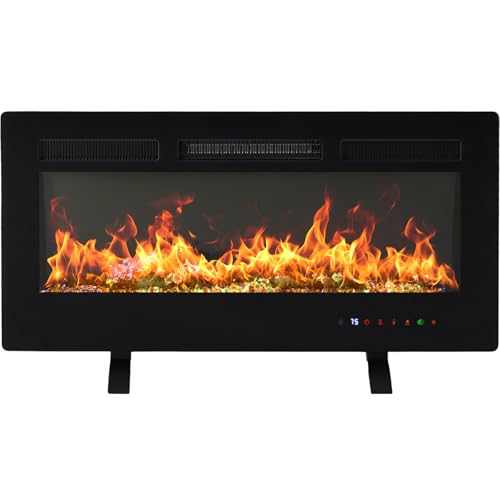
DUMOS 36 Inch Electric Fireplace Wall Mounted/Recessed/Free Standing Space Heater with Remote Control Adjustable Flame Colors Touch Screen Energy Saving, Black
Safety First: Our electric fireplace is equipped with an overheat protection system. The heater will automatically shut off…
As an affiliate, we earn on qualifying purchases.
As an affiliate, we earn on qualifying purchases.
Conclusion
So, whether you prefer the drama of a front vent or the sleekness of a top vent, remember — the real heat comes from your choice, not just the vent style. Irony’s on your side: you get to pick a fireplace that suits your style, yet it might just be the vent that steals the show. Either way, you’re cozy, stylish, and secretly winning the battle of vents. Who knew fire could be so cleverly vented?
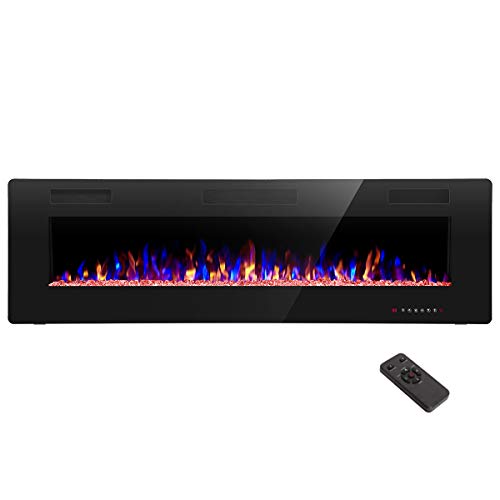
R.W.FLAME 60" Recessed and Wall Mounted Electric Fireplace, Low Noise, Fit for 2 x 6 Stud, Remote Control with Timer, Touch Screen, Adjustable Flame Color and Speed, 750-1500W
Attractive and Practical Design: 3.86"D x 60"W x 18.11"H,The thickness of the new style is only 3.86 inches…
As an affiliate, we earn on qualifying purchases.
As an affiliate, we earn on qualifying purchases.
R.W.FLAME 60" Recessed and Wall Mounted Electric Fireplace, Low Noise, Fit for 2 x 6 Stud, Remote Control with Timer, Touch Screen, Adjustable Flame Color and Speed, 750-1500W
Attractive and Practical Design: 3.86"D x 60"W x 18.11"H,The thickness of the new style is only 3.86 inches…
As an affiliate, we earn on qualifying purchases.
As an affiliate, we earn on qualifying purchases.