
TL;DR

Get home appliances delivered free with Prime
- Fast, free delivery on millions of items
- Prime Video, Amazon Music and more included
- Member-only deals all year
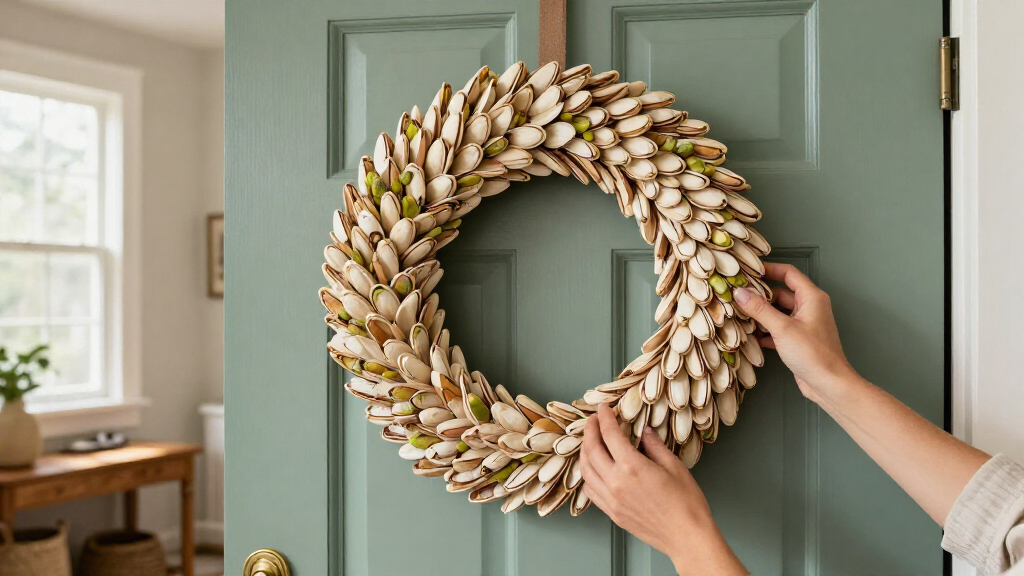
A Hunker report outlines a DIY wreath made by layering painted pistachio shells into flower shapes and attaching them to a wreath base. The shells can be saved from food waste, but the project requires careful gluing, drying time and craft materials; its durability outdoors is not independently tested in the source.
Hunker has published instructions for making a flower-style front-door wreath from cleaned pistachio shells, paint and a wreath form, offering a reuse-focused alternative to buying fresh or manufactured decorations. The project involves gluing shells in overlapping layers to create blooms, then attaching those flowers to a base made from cardboard, a pool noodle or an existing wreath.
The shells need to be rinsed in hot water to remove residue and dried before painting, according to Hunker. Makers can paint all the shells one color or divide them into groups for a multicolor design; the report advises coating both sides. The article says to allow time for the shells and paint to dry, though it does not specify drying times or how many shells a wreath will require.
For a cardboard base, Hunker suggests cutting a ring from a reused shoe or shipping box. It gives 24 inches in diameter as an example for a standard 36-inch-wide door. Another option is to join the ends of a pool noodle with duct tape and cover the form with twine or ribbon. The materials list also includes an adhesive, a craft knife, and spray paint.
To make each bloom, the instructions call for gluing three or four shells upright in the center of a small cardboard circle, then adding more shells in outward-facing layers. Once the flowers are assembled and the adhesive has set, they can be attached to the wreath base. A ribbon can be tied on for hanging; Hunker recommends placing the wreath so it sits 14 inches below the top of the door.
A Reuse-Based Alternative to Store-Bought Wreaths
The project turns a food byproduct that might otherwise be discarded into a decorative material, while letting makers choose the wreath’s color, flower arrangement and hanging trim. Reusing a box or an old wreath form can also reduce the number of new materials needed, although the project still calls for paint and glue.
Hunker describes the finished shell flowers as suitable for repeated seasonal use, contrasting them with fresh flowers that can wilt in sun and rain. That durability is the article’s claim, not a result of a reported outdoor test. Weather exposure, the type of adhesive and the wreath’s construction could affect how long it lasts, so readers should not treat it as a guaranteed all-weather decoration.
Products Worth Considering

TCL 65-Inch T7 Series 4K QLED Smart Google TV, 144Hz (65T7)

Philips Hue White and Color Ambiance Smart Light Starter Kit, 2 A19 Bulbs with Hub

Philips Hue Secure Starter Kit with Contact Sensors, Motion Sensor, Bridge, and Color Smart Bulbs
As an affiliate, we earn on qualifying purchases.
From Kitchen Scraps to Flower Shapes
The instructions are presented as a do-it-yourself decorating idea, rather than a report of a new commercial product or a tested craft standard. Its central technique is to arrange shells like petals, building each flower from the center out and fixing the blooms to a circular form.
The report suggests changing paint colors for spring or fall and swapping twine for ribbon to suit a season or occasion. It also allows for materials already at home: cardboard can serve as the base, while a stored wreath can be refreshed instead of replaced. Hunker cautions that the small-scale assembly takes time, particularly when making several flowers.
““All you have to do is glue the shells onto a wreath base in overlapping layers, and paint or tint them a little to turn them into gorgeous real-looking blooms.””
— Hunker
Outdoor Wear and Project Costs
The source does not give a total project cost, a shell count, a specific adhesive brand or a measured estimate of how long construction takes. It also does not report testing the wreath under rain, direct sun or temperature changes. Although Hunker says the blooms can hold up season after season, the expected outdoor lifespan is not established by the instructions.
Other practical details are left to the maker, including the amount of paint needed, the best way to protect the cardboard base from moisture and whether a particular adhesive is suitable for the intended location. The article does not describe a finished wreath’s weight or give instructions for adapting the hanging method to different doors.
Choose Materials Before Assembly
Readers following the project can start by collecting and cleaning enough shells, then choosing a base and color scheme. Shells should be fully dry before painting, and paint and adhesive should be allowed to set according to their product directions before the flowers are attached or the wreath is hung.
The source provides no scheduled follow-up or product testing. Anyone making the wreath will need to decide whether to display it indoors or outdoors and check the finished decoration periodically for loose shells or a weakened hanging point.
Key Questions
What materials does the pistachio shell wreath require?
Hunker lists pistachio shells, a wreath base, adhesive, a craft knife, twine or ribbon, and spray paint. The base can be cardboard, a pool noodle or an old wreath. The source does not specify quantities.
How are the shell flowers assembled?
Glue three or four shells upright near the center of a small cardboard circle, then add shells in overlapping layers moving outward. Attach the completed flowers to the wreath form after the adhesive sets.
What size wreath base does Hunker suggest?
For a standard 36-inch-wide door, Hunker gives a 24-inch-diameter wreath as an example. It does not say that this size is required for other doors.
Can the wreath stay outside in all weather?
The report says the shell blooms can hold up season after season, but it provides no weather testing or lifespan data. Outdoor performance may depend on the base, paint, adhesive and exposure to moisture and sun.
Source: hunker.com