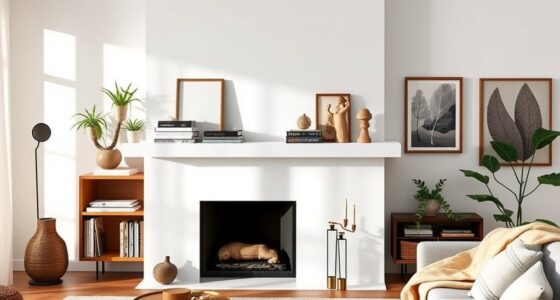
To confidently design a feature wall, start by choosing a color scheme that sets the mood—calm neutrals or bold hues—while ensuring it complements your room. Decide on materials like textured wallpaper, wood, or stone that match your style, budget, and maintenance needs. Carefully plan the wall’s size and placement to create a focal point without overwhelming the space. With these basics in mind, you’ll be ready to craft a stunning centerpiece that elevates your entire room—more details await as you continue.
Key Takeaways
- Define the room’s mood and choose a color scheme that complements existing decor.
- Select suitable materials and textures based on style, durability, and maintenance needs.
- Measure the wall accurately and visualize lighting effects before finalizing design choices.
- Gather samples or mood boards to ensure cohesion and proportion within the space.
- Create a balanced focal point by integrating color, material, and placement for visual harmony.
Designing Your Perfect Feature Wall

Have you ever wondered how a single wall can transform the entire look of a room? It’s incredible how one well-designed feature wall can redefine your space, making it feel more vibrant, cozy, or sophisticated. To get there, you need to carefully contemplate your choices, starting with color schemes and material options. These elements set the tone and mood, so think about what atmosphere you want to create. If you prefer a calming vibe, soft neutrals or pastel shades work well. For a bold statement, go for vibrant hues like navy, emerald, or even black. Remember, the color scheme should complement the rest of your room’s decor and furniture. Take a moment to envision how different shades will look during different times of the day, and deliberate how natural or artificial light affects the space. This initial step helps you narrow down your options and avoid choices that might clash or feel out of place. Additionally, considering the influence of sound healing frequencies can inspire creative ideas for incorporating calming or energizing elements into your design, promoting a more balanced environment.
Next, explore material options for your feature wall. Your choices can range from paint to textured wallpaper, wood paneling, stone veneer, or even fabric. Each material brings its own personality and texture, so think about the tactile experience you want and the level of maintenance involved. Paint is the simplest and most versatile option, allowing for easy updates or changes down the line. Wallpaper, especially textured or patterned designs, adds visual interest and depth but may require more effort to install and remove. Wood paneling can lend warmth and a natural touch, perfect for creating a cozy atmosphere, while stone veneer offers an earthy, rustic aesthetic for a dramatic impact. Fabric wall coverings or tapestries can add softness and a touch of luxury. Whatever material you choose, make certain it aligns with the overall style of your space and your personal preferences. It’s also wise to ponder durability and ease of cleaning, especially in high-traffic or humid areas.
Once you’ve nailed down your color scheme and material options, think about the placement and size of your feature wall. It should complement the room without overwhelming it. Measure carefully, visualize the effect, and don’t hesitate to gather samples or mood boards before making a final decision. The goal is to create a focal point that enhances your room’s character, making you feel proud of your design choices. With thoughtful planning and a clear vision, you’ll turn that single wall into a stunning centerpiece that elevates your entire space.
Frequently Asked Questions
What Are the Best Colors for a Feature Wall?
You should choose bold colors like navy, emerald, or deep red for your feature wall, as they evoke strong emotions through color psychology. Consider paint finishes like matte or satin to add texture and depth. These choices will make your wall stand out and create a focal point. Opt for colors that complement your overall room palette to guarantee harmony while still making a statement.
How Do I Choose the Right Wall for My Feature?
You stumble upon the perfect wall when it naturally draws your eye, aligning with your space criteria and wall surface. Consider a large, empty wall that’s visible from multiple angles, ensuring it’s free of clutter. Think about the wall’s texture—smooth surfaces work best for bold colors or art, while textured walls can add depth. Trust your instincts to pick a wall that enhances your room’s overall vibe effortlessly.
What Tools Are Essential for Installing a Feature Wall?
You’ll need essential tools like a level, tape measure, utility knife, and a cordless drill for your DIY feature wall. Don’t forget a stud finder to guarantee secure mounting. Keep budget considerations in mind by opting for versatile, quality tools that last. These DIY tips help you work efficiently and safely, making the installation smoother and more cost-effective. Proper tools boost your confidence and ensure a professional-looking result.
How Can I Make a Feature Wall Look More Modern?
To make your feature wall look more modern, start by choosing sleek texture options like smooth paint, metal panels, or geometric tiles. Incorporate contemporary lighting techniques such as wall sconces, LED strips, or spotlights to highlight the textures and create depth. Keep the color palette minimal and bold, and avoid clutter. These elements combine to give your feature wall a fresh, stylish, and modern vibe.
What Are Common Mistakes to Avoid When Designing a Feature Wall?
Ever wondered what could go wrong with your feature wall? You should avoid selecting the wrong paint finish or ignoring wall texture, which can make your design look flat or mismatched. Don’t rush the prep work—imperfections can stand out. Keep your color choices cohesive, and steer clear of overly busy patterns. Do you really want a wall that distracts rather than enhances? Pay attention to details for a flawless finish.
Conclusion
Think of your feature wall as the canvas of your home’s story. Just like a skilled artist, you’ve chosen the colors, textures, and details that reflect your personality. With your checklist in hand, you’re now ready to bring this masterpiece to life. Trust your instincts, embrace your creativity, and remember—every brushstroke adds character. Before long, your space will stand as a vibrant chapter, a proof to your vision and confidence.