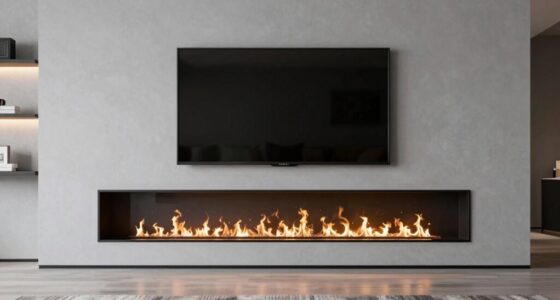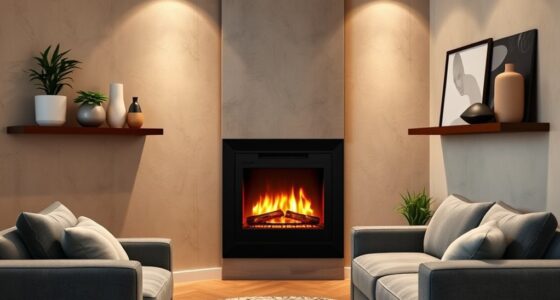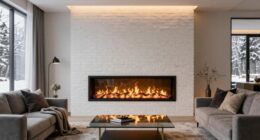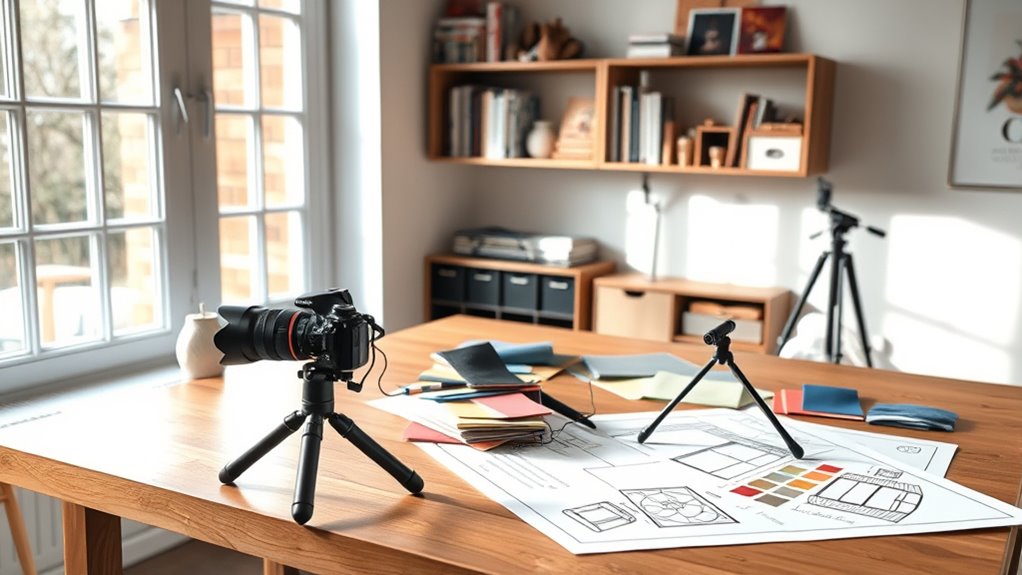

Before you start designing your feature wall, take time to assess your existing decor, including colors, furniture styles, and textures. Measure the wall carefully and gather samples to visualize how different finishes or patterns will work. Set a budget and timeline to stay on track. Make sure your design complements your room’s overall style and feels balanced with your current decor. Keep exploring tips to master every step of this creative process.
Key Takeaways
- Assess existing decor elements and decide if the feature wall should harmonize or contrast with current colors and textures.
- Measure wall dimensions accurately and gather samples to visualize how new finishes will integrate with your room’s style.
- Identify your room’s overall color scheme and furniture style to select a feature wall design that complements or enhances the space.
- Set a realistic budget and timeline, considering costs for materials like paint, wallpaper, or textures, and plan installation accordingly.
- Finalize the design by creating a mood board and testing samples to ensure color harmony and style consistency before installation.
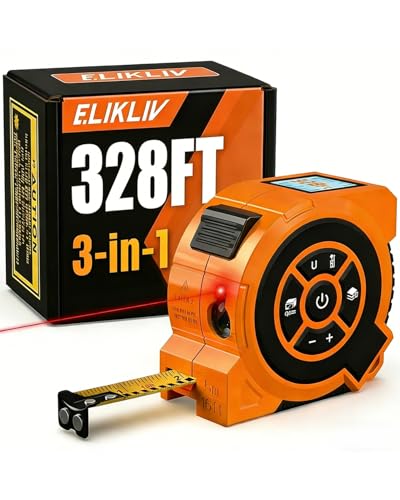
328Ft 3-in-1 Digital Laser Tape Measure Rechargeable Measuring Tool &16Ft Auto-Lock Tape Measure Movable Magnetic Hook with Area/Volume/Pythagorean, Ft/in/M/Ft+in for Construction;Woodworking;Home DIY
Ultimate 3-in-1 Tape Measure: Switch between 16.4ft digital tape for real-time tracking, 328ft laser tape measure for long-range…
As an affiliate, we earn on qualifying purchases.
As an affiliate, we earn on qualifying purchases.
Planning Your Feature Wall: Essential Design Checklist
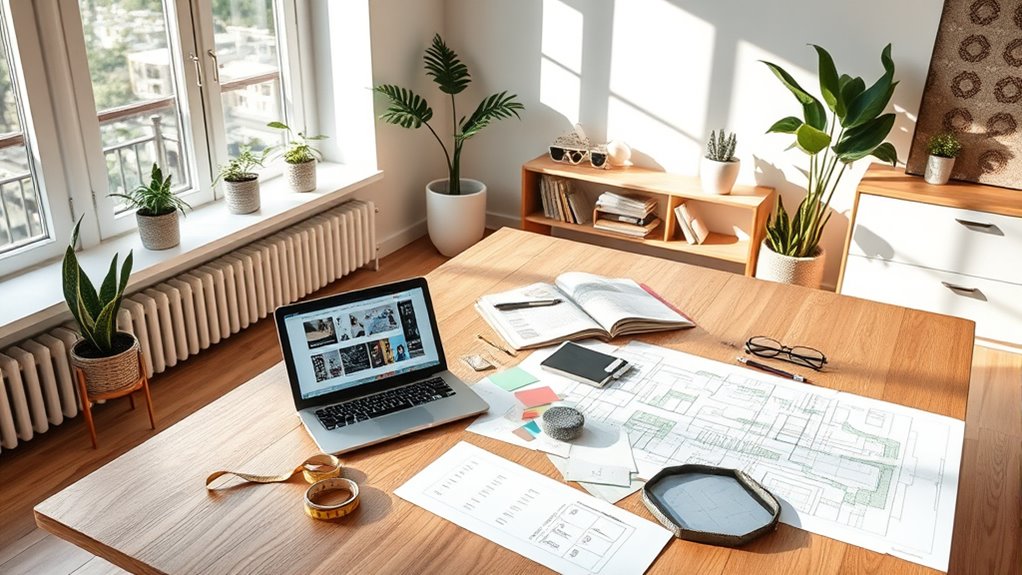
Creating a feature wall can transform a room and showcase your personal style, but proper planning is vital to achieve the desired impact. Before diving into paint, wallpaper, or other design elements, you need a clear plan that considers how the feature wall will complement the rest of your space. Start by evaluating the room’s existing color schemes. Think about the hues already present in your furniture, rugs, curtains, and decor. You want your feature wall to either harmonize with these elements or create a striking contrast that draws attention without clashing. If your room has a neutral palette, you have more flexibility to experiment with bold colors or textured finishes. Conversely, if your space already features vibrant tones, opt for a more subtle feature wall to balance the look.
Plan your feature wall carefully to enhance your room’s existing color schemes and furniture accents.
Next, consider how your furniture accents will influence your choice. Your furniture isn’t just functional; it plays an essential role in defining the overall aesthetic. For instance, if you have sleek, modern furniture, a minimalist wall with a subtle texture or a single bold color might work best. If your furniture has intricate details or vintage charm, a wallpaper with patterns or a textured surface can enhance that style. The key is to select a feature wall that complements your furniture accents and amplifies your room’s personality. Think about how your furniture’s materials—wood, metal, fabric—will interact with your wall choices. This will help you decide whether to go for a matte, glossy, textured, or patterned finish.
As you plan, don’t forget to measure your wall carefully. Knowing the exact dimensions will prevent surprises and help you estimate how much paint, wallpaper, or other materials you’ll need. It’s also wise to create a mood board or gather samples of paint colors, wallpapers, or finishes you’re considering. This visual aid helps you see how different options work with your existing decor and color schemes. During this process, pay attention to lighting, as natural and artificial light can alter the appearance of your chosen colors and textures. Additionally, understanding the importance of soil conditions can influence your choice of wall finishes or materials, especially in outdoor or challenging environments.
Finally, set a realistic budget and timeline. Decide whether you want a quick refresh or a more elaborate design, and select materials that fit within your means. Remember, planning thoroughly before starting saves you from costly mistakes and guarantees your feature wall becomes a true reflection of your style, seamlessly integrated with your room’s color schemes and furniture accents.

QDYMXUN Brushed Gold Peel and Stick Wallpaper Border, PVC Self Adhesive Removable Contact Paper, Waterproof Mirror Frame Sticker for Bathroom, Kitchen and DIY Decor (394''L x 1.97''W)
Plenty of choices: We offer a variety of sizes, Length 9.8ft/32.8ft , width 1.97/3.94/7.88/15.75/23.63/31.5 in. Meet the decorative…
As an affiliate, we earn on qualifying purchases.
As an affiliate, we earn on qualifying purchases.
Frequently Asked Questions
How Do I Choose the Best Wall for My Feature Wall?
To select the best wall for your feature wall, consider a wall with a bold wall color that complements your room’s overall palette. Also, choose a wall with interesting wall texture, like brick or textured paint, to add visual interest. Avoid walls with heavy furniture or clutter, and pick a space that naturally draws attention. This ensures your feature wall becomes a stunning focal point in your room.
What Are Budget-Friendly Materials for a Feature Wall?
You can create a stunning feature wall on a budget by using DIY tips like painting with bold color schemes or adding removable wallpaper. Consider using inexpensive materials like reclaimed wood, stencils, or washi tape for patterns. These options let you experiment with color schemes without overspending. With a little creativity, you’ll achieve a stylish, personalized look that transforms your space without breaking the bank.
How Can I Incorporate My Personal Style Into the Design?
Your personal style is your secret weapon to make your feature wall truly unique. Mix bold colors, patterns, or textures that reflect who you are—don’t hold back! Use design elements like artwork, photos, or quirky decor to express your personality. Remember, your space should scream *you*, turning your feature wall into a powerful statement of your design expression and making your home feel irresistibly authentic and vibrant.
What Lighting Options Enhance a Feature Wall?
You can enhance your feature wall with various lighting fixtures like wall sconces, picture lights, or adjustable spotlights. These fixtures add focused illumination, highlighting your wall’s design. Incorporate ambient lighting such as LED strip lights or soft ceiling lights to create a warm, inviting glow. Combining these lighting options helps emphasize your personal style and makes your feature wall a mesmerizing focal point in your space.
How Do I Maintain and Clean My Feature Wall?
To maintain and clean your feature wall, regularly dust it with a soft cloth or vacuum with a brush attachment. For cleaning tips, use a mild detergent mixed with water for painted or wallpapered walls, and avoid harsh chemicals. Always test a small area first. Keep up with wall maintenance by inspecting for damage or stains, addressing issues promptly to keep your feature wall looking fresh and vibrant.
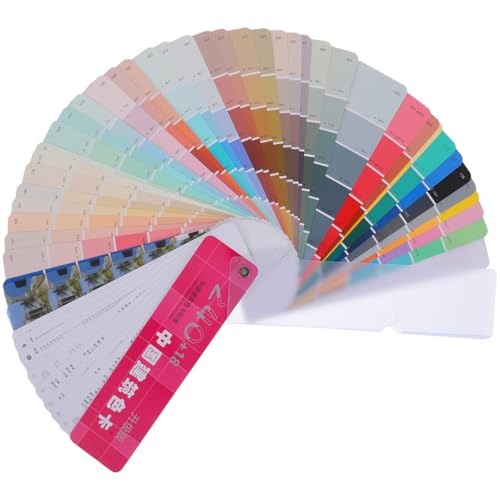
Gadpiparty Paint Standard Sample Card 258 Colors Paint Sample Cards Bulk Chips s for ing Projects
Extensive Color Variety: Our paint sample cards offers a wide range of different colors, providing a comprehensive palette…
As an affiliate, we earn on qualifying purchases.
As an affiliate, we earn on qualifying purchases.
Conclusion
So, after all that planning, don’t forget to relax and enjoy your new feature wall. It’s funny how all the careful measurements and color choices seem so essential—until you realize it’s just a wall, not a masterpiece. Sometimes, the best designs come from a little imperfection and a lot of confidence. So, trust your instincts, embrace the quirks, and remember: perfection is overrated when it comes to creating a space you love.

YLTOLOO 12 Pcs Textured Paint Roller Covers with 2 Frames Set, 4 inch 3 Textures Foam Drywall Texture Paint Rollers, House Paint Roller Covers for Art Painting Walls Ceilings
【ABOUT PACKAGE】Package Include 12 rollers 3 size 4 inch textured painting roller covers and 2 roller frames, enough…
As an affiliate, we earn on qualifying purchases.
As an affiliate, we earn on qualifying purchases.