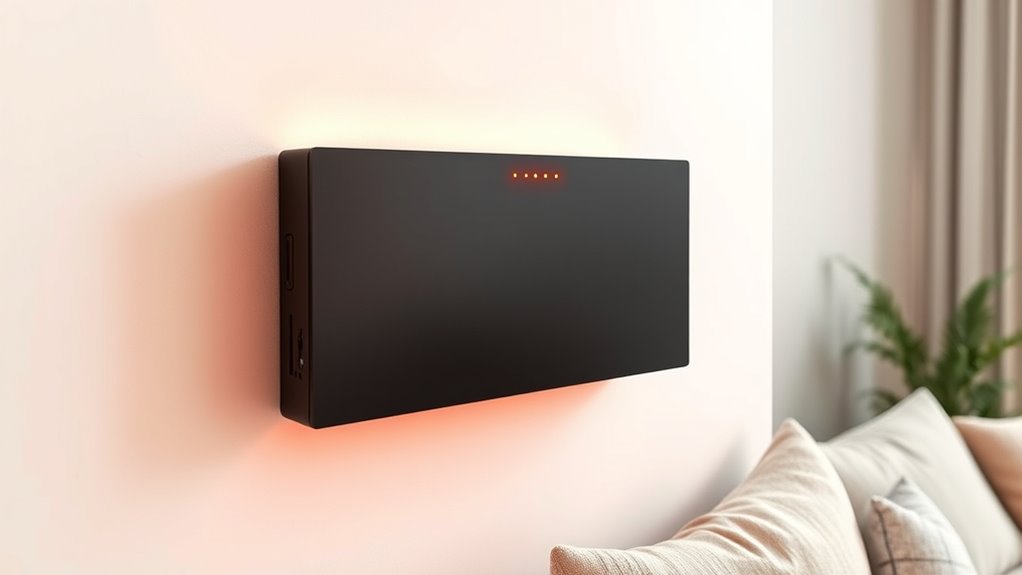

If you’re looking for the most energy-efficient electric heater types, infrared panels are a top choice. They directly heat objects and people instead of the air, using less energy and providing instant warmth. Combining these with solar power boosts sustainability and cuts costs further. Smart thermostats and proper insulation can enhance efficiency too. To discover more innovative solutions and how to optimize your heating system, keep exploring options that maximize energy savings.
Key Takeaways
- Infrared panel heaters directly heat objects and people, reducing energy waste compared to traditional convection heaters.
- Solar-powered electric heaters, especially when combined with photovoltaic panels, maximize renewable energy use for efficiency.
- Heat pumps are highly energy-efficient electric heating options, transferring heat rather than generating it directly.
- Ceramic and oil-filled electric radiators provide consistent warmth with moderate energy consumption, suitable for specific spaces.
- Smart thermostats and zoning controls optimize heater operation, minimizing energy use while maintaining comfort.
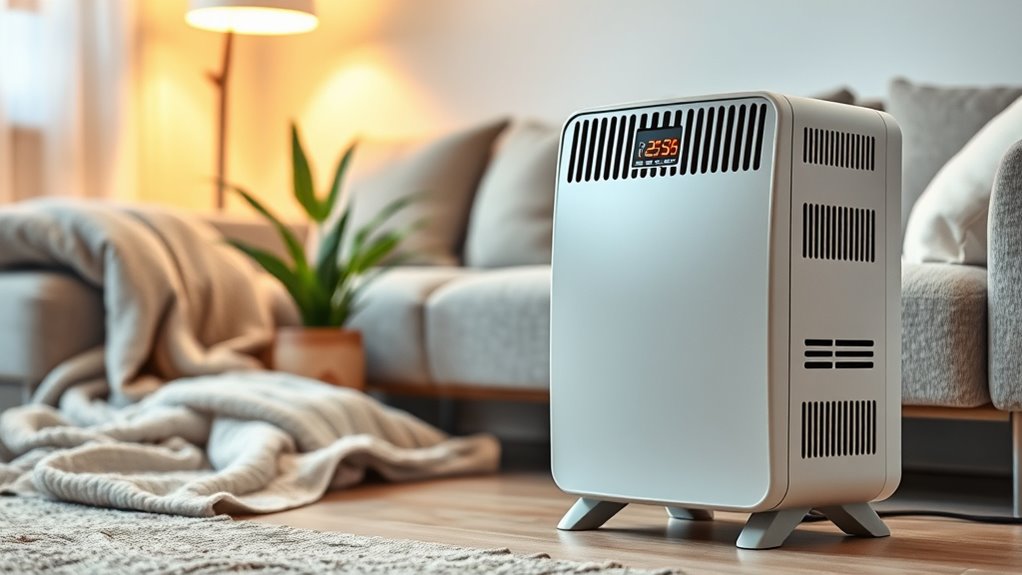
When choosing an electric heater, prioritizing energy efficiency can save you money and reduce your carbon footprint. One of the most innovative options to contemplate is solar heating, which harnesses the sun’s energy to warm your space. Solar heating systems use solar panels to generate electricity or directly convert sunlight into heat, making them an eco-friendly choice. Although they may require an upfront investment, they considerably lower ongoing energy costs and diminish reliance on traditional power grids. If you have the space and sunlight, integrating solar heating into your home can be a long-term, sustainable solution that decreases your energy bills and carbon emissions. Embracing renewable energy sources like solar power is key to maximizing the environmental benefits of energy-efficient heating options. Another highly efficient option are infrared panels, which directly heat objects and people rather than the air. This targeted heating method means less energy is wasted, making infrared panels a smart choice for energy-conscious households. When you turn on infrared panels, they emit radiant heat that penetrates surfaces and warms you directly, much like the warmth of the sun. Because they operate at lower wattages compared to traditional convection heaters, they consume less electricity while providing sufficient warmth. Infrared panels are also quick to heat up, so you get instant comfort without wasting energy on heating unused spaces. Their slim design allows for easy installation on walls or ceilings, making them suitable for various room layouts and saving space. Additionally, infrared panels tend to have a longer lifespan and require minimal maintenance, which further enhances their cost-effectiveness over time. When combined with smart thermostats, you can optimize their operation, ensuring they only run when needed and avoiding unnecessary energy consumption. For those looking to maximize efficiency, pairing infrared panels with renewable energy sources like solar power can create a highly sustainable heating system. This combination leverages free, renewable sunlight to power your infrared panels, reducing your reliance on grid electricity and lowering your overall energy costs. In essence, choosing energy-efficient electric heating options like solar heating and infrared panels not only cuts your energy bills but also helps protect the environment. Solar heating taps into the sun’s abundant energy, providing a clean and sustainable source of warmth, while infrared panels deliver targeted heating with minimal waste. By making these smart choices, you can enjoy comfort while making a positive impact on your household’s energy footprint. Both options exemplify modern, efficient heating solutions that align with eco-conscious living and cost-saving goals.
Frequently Asked Questions
How Do Electric Heaters Compare to Traditional Heating Systems?
Electric heaters are often more cost-effective and easier to install than traditional systems, especially for small spaces. You’ll find they have lower upfront costs and don’t require extensive installation. While traditional systems like furnaces may be better for whole-house heating, electric heaters offer quick warmth and energy efficiency, reducing your overall energy bills. Consider your space and needs when comparing costs and installation considerations to choose the best option.
Are There Safety Concerns With Specific Electric Heater Types?
You should know that heater safety is vital when choosing an electric heater, as certain types can pose electric heater hazards like electrical fires or burns if not used properly. For example, space heaters with exposed elements or poor insulation increase risks. Always follow manufacturer instructions, keep heaters away from flammable materials, and guarantee they have safety features like tip-over and overheat protection to minimize electric heater hazards.
What Maintenance Is Required for Energy-Efficient Electric Heaters?
You should regularly clean the filter to guarantee efficient operation and prevent dust buildup. Check and replace or clean filters as recommended by the manufacturer. Additionally, calibrate the thermostat periodically to maintain accurate temperature control. Keep the heater free of dust and debris, and inspect wiring for signs of wear. Proper maintenance keeps your energy-efficient electric heater running smoothly, saving you money and extending its lifespan.
Can Electric Heaters Be Used in Outdoor Environments?
Yes, you can use electric heaters for outdoor heating, but make certain they’re weather-resistant. Look for models specifically designed for outdoor use, with features like sealed enclosures and weather resistance. These heaters can withstand rain, snow, and wind, keeping you warm and safe. Always follow manufacturer instructions for proper installation and maintenance to guarantee peak performance and longevity in outdoor environments.
How Do Electric Heaters Impact Overall Energy Bills?
Electric heaters can impact your overall energy bills substantially, but choosing energy-efficient models helps maximize cost savings. They use less energy compared to traditional heating systems, reducing your environmental impact. By properly using and maintaining your heater, you can lower energy consumption, save money, and contribute to a greener environment. Keep an eye on usage and settings to guarantee you’re optimizing efficiency, making your heating more affordable and eco-friendly.
Conclusion
Choosing the most energy-efficient electric heater can save you money and reduce your carbon footprint. For example, if you live in a small apartment, a ceramic heater might be your best bet because it heats quickly and uses less energy. Imagine turning on your heater in the morning and feeling warm instantly without wasting power—it’s a simple switch that makes a big difference. By selecting the right heater, you’ll stay cozy while keeping energy bills low.