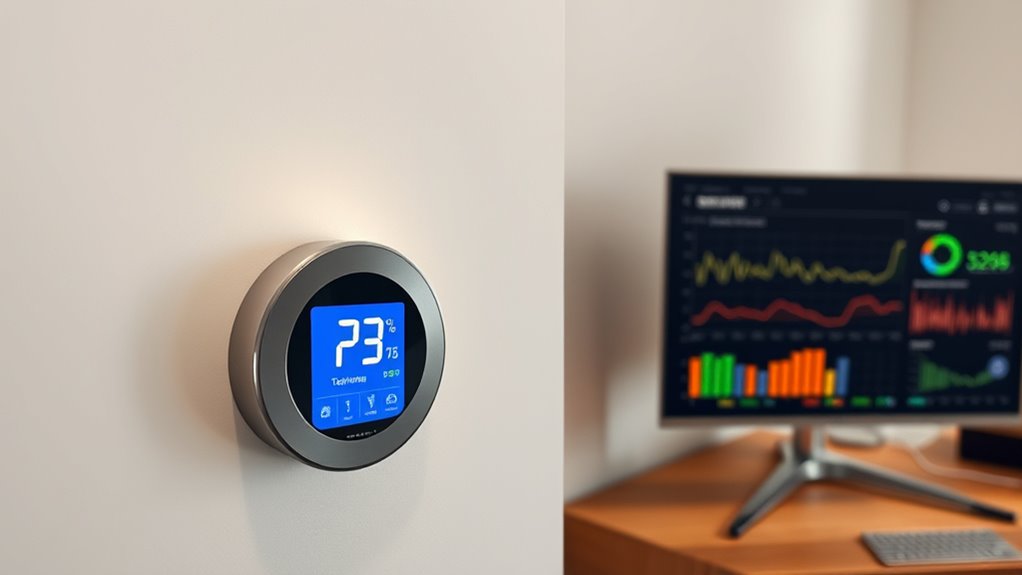

Adjusting your thermostat settings can substantially impact your energy consumption and bills. Raising the temperature by a few degrees in summer or lowering it in winter can save around 3% on energy costs per degree. Using programmable or smart thermostats helps automate these adjustments and manage humidity, which also affects efficiency. Maintaining consistent, ideal settings prevents waste and system strain. Keep exploring to discover how fine-tuning your thermostat and humidity controls can maximize savings even further.

Get home appliances delivered free with Prime
- Fast, free delivery on millions of items
- Prime Video, Amazon Music and more included
- Member-only deals all year
Key Takeaways
- Proper thermostat settings, like 78°F when active, can reduce energy use by around 3% per degree changed.
- Consistent, optimized temperature and humidity management prevent unnecessary HVAC operation and energy waste.
- Programmable thermostats automate temperature adjustments, avoiding constant system operation and saving energy.
- Small, strategic adjustments in thermostat settings are more effective than drastic changes for reducing energy consumption.
- Advanced thermostats with smart features enhance control over climate, further lowering energy bills through personalized scheduling.

Have you ever wondered how your thermostat settings impact your energy bills? The way you manage your thermostat can make a significant difference in your monthly expenses, and understanding the role of humidity control and programmable thermostats can help you save more. When you set your thermostat, you’re not just controlling the temperature; you’re also influencing humidity levels and overall comfort. Proper humidity control prevents the air from becoming too dry or too moist, which can cause your HVAC system to work harder and increase energy use. Maintaining suitable humidity levels—usually between 30% and 50%—keeps your home comfortable and reduces strain on your system, leading to lower energy bills.
Programmable thermostats are game-changers when it comes to optimizing your energy consumption. They allow you to set different temperatures for various times of the day and week, so you’re not wasting energy when you’re asleep or away. For example, you can program your thermostat to lower the temperature during the night and when you’re at work, then automatically raise it before you wake up or return home. This automation helps you avoid the common mistake of leaving your HVAC system running at a constant setting, which can lead to unnecessary energy waste.
Using a programmable thermostat also enables you to better manage humidity control. Many models include features that help monitor and adjust humidity levels along with temperature, ensuring your home remains comfortable without overworking your system. This integrated approach prevents both temperature and moisture from reaching uncomfortable or inefficient levels, reducing energy consumption and prolonging the life of your HVAC equipment.
Furthermore, adjusting your thermostat by just a few degrees can lead to noticeable savings. Experts recommend setting your thermostat to 78°F (25-26°C) when you’re home and active, and increasing it slightly when you’re away or sleeping. When cooling or heating, every degree you raise or lower can save you around 3% on your energy bill. The key is consistency and making small, smart adjustments rather than drastic changes that your system will have to work harder to compensate for.
In addition, many modern programmable thermostats come with smart features, such as learning your schedule and preferences, and providing remote control via smartphone apps. These capabilities offer even greater control and efficiency, making it easier to fine-tune your home’s climate while keeping costs down. Ultimately, by paying attention to your thermostat settings, utilizing programmable thermostats, and managing humidity levels, you take control of your energy use, reduce waste, and save money—all while maintaining a comfortable home environment.
programmable thermostat with humidity control
As an affiliate, we earn on qualifying purchases.
As an affiliate, we earn on qualifying purchases.
Frequently Asked Questions
How Do Different Thermostat Brands Compare in Energy Efficiency?
You’ll find that brand comparison reveals some thermostats are more energy-efficient than others. Brands like Nest and Ecobee often lead in energy efficiency, thanks to smart features that optimize heating and cooling. When choosing, consider models with learning capabilities and advanced scheduling, which help reduce energy use. Ultimately, your best pick depends on your home’s needs and how well the brand’s features align with your energy-saving goals.
Can Smart Thermostats Significantly Reduce Energy Bills?
Yes, smart thermostats can substantially reduce your energy bills. Their smart thermostat features, like learning your schedule and adjusting temperatures automatically, help optimize energy use. To maximize savings, you should follow energy-saving tips such as setting your thermostat lower during winter or higher during summer, and using zoning controls. These features and tips work together to lower your energy consumption while keeping your home comfortable.
What Is the Ideal Temperature Range for Energy Savings?
You should aim for an ideal temperature range of 68-72°F for energy savings. Maintaining this range helps with humidity control and reduces strain on your HVAC system. Use ventilation strategies like exhaust fans and proper airflow to enhance comfort without increasing energy use. Adjust your thermostat when you’re away or asleep, and consider smart thermostats to optimize temperature settings, further saving on energy bills while keeping your home comfortable.
How Does Insulation Affect Thermostat Efficiency?
Insulation considerably impacts your thermostat efficiency by improving temperature regulation, keeping your home warmer in winter and cooler in summer. When your insulation is effective, it reduces heat transfer, so your thermostat doesn’t have to work as hard to maintain desired temperatures. This means less energy consumption and lower utility bills. Proper insulation creates a barrier that enhances your thermostat’s performance, making your home more energy-efficient and comfortable year-round.
Are There Regional Climate Considerations for Thermostat Settings?
Did you know that adjusting your thermostat by just 1 degree can save about 3% on energy bills? Regional climate greatly impacts your thermostat adaptation; in colder areas, you set it lower in winter, while in warmer regions, you raise it higher in summer. By considering your regional climate, you optimize comfort and efficiency, reducing energy consumption and costs. Tailoring your thermostat to your climate helps you save money and stay comfortable year-round.
smart thermostat for energy savings
As an affiliate, we earn on qualifying purchases.
As an affiliate, we earn on qualifying purchases.
Conclusion
By adjusting your thermostat wisely, you can save energy and cut costs. Did you know that lowering your thermostat by just 7-10°F in winter can reduce heating bills by up to 10%? It’s a simple change that makes a big difference. So, next time you set your thermostat, remember that small tweaks can lead to big savings, helping both your wallet and the environment. It’s easy to stay cozy while being energy-smart!
home humidity monitor and controller
As an affiliate, we earn on qualifying purchases.
As an affiliate, we earn on qualifying purchases.
energy-efficient programmable thermostat
As an affiliate, we earn on qualifying purchases.
As an affiliate, we earn on qualifying purchases.
Fall yard work Picks
leaf blowers
As an affiliate, we earn on qualifying purchases.