TL;DR
Electric fireplaces create a flame-like display without burning wood or gas, and many can provide supplemental heat for one room. Choose a style that fits your layout, check its rated heating area and electrical needs, and compare the flame effect in ordinary room lighting before you buy.
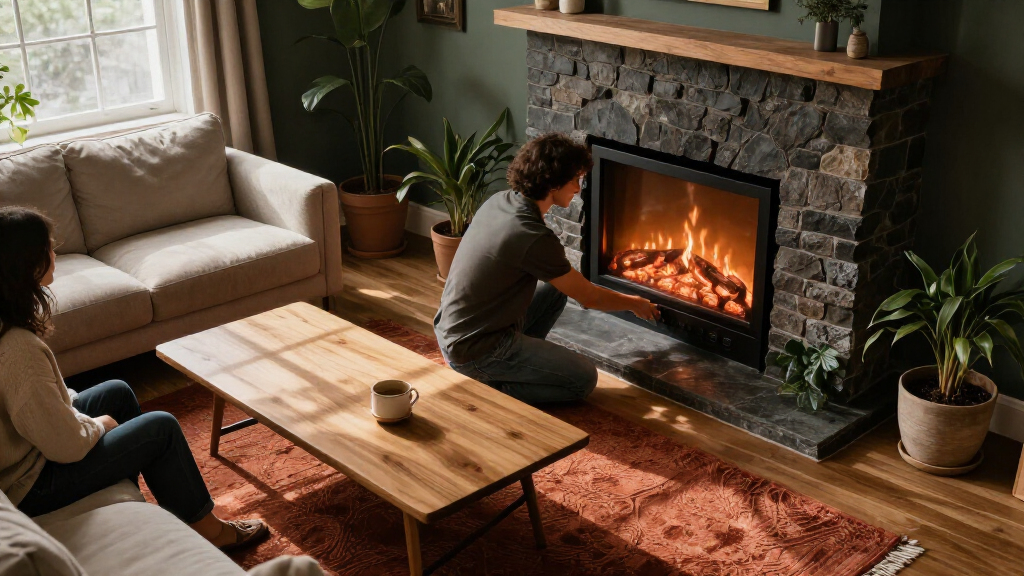
A fireplace can change the feel of a living room in seconds: the lights soften, the room glows, and everyone drifts a little closer. With an electric model, you can get that flame-like glow without hauling in logs or adding a chimney. Many units also offer supplemental heat, but they work best when you match their capacity and placement to your room.

Get home appliances delivered free with Prime
- Fast, free delivery on millions of items
- Prime Video, Amazon Music and more included
- Member-only deals all year
This guide walks you through the main styles, what to expect from the flames and heater, and the practical details that shape the buying decision. You’ll see why a slim wall-mounted unit may suit a small apartment, while a built-in model can make more sense around an existing fireplace opening. A few careful checks can save you from a unit that looks washed out in daylight, warms less space than you hoped, or needs electrical work you hadn’t planned for.
Choose wall-mounted, freestanding, insert, or built-in style based on your room layout and the permanence of the installation.
Treat the heater as supplemental heat and compare the rated coverage with your room’s insulation, ceiling height, and drafts.
Judge flame realism in ordinary room lighting and from the distance where you’ll actually sit.
Check outlet, clearance, wiring, and TV placement requirements; use a licensed electrician for hardwired work.
Estimate running cost from kilowatts, hours, and your electricity rate, and distinguish heater use from flame-only operation.
Choose a Fireplace Style That Fits Your Room
Electric fireplaces for living rooms come in wall-mounted, freestanding, insert, and built-in styles, so you can match the unit to your layout instead of reshaping the whole room. Most need no chimney or combustion vent, and many plug into a standard outlet. The best fit depends on available wall space, an existing fireplace opening, and how permanent you want the installation to be. Those choices affect more than appearance: a fixed unit becomes part of the room’s layout, while a portable one can move as your furniture or housing changes.
A wall-mounted model can bring a clean, modern line to an apartment living room, especially above a low media console. It saves floor space, but the wall position is fixed and the display may compete with a television. A freestanding stove, by contrast, may feel at home beside a reading chair, with its dark metal sides and warm orange display giving a cozy corner some weight. It is easier to reposition, though it takes up floor area and its cord needs a safe route. If you have an unused masonry fireplace, an insert can fill the opening without the crackle, ash, or wood storage; its size is constrained by that opening, so check measurements before assuming a standard insert will fit.
Built-in designs can look seamless, but they often call for framing, careful clearance planning, and sometimes electrical work. The finished look comes with less flexibility if you later rearrange the room. Measure the opening, wall depth, and nearby furniture before you shop. For example, a homeowner with a shallow wall may find that a deep built-in unit projects awkwardly into the room, while a slim wall-mounted model keeps the walkway clear. The tradeoff is that the wall-mounted option remains visible as an appliance rather than blending into the architecture.
Think of the display as a layer in the room’s design, much like a lamp or a large piece of art. Recent models may offer wider viewing windows, custom colors, and app controls, but features vary by brand. A wider window can make the flames easier to see from multiple seats, while extra controls matter only if you will use them. Check dimensions, control options, and independent reviews instead of assuming a photo tells the whole story.
Products Worth Considering

TCL 32-Inch R3D Series QLED Full HD Roku Smart TV (32R3D, 2026)

Hisense 55-Inch E6SR Series 4K UHD Hi-QLED Roku Smart TV (2026 Model)

Dyson Ball Animal 2 Total Clean Upright Vacuum Cleaner, Blue
As an affiliate, we earn on qualifying purchases.
Get Comfortable Supplemental Heat Without Overpromising
Electric fireplaces for living rooms can warm one room, but most are supplemental heaters, not replacements for a home’s central heating. Check the model’s rated room area and heat output, then compare them with your ceiling height, insulation, windows, and local climate. Coverage ratings are useful for comparing similar units, but they simplify the room into an area measurement: heat can distribute unevenly around furniture, open doorways, and cold windows. A drafty room with tall ceilings may feel cooler than a compact, well-insulated space even when both fall within a listed coverage range.
Consider a family room with an older bay window: the heater may take the chill off the seating area during a mild evening, but it won’t necessarily keep every corner warm on a freezing night. That distinction matters if you’re buying for comfort at one seat versus expecting the fireplace to heat the whole room. A thermostat can help maintain a more comfortable temperature by cycling the heater, while a timer can limit how long it runs. When you compare models, also check whether the heater pushes air forward, upward, or through a lower vent; placement can change where you feel the warmth, and a vent aimed at a wall or blocked by furniture wastes some of that immediate comfort.
Resistance heaters convert nearly all the electricity they consume into heat at the unit, but “efficient” doesn’t automatically mean low-cost. Your bill depends on power draw, run time, electricity prices, and how your power is generated. A heater running at full power uses substantially more electricity than the flame display alone. If your goal is ambience, flame-only mode avoids the heater’s larger draw; if your goal is warmth, compare the cost with how long you expect to run it and whether central heating already keeps the room comfortable.
Room rating is a starting point, not a promise that every seat will feel equally warm. Use the manufacturer’s coverage as a guide and account for the room’s real shape and drafts.
Some units let you run a flame effect with the heater off. That can provide a soft glow during a spring dinner or a warm-looking backdrop on a mild night, though the display and controls still use some electricity.
Judge the Flame Effect in Your Own Kind of Light
Electric fireplaces create a flame-like display with lighting and other effects, rather than real fire. The look can range from a simple, bright LED pattern to a more dimensional display using moving parts, projections, or water vapor. Flame color, brightness, movement speed, and the ember bed all shape whether a unit feels like a gentle hearth or a glowing screen. More visual layers can create depth, but they do not guarantee a convincing effect; the way they combine is what you’ll notice from the sofa.
A showroom’s dark corner can flatter almost any model. In a sunny living room, direct window light may wash out a display that looked rich and lively in a product video. This is more than a cosmetic detail: a low-contrast display may disappear during the hours you use the room most, while a very bright one can dominate a darker space. Try to see the unit in ordinary room lighting or find independent reviews filmed from a few feet away. Viewing distance matters too: from across a large room, subtle flame details may disappear.
Imagine a couple choosing a wide unit for a living room with pale walls. They might prefer a lower brightness setting at night so the display doesn’t overpower the television, while a brighter setting helps it remain visible on an overcast afternoon. Custom colors can suit a modern space, but a natural-looking orange and amber palette may blend more easily with wood furniture and a woven rug. The best choice depends on whether the fireplace should draw attention or sit quietly in the background.
Water-vapor models can add a three-dimensional, curling effect, but they require regular refilling and cleaning. That upkeep can be worthwhile if a lifelike moving display is a priority, but it may feel like unnecessary work if you mainly want a simple evening glow. Simpler LED models usually need less upkeep. Before buying, compare more than the most dramatic flame setting: look at the ember bed, sound level, controls, and whether the unit saves your preferred settings after power loss.
Check the Outlet, Clearances, and Installation Before Buying
Installation requirements depend on the model: many plug-in units use a standard household outlet, while larger or hardwired fireplaces may need a dedicated circuit. Read the manual and check local electrical requirements before you commit to a built-in design. This check can change both the project cost and where the unit can go; a suitable wall location does not guarantee that the existing wiring can support the heater. If the job involves hardwiring or other electrical work, use a licensed electrician and follow the relevant code and permit rules.
Start with a tape measure. Check the fireplace opening or wall area, the distance to curtains and furniture, and the manufacturer’s required clearances. These measurements help prevent a unit from fitting on paper but interfering with how the room works. A wall-mounted unit that fits neatly above a console can still crowd a television, while a built-in model may need more depth behind the finished wall than you expect. For a TV above the fireplace, follow both manufacturers’ guidance on heat direction and clearance; otherwise, heat can affect the viewing area or the equipment above it.
Plug-in installation can be simple, but that doesn’t make every setup safe by default. Keep the heater’s air inlets and outlets unobstructed, use the outlet and cord as directed, and don’t hide a power cord behind a rug. Airflow is part of how the heater operates, so blocking a vent can reduce performance and create a safety concern. For instance, a thick curtain that brushes the heater vent can block airflow; shifting the furniture a few inches may give the unit room to breathe.
Electric units don’t burn fuel, so they don’t need a chimney or flue for combustion exhaust. They still produce heat, though, and the outlet, wiring, and clearance instructions matter. Look for overheat protection and follow the manual’s direction on unattended use. If you’re uncertain about wiring or mounting, ask a licensed professional to assess the installation before you switch it on.
Estimate Running Costs With One Simple Calculation
You can estimate an electric fireplace’s running cost by multiplying its power use in kilowatts by the hours you run it and your electricity rate. The heater usually accounts for most of the consumption; flame-only mode generally uses much less. The exact result depends on the unit’s settings and your local rate, so use the specification label and a recent bill for a grounded estimate. This calculation helps compare likely use rather than predict an exact bill, since a thermostat may cycle the heater instead of drawing full power continuously.
For example, suppose a heater draws 1.5 kilowatts, runs for two hours, and your electricity costs 30 cents per kilowatt-hour. That session uses 3 kilowatt-hours and costs about 90 cents if the heater draws its full rated power throughout. If a thermostat cycles it off part of the time, actual use may be lower. If you use only the flame display, the cost should be lower, but check the product’s power figures rather than assuming the lights use nothing.
Use this quick process before you buy:
- Find the power draw in the specifications, in watts or kilowatts.
- Estimate realistic hours of heater use for a typical day or week.
- Multiply kilowatts by hours to get kilowatt-hours.
- Multiply that figure by your rate to estimate the cost.
Compare the result with how you already heat the room. If you only need a cozy boost while reading, short heater sessions may suit your habits. If you expect to heat a large, leaky living room all evening, the cost and comfort may look different. A thermostat and timer can help keep operation aligned with your routine; they control when heat runs, while the room’s insulation and drafts determine how long it may take to feel comfortable.
Match the Features to the Way You Use the Room
The most useful fireplace features are the ones you’ll reach for in ordinary life. A remote helps when you’re settled on the sofa; a thermostat can manage room temperature; and a timer can switch the unit off after a movie. Flame brightness and color controls can help the display suit different moods, while quieter operation matters if you read, work, or watch television nearby. Features add value when they solve a routine problem; otherwise, they can make a model more complicated without changing how you use it.
Picture a household that uses the living room in two different ways: a parent reads in a chair before dinner, then everyone gathers for a film. The flame-only setting can add a low, steady glow during the reading hour, while a short heating session may help take the chill off on a cold evening. A loud fan could distract from conversation, so it’s worth listening to a unit in person or checking reviews that mention operating noise. If the fan is audible at the seat where you watch TV, a quieter heater or a flame-only setting may suit that routine better.
Smart controls and voice-assistant links have appeared on some newer models, but compatibility varies. Confirm the specific system and features you use; a product listing that mentions an app doesn’t guarantee every function works with your setup. The distinction matters because app control may offer convenience while still lacking a feature you expect, such as adjusting heat or flame separately. Also check whether remote or app settings stay saved after power loss, which can save a small annoyance after a breaker trip.
Look at maintenance as part of the feature choice. Most electric fireplaces need less routine care than a wood-burning hearth, but vents need to stay clear and the unit should be cleaned as directed. A water-vapor effect adds a lovely, shifting plume, yet regular refilling and cleaning make it a better fit for someone who doesn’t mind a little upkeep. Weigh that recurring task against how much the more dimensional effect matters to you.
Frequently Asked Questions
Do electric fireplaces actually heat a living room?
Yes. Many models provide supplemental heat for one room, but capacity depends on the unit and the room. Check the manufacturer’s coverage and account for drafts, ceiling height, windows, and insulation.
How much does an electric fireplace cost to run?
Multiply the unit’s power in kilowatts by the hours used and your electricity rate. A heater uses substantially more electricity than the flame effect alone, so estimate those modes separately when the manufacturer provides the figures.
Can I run the flame without heat?
Many models have a flame-only mode, but confirm that feature in the product specifications. The display and controls still use some electricity even when the heater is off.
Do electric fireplaces need a chimney or vent?
No combustion vent is required because the unit doesn’t burn wood or gas. Built-in fireplaces still need the installation clearances and electrical setup specified by the manufacturer.
Can I install an electric fireplace myself?
Some plug-in wall-mounted and freestanding models are straightforward to set up if you follow the manual. Built-in or hardwired installations may need electrical work, permits, or a licensed professional, depending on the model and local rules.
Are electric fireplaces safe to leave on overnight?
Follow the manufacturer’s instructions for unattended use. Keep vents clear, maintain the stated distance from curtains and furniture, and use timer and overheat features as directed; don’t leave a unit running unattended if its manual advises against it.
Conclusion
Choose your fireplace by starting with the room: measure the space, decide whether you want a heater or mainly a glow, and check the electrical and clearance requirements before comparing finishes. A model that suits your layout and routine will feel more at home than the flashiest display in a showroom.
Let the flames set the mood, and let the measurements make the decision. That’s how you get a living room that feels warmer without a pile of logs by the door.