TL;DR

Get home appliances delivered free — and shop member deals
- Fast, free delivery on millions of items
- Access to Prime Big Deal Days deals on October 6–7
- Prime Video, Amazon Music and more included
Electric fireplaces with remote control let you adjust common settings such as heat, flame brightness, and timers from a handset, though features vary by model. Many consumer heaters are rated around 1,500 watts and work best as supplemental heat; check the manual, clearances, and circuit requirements before choosing where to use one.
A fireplace remote can turn a chilly evening into a one-button affair: the room warms, the ember bed glows, and you stay curled up under a blanket instead of crossing the room. But the glowing flames and the heater are separate features, and confusing them can lead to the wrong expectations about warmth, energy use, or where the unit belongs.
This guide explains what electric fireplaces with remote control can do, how their heat and flame settings differ, and what to check before buying or plugging one in. You’ll also get a straightforward way to estimate running costs and practical safety tips for a living room, bedroom, or apartment.
Think of the fireplace as two devices sharing one cabinet: a light show for atmosphere and an electric heater for supplemental warmth. The remote may control both, but the model’s manual—not the handset’s number of buttons—tells you what the unit can safely do.
Check whether the fireplace offers separate flame-only and heater settings; the glow itself does not provide meaningful warmth.
Use the unit’s wattage, hours of operation, and local electricity rate to estimate cost; 1,500 watts for one hour uses 1.5 kWh.
Treat most consumer electric fireplaces as supplemental heat, with results shaped by room size, insulation, drafts, and ceiling height.
Follow the manual’s clearances and circuit instructions, and don’t block air inlets or outlets.
Confirm placement, remote features, and replacement-part compatibility against current manufacturer information.
What You Can Control From the Sofa
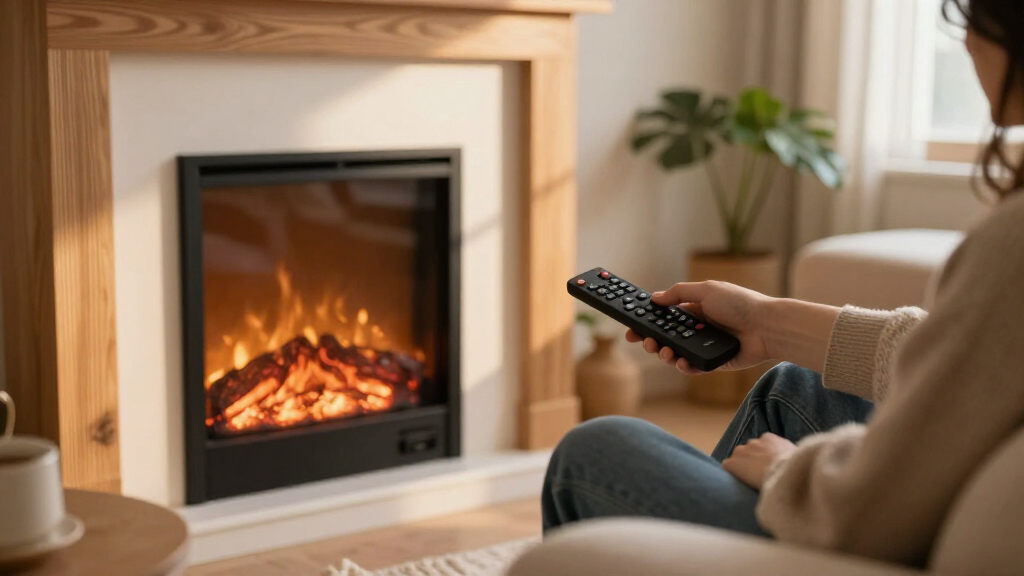
Electric fireplaces with remote control combine a flame-effect display and an electric heater in a freestanding unit, insert, or wall-mounted model. A typical remote can turn the unit on or off and adjust heat, flame brightness, or a timer, but the available buttons depend on the model. The handset acts like a small control panel you can carry across the room.
Some models let you run flame-only mode, so you can enjoy the orange flicker without heating the room. That can suit a mild autumn evening when you want the cozy look but not the extra warmth. Other models offer flame colors, speed settings, or ember-bed brightness; don’t assume every feature appears on every remote.
It helps to separate flame controls from heater controls. The flame effect uses lights and visual components to imitate fire; it doesn’t burn fuel or create meaningful heat on its own. The heater is a different system, often paired with a fan that pushes warm air into the room. For instance, you could leave the flames on while turning the heat off after the living room feels comfortable.
Look at the remote and the fireplace’s built-in controls before you buy. A remote may need a clear signal path, and its range varies; many units also have buttons on the body if the handset is lost or the batteries run down. Check the current manufacturer’s specifications for features, app controls, and replacement-remote compatibility rather than relying on a product photo.
As an affiliate, we earn on qualifying purchases.
How Much Warmth You’ll Get in a Real Room
Electric fireplaces with remote control are generally best treated as supplemental heaters, not whole-home heating systems. Many consumer models are rated around 1,500 watts, but the comfort you feel depends on room size, insulation, ceiling height, drafts, and the fireplace’s design. A sunny, insulated den and a drafty room with tall ceilings will not feel alike, even with the same heater.
Imagine a small apartment living room on a cold evening. The unit may take the edge off while you sit nearby, but it may not keep a large open-plan space evenly warm. The heater is more like a warm patch of sunlight than a replacement for your central heating: useful in the right spot, less effective when the room is large or leaky.
Thermostat controls can help the unit maintain a preferred setting, and a timer can limit how long it runs. Still, the fireplace’s thermostat may read differently from a separate room thermometer, especially if the sensor sits near the heater. If the room feels too warm while the display says otherwise, compare the unit with a thermometer placed away from the airflow.
Some heaters make a soft fan sound during operation, while flame effects can produce quiet mechanical noises. If you plan to use one in a bedroom or a quiet home office, check product information and reviews for noise details. A model that feels pleasant in a lively family room may be distracting beside your bed.
freestanding electric fireplace with flame effect
As an affiliate, we earn on qualifying purchases.
As an affiliate, we earn on qualifying purchases.
How to Estimate Your Electricity Cost
Estimate an electric fireplace’s running cost by multiplying its power in kilowatts by the hours used and your electricity price per kilowatt-hour. A 1,500-watt heater equals 1.5 kilowatts, so one hour at full power uses 1.5 kWh. At an example rate of 20 cents per kWh, that hour costs about 30 cents; your actual bill depends on your local rate and how the heater cycles.
Use this simple process to get a useful estimate before you settle in for a long evening:
- Find the rated wattage on the product label or in the manual.
- Convert watts to kilowatts by dividing by 1,000. For example, 1,500 watts becomes 1.5 kW.
- Multiply by hours of use and your electricity rate. At 1.5 kW, three hours, and 20 cents per kWh, the estimate is 90 cents.
- Adjust for actual operation. A thermostat may cycle the heater instead of running it continuously, so full-power math is a straightforward upper estimate for those hours.
Flame-only mode generally uses less electricity than heating mode, though it still draws power. For instance, you might use the glow for several hours during a movie but run the heater only until the room feels comfortable. That can keep the fire-like atmosphere without paying to produce warmth you don’t need.
This estimate is a planning tool, not a promise of your bill. Check your electricity rate and the unit’s specifications, and remember that heating a drafty room may require longer operation. A timer or thermostat can help manage run time, but the manufacturer’s instructions should guide how you use those controls.
wall-mounted electric fireplace with remote
As an affiliate, we earn on qualifying purchases.
As an affiliate, we earn on qualifying purchases.
Which Fireplace Style Fits Your Space?
Choose a fireplace style by matching the unit to your room, installation plans, and electrical setup. Freestanding models are usually easy to position, while inserts and built-in units demand careful attention to dimensions and clearances. Wall-mounted fireplaces save floor space, but they need a suitable mounting surface and a convenient power source.
Here’s a practical comparison: if you rent and want to move the unit later, a freestanding model may be the easiest fit. If you’re updating an existing fireplace opening, an insert could give the room a more finished look—but only if its dimensions and installation requirements match the opening. A sleek wall unit may suit a small living room, provided you can mount it correctly and follow its instructions about nearby surfaces.
| Style | Often suits | Check before choosing |
|---|---|---|
| Freestanding | Flexible room layouts and renters | Clearances, stable placement, and outlet location |
| Insert or built-in | Existing fireplace openings or planned renovations | Exact dimensions, airflow, and installation requirements |
| Wall-mounted | Rooms where floor space is limited | Mounting surface, manufacturer clearances, and power access |
For example, don’t assume a model can sit beneath a television just because the product image shows that arrangement. Heat direction and required clearances matter. Confirm the manufacturer permits that placement and follow its instructions; if installation involves electrical changes or building work, use a qualified professional and follow local requirements.
electric fireplace with flame and heat settings
As an affiliate, we earn on qualifying purchases.
As an affiliate, we earn on qualifying purchases.
How to Use Your Fireplace Without Creating a Safety Problem
Use an electric fireplace safely by following the manual, keeping the required clearance around it, and leaving its air inlets and outlets unobstructed. Electric models don’t burn fuel, so most don’t need a chimney or combustion vent, but the heater and outlet can still become hot. No exhaust does not mean no safety checks.
Before placing the unit, check the manufacturer’s clearance instructions for curtains, furniture, bedding, and other materials. Don’t drape a blanket over the cabinet or push furniture against its air openings. A practical example: if a curtain sways close to the heater when the window is open, move the fireplace or secure the curtain rather than hoping it stays put.
Check the product’s voltage, current, outlet, and circuit requirements in the manual. A 1,500-watt heater can draw a substantial portion of the capacity of a household circuit, so avoid sharing that circuit with other high-load appliances unless the manufacturer’s instructions and electrical setup allow it. Don’t use an unsuitable extension cord or adapter as a workaround.
Keep children and pets in mind, too: curious hands can find hot surfaces, and a wagging tail can bump a freestanding unit. Follow the manual’s guidance on unattended or overnight use and use a timer if appropriate. If you need a new outlet, circuit, or wiring change, have a licensed electrician handle it; switch off power before any permitted electrical work, use proper PPE, and follow local codes and permit rules.
Keep the Flames Looking Good With Simple Care
Routine care is usually simple: keep the unit free of dust, leave airflow paths open, and follow the manufacturer’s cleaning instructions. Electric fireplaces don’t need fuel replenishment or chimney sweeping because they don’t burn wood or gas. That saves the ash, soot, and smoky smell of a traditional fire, but it doesn’t make the appliance maintenance-free.
Dust can collect around vents and surfaces, especially in a busy room with pets. If the heater is off and cool, follow the manual’s instructions for cleaning; don’t push cloth, tools, or a vacuum attachment into places the manufacturer says to leave alone. A quick, careful wipe can keep a dark cabinet looking sharp instead of gray and dusty.
Some designs may use components such as bulbs that need cleaning or replacement, while many modern flame effects use LEDs. The exact arrangement differs by model, so check the product manual before opening any panel or attempting repairs. If the display flickers, the remote stops responding, or the heater behaves oddly, first use the troubleshooting steps and contact the manufacturer if needed rather than guessing at internal repairs.
For instance, if your remote stops working during movie night, check its batteries and try the fireplace’s manual buttons. A replacement handset may be available, but compatibility is model-specific. Keep the product name and model number where you can find them; that small detail can save a frustrating search when you need a part or support.
Frequently Asked Questions
Can an electric fireplace with a remote heat a whole room?
Many consumer models can add supplemental heat, but they may not warm a whole room evenly or replace central heating. Results depend on the unit, room size, insulation, drafts, and ceiling height. A 1,500-watt model may feel useful near your sofa but fall short in a large open-plan space.
Can I use the flames without turning on the heat?
Many models offer flame-only operation, but you should confirm that feature in the product specifications. The visual effect comes from lights and related components, not burning fuel, so it doesn’t produce meaningful heat by itself. Flame-only use can suit a mild evening when you want the glow without extra warmth.
How much electricity does a 1,500-watt fireplace use?
At full power, a 1,500-watt heater uses 1.5 kWh per hour. Multiply 1.5 by your local electricity rate to estimate the cost; at 20 cents per kWh, that example works out to about 30 cents an hour. Actual use may differ if a thermostat cycles the heater on and off.
Is it safe to leave an electric fireplace on overnight?
Follow the manufacturer’s instructions, since safety features and permitted use vary by model. Keep the unit unobstructed, respect its clearances, and use a timer if the manual recommends it. Don’t assume that one model’s overnight guidance applies to another.
Does an electric fireplace need a special outlet or its own circuit?
Check the fireplace’s electrical rating and manual before plugging it in. A high-wattage heater can place a substantial load on a circuit, especially if other high-load appliances share it. If the instructions call for electrical changes or you’re unsure about the circuit, consult a licensed electrician.
Will the remote work from another room?
Remote range varies by model, and some handsets need a clear signal path or line of sight. Check the manual for the specific unit rather than assuming the remote will work through walls. Many fireplaces also have body-mounted controls if the handset is misplaced or stops working.
Conclusion
Before you buy, match the fireplace to the room, then check three things in the manual: heat rating, electrical requirements, and clearances. Make sure the remote controls the settings you actually want, especially flame-only operation and a timer. Those details matter more than a long row of buttons or a convincing product photo.
Use the heater as targeted supplemental warmth, keep the airflow clear, and let the flame effect set the mood when you don’t need extra heat. The best fireplace is the one that gives your room a soft amber glow without making you guess about the wiring, the bill, or the space around it.
Halloween Picks
halloween
As an affiliate, we earn on qualifying purchases.