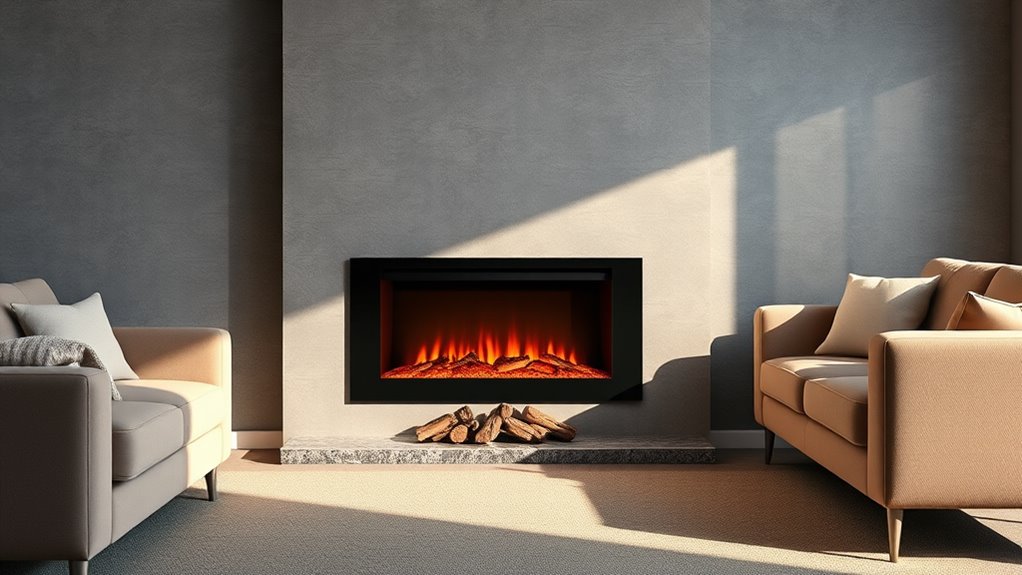

An electric fireplace can heat a whole room if its size and power match your space’s needs. Typically, a 1500-watt unit produces enough heat for a medium-sized room and uses nearly all its energy efficiently. However, in larger or poorly insulated areas, it might not be sufficient alone. To get the most out of your electric fireplace’s warmth, consider factors like placement and supplemental heating options—more tips await if you stay with us.

Get home appliances delivered free with Prime
- Fast, free delivery on millions of items
- Prime Video, Amazon Music and more included
- Member-only deals all year
Key Takeaways
- Electric fireplaces convert nearly all their energy into heat, maximizing efficiency for warming a room.
- Their heating capacity depends on wattage, with higher wattage units suitable for larger spaces.
- Most models include fans or blowers that help distribute heat evenly throughout the room.
- They are best used as supplementary heating sources, especially in medium-sized or well-insulated rooms.
- Electric fireplaces excel at providing immediate warmth and ambiance but may not fully heat very large or poorly insulated spaces alone.
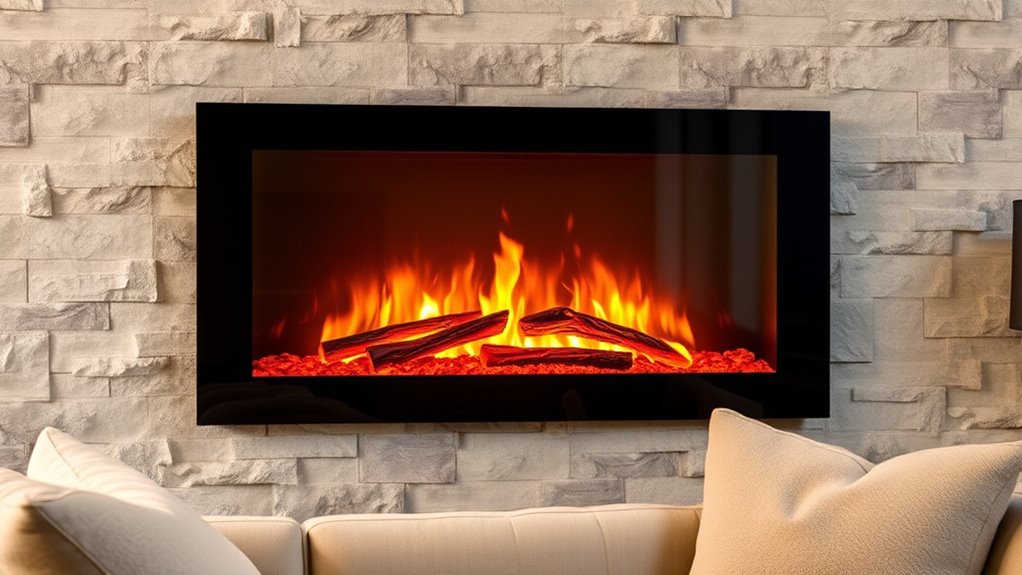
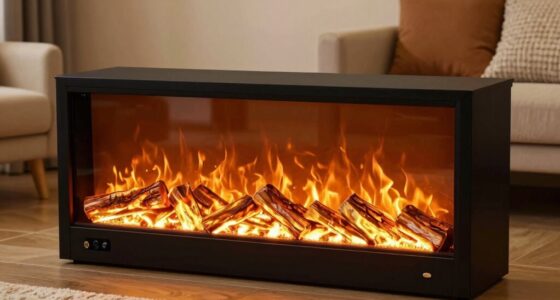
Electric fireplaces have become a popular choice for heating homes because they offer efficient, safe, and easy-to-use warmth. When considering whether an electric fireplace can heat a whole room, one of the first things you need to evaluate is fireplace efficiency. Unlike traditional fireplaces, electric models tend to convert nearly all their energy into heat, making them highly efficient. This means that almost every watt of electricity you use is turned into usable warmth, minimizing waste. In contrast, gas fireplaces, while also efficient, often lose some heat through venting or incomplete combustion. Electric vs gas comparisons highlight that electric fireplaces generally deliver consistent heat with less energy loss, which can be advantageous when trying to heat a larger space.
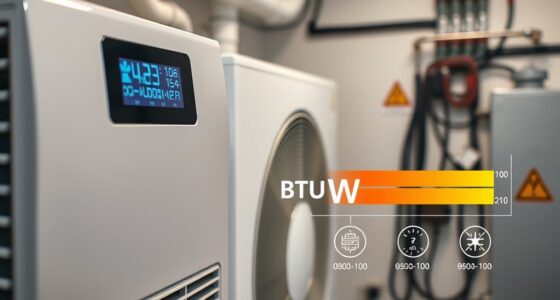
You might wonder if an electric fireplace can truly warm a whole room or just serve as a supplementary heat source. The answer depends on several factors, including the size of the room, the power of the unit, and the insulation of your space. Many electric fireplaces are rated by their wattage, and higher wattage units tend to produce more heat, capable of warming larger areas. For example, a typical 1500-watt electric fireplace can generate roughly 5,120 BTUs of heat, which is enough to heat a medium-sized room comfortably. But if your space is particularly large or poorly insulated, an electric fireplace alone might not suffice. In such cases, it’s best used as part of a broader heating plan, supplementing your primary system.
Another key aspect is how electric fireplaces distribute heat. Most models incorporate fans or blowers that circulate warm air, helping to spread heat evenly throughout the room. This air movement, combined with the radiant heat from the flame effect, creates a cozy environment. You should also consider the placement of the unit; positioning it centrally or near the area where you spend most of your time can improve its heating effectiveness. While electric fireplaces excel at providing immediate warmth and instant ambiance, they’re generally designed for room-scale heating rather than replacing a full central heating system.
As an affiliate, we earn on qualifying purchases.
Frequently Asked Questions
Do Electric Fireplaces Use More Energy Than Traditional Heaters?
Electric fireplaces generally use less energy than traditional heaters because they convert electricity directly into heat with high efficiency. You’ll find their energy consumption is often lower, making them more energy efficient for heating small spaces or adding supplemental warmth. However, if you’re trying to heat a large room, they may need to work harder, which could increase power consumption slightly. Overall, they’re a more energy-efficient option for targeted heating.
Can Electric Fireplaces Replace Central Heating Systems Entirely?
Sure, an electric fireplace might seem like a perfect substitute, but for larger rooms, it’s hardly enough. You’ll quickly realize that its heating efficiency drops as room size grows, making it an ineffective solution for whole-house warmth. While cozy for small spaces, relying solely on an electric fireplace won’t keep your entire home comfortable. Instead, it’s better as a supplementary heat source, not a complete replacement for central heating systems.
Are Electric Fireplaces Safe to Leave on Unattended?
Yes, electric fireplaces are generally safe to leave on unattended, but you should always be cautious. Safety concerns include potential fire hazards if the unit is damaged or obstructed. Make sure the fireplace has an automatic shut-off feature, keep it away from flammable materials, and follow the manufacturer’s instructions. Regularly inspect the unit for any electrical issues to minimize fire hazards and guarantee safe operation when unattended.
How Long Does It Take to Heat a Large Room With an Electric Fireplace?
It can take anywhere from 20 to 45 minutes to heat a large room with an electric fireplace, depending on heat distribution and room size. As you turn it on, you might wonder how quickly warmth will spread. Larger rooms challenge your fireplace’s capacity, so patience is key. Keep the doors closed, and soon you’ll feel the cozy heat filling every corner, transforming your space into a warm haven.
Do Electric Fireplaces Emit Any Harmful Fumes or Emissions?
Electric fireplaces don’t emit harmful fumes or emissions, so they won’t negatively impact your air quality. Unlike gas or wood-burning fireplaces, they produce no smoke, fumes, or carbon monoxide, making them safer for your indoor air. You can enjoy the cozy ambiance without worrying about fumes emissions or air quality issues. This clean operation makes electric fireplaces a convenient and safe heating choice for your home.
electric fireplace with blower fan
As an affiliate, we earn on qualifying purchases.
As an affiliate, we earn on qualifying purchases.
Conclusion
In the end, an electric fireplace can warm your space, but it’s like trying to heat a vast ocean with a teacup—you’ll get cozy, but maybe not the whole room. If you’re seeking a focal point that offers both ambiance and heat, it’s a great choice. Just remember, its warmth is best suited for smaller areas or supplemental comfort. Think of it as your room’s glowing heart, bringing warmth and charm wherever it’s placed.
As an affiliate, we earn on qualifying purchases.
electric fireplace for medium-sized room
As an affiliate, we earn on qualifying purchases.
As an affiliate, we earn on qualifying purchases.
Cold & flu season Picks
humidifiers
As an affiliate, we earn on qualifying purchases.