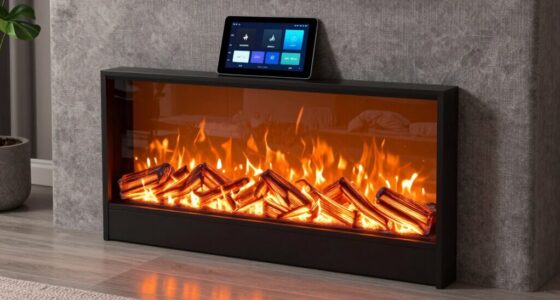
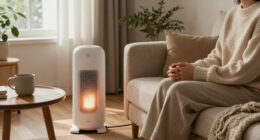
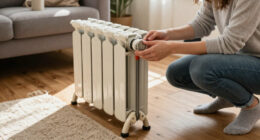
Electric fireplace fans help move heat by circulating warm air throughout your space, preventing hot and cold spots. They boost the overall efficiency of your fireplace, pushing heat into different areas and reaching both upper and lower parts of the room. With adjustable speeds, you can customize comfort and enjoy quicker warmth. Proper use improves safety and maximizes your heater’s performance. Keep exploring to discover more tips on making the most of your fireplace fan.

Get home appliances delivered free with Prime
- Fast, free delivery on millions of items
- Prime Video, Amazon Music and more included
- Member-only deals all year
Key Takeaways
- Fireplace fans distribute warm air evenly, reducing hot and cold spots in the room.
- They push heat into different areas, enhancing overall heating efficiency.
- Fans help circulate warm air, preventing heat from rising directly upward and escaping.
- Adjustable speeds allow personalized control for optimal comfort.
- They operate quietly, improving room comfort without noise disruption.

Electric fireplace fans play an essential role in distributing heat more evenly throughout your room. When you install one, you’re taking a simple step that considerably improves the way your electric fireplace heats your space. Fireplace fan installation is straightforward, often involving just a few basic steps, but the benefits are substantial. Once set up, the fan actively pushes warm air out into the room, preventing hot and cold spots and creating a consistent, comfortable environment. Without a fan, most of the heat from your electric fireplace tends to rise directly upward, leaving the lower areas cooler and reducing overall comfort. By adding a fan, you guarantee that heat circulates efficiently, making your space feel warmer without needing to turn up the thermostat. Proper heat distribution is key to maximizing the efficiency of your heating setup. Using a fan also enhances energy efficiency. When the heat is distributed more effectively, your electric fireplace doesn’t have to work as hard to warm the entire room. This means you can enjoy the cozy ambiance and warmth without increasing your energy bills. The fan’s ability to spread heat faster and more evenly means the fireplace reaches your desired comfort level sooner, reducing the amount of energy consumed during operation. Because electric fireplaces are designed to be energy-efficient already, combining them with a good fan maximizes this benefit. You get more warmth for less energy, which is both budget-friendly and environmentally conscious. Installing a fireplace fan is a small investment that pays off quickly. Once in place, it quietly operates in the background, enhancing the overall heating process. It’s especially useful in larger rooms or open-concept spaces where heat tends to escape or circulate unevenly. The fan works by pulling in cool air from the room, warming it with the fireplace’s heat source, and then blowing it out into the space. This cycle ensures that heat doesn’t just stay near the fireplace but reaches every corner of the room. Plus, many models are adjustable, so you can control the fan speed to suit your comfort level and optimize energy savings. Incorporating sauna safety tips can help ensure safe and efficient heating practices in your home. Additionally, ensuring proper ventilation can improve the overall safety and effectiveness of your heating system.
Products Worth Considering

Philips Hue White and Color Ambiance A19 Smart Bulb Starter Kit, 2-Pack

Ring Alarm 8-Piece Kit (2nd Gen) Home Security System

Bose SoundLink Flex Bluetooth Speaker (2nd Gen), Black
As an affiliate, we earn on qualifying purchases.
Frequently Asked Questions
Do Electric Fireplace Fans Consume a Lot of Energy?
Electric fireplace fans don’t consume a lot of energy, making them quite energy-efficient. They use minimal power, typically around 20-50 watts, which keeps your power consumption low. By efficiently circulating heat, these fans help you save on heating costs while maintaining comfort. So, if you’re concerned about energy efficiency, electric fireplace fans are a smart choice because they enhance heating without considerably increasing your energy bills.
Are Electric Fireplace Fans Noisy During Operation?
Electric fireplace fans are generally quiet during operation, making them unobtrusive in your living space. Their sound levels are low, and many models feature noise reduction technology to minimize any hum or whirring sounds. You might hear a gentle breeze, but it shouldn’t disrupt your activities or sleep. Overall, these fans are designed to operate smoothly and quietly, helping you enjoy the warmth without added noise disturbances.
Can Electric Fireplace Fans Be Used With Any Fireplace Model?
Imagine fitting a puzzle piece perfectly—you’ll find electric fireplace fans work with many models, but not all. Fireplace compatibility varies, so you must check your unit’s specifications. Fan installation is usually straightforward, yet some fireplaces require specific adapters or mounting brackets. To guarantee smooth operation, verify your fireplace’s compatibility before purchasing, and follow the manufacturer’s instructions for a safe, efficient setup that keeps your room warm and cozy.
How Long Do Electric Fireplace Fans Typically Last?
Electric fireplace fans typically last around 3 to 5 years, depending on fan durability and usage. Factors like how often you run the fan, the environment, and proper maintenance influence their lifespan. To extend their lifespan, keep the fan clean and make certain it’s not overworked. Regularly checking for dust buildup and avoiding continuous operation can help maximize durability, ensuring you get the most out of your investment.
Do Electric Fireplace Fans Require Regular Maintenance?
Electric fireplace fans do require some regular maintenance to guarantee safety and ideal performance. You should clean the blades and vents to prevent dust buildup, which can impact airflow and aesthetics. Always follow safety precautions, like unplugging the unit before cleaning. Proper maintenance enhances the aesthetic appeal of your fireplace and helps prevent potential hazards, ensuring your fan operates quietly and efficiently for years to come.
Conclusion
So, next time you’re basking in the glow of your electric fireplace, remember those tiny fans aren’t just blowing air—they’re secretly orchestrating a heat conspiracy. They tirelessly shuffle warmth around, making sure every corner feels the love. Who knew that a simple fan could be the unsung hero of your cozy kingdom? So sit back, relax, and let these little heat movers do all the heavy lifting—your comfort’s best kept secret.