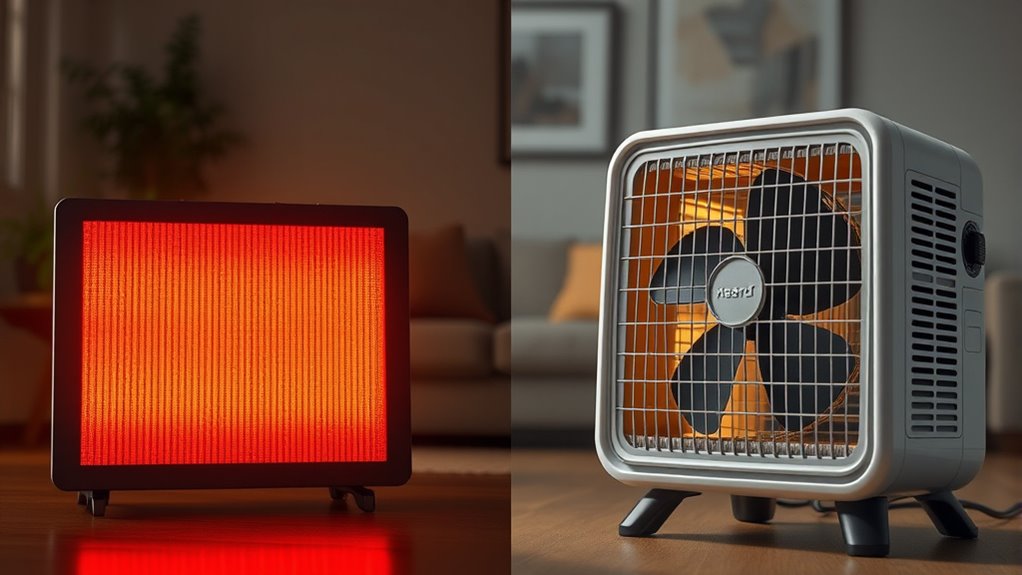

Infrared heaters emit radiation that directly warms objects and people, making them quick and energy-efficient for targeted heating. Fan-forced models use a heating element and a fan to circulate warm air throughout the room, offering faster, widespread heat. Infrared units are great for small spaces and quick warmth, while fan-forced heaters work well in larger areas requiring rapid heating. To discover how each type could suit your needs, keep exploring their key differences.
Key Takeaways
- Infrared heaters emit direct radiation for targeted warmth, while fan-forced heaters circulate heated air for room-wide heating.
- Infrared models are more energy-efficient and respond faster, ideal for quick, focused heating needs.
- Fan-forced heaters heat larger areas quickly but consume more power due to fans and active air circulation.
- Infrared heaters have fewer moving parts and generally pose fewer safety risks related to airflow.
- Infrared units are suited for small or poorly insulated spaces, while fan-forced heaters are better for larger, open areas.

When choosing an electric heater for your space, understanding the differences between infrared and fan-forced models is essential. Each type offers unique benefits and considerations that can impact your comfort, safety, and energy bills. Infrared heaters work by emitting infrared radiation, which directly warms objects and people in the room, rather than heating the air itself. This targeted approach often makes them more energy-efficient, especially in spaces where you want quick warmth without wasting energy on heating the entire room. Because they heat objects directly, infrared models tend to respond faster and maintain heat better in small or poorly insulated areas, making them a smart choice for energy-conscious users. Additionally, infrared heaters generally have fewer moving parts and less airflow, which can enhance safety features by reducing the risk of dust circulation or mechanical failure. They’re often equipped with tip-over switches and overheating protection, ensuring safe operation even if the unit is knocked over or used in sensitive environments.
Fan-forced heaters, on the other hand, rely on a heating element and a fan to distribute warm air throughout a space. They’re typically more versatile for larger areas or rooms that need rapid, widespread heating. Because they actively blow heated air, fan-forced models can quickly elevate the temperature of a room, making them ideal for temporary heating needs. However, their energy efficiency tends to be lower compared to infrared heaters, since they consume more power to operate the fan and heat element simultaneously. Safety features are also important here; many fan-forced models include safety shutoff mechanisms, cool-to-touch exteriors, and protective grilles to prevent accidental contact with hot components. Still, the moving parts and airflow can circulate dust and allergens, which might be a concern for allergy sufferers or those with respiratory issues.
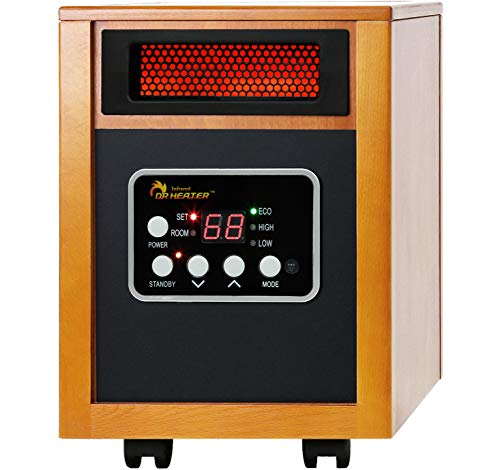
Dr Infrared Heater DR-968 Portable Space Heater, 1500-Watt, Cherry
Can heat up a large room with Auto Energy Saving Model With High and Low Feature. Tip-over protection…
As an affiliate, we earn on qualifying purchases.
As an affiliate, we earn on qualifying purchases.
Frequently Asked Questions
Which Heater Is More Energy-Efficient for Large Spaces?
You’ll find infrared heaters more energy-efficient for large spaces because they directly heat objects and people, reducing overall energy consumption. Fan-forced heaters tend to use more power as they heat the air uniformly, which can increase your energy costs. When considering a cost comparison, infrared options often save you money long-term due to their targeted heating and lower energy use, making them ideal for large areas where efficiency matters.
How Quickly Does Each Heater Type Warm a Room?
You wonder how quickly each heater warms a room? Infrared heaters deliver rapid warmth by directly heating objects and people, giving you almost instant comfort. Fan-forced heaters, on the other hand, distribute heat through convection, gradually warming the air for a more uniform temperature. The warming speed depends on your space, but infrared heaters typically act faster due to their direct heat transfer, leaving you feeling cozy sooner.
Are Infrared Heaters Safer for Indoor Use?
Yes, infrared heaters are generally safer for indoor use because of their design. They don’t get as hot on the surface, reducing burn risks, and produce no harmful emissions. When considering safety, check the material safety of the heater components and verify it has safety features like tip-over protection and overheat shutoff. Proper placement and following manufacturer guidelines further enhance safety considerations, making infrared heaters a reliable choice for indoor warmth.
Can Both Heater Types Be Used Outdoors?
You can use both heater types outdoors, but it’s a bit of a double-edged sword. Infrared heaters are generally better for outdoor safety because they provide direct heat and work well in weather-resistant setups. Fan-forced heaters, on the other hand, aren’t typically weatherproof, so they’re less suitable for outdoor use. Make sure you choose a model designed for outdoor conditions to keep yourself safe and warm.
What Maintenance Is Required for Each Heater Type?
You need to regularly inspect and clean your heaters to guarantee peak performance and extend their lifespan. For infrared heaters, wipe the reflective surfaces and check for dust buildup, while fan-forced heaters require dusting vents and filters. Proper maintenance keeps repair costs low and prolongs your heater’s life. Both types benefit from annual checks, but infrared heaters typically demand less upkeep, reducing long-term maintenance costs considerably.

Dura Heat EUH1465 Electric Forced Air Heater with Pivoting Base 5,120 BTU, Yellow
POWERFUL FORCED AIR HEATER: Delivers 1500W of PTC ceramic heating for quick warmth in small spaces.
As an affiliate, we earn on qualifying purchases.
As an affiliate, we earn on qualifying purchases.
Conclusion
So, whether you choose infrared or fan-forced electric heaters, remember they’re like two sides of the same coin—each with its own charm. Infrared heaters warm you directly like a cozy sunbeam, while fan-forced units spread warmth quickly like a gust of fresh air. Think about your space and needs, and you’ll find the perfect match. Picking the right heater is like finding the missing piece of your comfort puzzle—warmth just a switch away.

DREO Space Heater, Portable Electric Heaters for Indoor Use with Thermostat and Remote, 2024 Upgraded, Digital Display, 12H Timer, 5 Mode, 1500W PTC Ceramic Fast Safety Heat for Office Bedroom Home
Powerful heat that fits everywhere: DREO space heaters for indoor combines Hyperamics 1500W advanced PTC system with a…
As an affiliate, we earn on qualifying purchases.
As an affiliate, we earn on qualifying purchases.

BLACK+DECKER Infrared Radiant Quartz Tower Heater, 1500W Space Heater with Adjustable Thermostat, Portable Heater with 2 Settings, Personal Heater for Home and Office, BHTI06, Black
Infrared Heat: Infrared radiant tower heater is compact but powerful and heats up quickly. Uses dual quartz tubes…
As an affiliate, we earn on qualifying purchases.
As an affiliate, we earn on qualifying purchases.