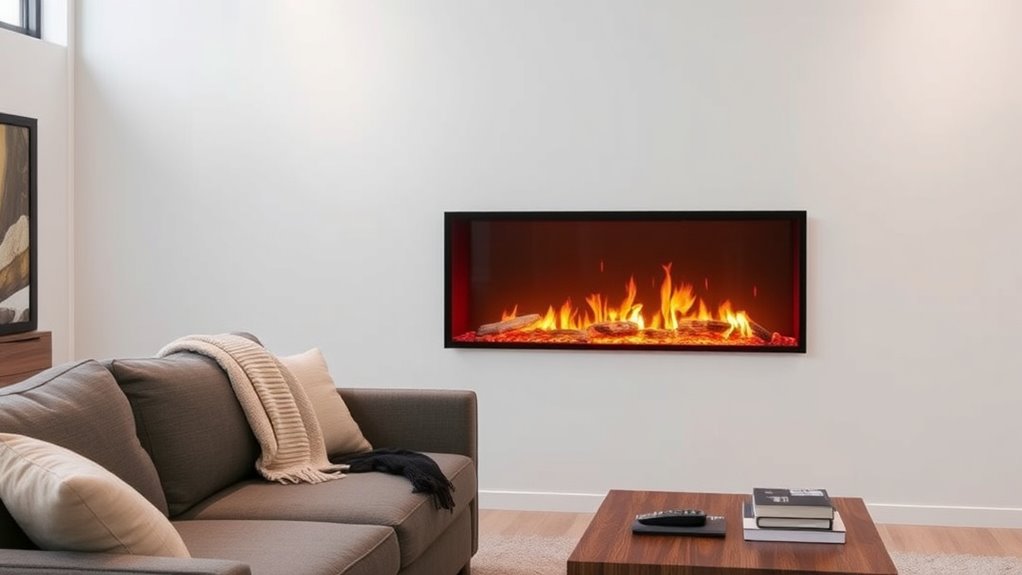

Electric fireplaces are an affordable, low-maintenance way to add warmth and ambiance to your space. They’re easy to install, often just plugging into a standard outlet, and don’t require venting or chimney work. While they lack real flames and authentic crackling sounds, they’re energy-efficient and portable, making them ideal for small to medium rooms. If you want to explore the benefits and drawbacks further, there’s plenty more to discover about their features and limitations.
Key Takeaways
- Cost-effective and energy-efficient, electric fireplaces reduce long-term utility bills compared to traditional heating methods.
- Easy to install with plug-and-play setup, suitable for rental spaces and quick upgrades without extensive modifications.
- Low maintenance and clean operation, eliminating soot, ash, and chimney cleaning concerns.
- Limited heat output and lack of authentic flames may reduce ambiance and primary heating capacity.
- Portable and versatile, ideal for supplemental heating in small to medium-sized spaces without requiring venting.

Electric fireplaces have become a popular alternative to traditional wood or gas units because they offer convenience and ease of use. One of the biggest advantages is their cost efficiency. Unlike traditional fireplaces that require purchasing firewood, gas lines, or major venting systems, electric models operate on electricity, which tends to be more affordable in the long run. You don’t have to worry about running out of fuel or dealing with the mess of ashes and soot. Plus, their energy-efficient designs mean they consume less power while providing ample heat, helping you save on utility bills. This makes electric fireplaces an economical choice, especially if you’re looking to add warmth without considerably increasing your energy costs.
Electric fireplaces offer affordable, energy-efficient warmth without mess or extensive installation hassles.
Another major benefit is installation ease. Setting up an electric fireplace is straightforward compared to traditional units. You typically just plug them into a standard electrical outlet, meaning you won’t need any extensive modifications to your home’s wiring or venting system. This is especially advantageous if you’re renting or want a quick upgrade without the hassle of professional installation. Many models are portable, allowing you to move them around your space as needed. You can even install them in rooms where traditional fireplaces wouldn’t be feasible, such as apartments or spaces without chimneys. The minimal installation process saves you both time and money, giving you immediate access to the cozy ambiance and heat they provide.
In addition to installation ease, electric fireplaces often come with features that enhance their practicality. Many models include adjustable thermostats, timers, and multiple flame settings, giving you control over your environment without any extra effort. You don’t have to worry about cleaning or maintenance that traditional fireplaces demand. This convenience appeals to busy individuals or those seeking a low-maintenance heating solution that still delivers visual appeal. Moreover, because they are cost-effective and energy-efficient, they can be a sustainable choice for your home heating needs.
However, it’s worth noting that despite their cost efficiency and ease of installation, electric fireplaces might not provide the same authentic experience as wood-burning or gas fireplaces. They lack the crackling sound and real flames, which some people find essential to the cozy fireplace ambiance. Additionally, their heating capacity might be limited compared to traditional fireplaces, making them better suited for supplemental heat rather than primary heating sources in larger spaces.
Frequently Asked Questions
Do Electric Fireplaces Increase Home Energy Bills Significantly?
Electric fireplaces generally don’t increase your home energy bills considerably because they’re energy-efficient and allow for targeted heating. You can enjoy cost savings by using them instead of your main heating system, especially in small spaces or rooms. Since they use less electricity and don’t require venting or fuel, they offer a convenient way to add warmth without a big impact on your overall energy bills.
Are Electric Fireplaces Safe for Children and Pets?
Electric fireplaces are generally safe for children and pets, especially when equipped with safety features. Did you know that 80% of accidents involve burns from traditional fires? You can enhance child safety and pet safety by installing models with cool-to-touch surfaces and safety screens. Always supervise your kids and pets around any heating device, and follow manufacturer instructions to guarantee a safe environment for everyone in your home.
Can Electric Fireplaces Be Used Outdoors?
Yes, you can use electric fireplaces outdoors, but make sure to select models designed for outdoor use. They create a cozy outdoor ambiance and are built with weather resistance, so they withstand elements like rain and wind. Always check the manufacturer’s specifications to guarantee safety and durability. Proper installation and maintenance will help you enjoy a warm, inviting outdoor space without worries.
How Long Do Electric Fireplace Units Typically Last?
Electric fireplace units typically last around 10 to 20 years. You might find that maintenance costs are quite low, often limited to cleaning and occasional bulb replacements, which helps preserve their aesthetic appeal. Proper care can extend their lifespan, ensuring you enjoy their cozy ambiance for years. Keep in mind, investing in quality units often results in longer-lasting performance, making them a smart, attractive addition to your home.
Do Electric Fireplaces Require Professional Installation?
You don’t always need professional installation for electric fireplaces, but it depends on your model and installation requirements. Many units are designed for easy setup and can be installed by yourself following the manufacturer’s instructions. However, if your electric fireplace involves complex wiring, built-in electrical work, or venting, it’s best to hire a professional for installation to guarantee safety and compliance with local codes.
Conclusion
Electric fireplaces offer a stylish, easy-to-maintain heating option, but they might not provide the same cozy ambiance as traditional fires. Did you know that over 60% of homeowners prefer electric fireplaces for their convenience and safety? Imagine relaxing in your living room, the flickering glow creating warmth and comfort without any smoke or ash. Weighing these pros and cons helps you decide if an electric fireplace is the right fit for your home’s style and needs.