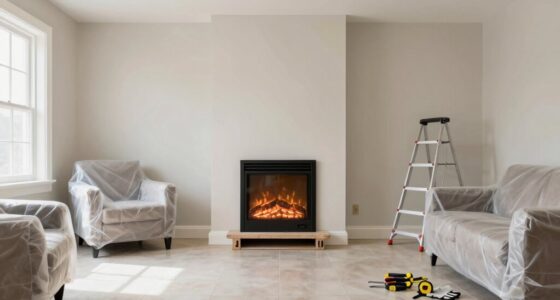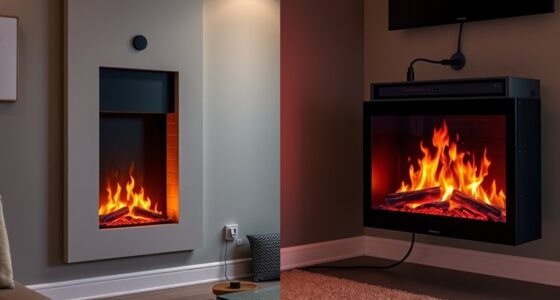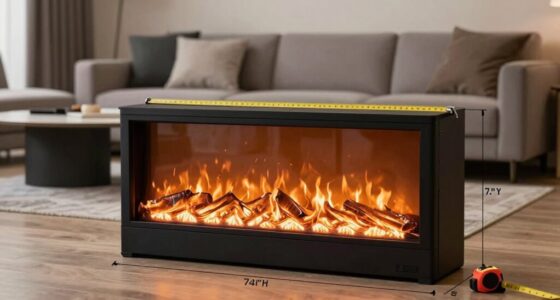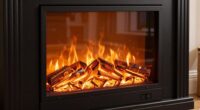
Insert depth greatly impacts your fireplace conversion’s safety, efficiency, and compliance with building codes. If it’s too deep, it can block proper venting, cause overheating, or reduce chimney clearance, increasing fire risk. Too shallow, and it might not provide enough insulation or proper fit, leading to heat transfer issues. Getting the right measurement ensures your installation is safe and performs well. If you want to understand how to measure accurately and optimize your setup, keep exploring the details.

Get home appliances delivered free — and shop member deals
- Fast, free delivery on millions of items
- Access to Prime Big Deal Days deals on October 6–7
- Prime Video, Amazon Music and more included
Key Takeaways
- Insert depth influences chimney clearance, affecting venting and heat dissipation during fireplace conversions.
- Proper depth ensures compliance with safety standards and prevents fire hazards in conversions.
- Incorrect insert depth can cause gaps, reducing insulation effectiveness and energy efficiency.
- Accurate measurement and conversion of insert depth are crucial for proper installation and safety.
- Adequate clearance and barrier considerations depend on correct insert depth to prevent overheating.

Have you ever wondered how to accurately convert insert depths and fireplace measurements for your remodel or installation? Understanding how insert depth impacts your project is essential, especially when considering factors like chimney clearance and insulation requirements. The depth of your fireplace insert isn’t just a matter of aesthetics or fit; it plays a crucial role in ensuring safety and efficiency.
Understanding insert depth is crucial for safety, efficiency, and proper chimney clearance in fireplace installations.
When selecting an insert, the depth determines how well it fits into your existing fireplace opening. If the insert is too deep, you might face issues with chimney clearance, which refers to the space needed above the insert to allow proper venting and prevent heat buildup. Insufficient chimney clearance can lead to unsafe conditions, such as increased risk of fire or damage to surrounding structures. Conversely, if the insert is too shallow, it may not fill the opening adequately, leaving gaps that can compromise insulation and heat transfer. Properly measuring and converting insert depths ensures you maintain the necessary chimney clearance, preserving both safety and performance.
Conversion of measurements becomes more complex when considering insulation requirements. An insert that’s too deep or improperly installed can interfere with the fireproofing around your fireplace opening. Insulation is vital for preventing heat transfer to combustible materials, so you need to ensure the insert’s depth aligns with the manufacturer’s specifications and local building codes. This often involves adjusting the depth measurement to accommodate insulation barriers and ensure an airtight fit. Failing to account for insulation needs can lead to gaps that reduce energy efficiency and increase fire risk. Additionally, understanding installation guidelines helps ensure you meet safety standards and optimize your fireplace’s performance. Properly incorporating fireplace measurements ensures a safe and efficient installation. Being aware of clearance requirements is also essential to prevent overheating and ensure proper ventilation, especially when considering insulation barriers during installation.
fireplace insert depth measurement tool
As an affiliate, we earn on qualifying purchases.
As an affiliate, we earn on qualifying purchases.
Frequently Asked Questions
How Do I Measure My Existing Fireplace’s Insert Depth Accurately?
To measure your fireplace’s insert depth accurately, start by identifying the fireplace dimensions, focusing on the front opening and interior depth. Use a tape measure or ruler for precise measurement techniques, placing it from the back wall to the front edge of the opening. Make sure to record the deepest point, as this will help you select the right insert size for a snug fit and efficient operation.
Can Insert Depth Influence the Overall Heating Efficiency of My Fireplace?
Like a master sculptor shapes their masterpiece, your insert depth can shape your fireplace’s efficiency. A deeper insert often improves heat transfer, boosting heating performance, but might affect fireplace aesthetics and increase installation costs. Conversely, a shallower insert might be easier on the eyes and budget but less effective. You should balance both factors to optimize your fireplace’s warmth and style, ensuring it suits your needs and space.
Are There Safety Concerns Related to Incorrect Insert Depth During Conversion?
Yes, incorrect insert depth during conversion can pose safety risks, such as poor airflow or excessive heat buildup. You might also face increased installation costs if adjustments are needed after installation. Besides safety, the wrong depth can harm your fireplace’s aesthetics, making it look uneven or unbalanced. To avoid these issues, make certain proper measurements and professional installation, safeguarding your home while maintaining a sleek, attractive fireplace.
What Tools Are Needed to Adjust Insert Depth Properly?
To adjust insert depth properly, you’ll need a tape measure for precise measurements, a level to guarantee proper positioning, and possibly a wrench or screwdriver to secure components. Check ventilation requirements to guarantee safe airflow, and confirm material compatibility to avoid damage. Visualize the process by imagining the insert fitting snugly without gaps, ensuring safety and efficiency. These tools help you achieve accurate, safe adjustments during your fireplace conversion.
Does Insert Depth Impact the Compatibility With Different Fireplace Styles?
Yes, insert depth impacts compatibility with various fireplace styles. When you choose an insert with the right depth, it guarantees better integration with your fireplace’s aesthetics, providing a seamless look. A mismatched depth can disrupt the visual harmony and reduce overall fireplace functionality. To maximize insert compatibility, measure your fireplace carefully and select an insert that complements its dimensions and style, ensuring both safety and a pleasing appearance.
fireplace insert safety clearance gauge
As an affiliate, we earn on qualifying purchases.
As an affiliate, we earn on qualifying purchases.
Conclusion
Understanding how insert depth impacts fireplace conversions is like tuning a fine instrument — every detail matters. When you pay attention to these measurements, you’ll guarantee your new insert fits seamlessly and performs beautifully. It’s not just about enclosing a space; it’s about creating harmony between form and function. So, measure carefully, choose wisely, and let your fireplace become the centerpiece of warmth and style, perfectly tuned to your home’s unique rhythm.
fireplace insulation barrier kit
As an affiliate, we earn on qualifying purchases.
As an affiliate, we earn on qualifying purchases.
fireplace venting and chimney clearance
As an affiliate, we earn on qualifying purchases.
As an affiliate, we earn on qualifying purchases.
Fall Picks
fall essentials
As an affiliate, we earn on qualifying purchases.