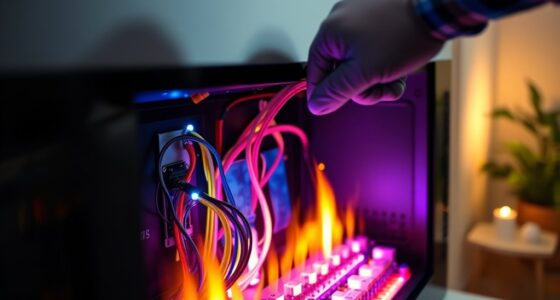
To check and replace your electric fireplace fuse, first unplug the unit for safety. Locate the fuse compartment, usually behind a panel, and carefully remove the fuse using insulated tools if needed. Inspect it for visible damage like a broken filament or discoloration. Match a new fuse with the specified amperage and voltage, then insert it securely. Restoring power and testing the fireplace can confirm if the issue is fixed. Continue to explore more tips for a safe, proper replacement.
Key Takeaways
- Unplug the fireplace and locate the fuse compartment, usually accessible via a panel or cover.
- Carefully inspect the fuse for visible damage such as a broken filament or discoloration.
- Remove the blown fuse using insulated tools or fingers, handling it gently to avoid damage.
- Replace with a fuse that matches the manufacturer’s specified type, amperage, and voltage.
- After replacing, secure the fuse compartment, restore power, and test the fireplace for proper operation.
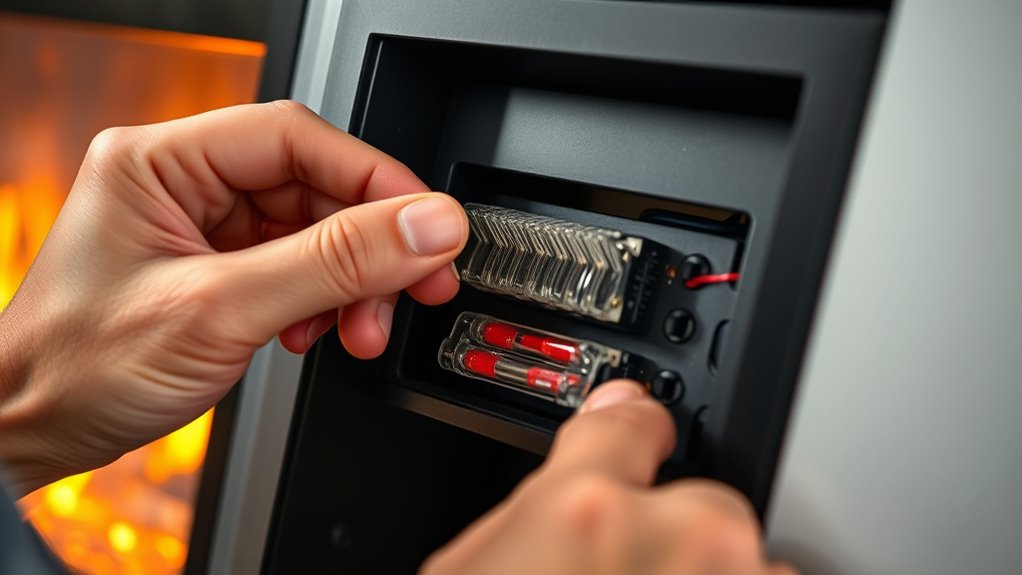
If your electric fireplace isn’t working properly, a blown fuse could be be the culprit. Fuses are essential safety devices that protect your appliance from electrical overloads or short circuits. Before you start troubleshooting, it’s important to understand the different fuse types your fireplace might use. Common fuse types include cartridge fuses, glass tube fuses, and blade fuses. Cartridge fuses are cylindrical and often found in newer models, while glass tube fuses are transparent, allowing you to see the blown filament inside. Blade fuses are flat and typically used in older or budget models. Knowing the fuse type helps ensure you select the correct replacement and avoid unnecessary damage or safety hazards.
Understanding fuse types helps ensure safe and proper replacement for your electric fireplace.
Safety precautions should always come first when working with electrical components. Before inspecting or replacing a fuse, unplug the fireplace from the power outlet. This step helps prevent accidental shocks or further electrical damage. Wear insulated gloves if possible, especially if you’re uncertain about the fuse’s condition or if corrosion is present. Always handle fuses with care, avoiding contact with other electrical parts. If you’re not confident in your ability to safely perform the task, consider consulting a professional electrician. Remember, fuses are designed to blow for safety reasons, so forcing or bypassing a blown fuse can lead to serious safety risks or further damage to your fireplace.
Once you’ve confirmed that the power is disconnected, locate the fuse compartment. This is usually accessible via a panel or cover at the back or bottom of the fireplace. Carefully open the panel, taking note of how the fuse is positioned. Examine the fuse for any visible signs of damage—such as a broken filament, blackened or cloudy appearance, or discoloration. If you find a blown fuse, remove it gently using insulated tools or your fingers, avoiding any force that could damage the socket. When replacing the fuse, ensure you select the same fuse type, amperage rating, and voltage rating as specified by the manufacturer. Using the wrong fuse can compromise safety and functionality.
After installing the new fuse, double-check that it’s seated firmly and correctly in its socket. Close the compartment securely, restore power, and turn on your fireplace. If it still doesn’t work, the issue may not be fuse-related, and further troubleshooting or professional assistance might be necessary. Always remember, safety and proper fuse handling are paramount. By understanding fuse types and adhering to safety precautions, you can replace your electric fireplace fuse confidently, ensuring safe operation and extending the life of your appliance. Additionally, being familiar with common fuse types can help you choose the right replacement more efficiently.
Frequently Asked Questions
How Do I Reset My Electric Fireplace’s Fuse Without Replacing It?
You can’t truly reset an electric fireplace fuse without replacing it if it’s blown. First, unplug your fireplace and locate the fuse. Conduct fuse testing by inspecting for visible damage or testing with a multimeter. If the fuse is blown, replacing it with a new one is necessary for safety and proper function. Remember, attempting to bypass or reset a blown fuse isn’t safe and may damage your fireplace.
Are There Specific Fuse Types Recommended for Different Electric Fireplace Models?
For your electric fireplace, focus on fuse compatibility to guarantee safety and proper function. Specific fuse types, like slow-blow or fast-blow, match different models for fire safety and fuse longevity. Always check your fireplace’s manual or manufacturer’s recommendations before selecting a fuse. Using the correct fuse type prevents potential overheating or electrical issues, helping you maintain a safe, seamless, and super-efficient fireplace experience.
Can a Blown Fuse Cause Intermittent Operation of My Electric Fireplace?
Yes, a blown fuse can cause intermittent operation of your electric fireplace. During fuse troubleshooting, you might notice inconsistent heating or power issues. Always prioritize electrical safety by unplugging the unit before inspecting or replacing the fuse. A blown fuse interrupts electrical flow, leading to irregular performance. Replacing it with the correct type guarantees safe, reliable operation. If problems persist, consult a professional to prevent damage or safety hazards.
What Safety Precautions Should I Take Before Inspecting the Fuse?
Before inspecting the fuse, prioritize electrical safety and proper handling. Turn off the power supply at the circuit breaker, unplug the fireplace, and wait for components to cool. Wear insulated gloves and use a non-conductive tool to remove the fuse. Keep your workspace dry, clear of clutter, and make certain you’re grounded to prevent shocks. By taking these precautions, you safeguard yourself and ensure a safe, effective inspection.
How Often Should I Check or Replace the Fuse in My Electric Fireplace?
You should check or replace the fuse in your electric fireplace every 1-2 years, depending on usage and fuse lifespan. Regular troubleshooting fuse issues helps prevent unexpected outages and ensures safety. If you notice frequent tripping or the fireplace isn’t working, it’s time to inspect the fuse. Keep an eye on signs of wear or damage, and replace the fuse promptly to maintain your fireplace’s performance and safety.
Conclusion
Remember, a stitch in time saves nine. If you notice your electric fireplace isn’t working, checking and replacing the fuse is a quick fix that can save you from bigger problems down the line. Always guarantee safety first—disconnect power before inspecting. With a little effort, you can keep your fireplace running smoothly and enjoy cozy evenings. Don’t wait until it’s too late; regular maintenance keeps things heating up without hassle.