
TL;DR

Get home appliances delivered free with Prime
- Fast, free delivery on millions of items
- Prime Video, Amazon Music and more included
- Member-only deals all year
A Hunker report outlines ways to reduce the chance of mice entering a garage without relying on traps or chemicals. It recommends inspecting for small openings, sealing them with suitable materials, maintaining garage-door seals and limiting access to food and nesting materials.
A Hunker report on winter mouse prevention advises homeowners to inspect garages for small openings and close them with metal barriers and sealants, rather than relying only on traps or chemicals. The advice matters because mice can enter through gaps that are easy to overlook, potentially reaching stored belongings or areas connected to the home.
The report cites the Centers for Disease Control and Prevention as saying mice can squeeze through openings about one-quarter inch wide, roughly the diameter of a pencil. That means a visual check of obvious holes may not be enough: the report recommends examining the outside of the garage, including its foundation, the area where the ground meets siding, and the frames around doors and windows.
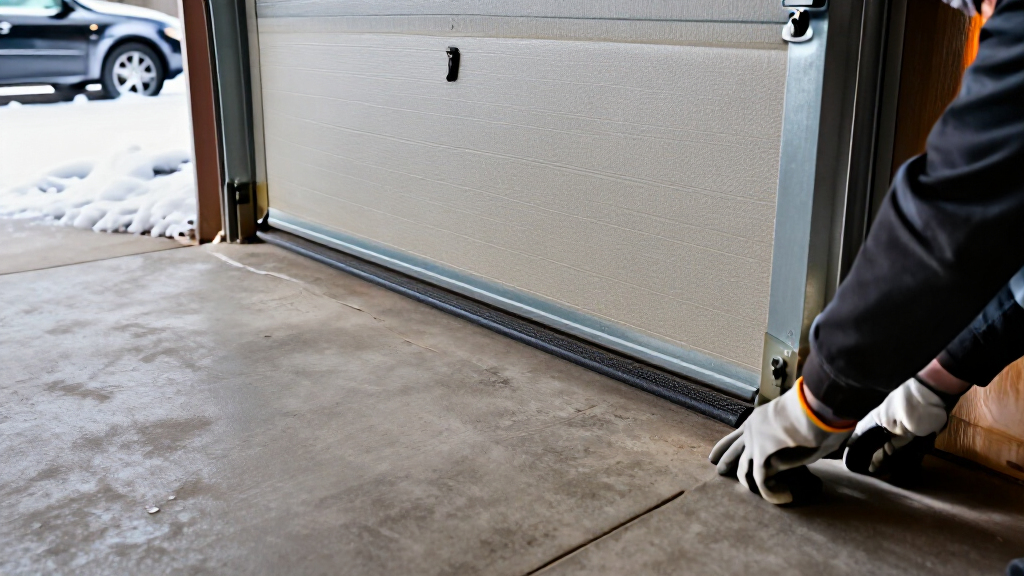
Garage doors need particular attention. The suggested inspection points include gaps beneath the bottom seal, at the corners, beside the metal tracks and along the top frame. The report also lists rooflines, vents, exhaust openings, soffits, and places where pipes or wires enter as areas to check. For garages with brick facades, it says to identify weep holes—intentional openings between bricks—before deciding whether and how to protect them.
For a second check, the report suggests closing the doors and turning off the lights inside. Daylight showing through can reveal gaps, though this method is an inspection aid, not a guarantee that every opening will be visible. Small holes can be packed with steel wool or copper mesh and secured with caulk or expanding foam; larger openings may call for metal sheeting, hardware cloth or cement. The right repair depends on the opening and the structure.
Small Gaps Can Become Entry Routes
Closing access points can address the problem before mice settle in, reducing the chance that a garage becomes a source of damage or a route toward the house. The Hunker report says mice may use insulation and stored materials as nesting supplies, so prevention is relevant even when there is no obvious food in the garage.
The advice also distinguishes between exclusion and housekeeping. Sealing openings is the main barrier; storing pet food, birdseed and other food in closed containers, and clearing away cardboard, paper and fabric, can make the space less attractive if a mouse does get inside. These steps may reduce opportunities for nesting and feeding, but the report does not claim they guarantee a mouse-free garage.
For homeowners who prefer not to use chemicals or traps, physical exclusion offers a practical alternative to consider. It is not a substitute for dealing with an active infestation, however. The report provides prevention guidance, not a diagnosis or an assessment of any particular building.
As an affiliate, we earn on qualifying purchases.
Where to Inspect Around the Garage
The report’s central point is that openings can be small and spread across multiple parts of a garage. Its inspection list covers the foundation and siding junction, exterior door frames, windows, roof edges and service penetrations. Checking both the exterior and interior can help identify gaps that are hidden from one side.
For garage doors, worn or poorly fitting seals may leave openings at the floor, corners, sides or top. Hunker recommends considering a reinforced, rodent-resistant bottom seal, stainless-steel corner shields and shielding for gaps along the tracks or top. If the door is in poor condition, repair or replacement may be an option. These are recommendations from the report; it does not specify products, costs or a standard that every garage door must meet.
The CDC measurement cited by Hunker provides a reason to pay attention to narrow openings, but it does not establish that a mouse is present at a particular property. Likewise, weep holes serve a building function, so readers should not simply seal them without understanding their purpose. The source report does not provide detailed instructions for preserving ventilation or drainage while protecting these openings.
“Mice can squeeze through openings just 1/4-inch wide.”
— Centers for Disease Control and Prevention, as cited by Hunker
As an affiliate, we earn on qualifying purchases.
Limits of the Prevention Advice
The source is a home-maintenance report, not a field study comparing prevention methods. It does not provide data on how often the suggested repairs prevent entry, nor does it assess their performance across different garage designs or climates. The CDC measurement is attributed by Hunker, but the supplied report does not link to the underlying CDC material.
It is also unclear from the report how to handle openings that have a ventilation, drainage or other building purpose, including brick weep holes. Sealing materials and methods may not suit every surface or gap. The report does not say how to confirm that mice are absent, or what steps to take if signs of an established infestation—such as droppings or damaged materials—are found. Its guidance is about reducing entry opportunities, not a guarantee or a complete pest-control plan.
As an affiliate, we earn on qualifying purchases.
Inspect, Seal and Recheck
The immediate next step for homeowners following the report is to inspect the garage perimeter and door seals, then choose a repair suited to each opening. After sealing, check that the garage door still operates correctly and that repairs have not blocked openings needed for drainage or ventilation. Store food in sealed containers and remove loose paper, cardboard and fabric that could provide nesting material.
The source does not announce a deadline, follow-up report or formal program. Homeowners who cannot identify the purpose of an opening, or who find signs of an active infestation, may need advice from a qualified pest-control or building professional. The next useful check is whether gaps remain after repairs and whether new signs of rodent activity appear.
As an affiliate, we earn on qualifying purchases.
Key Questions
How small an opening can a mouse fit through?
The Hunker report cites the CDC as saying mice can squeeze through openings about one-quarter inch wide, approximately the diameter of a pencil. The measurement is a reason to inspect narrow gaps, not proof that mice are present in a specific garage.
What materials does the report suggest for small holes?
It recommends filling small holes with steel wool or copper mesh and securing the material with caulk or expanding foam. Larger gaps may require a more substantial barrier, such as metal sheeting, hardware cloth or cement. The suitable option depends on the opening and building surface.
Where should I check for mouse entry points?
Inspect the foundation, the ground-to-siding area, door and window frames, and the garage door’s bottom, corners, sides and top. The report also lists rooflines, vents, soffits, exhaust openings and places where pipes or wires pass through walls.
Will storing food and removing clutter keep mice out?
Those steps can make a garage less appealing, according to Hunker, but they do not replace sealing entry points. Keep pet food and birdseed in closed containers and clear away soft materials that could be used for nesting.
Source: rss
Fall Picks
fall essentials
As an affiliate, we earn on qualifying purchases.