TL;DR

Get home appliances delivered free with Prime
- Fast, free delivery on millions of items
- Prime Video, Amazon Music and more included
- Member-only deals all year
Hunker asked HVAC professional Andrew Kuznetsov what homeowners should do before turning off air conditioning for the season. He said most outdoor units are designed to remain outside in typical winter weather, but homeowners can clear debris, use a cover only for limited periods and arrange a technician inspection.
Most homeowners do not need to winterize an outdoor air-conditioning unit before switching to heat, according to HVAC professional Andrew Kuznetsov, who spoke with Hunker. His advice is to clear leaves and other debris, use a cover only during especially wet or snowy periods if desired, and arrange a technician inspection between cooling seasons.
Kuznetsov, president of ADRIUM Service Solutions, told Hunker that outdoor units are designed to remain outdoors through ordinary seasonal conditions, including sun, rain and snow. He said elaborate winter preparation is generally unnecessary in places that do not experience prolonged, extreme cold. The guidance is not a guarantee that every unit or location can be treated the same way; the source does not address specific models, manufacturer instructions or local climate requirements.
Homeowners who want extra protection can position an umbrella or canopy to reduce water collecting inside the condenser, Kuznetsov said. A properly secured cover may also shield the unit from debris in strong winds. Before covering it, he advised checking that leaves, twigs and other obstructions are removed and that the fan blades can spin freely. These are limited external checks, not a substitute for servicing electrical or refrigerant components.
Kuznetsov warned against leaving a cover on for the whole winter. Animals may use a covered unit as shelter, and a long-covered unit may not be checked until spring. He suggested using a cover during the rainiest or snowiest periods and removing it afterward so the unit can air out. He also recommended an inspection by a technician to check components such as capacitors, electrical connections, the fan, refrigerant level and evaporator and condenser coils.
Avoiding Spring Startup Problems
Off-season preparation can affect whether an air conditioner is ready when warm weather returns. Debris around the outdoor unit can obstruct the fan, while animals or prolonged exposure to moisture may create problems that go unnoticed during winter. A cover can offer some protection, but the advice presented by Hunker makes clear that leaving one in place continuously may introduce a different risk.
Professional maintenance also matters because faults are not always visible from outside. Kuznetsov said dirty coils can reduce the system’s ability to transfer heat, which can lower efficiency and raise operating costs. A technician can inspect parts and connections that homeowners should not attempt to service themselves. The story’s practical distinction is between simple visual cleanup and more technical checks best handled by an HVAC professional.
Households can also prepare for the heating season without working on the AC unit. Hunker reported that Kuznetsov recommended addressing drafts with weatherstripping or thermal curtains, moving furniture away from vents and reversing ceiling fans to help circulate warm air. These steps are separate from maintaining the outdoor condenser, but can help homeowners shift their attention from cooling to heating.
Products Worth Considering

Blueair Blue Pure 511i Max Smart Air Purifier

Levoit Vital 100S-P Air Purifier with Washable Pre-Filter

Coway Mighty AP-1512HH(W) Air Purifier, White
As an affiliate, we earn on qualifying purchases.
What the HVAC Advice Covers
The guidance comes from a Hunker report based on an interview with Andrew Kuznetsov, rather than a new regulation or a product-specific instruction. Hunker’s report cites a 2022 U.S. Energy Information Administration finding that almost 90% of American households rely on air conditioning. That figure describes household use in the cited report; it does not measure how many homes need winter preparation.
An air-conditioning system includes indoor and outdoor equipment. In cooling mode, refrigerant moves heat through the system and the outdoor condenser releases it to the air. Kuznetsov’s advice focuses on protecting that outdoor component during the period when cooling is not in use. The report does not provide a one-size-fits-all checklist for every system, nor does it replace the manufacturer’s maintenance instructions.
His recommendations distinguish between ordinary winter exposure and circumstances that may call for more care. The interview says typical weather is generally manageable for outdoor units, while prolonged sub-zero conditions are outside the conditions he described as ordinary. Homeowners should account for their local weather and their equipment’s instructions instead of assuming the same approach applies everywhere.
“In my opinion, there is no need for the AC to be ‘winterized’.”
— Andrew Kuznetsov, president of ADRIUM Service Solutions, in an interview with Hunker
Climate and Model Differences
The advice does not identify which specific climates, AC models or installation types need additional protection. It also does not give temperature thresholds for when normal winter exposure becomes too severe. The report’s general guidance should not be read as overriding a manufacturer’s instructions or a technician’s advice for a particular system.
It is also unclear how often homeowners should schedule the recommended inspection, what it might cost or whether a given unit has existing damage. The source provides no data comparing covered and uncovered units or quantifying the effect of seasonal maintenance on repair rates. Those questions depend on the equipment and conditions at each home.
Before Cooling Season Ends
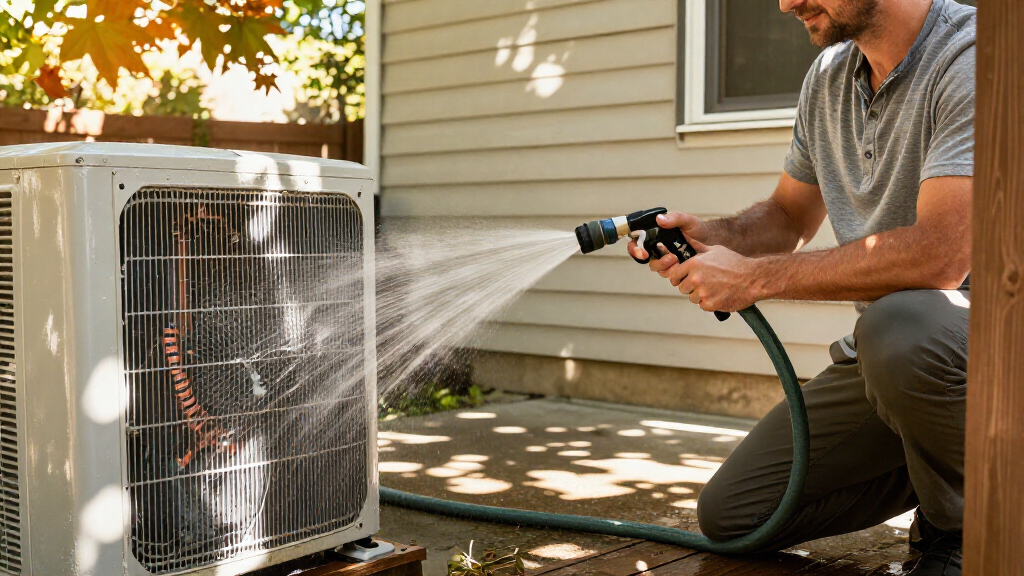
Before switching the thermostat to heat, homeowners can remove visible debris around the outdoor unit and check that nothing obstructs the fan. Anyone choosing to use a cover can follow Kuznetsov’s advice to secure it appropriately, limit use to particularly wet or snowy periods and remove it afterward. The unit should not be opened or have internal components serviced as part of this basic cleanup.
Homeowners can then arrange an HVAC technician’s inspection, especially if the system has shown problems or is due for service. They should follow the equipment manufacturer’s instructions and ask a qualified professional about unusual local weather or unit-specific concerns. The source does not announce a formal deadline or a new maintenance standard; its next practical step is routine preparation before the next period of use.
Key Questions
Should I cover my outdoor AC unit all winter?
Not necessarily. Kuznetsov told Hunker that a cover can offer some protection, but leaving it on all season may give animals a place to shelter. He suggested using one during the rainiest or snowiest periods and removing it afterward.
What should I clear before shutting off the AC?
Remove visible leaves, twigs and other debris around the unit, and check that nothing obstructs the fan blades. The report does not recommend homeowners work on internal electrical or refrigerant components.
Do I need a technician to winterize the unit?
Kuznetsov said elaborate winterization is generally unnecessary in ordinary conditions, but recommended a technician inspection between seasons. A professional can check components, connections, refrigerant and coils.
Can I follow this advice in every climate?
The report does not give a universal rule for all climates or AC models. It describes typical seasonal weather, not prolonged extreme cold. Follow your unit’s manufacturer instructions and ask an HVAC professional about local conditions.
Source: hunker.com