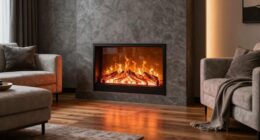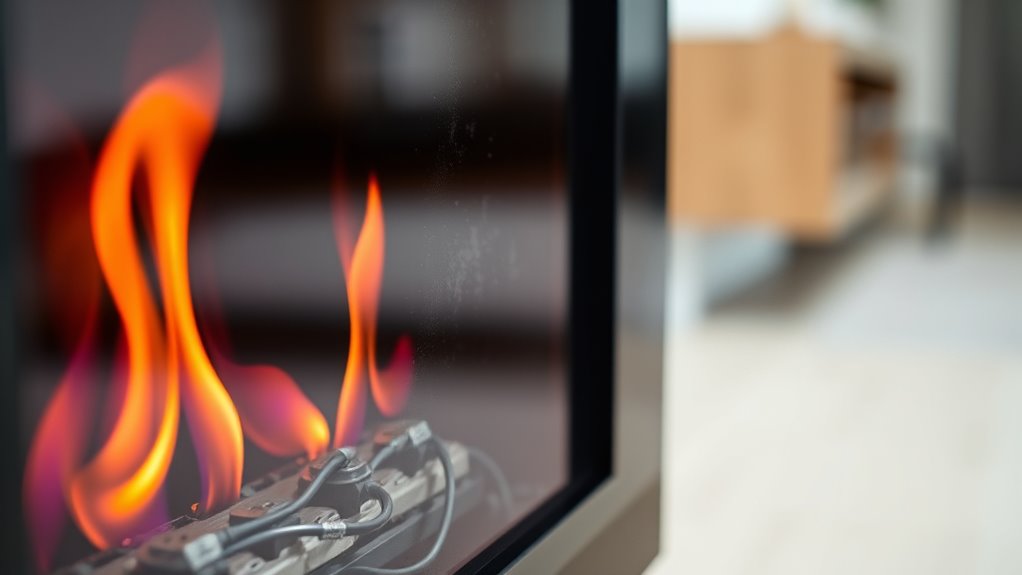
If your electric fireplace has flickering flames, strange odors, or no heat at all, it’s a sign you need maintenance. Remote control issues or visible damage also indicate problems. Unusual noises like buzzing or rattling suggest loose parts or wiring issues. Dust, dirt, or burnt components can impair performance and safety. If these signs appear, it’s best to inspect and address them promptly—keep going to discover how to get your fireplace back in top shape.
Key Takeaways
- Remote control stops functioning or responds intermittently, indicating possible battery or signal issues.
- Unusual odors like burning plastic or chemical smells suggest overheating or electrical faults.
- Flickering or dim flames, along with strange noises, can signal wiring or internal component problems.
- No heat output despite the fireplace being on may point to a faulty heating element or thermostat.
- Visible damage, burnt components, or accumulated dust and dirt require inspection and possible professional repair.
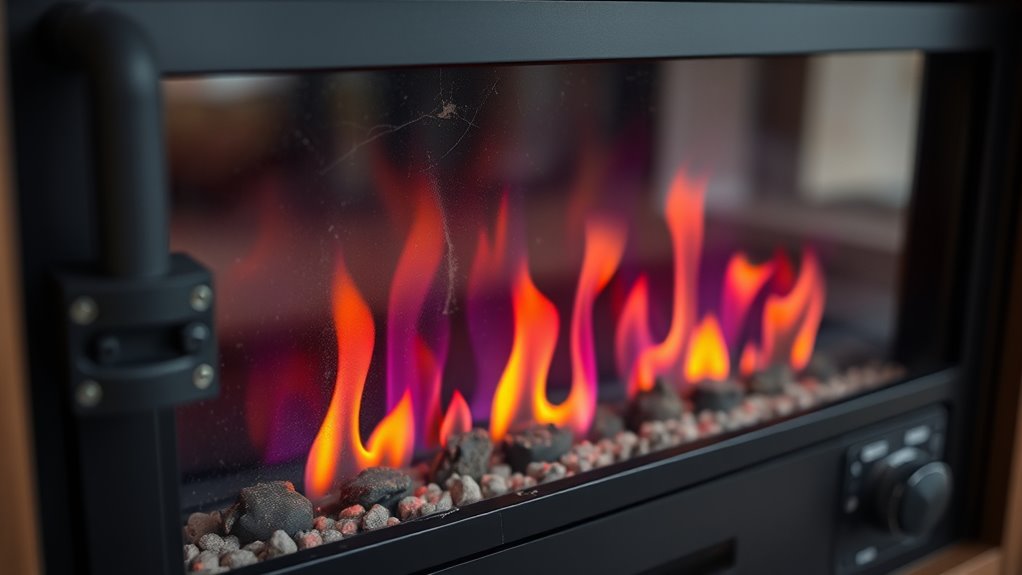
Have you noticed any unusual behavior from your electric fireplace lately? If so, it could be a sign that it’s time for some maintenance. One common issue people face is remote control problems. If your remote suddenly stops working, responds intermittently, or doesn’t control the fireplace at all, it’s often due to a faulty battery, interference, or a malfunction in the remote or receiver. Try replacing the batteries first, making sure nothing is blocking the signal between the remote and the unit. If that doesn’t work, check for any visible damage or dirt on the remote’s sensor or the fireplace’s receiver. Sometimes, cleaning the sensor with a soft cloth can restore proper communication. Persistent remote issues might mean a deeper electrical problem or a need for professional inspection to ensure your remote control system is functioning correctly and safely. Understanding city dynamics can help you troubleshoot and maintain your appliance more effectively.
Another warning sign to watch out for is an unusual odor emanating from your electric fireplace. Typically, electric models shouldn’t produce any smell, so if you notice a burning or plastic-like odor, it indicates that something isn’t right. The odor could be caused by dust or debris burning off the heating elements, which isn’t necessarily dangerous but still worth inspecting. However, a more concerning odor—such as a chemical or burning plastic smell—may signal electrical components overheating or short-circuiting. Ignoring this smell can lead to further damage or even pose safety risks. Turn off the fireplace immediately if you detect an unusual odor, unplug it, and give it some time to cool down. Once cooled, carefully inspect the unit for visible signs of damage, burnt components, or accumulated dust and dirt. If you notice anything suspicious or the smell persists, it’s best to contact a professional technician to diagnose and repair the issue before using the fireplace again.
Beyond remote control issues and strange odors, other signs that your electric fireplace may need maintenance include flickering flames, unusual noises, or a lack of heat output. Flickering or dim flames could point to electrical problems or faulty wiring. Strange noises, like buzzing or rattling, might indicate loose parts or internal components that need tightening or replacement. A fireplace that doesn’t produce heat when it should could mean a faulty heating element or thermostat. Regularly inspecting your unit and cleaning any dust or debris can help prevent many of these problems, but if you notice persistent issues or anything out of the ordinary, don’t hesitate to seek professional help. Addressing these signs early can keep your electric fireplace running safely and efficiently, extending its lifespan and ensuring it remains a cozy feature in your home.

EUHOMY 50 Inch Electric Fireplace Wall Recessed and Wall Mounted with Adjustable Flame Color, Fireplace Heater with Remote Control, Linear Fireplace with Timer, Touch Screen, Log & Crystal, 750/1500W
Package Inclusions & 2-Year Technical Support: : The EUHOMY electric fireplace is equipped with 1* carbon log, 1*...
As an affiliate, we earn on qualifying purchases.
Frequently Asked Questions
How Often Should I Schedule Professional Inspections?
You should schedule professional inspections once a year to guarantee your electric fireplace remains safe and energy-efficient. Regular check-ups help maintain fireplace safety by catching potential issues early and improve energy efficiency by ensuring all components work properly. If you notice any unusual sounds, sparks, or a decline in heat output, consider scheduling an inspection sooner. Consistent maintenance keeps your electric fireplace running safely and efficiently year-round.
Can I Clean the Fireplace Myself Safely?
Sure, you can try fireplace cleaning yourself—just don’t turn your living room into a science lab. Always follow safety precautions: unplug the unit, wear gloves, and avoid water near electrical components. Use a soft cloth and mild cleaner for dust or smudges. If you’re feeling adventurous, skip the safety gear and risk a shock; otherwise, professional maintenance is the smarter, safer choice for keeping your electric fireplace sparkling and trouble-free.
What Are Common Electrical Issues to Look For?
You should watch for flickering lights, frequent resets, or unusual buzzing sounds, as these are common electrical issues that affect fireplace safety. Check the power cord and outlet for damage during electrical troubleshooting. If you notice any sparks or burning smells, turn off the unit immediately. Regularly inspecting these signs helps guarantee your electric fireplace operates safely and efficiently, preventing potential hazards.
How Do I Reset a Tripped Circuit Breaker?
Think of your circuit breaker as a safety gate; when it trips, it’s protecting your home. To reset it, locate your breaker panel, find the switch in the ‘off’ position, and flip it back to ‘on’. This circuit breaker reset restores electrical safety, preventing overloads. Always guarantee the issue causing the trip is resolved before resetting to keep your electric fireplace operating safely and efficiently.
Are There Specific Filters or Parts I Should Replace Regularly?
You should regularly replace the air filter to guarantee efficient airflow and prevent dust buildup. It’s also important to inspect the heating element for signs of wear or damage, like discoloration or corrosion. These steps help maintain your electric fireplace’s performance and safety. Check your user manual for specific replacement intervals, but generally, changing the air filter every 1-3 months and inspecting the heating element annually keeps everything running smoothly.
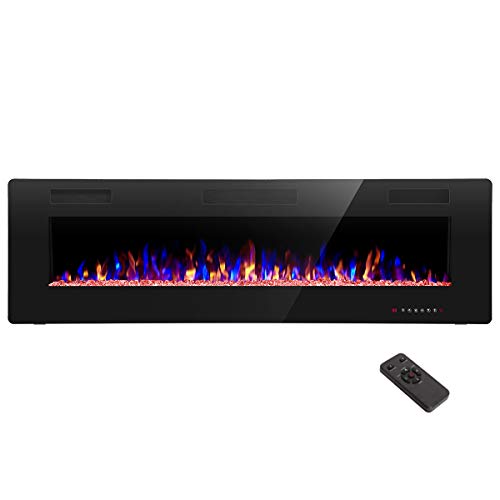
R.W.FLAME 60" Recessed and Wall Mounted Electric Fireplace, Low Noise, Fit for 2 x 6 Stud, Remote Control with Timer, Touch Screen, Adjustable Flame Color and Speed, 750-1500W
Attractive and Practical Design: 3.86"D x 60"W x 18.11"H,The thickness of the new style is only 3.86 inches...
As an affiliate, we earn on qualifying purchases.
Conclusion
If you notice flickering flames or strange noises, it’s like your fireplace is sending you a silent alarm. Don’t ignore these signs—imagine your cozy evenings without that warm, inviting glow. Regular maintenance keeps your electric fireplace shining bright and functioning smoothly, so you can keep relaxing by its gentle, flickering light. Treat it well, and it’ll continue to be the comforting centerpiece of your home for years to come.

Westinghouse 60 Inch Electric Fireplace Heater, Compatible with Alexa & Google Home, Wall Mount or in-Wall Recessed Fireplace Insert, 24 Hour Timer, Color Changing Flames, 750W/1500W Indoor Heater
CUSTOMIZE APPEARANCE: Up to 144 total color combinations for flames and embers, 5 independent brightness levels, and 5...
As an affiliate, we earn on qualifying purchases.

Touchstone Smart Electric Fireplace-The Sideline 50" Wide-in Wall Recessed - 30 Realistic Ember Color/Flame Options - 1,500W Heater w/Thermostat - Log & Crystal Hearth Options - Alexa/WiFi Enabled
APPEARANCE: The Sideline electric fireplace is designed for recessed in-wall mounting. Creating a cozy atmosphere of a traditional...
As an affiliate, we earn on qualifying purchases.