
TL;DR

Get home appliances delivered free with Prime
- Fast, free delivery on millions of items
- Prime Video, Amazon Music and more included
- Member-only deals all year
A Hunker home-care report describes a DIY curtain refresher made with ¼ cup rubbing alcohol and 1 cup distilled water. The spray may help freshen fabric as a finishing touch, but it does not replace cleaning, and fragrance added to it can mask rather than remove the source of an odor.
A Hunker home-care report outlines a DIY curtain refresher made from ¼ cup rubbing alcohol and 1 cup distilled water, while stressing that it is not a substitute for washing or other care-label instructions. The advice matters to people trying to address stale-smelling curtains, but the report also warns that alcohol is flammable and that scented oil may mask an odor rather than remove its cause.
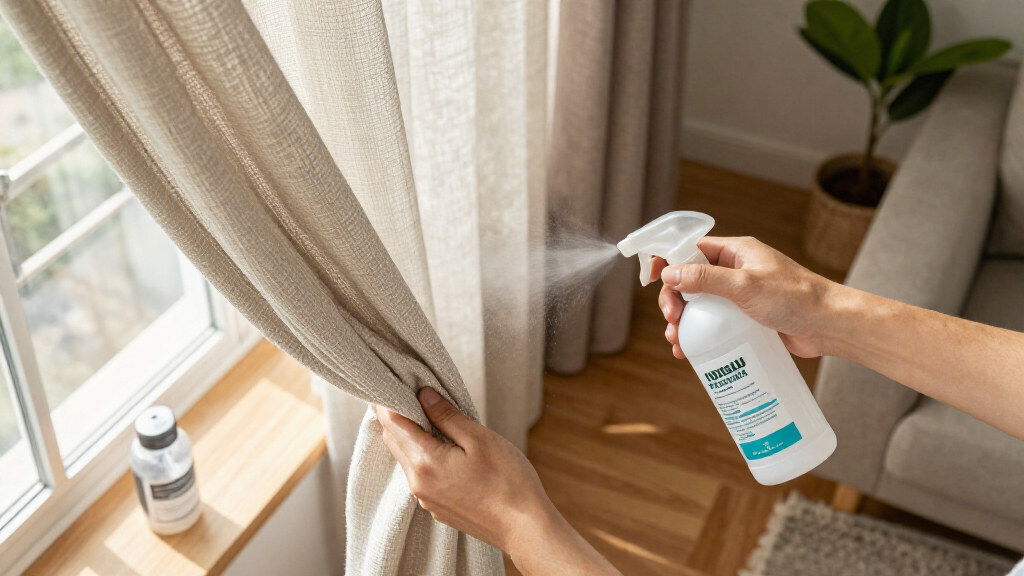
The report describes rubbing alcohol as a fast-evaporating solvent and suggests using the diluted mixture as an alternative to linen spray. It recommends first vacuuming curtains with an upholstery attachment to remove loose dust. The solution is then mixed in a clean, labeled spray bottle using one part rubbing alcohol to four parts distilled water by volume, based on the listed measurements.
Users are advised to lightly mist the fabric, not soak it, and let it air-dry fully. If adding essential oil, the report says to test it on the fabric first for stains or residue and to shake the bottle before each use so the oil is distributed. The optional fragrance is not necessary for the alcohol mixture to evaporate, according to the article.
Hunker says the spray should be treated as an occasional finishing touch after cleaning, not as a way to clean curtains or solve persistent odor by itself. It advises following the garment or curtain care label and checking with a dry cleaner before applying homemade spray to dry-clean-only drapes. The report also says to apply it only in a well-ventilated area, away from candles, heaters and other heat sources.
A Refresher, Not a Cleaning Substitute
The practical appeal is that the mixture uses common household ingredients and is presented as a quick way to freshen fabric between more thorough cleanings. That distinction matters: readers could mistake a pleasant scent for evidence that an underlying source of stale odor has been addressed. Hunker explicitly cautions that adding fragrance may mask the smell rather than remove whatever caused it.
Fabric and fire safety also affect whether the tip is appropriate. A spray that seems harmless on one curtain may leave marks or residue on another, particularly if essential oils are included. Alcohol’s flammability means the preparation and application should be kept away from ignition and heat sources. The report does not present the mixture as a tested treatment for every textile or odor, so care labels and cautious spot-testing remain important.
Products Worth Considering

Shark Navigator Robot Vacuum with 30-Day Self-Empty Base, White (AV2110S)

Dyson Ball Animal Total Clean Upright Vacuum

iRobot Roomba Max 715 Pet Robot Vacuum with AutoEmpty Dock
As an affiliate, we earn on qualifying purchases.
How the Suggested Mixture Works
The report frames the spray as an alternative to commercial linen spray, not as a new cleaning standard. Its recipe combines rubbing alcohol and distilled water; optional essential oil is added only for fragrance. The stated reason for using alcohol is that it evaporates quickly, while the article says its own strong scent should not linger after the mixture dries.
The instructions place the spray after basic dust removal and alongside regular curtain care. Readers are told to vacuum first, mist lightly and allow the fabric to dry. That order is significant to the report’s claim: the solution is meant as a final refresh on curtains that have already been cleaned as needed, rather than a replacement for removing dirt or addressing the source of an odor.
“Think of this solution as an alternative to a linen spray.”
— Hunker report
Fabric Results May Differ
The supplied report does not identify testing across different curtain materials, finishes or dyes, and it does not establish that the mixture is suitable for every fabric. It also gives no measured evidence about how much odor the spray removes or how long any effect lasts. Essential oils may leave stains or residue, which is why the article recommends testing them first.
The cause of a stale smell is also not specified. The report cautions that fragrance can mask an odor, but does not offer a diagnosis for persistent smells or say whether alcohol and water will address them. Readers should not infer that spraying the mixture disinfects curtains or resolves a problem that requires laundering or other care. The source provides a recipe and safety cautions, not independent product testing or a universal fabric-care recommendation.
Check Care Labels Before Spraying
Before using the mixture, readers can check the curtain’s care label and vacuum the fabric to remove loose dust. The report recommends testing any optional essential oil on an inconspicuous area and letting the test dry before proceeding. For dry-clean-only curtains, it says to ask a dry cleaner before applying a homemade spray.
If proceeding, the article’s directions are to use a light mist in a well-ventilated space, keep the bottle and spray away from flames and heat, and wait until the curtains are completely dry. The bottle should be labeled and stored upright in a cool place away from heat. The source gives no broader follow-up guidance or claim that the mixture will fix persistent odors, so standard care-label instructions remain the relevant next step.
Key Questions
What is the recipe described in the report?
Hunker specifies ¼ cup rubbing alcohol mixed with 1 cup distilled water in a clean, labeled spray bottle. Essential oil is optional, not required.
Does the spray remove the cause of a stale smell?
The report does not claim that it does. It says added fragrance may mask the odor rather than remove its source, and presents the mixture as an occasional refresher after cleaning.
Can it be used on dry-clean-only curtains?
The report advises checking with a dry cleaner first before applying a homemade spray to dry-clean-only drapes.
What safety precautions does the article recommend?
Use the spray in a well-ventilated area and keep it away from candles, heaters and other heat sources because rubbing alcohol is flammable. Mist lightly and let the curtains air-dry fully.
Source: rss