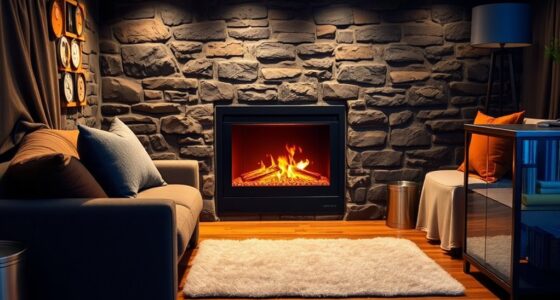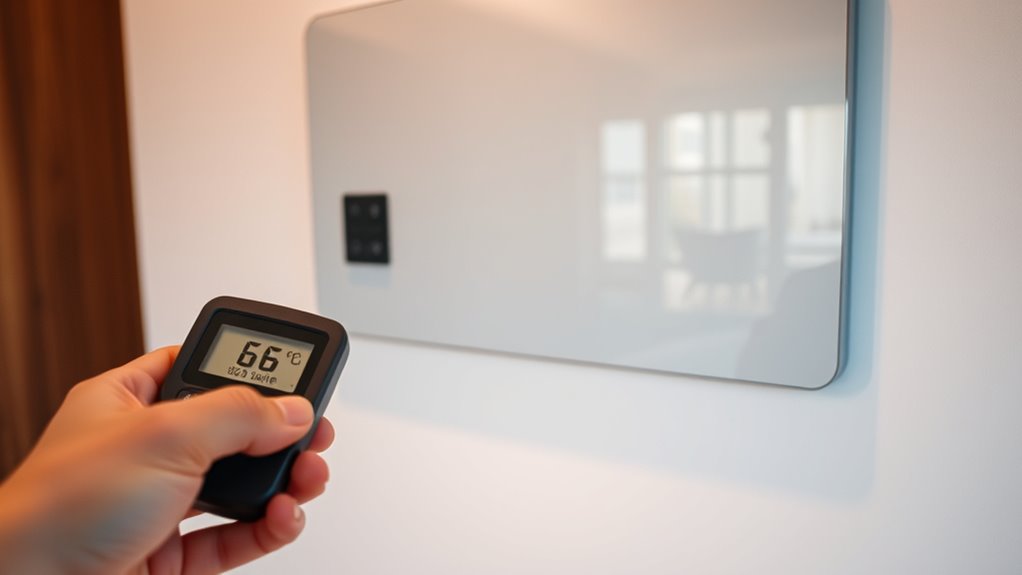
To calculate the wattage per square foot for electric heating, start by measuring the total space in square feet. For well-insulated areas, use around 10 watts per sq ft as a baseline; if insulation is poor, increase that estimate to 15-20 watts per sq ft. Consider factors like window size and wall exposure for more accuracy. Keep in mind, adjusting for insulation and thermostat settings helps optimize comfort and energy use—discover more details ahead.
Key Takeaways
- Measure the room’s total square footage to determine heating needs accurately.
- Start with an estimate of 10 watts per square foot for well-insulated spaces.
- Adjust wattage based on insulation quality: 15–20 watts per sq ft for poorly insulated areas.
- Consider thermostat settings, increasing wattage if higher temperatures are desired.
- Incorporate external factors like windows and wall exposure to refine wattage per square foot calculations.
Have you ever wondered how much lighting you need for a specific space? Well, the same question applies when it comes to electric heating—specifically, calculating wattage per square foot. Knowing this helps guarantee your space stays comfortable without wasting energy. To get started, you need to understand how insulation requirements and thermostat settings influence your heating needs. Proper insulation reduces heat loss, meaning you’ll need less wattage to keep your space warm. Conversely, poorly insulated areas require higher wattage to compensate for the heat escaping through walls, ceilings, or floors. Additionally, thermostat settings play a critical role. Setting your thermostat higher increases your total wattage consumption, while a lower setting decreases it. Balancing these factors is essential for efficient heating.
First, assess your space’s insulation. If your room has high-quality insulation—think double-pane windows, insulated walls, and well-sealed doors—you can use a lower wattage per square foot. For poorly insulated spaces, you’ll need to increase the wattage to maintain comfort. For example, a well-insulated room might need around 10 watts per square foot, whereas a poorly insulated one could require 15 to 20 watts. Next, consider your thermostat settings. If you prefer a warmer environment, set your thermostat higher, which means you’ll need more wattage to reach and maintain that temperature. Conversely, lowering the thermostat by a few degrees can considerably reduce energy consumption, especially if your insulation isn’t ideal.
To determine the appropriate wattage, start by measuring the square footage of your space. Once you know that, decide on a wattage estimate based on your insulation quality. For most well-insulated rooms, multiplying the square footage by 10 watts gives a good starting point. Adjust upward if insulation is poor or if you prefer a warmer setting. Keep in mind that other factors, like the number of windows, external wall exposure, and ceiling height, also influence heating needs. It’s helpful to consider these variables to refine your calculations. Moreover, understanding how merchant services impact energy management can help you optimize your heating system for cost savings.
Finally, always remember that thermostat settings directly impact wattage requirements. If you plan to keep your space at a consistent, comfortable temperature, set your thermostat accordingly and calculate wattage based on that target. Regularly reviewing your insulation and thermostat settings can help you enhance your heating system, conserving energy and reducing costs. By understanding how insulation requirements and thermostat settings work together, you can accurately calculate wattage per square foot and create a warm, energy-efficient environment tailored to your needs.
Frequently Asked Questions
How Does Insulation Affect Wattage Requirements?
Insulation greatly impacts wattage requirements by increasing thermal resistance, meaning less heat escapes your space. When you add better insulation, your heating system doesn’t need to work as hard, reducing wattage needs. Conversely, poor insulation allows more heat to escape, so you’ll need higher wattage to maintain comfort. Improving insulation effectively lowers your energy costs by decreasing the overall wattage required for heating.
Can Existing Wiring Handle High Wattage per Square Foot?
Don’t bite off more than you can chew; verify your wiring capacity first. Existing wiring might not handle high wattage per square foot without tripping the circuit breaker, risking damage or fire. Inspect the gauge of your wiring and the circuit breaker’s rating to ensure they match the demands of your electric heating system. Upgrading your wiring or breaker may be necessary to safely support higher wattage requirements.
What Safety Precautions Are Necessary for High-Wattage Heating?
You need to prioritize safety when handling high-wattage heating systems. Always wear appropriate safety gear like gloves and goggles to protect against electrical hazards. Install emergency shutoffs within easy reach, so you can quickly cut power if needed. Regularly inspect wiring and connections for damage or overheating, and verify your circuit breaker can handle the load. Following these precautions minimizes risks and keeps your environment safe.
How Do Climate Variations Influence Wattage Calculations?
Did you know climate variations can change your wattage needs by up to 30%? When calculating wattage, climate influences factors like solar efficiency and moisture control. Colder, wetter environments demand higher wattage for effective heating, while milder climates require less. Understanding these variations helps you adjust your electric heating system accordingly, ensuring ideal performance and energy efficiency regardless of external conditions.
What Are the Energy Efficiency Considerations for Different Wattage Levels?
You should consider how different wattage levels impact your energy efficiency, cost comparison, and environmental impact. Higher wattage units often heat faster but consume more energy, increasing costs and environmental footprint. Lower wattage options may be more efficient and eco-friendly, though they might take longer to heat spaces. Choosing the right wattage balances comfort, cost savings, and sustainability, helping you reduce energy waste and minimize your environmental impact over time.
Conclusion
By understanding how to calculate wattage per square foot, you gain clarity, you improve efficiency, and you guarantee comfort. With accurate calculations, you optimize energy use, avoid excess costs, and create a warm, inviting space. Remember, precise measurements lead to better results, better savings, and better comfort. So, take the time to calculate, apply the knowledge, and enjoy a perfectly heated environment tailored to your needs.