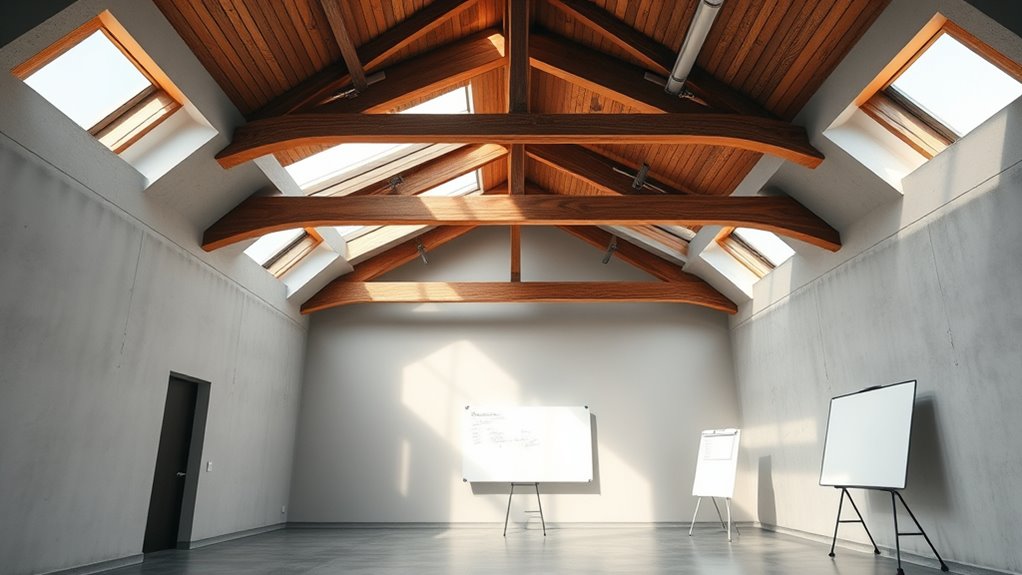

Ceiling height substantially impacts how your space feels, looks, and functions. Higher ceilings create a sense of openness, improve natural light, and allow for striking design elements like chandeliers. However, they also increase energy costs and pose structural challenges. Understanding these effects helps you choose the right height for your needs. For practical tips and hidden considerations, keep exploring to discover what truly works for your space.
Key Takeaways
- Higher ceilings create a sense of spaciousness and grandeur, enhancing aesthetic appeal and room functionality.
- Tall ceilings improve natural light distribution but may increase energy costs due to heating and cooling demands.
- Acoustic treatments like diffusers and panels are essential to manage echo and sound quality in rooms with high ceilings.
- Structural constraints and higher construction costs limit feasible ceiling height increases; balance design with budget.
- Proper insulation and ventilation are critical to maintaining comfort, air quality, and energy efficiency in spaces with tall ceilings.
How Does Ceiling Height Affect Room Size and Perception?
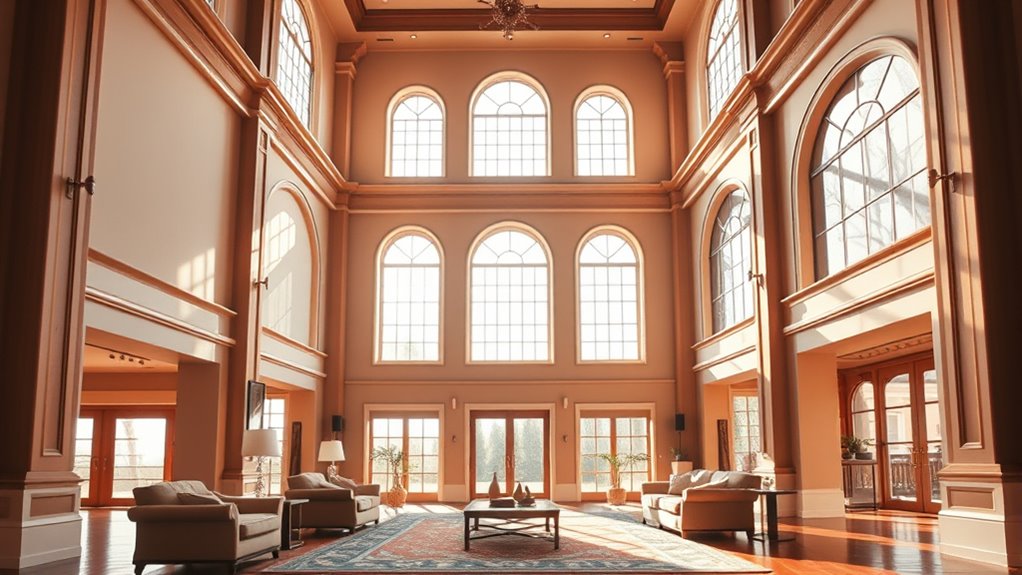
Ceiling height plays a crucial role in how a room feels and appears. Higher ceilings can make a space seem larger and more open, giving you a sense of freedom and grandeur. To emphasize this effect, you might add decorative trusses, which draw the eye upward and create visual interest. Conversely, if your ceiling is low, it can make a room feel cozy, but possibly cramped. To improve airflow and comfort, ceiling fans are essential; in rooms with higher ceilings, larger or more powerful fans help circulate air effectively. Incorporating creative practice into your design choices can also enhance the aesthetic appeal of your space. By carefully choosing decorative trusses and ceiling fans, you can balance the perception of space and comfort, ensuring your room feels inviting without overwhelming or shrinking the available area.
What Are the Impacts of High Ceilings on Lighting and Natural Light?

When a room features high ceilings, it naturally allows more light to enter and spread throughout the space. This enhances brightness and creates an open, airy atmosphere. High ceilings also give you the freedom to incorporate artistic ceiling designs that reflect your style, making the lighting even more striking. During a ceiling height renovation, you can optimize natural light by adding tall windows or skylights that work well with the increased height. Additionally, the extra space allows for layered lighting options, such as chandeliers or pendant lights, to complement the natural light. Leveraging the scale of the space can further influence how light interacts within the environment, enhancing the overall ambiance.
How Does Ceiling Height Influence Acoustics and Sound Quality?
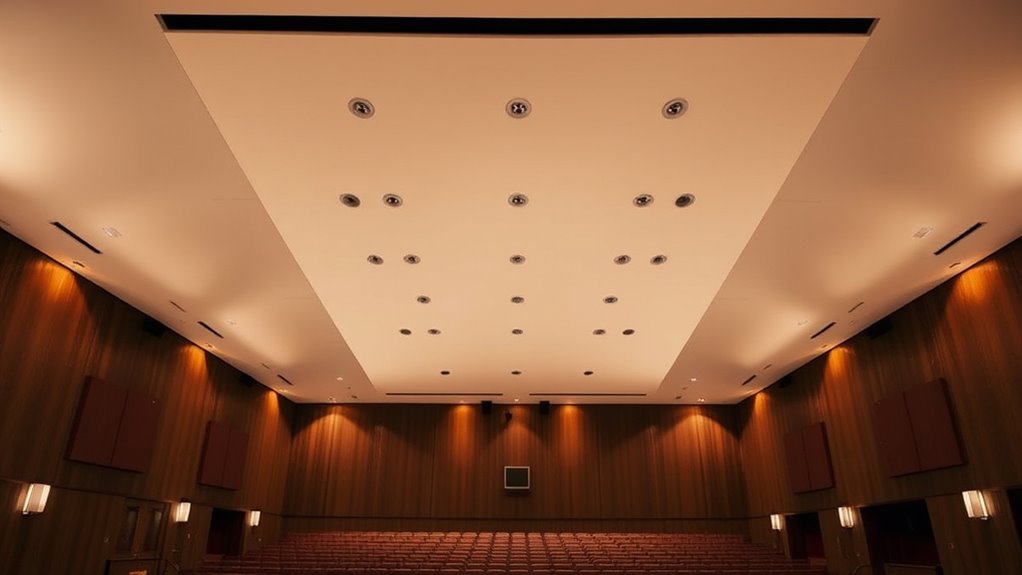
The height of your ceiling directly shapes how sound moves and how clear it feels within a space. Higher ceilings can create a sense of openness, but they also cause sound waves to bounce more, which can lead to echoes and reduced clarity. To improve acoustics, consider adding decorative features like wall panels or ornate moldings that help absorb or diffuse sound. Acoustic treatments such as diffusers and sound-absorbing panels are especially effective in large or high-ceiling rooms, preventing sound from becoming muddled. Proper placement of these treatments ensures clearer audio and reduces unwanted reverberation. Additionally, understanding supermarket hours today can help plan visits during optimal times when acoustics are less affected by crowd noise. By balancing decorative features with practical acoustic solutions, you can optimize sound quality and create a more comfortable, acoustically pleasing environment.
What Are the Energy Efficiency Considerations With Different Ceiling Heights?
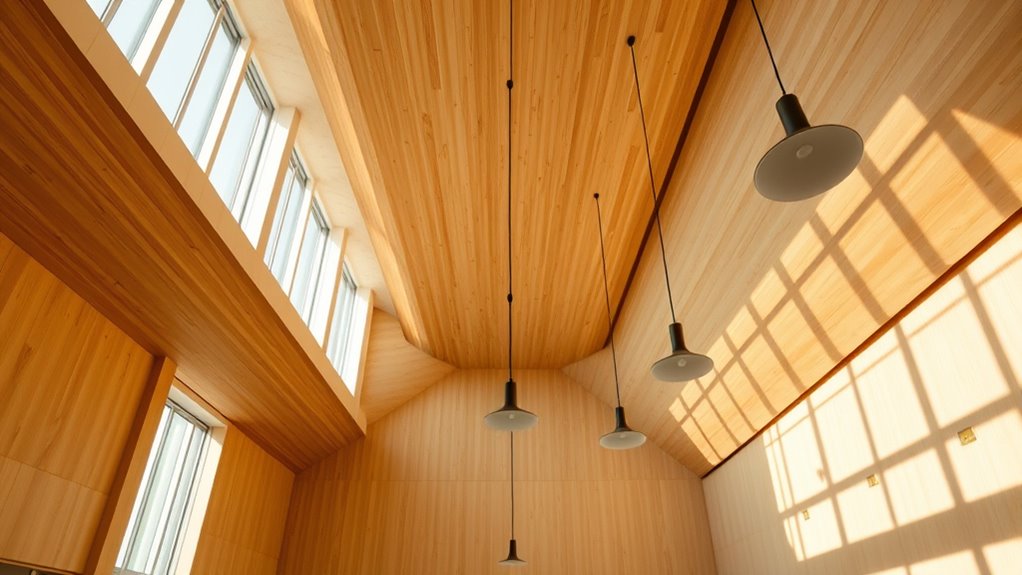
Higher ceilings often lead to increased energy costs because they require more heating and cooling to maintain a comfortable temperature. To improve energy efficiency, you should focus on proper ceiling maintenance and effective ventilation systems. These elements help regulate temperature and reduce energy waste.
Consider these points:
- Well-maintained ceilings prevent drafts and insulation gaps that can escalate heating and cooling needs.
- Upgrading ventilation systems ensures better airflow, reducing the workload on your HVAC system.
- Insulation strategies tailored to ceiling height help maintain consistent indoor temperatures and lower energy bills.
- Incorporating proper insulation techniques tailored to the ceiling height can further enhance energy savings.
How Can Ceiling Height Impact Heating and Cooling Costs?
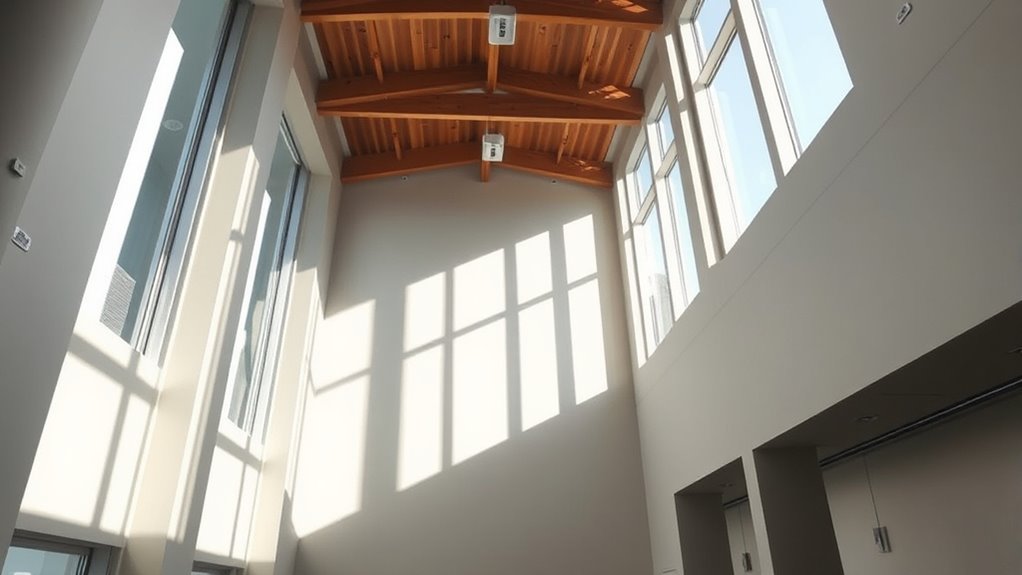
Higher ceilings can cause uneven air circulation, making it harder to maintain consistent temperatures. You might notice warmer air accumulating near the ceiling while lower areas stay cooler. This temperature stratification can lead to increased heating and cooling costs as your system works harder to balance the air. Additionally, ventilation systems designed for standard ceiling heights may become less effective in taller spaces, further impacting energy efficiency.
Air Circulation Efficiency
Ever wonder how ceiling height influences your home’s heating and cooling costs? With higher ceilings, air flow becomes less efficient, affecting ventilation efficiency. As warm air rises and cool air sinks, taller ceilings can cause uneven temperature distribution. This means your HVAC system works harder to maintain comfort, increasing energy use. To optimize air circulation:
- Use ceiling fans to promote better air flow
- Ensure proper vent placement for even ventilation
- Consider zoning systems to target specific areas
These strategies improve air circulation efficiency, reducing strain on your heating and cooling systems. When ceiling heights are high, maintaining good ventilation becomes even more critical to prevent wasted energy. Clear airflow paths help your HVAC operate more efficiently, saving you money and enhancing comfort. Additionally, insulating the space can help stabilize temperature differences caused by ceiling height variations.
Temperature Stratification Effects
Ceiling height can substantially influence how temperature is distributed in your home, often leading to energy inefficiencies. When ceilings are high, warm air rises above the living areas, creating temperature stratification that hampers HVAC efficiency. You may find yourself overworking your heating or cooling systems to compensate for this uneven temperature distribution. To combat this, consider insulation strategies that reduce heat transfer at higher levels, such as installing radiant barriers or adding insulation in the ceiling space. These measures help maintain a more consistent temperature, reducing energy costs. Properly addressing temperature stratification ensures your HVAC system operates more efficiently, saving you money while keeping your home comfortable. Understanding how ceiling height impacts temperature distribution is key to optimizing your home’s energy performance.
What Design Styles Complement Various Ceiling Heights?
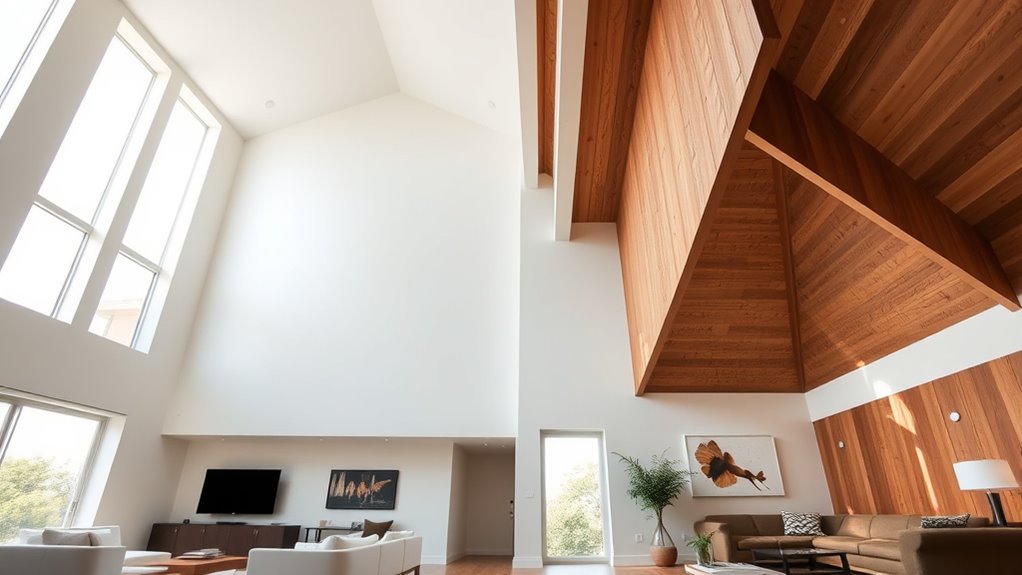
When choosing a design style, understanding the relationship between ceiling height and interior aesthetic is essential. High ceilings often suit styles that emphasize grandeur, like art deco, with bold lighting and geometric patterns. For lower ceilings, cozy styles work best, such as rustic charm, where warm woods and textured textiles create intimacy. Medium-height ceilings lend themselves to versatile styles, like modern or transitional, balancing openness with comfort. Incorporating appropriate lighting, such as LED lighting, can further enhance the ambiance and complement the chosen style. Consider these options:
- Art deco pairs beautifully with tall ceilings, highlighting dramatic light fixtures and sleek furniture.
- Rustic charm complements lower ceilings with warm, inviting materials and layered textures.
- Mid-range ceilings work well with contemporary styles that blend openness and practicality.
Matching your style with ceiling height ensures a cohesive, appealing interior.
Are There Structural Limitations or Costs Associated With Taller Ceilings?
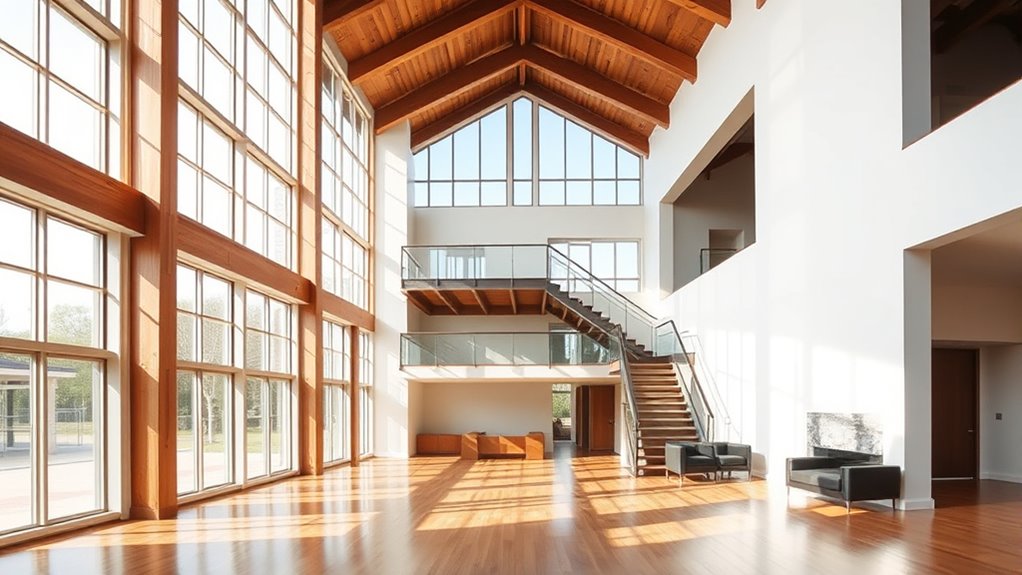
Constructing taller ceilings often involves additional structural considerations and costs that homeowners should carefully evaluate. Structural constraints, such as the need for reinforced beams or stronger support systems, can limit how high you can go without significant upgrades. These modifications typically increase construction costs, sometimes substantially, depending on the building’s existing framework. Taller ceilings may require more extensive framing, additional materials, and specialized labor, all contributing to higher expenses. It is crucial to work with a structural engineer or experienced contractor to assess what’s feasible within your budget. While taller ceilings can create a stunning effect, understanding these limitations upfront helps prevent unexpected expenses and ensures your project stays on track. Additionally, considering the design aesthetic can help balance the desire for height with practical limitations.
How Does Ceiling Height Affect the Use of Space and Functionality?
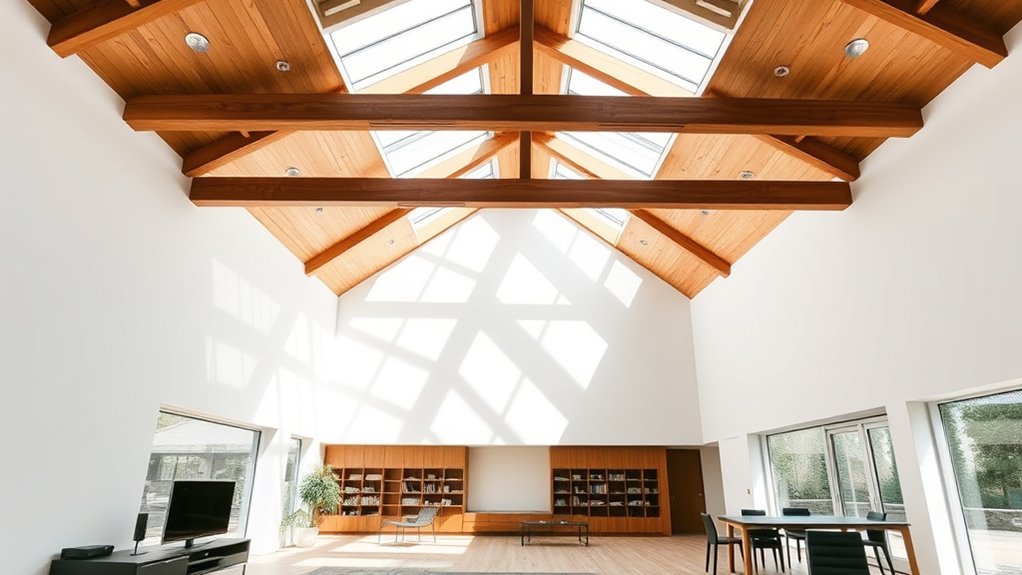
Higher ceilings can considerably influence how you use and feel in a space, often making rooms seem more open and inviting. They allow for more creative design options, such as dramatic lighting or tall artwork, enhancing the room’s functionality. However, taller ceilings may require more careful ceiling maintenance to prevent dust buildup and ensure safety. They also impact ventilation strategies, as air circulation becomes more complex, needing proper fans or vents to maintain comfort. Keep in mind:
- Increased space for storage or decorative elements
- Potential for better air circulation and fresh airflow
- Need for enhanced ventilation strategies to manage temperature and air quality
- Gold IRA options can provide a hedge against inflation, which becomes especially relevant in larger, more expensive spaces.
Understanding these effects helps you optimize space use while maintaining comfort and safety in taller-ceilinged rooms.
What Factors Should You Consider When Choosing the Right Ceiling Height for Your Room?
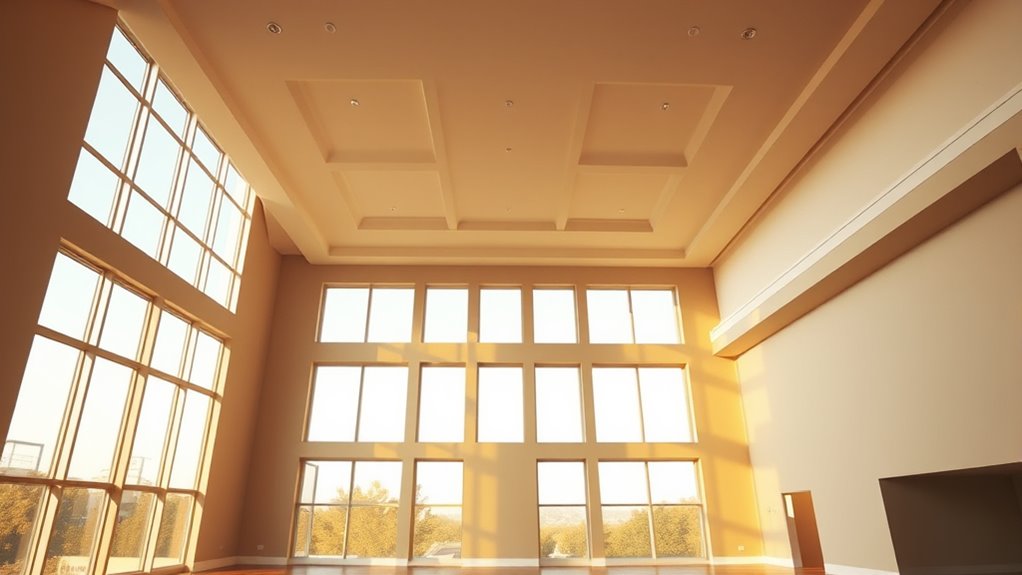
Choosing the right ceiling height involves balancing your aesthetic preferences with practical considerations such as room size, purpose, and budget. Think about how decorative elements will fit; higher ceilings can showcase chandeliers or artwork but may require more maintenance challenges, like dusting high fixtures or cleaning hard-to-reach corners. Consider the room’s purpose: a cozy bedroom benefits from lower ceilings, while a living room or open-plan space might feel more inviting with taller ceilings. Also, keep your budget in mind—higher ceilings often mean higher construction and ongoing maintenance costs. Additionally, understanding tiny house building essentials can help you determine feasible ceiling heights within your space constraints. Ultimately, select a ceiling height that complements your style without sacrificing functionality or increasing upkeep beyond what you’re comfortable managing.
Frequently Asked Questions
What Are the Safety Considerations for Very High Ceilings?
When dealing with very high ceilings, you should prioritize safety by ensuring proper lighting design to prevent dark spots and accidents. Use adequate acoustic treatment to reduce echoes that could cause confusion or disorientation. Install sturdy scaffolding or lifts for maintenance and avoid falling hazards by securing fixtures properly. Regularly inspect safety equipment, and plan for emergency exits that accommodate the ceiling height. This approach keeps everyone safe and the space functional.
How Does Ceiling Height Influence Interior Decor Choices?
You should consider how ceiling height influences your interior decor choices by selecting appropriate lighting options that enhance the space’s proportions and ambiance. High ceilings allow for statement chandeliers or pendant lights, creating visual interest. Also, incorporate acoustic treatments like wall panels or drapes to manage sound in large, open areas. These choices help balance the room’s scale and make your decor feel cohesive and inviting, regardless of ceiling height.
Can Adjustable Ceiling Heights Be a Practical Solution?
Adjustable ceiling heights might be your smartest move yet, giving you control in a room with unpredictable acoustics and lighting. Imagine toggling between a cozy nook and a grand ballroom with just a button—perfect for installing smart lighting and acoustical treatments. Sure, it sounds fancy, but it’s practical, offering tailored comfort and ambiance. So, yes, adjustable ceilings are a clever, flexible solution to elevate your space effortlessly.
What Are the Maintenance Challenges With Different Ceiling Heights?
You’ll find that maintenance challenges with different ceiling heights mainly involve lighting design and acoustic treatment. Higher ceilings require more extensive lighting adjustments and regular cleaning to keep fixtures working efficiently. Acoustic treatments can be tricky, as they need to be tailored to each height to prevent sound issues. You’ll need to plan for easier access and regular upkeep to guarantee your space remains functional and comfortable over time.
How Does Ceiling Height Impact Resale Value of a Property?
You’ll find that higher ceilings can boost your property’s resale value by up to 10%, especially for luxury appeal. Buyers often see tall ceilings as a sign of spaciousness and elegance. Plus, they enhance energy efficiency by improving airflow and natural light, making your home more attractive. If you want to maximize your property’s worth, consider how ceiling height influences both luxury appeal and energy savings.
Conclusion
Choosing the right ceiling height can transform your space. For example, if you’re designing a home office, taller ceilings boost natural light and make the room feel more spacious, improving productivity. Consider your needs, style, and budget to find the perfect height. Remember, balancing aesthetics with functionality guarantees your space feels comfortable and efficient for years to come. Don’t overlook these factors—your ideal ceiling height is the key to a truly inviting room.