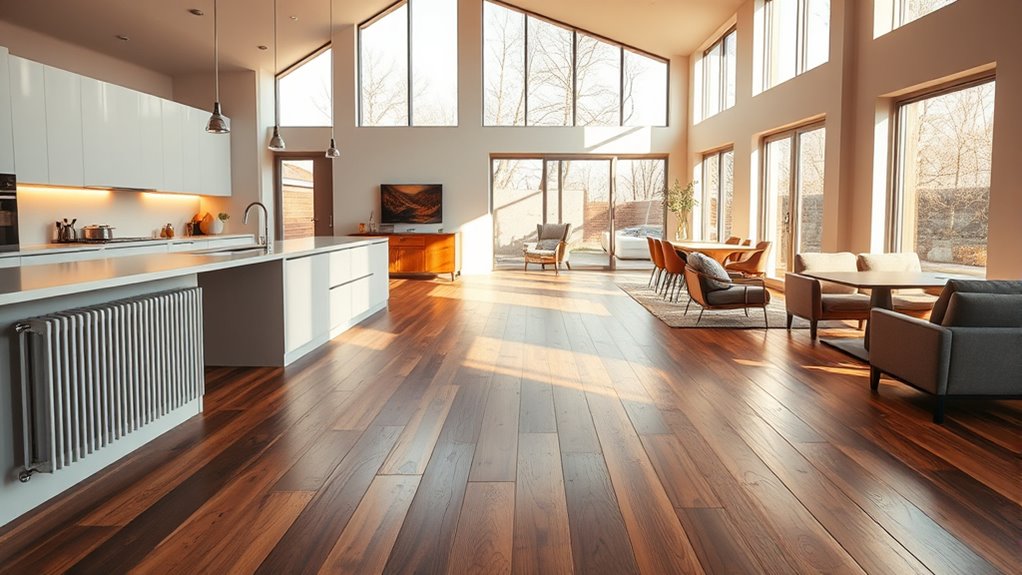

Your floor plan layout impacts heating efficiency because open-concept spaces promote even heat distribution, while partitioned rooms can create cold spots and require more targeted heating. Smaller rooms heat quickly but lose warmth faster without proper insulation, and exterior-facing areas tend to lose more heat. A well-designed layout minimizes heat loss and balances room sizes, making your heating system run more smoothly. Keep exploring to discover how smart design choices can boost your comfort and energy savings.
Key Takeaways
- Open-concept layouts promote even heat distribution and reduce energy use compared to partitioned spaces.
- Smaller, well-insulated rooms retain heat better, improving overall heating efficiency.
- Complex floor plans with multiple rooms and barriers can create cold spots and increase heating demands.
- Strategic placement of heating sources and zoning controls enhances targeted warmth and reduces energy waste.
- Poorly designed layouts with large exterior walls or insufficient insulation lead to higher heat loss and lower efficiency.
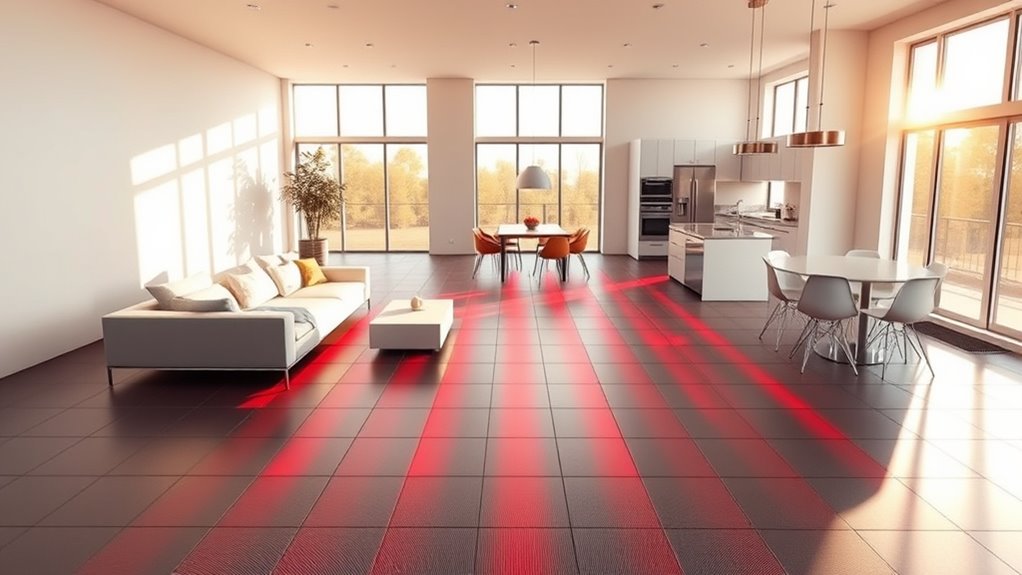
The layout of your floor plan plays a crucial role in how effectively your heating system works. When you consider how your home is arranged, it’s clear that factors like room size and insulation quality directly impact your comfort and energy efficiency. Larger rooms tend to require more heat to reach and maintain a comfortable temperature, which can strain your system if it isn’t designed properly. Conversely, smaller spaces can heat up quickly but may cool down faster if insulation isn’t up to par. Recognizing how these elements interact allows you to optimize your heating setup, ensuring each area receives appropriate warmth without wasting energy.
Your floor plan’s layout influences heating efficiency and comfort.
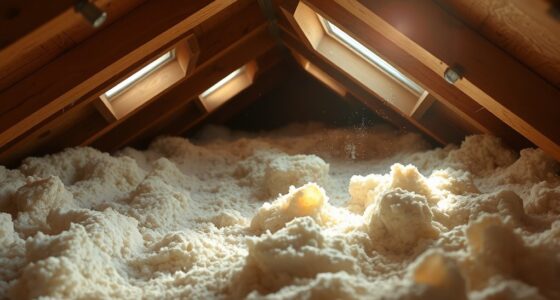
If your floor plan includes open-concept spaces, you might find that heat distributes more evenly. However, in homes with many small, partitioned rooms, the flow of heat becomes more complex. These smaller rooms often need individual attention, especially if they’re poorly insulated. When insulation quality is high, heat retention improves, meaning your system doesn’t have to work as hard to keep each space warm. Poor insulation, on the other hand, leads to heat loss, making your heater run longer and increasing energy bills. Understanding the relationship between room size and insulation quality helps you decide whether additional insulation or zoning controls are necessary to improve efficiency.
The placement of rooms within your floor plan also matters. Rooms at the exterior of your home, especially those with large windows or thin walls, tend to lose heat faster. If these spaces are large or poorly insulated, they can become cold spots, forcing your heating system to operate continuously. To counteract this, you might consider adding insulation or sealing drafts to prevent heat from escaping. Smaller or interior rooms, insulated well, retain heat better, but if they’re connected to larger, colder spaces, the overall heating efficiency can suffer. Analyzing how room sizes and insulation quality interact within your layout helps you identify potential problem areas and address them proactively.
In essence, understanding the dynamics of your floor plan—how room sizes influence heat requirements and how insulation quality affects heat retention—is key to maximizing heating efficiency. By paying attention to these factors, you can tailor your heating system to your home’s specific needs. Whether that means upgrading insulation, redesigning room layouts, or adding zoning controls, being aware of how your home’s layout influences heat flow enables you to create a more comfortable, energy-efficient living space. Additionally, considering portable heating solutions can provide targeted warmth to problem areas that are difficult to insulate effectively.
Frequently Asked Questions
How Does Window Placement Impact Heating Efficiency?
You can improve heating efficiency by paying attention to window placement. Proper window orientation, like south-facing windows, allows more sunlight, reducing heating needs. Larger windows let in more warmth but can cause heat loss if not properly insulated. Conversely, small, well-insulated windows help retain heat. By strategically choosing window size and orientation, you optimize sunlight and minimize heat loss, making your space warmer and more energy-efficient.
Do Open Floor Plans Use Less Energy Than Partitioned Layouts?
Open floor plans generally use less energy than partitioned layouts because they allow heat to circulate more freely across larger, connected spaces. You’ll find it easier to maintain consistent temperatures without needing multiple heating zones. In contrast, partitioned layouts can create cold spots, requiring more energy to heat each area separately. So, if energy efficiency is your goal, opting for an open floor plan can help you save on heating costs.
Can Furniture Arrangement Improve Heating Effectiveness?
Yes, furniture arrangement can improve heating effectiveness. You should focus on strategic furniture placement to optimize room zoning, which helps direct heat where it’s needed most. By arranging furniture to facilitate better airflow and prevent blockages near vents or radiators, you create a more efficient heating environment. Imagine cozy, evenly warmed spaces where your furniture enhances comfort, not hinders it—making your home warmer and more energy-efficient.
What Role Does Ceiling Height Play in Heating Performance?
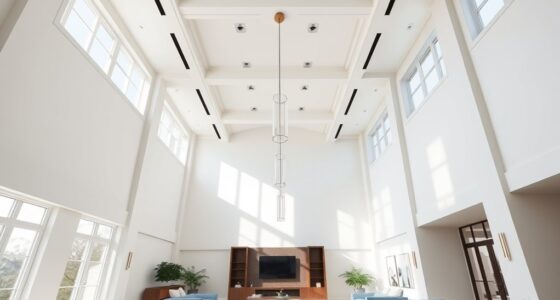
You’ll find that ceiling height considerably impacts heating performance because taller ceilings can cause thermal stratification, where warm air rises and cool air stays near the floor. This makes heating less efficient, as your system has to work harder to warm the entire space. To improve comfort, consider lowering ceilings or using fans to promote even heat distribution, reducing energy use and maintaining a cozy environment.
How Do Exterior Wall Materials Influence Heating Needs?
You can’t judge a book by its cover, and exterior wall materials matter more than you might think. Heavier materials like brick or stone with thicker walls provide better thermal insulation, reducing heat loss and lowering your heating needs. Conversely, lighter materials with less wall thickness let heat escape, making your system work harder. Choosing the right exterior wall material helps keep your home warm and energy bills in check.
Conclusion
So, you thought an open floor plan would save energy? Turns out, it might just make your heating bills skyrocket. Ironically, the more spacious and connected your layout, the more heat escapes, leaving you colder and poorer. Who knew that a clever design could backfire? Next time, maybe consider the smaller, compartmentalized rooms that actually keep the warmth in—and your wallet a little thicker. Sometimes, the simplest layout is the most efficient.