
Understanding the difference between heated square footage and room volume is essential for selecting the right heater and improving energy efficiency. Heated square footage measures the surface area you need to warm, while room volume accounts for the air space that influences heat needs. Tall-ceiling rooms with the same square footage require more energy. Knowing how these measurements differ helps you size your heating system properly and save money—discover more tips ahead.
Key Takeaways
- Heated square footage measures surface area, while room volume considers three-dimensional air space, both affecting heating needs.
- Tall-ceiling rooms with the same square footage require larger heating capacity due to increased volume.
- Proper sizing based on both measurements prevents inefficient heating, energy waste, and discomfort.
- Insulation quality influences how room volume impacts heat retention and energy efficiency.
- Accurate assessment of both factors ensures optimal heater performance and cost-effective energy use.
When it comes to heating a space efficiently, understanding the difference between heated square footage and room volume is essential. These two measurements influence how well your heating system performs and how much energy you consume. Heated square footage refers to the total area of a space that needs warmth, typically measured in square feet. Room volume, on the other hand, considers the three-dimensional space—length, width, and height—measured in cubic feet. Recognizing this distinction helps you choose the right heating approach, especially when considering insulation effectiveness and overall heating system efficiency.
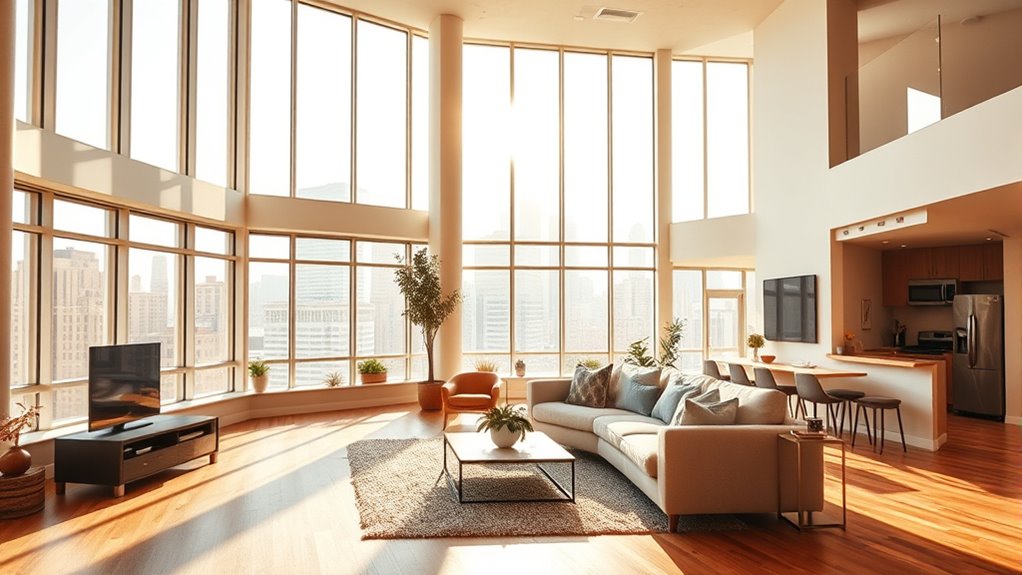
Many homeowners focus solely on heated square footage when selecting a heater, assuming that a larger area always requires a more powerful system. However, ignoring room volume can lead to inefficiencies. For example, a tall-ceiling room with the same square footage as a standard-height room will have a greater volume, meaning it contains more air that needs heating. Without accounting for this, your heater may struggle to maintain consistent warmth, wasting energy and increasing costs. Properly evaluating both measurements allows you to match your heating system’s capacity to the actual space, ensuring efficient operation.
Ignoring room volume can lead to inefficiencies and higher energy costs. Properly evaluate both for optimal heating.
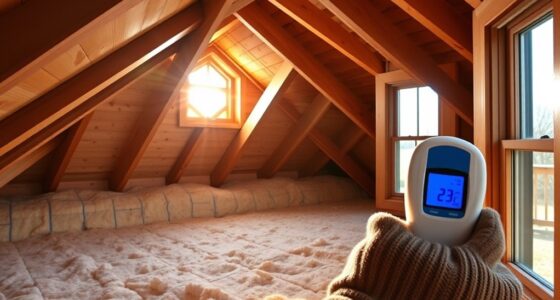
Insulation effectiveness plays a critical role here. A well-insulated room retains heat better, reducing the workload on your heater. Conversely, poor insulation lets heat escape, making it seem like you need a larger or more powerful system. When you understand your space’s volume, you can better assess how insulation impacts heating needs. For instance, a high-ceiling room with poor insulation will require more energy to heat because the larger volume and heat loss combine to lower overall efficiency. Improving insulation can substantially boost heating system efficiency, allowing a smaller or less powerful unit to do the same job.
In addition, understanding room volume helps optimize your heating system’s efficiency. If you incorrectly size your heater based solely on square footage, you risk underheating or overworking the system. An undersized unit will struggle to keep the room warm, while an oversized one can cycle on and off excessively, wasting energy and reducing the lifespan of the equipment. By accurately evaluating both heated square footage and room volume—considering insulation effectiveness—you ensure your system runs smoothly, consumes less energy, and maintains comfort. Furthermore, wall organization solutions and material choices can influence heat retention, making it even more crucial to consider both measurements for optimal efficiency.
Frequently Asked Questions
How Does Insulation Impact Heating Efficiency Related to Room Volume?
Insulation directly affects your heating efficiency by reducing thermal bridging and increasing the insulation R value. When you improve insulation, less heat escapes through walls and ceilings, making it easier to maintain a comfortable temperature in larger rooms. This means your heating system works less hard, saving energy and money. Proper insulation guarantees your heat stays inside, especially in rooms with high volume, maximizing overall heating efficiency.
Can Two Rooms With Same Square Footage Have Different Heating Needs?
Absolutely, two rooms with the same square footage can demand different heating needs. Maybe one has fantastic wall insulation or energy-efficient windows, trapping heat like a cozy secret, while the other’s windows let in the chill like gossip. So, don’t just measure size—consider insulation and window efficiency. After all, a room’s warmth depends more on its secrets than its size!
What Role Does Ceiling Height Play in Heating Calculations?
Ceiling height substantially impacts your heating needs because taller ceilings increase the room volume, requiring more heat. When calculating, consider ceiling design, as vaulted or ornate ceilings can trap more warm air or affect airflow. You should account for these factors to guarantee your heating system efficiently warms your space without overspending. Higher ceilings mean you might need additional or more powerful heating solutions to keep the room comfortable.
How Does Furniture Placement Affect Heating Effectiveness?
Your furniture placement markedly impacts heating effectiveness by affecting airflow and heat distribution. A well-thought-out room layout ensures that furniture doesn’t block vents or radiators, allowing warm air to circulate freely. Avoid cluttered arrangements that trap heat or create cold spots. By optimizing your furniture arrangement, you enhance overall comfort and energy efficiency, making sure your heating system works more effectively and evenly throughout the space.
Are Standard Heating Systems Suitable for Irregularly Shaped Rooms?
You might think standard radiators are enough, but irregularly shaped rooms challenge their effectiveness. Unlike straightforward spaces, these rooms benefit from custom ductwork design that guarantees even heat distribution. While a standard radiator may cover the main area, the shape causes cold spots. So, for irregular rooms, you should consider tailored solutions, like advanced ductwork or additional heating units, to keep every corner comfortably warm.
Conclusion
Understanding the difference between heated square footage and room volume is like knowing the size of the boat versus the ocean it sails. When you grasp how each impacts heating needs, you can better navigate comfort and energy efficiency. Think of your home as a living organism; giving it the right amount of heat is like feeding it the right nutrients. Mastering this balance guarantees your space stays cozy without wasting energy.