To minimize heat loss from windows and drafts, seal gaps with weather stripping and caulking to create a tight barrier. Use thermal curtains at night to trap warm air and open them during the day for natural heat. Keep furniture away from windows to allow proper airflow, and consider upgrading to insulated window treatments. Regular maintenance of seals and adding additional insulation can make a noticeable difference—learn how these steps further improve your home’s energy efficiency.
Key Takeaways
- Install weather stripping around window frames to seal gaps and prevent drafts.
- Use thermal curtains during cold weather to add an insulating barrier.
- Keep furniture away from windows to improve air circulation and reduce cold spots.
- Regularly maintain and replace worn weather stripping for continuous draft protection.
- Consider upgrading to advanced insulating window treatments for enhanced thermal efficiency.
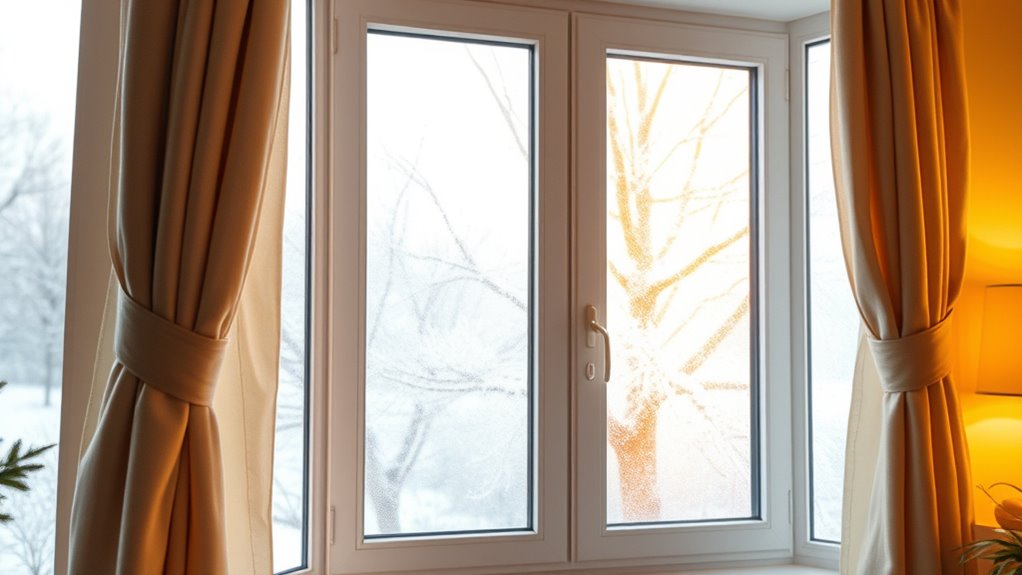
During colder months, heat loss through windows and drafts can considerably increase your energy bills and reduce comfort. To combat this, you need effective strategies that block cold air from sneaking in and warm air from escaping. One of the simplest and most effective solutions is using thermal curtains. These heavy, insulated drapes are designed to trap air between the fabric and your window, creating a barrier that slows down heat transfer. When drawn during the night or on particularly chilly days, thermal curtains can significantly reduce heat loss, keeping your space warmer and more comfortable. They’re easy to install and can be opened during sunnier days to let natural warmth in, making them a flexible and cost-effective option.
In addition to thermal curtains, paying attention to your windows’ seals is essential. Drafts often occur around the edges of windows where gaps allow cold air to seep inside. Weather stripping is an affordable and straightforward fix that can make a big difference. By applying weather stripping around your window frames, you create a tight seal that prevents drafts from entering. It’s a simple DIY project that doesn’t require special tools or skills, and it offers immediate benefits. Properly installed weather stripping not only reduces heat loss but also minimizes outdoor noise and helps improve overall energy efficiency in your home.
You should also consider the placement of your furniture and curtains. Keep heavy furniture away from windows, as it can obstruct the natural flow of warm air and create cold spots. When you’re not using your windows, keep the curtains closed, especially at night, to provide an extra layer of insulation. Combining thermal curtains with weather stripping offers a double layer of protection—one that blocks cold air from entering and traps warm air inside. Additionally, understanding heat transfer mechanisms can help you identify other effective ways to improve insulation and reduce energy costs.
Regular maintenance is key for sustained effectiveness. Check your weather stripping periodically for signs of wear or damage and replace it as needed. Clean your thermal curtains regularly to preserve their insulating properties, and consider upgrading to thicker or more advanced insulating fabrics if you notice persistent drafts or heat loss. Small adjustments, like sealing leaks and adding insulation, can cumulatively lead to noticeable savings on energy bills and a more comfortable living space. By taking these proactive steps, you’re better equipped to minimize heat loss from windows and drafts all season long.
Frequently Asked Questions
How Can I Prevent Condensation on Windows During Winter?
To prevent condensation on your windows during winter, you should improve air circulation inside your home by regularly opening curtains and vents. Keep your windows clean, as dirt and moisture can promote condensation. Using a dehumidifier helps reduce excess humidity. Additionally, make certain proper ventilation in high-moisture areas like kitchens and bathrooms. These steps help balance indoor humidity levels, preventing moisture buildup on your windows and keeping your home comfortable.
Are There Eco-Friendly Options to Reduce Drafts Effectively?
Yes, you can reduce drafts eco-friendly by using sustainable draft stoppers made from natural materials like wool or recycled fabrics. Additionally, eco-friendly insulation options, such as cellulose or sheep’s wool, help seal gaps effectively without harming the environment. These sustainable choices improve your home’s energy efficiency, keep cold air out, and minimize heat loss, all while supporting environmentally responsible solutions.
What Is the Best Way to Seal Gaps Around Window Frames?
To seal gaps around window frames effectively, you should use caulking techniques and weatherstripping methods. Apply a high-quality, paintable acrylic or silicone caulk along the window frame’s edges to fill any cracks. For movable parts, install weatherstripping like foam tape or V-strip to create a tight seal. Make certain the surfaces are clean and dry before applying, and press the weatherstripping firmly for best results.
How Does Window Orientation Affect Heat Loss?
Your window orientation considerably impacts heat loss by influencing solar gain and wind exposure. South-facing windows in the northern hemisphere capture more sunlight, boosting warmth during winter, while east and west windows can cause heat loss through early or late-day sun. Conversely, wind-exposed windows lose more heat; orienting them away from prevailing winds reduces drafts and minimizes heat loss, keeping your home warmer and more energy-efficient.
Can Window Treatments Improve Insulation Without Blocking Light?
Yes, window treatments like thermal curtains and window films can improve insulation without blocking light. Thermal curtains insulate by trapping air and reducing heat transfer, while window films reflect heat back into your room. You can easily enjoy natural light while enhancing your home’s energy efficiency. These solutions are simple, effective, and don’t compromise your daylight, helping you stay cozy without sacrificing brightness.
Conclusion
So, next time you shiver through a chilly breeze sneaking in, remember: you’re merely testing your resilience—and your wallet’s patience. By sealing those drafts and insulating your windows, you’ll save enough on heating to finally justify that indoor swimming pool or a lifetime supply of hot cocoa. Who knew that tightening a few gaps could turn your home into a cozy fortress, all while giving Mother Nature a well-deserved cold shoulder? Stay warm, and let the drafts go.