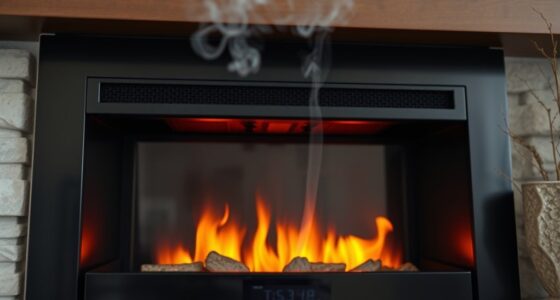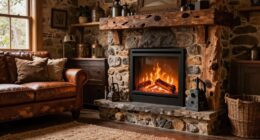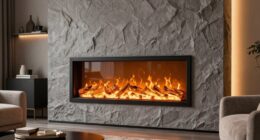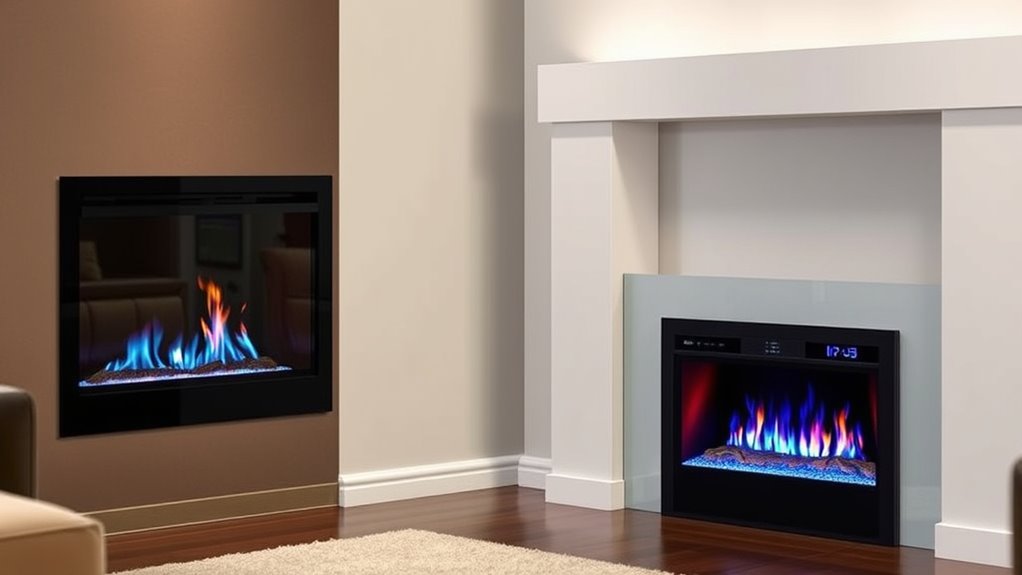
Electric fireplaces are generally safer than gas models because they don’t produce real flames or harmful combustion gases, which reduces risks like gas leaks, carbon monoxide buildup, and fires. With electric units, you don’t need vents or gas lines, making installation simpler and safer. Gas fireplaces require more complex setup and regular maintenance to ensure safety. If you want a safer heating option that’s easier to use and maintain, electric fireplaces might be the better choice—learn more to see which suits your needs.
Key Takeaways
- Electric fireplaces do not produce real flames or combustion gases, reducing fire and carbon monoxide risks.
- Gas fireplaces require proper installation and maintenance to prevent leaks and safety hazards.
- Electric models have lower upfront costs and simpler installation, minimizing safety concerns.
- Gas units involve venting and gas line setup, increasing potential for installation errors and hazards.
- Overall, electric fireplaces are inherently safer due to the absence of combustion and related risks.
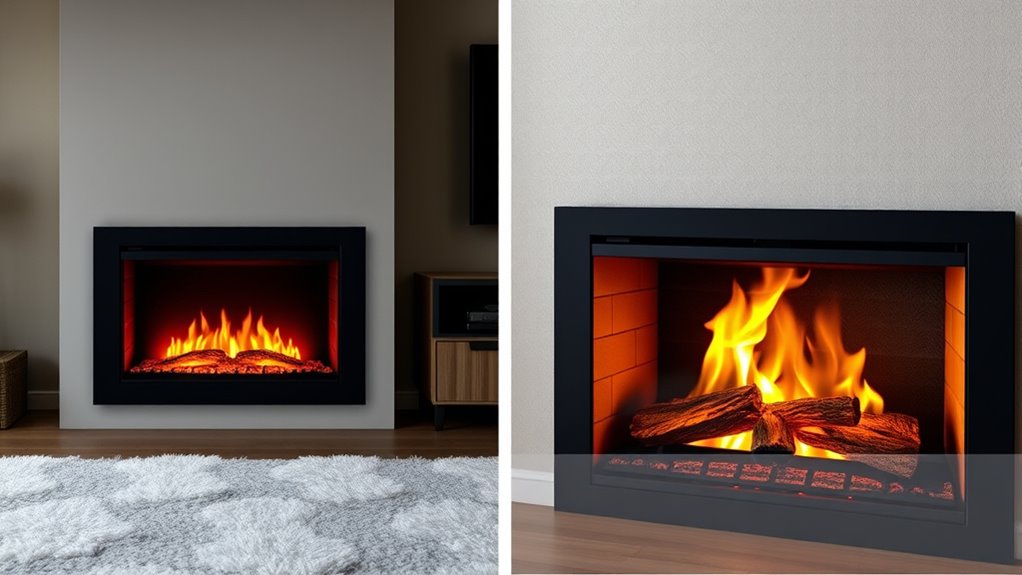
When choosing between an electric and a gas fireplace, understanding their differences can help you make an informed decision. Safety is a significant factor in that decision, but it’s also helpful to contemplate practical aspects like cost comparison and installation process. Electric fireplaces generally cost less upfront and are simpler to install. They often just need an electrical outlet, making the process quick and straightforward. You don’t need to worry about venting or gas lines, which can add to the overall cost and complexity. Gas fireplaces, on the other hand, tend to have higher initial costs because they require professional installation, including venting systems and gas line connections. This process can take more time and may involve permits or inspections, depending on local codes. Although the upfront investment for a gas fireplace is higher, some homeowners find the long-term operational costs more economical, especially if natural gas prices are favorable in their area.
When it comes to safety, electric fireplaces are generally considered safer because they don’t produce real flames or emit combustion gases. They generate heat through electric elements and often have automatic shut-off features, reducing fire risk and eliminating concerns about carbon monoxide leaks. Gas fireplaces, while safe when properly installed and maintained, carry inherent risks. Improper installation or maintenance can lead to gas leaks or carbon monoxide buildup, which can be dangerous or even deadly. Venting systems help mitigate some of these risks, but they must be properly maintained to prevent leaks or blockages. If safety is your primary concern, electric fireplaces offer a more hands-off, low-risk option. Additionally, sound heating science indicates that sound vibrations are believed to enhance cellular regeneration and overall health, adding a potential wellness benefit to choosing electric models. However, safety also depends on how you use and maintain your fireplace. Gas units require regular inspections for leaks and proper venting, which, if neglected, could pose safety hazards. Electric fireplaces require minimal maintenance beyond occasional cleaning of vents and electrical components, making them a safer choice for many households. Both types are designed with safety features, but electric fireplaces inherently avoid many risks associated with combustion.

Sweetcrispy Freestanding Electric Fireplace Heater, 26” Indoor Fireplace with 3D Flame Effect, Overheating Safe Design, Energy Saving Space Heater with 12H Timer&Remote for Living Room, Bedroom, Black
Powerful Fireplace Heater: This freestanding electric fireplace heater offers adjustable heat settings ranging from 750W for a gentle…
As an affiliate, we earn on qualifying purchases.
As an affiliate, we earn on qualifying purchases.
Frequently Asked Questions
Do Electric Fireplaces Emit Any Harmful Fumes?
No, electric fireplaces don’t emit harmful fumes because they don’t produce combustion. You don’t need special ventilation requirements, making them safer for indoor use. Just guarantee proper electrical safety by using a grounded outlet and avoiding overloading circuits. You can enjoy the warmth without worrying about fumes or harmful gases. They’re a low-maintenance, safe option that provides ambiance without the risks associated with gas fireplaces.
Can Gas Fireplaces Cause Carbon Monoxide Poisoning?
Yes, gas fireplaces can cause carbon monoxide poisoning if there are gas leaks or ventilation issues. Even a small leak can release dangerous fumes, especially if the venting system is blocked or faulty. You should always make certain of proper installation and regular maintenance to prevent leaks and ventilation problems. Never ignore signs of ineffective venting, like condensation or strange smells, as these increase your risk of dangerous carbon monoxide buildup.
Are Electric Fireplaces Safe for Children and Pets?
Electric fireplaces are generally safe for children and pets because they don’t produce real flames or hot surfaces, reducing childproofing hazards. You should still install safety barriers and supervise interactions to prevent accidents. For pet safety measures, make sure the unit is out of their reach and use models with cool-to-touch surfaces. Regularly check for damage and educate your family about the fireplace’s safety features to keep everyone protected.
What Fire Safety Features Do Gas Fireplaces Have?
Gas fireplaces come with essential fire safety features like flame control, which lets you adjust or turn off the flame easily, reducing fire risks. They also have ventilation requirements to prevent dangerous buildup of gases, ensuring safe operation. These features help you manage the fireplace safely, but it’s important to follow manufacturer instructions and have proper ventilation to prevent accidents or health hazards.
How Do Maintenance Safety Concerns Differ Between Types?
You should know that maintenance safety concerns differ markedly between electric and gas fireplaces. With electric models, you mainly need to guarantee proper electrical safety and avoid overloading circuits during installation. Gas fireplaces require careful attention to installation requirements, like proper ventilation and checking for leaks. Both types demand regular inspections, but gas fireplaces pose higher risks if ventilation or connections aren’t correctly maintained, making safety checks essential to prevent hazards.

Duluth Forge Dual Fuel Ventless Gas Fireplace Insert, Remote Control, 9 Fire Logs, Use with Natural Gas or Liquid Propane, 32000 BTU, Heats up to 1500 Sq. Ft., Black, Model# FDI32R
VENTLESS DUAL FUEL TECHNOLOGY: Patented technology gives the option to fuel the Fireplace Insert with either Natural Gas…
As an affiliate, we earn on qualifying purchases.
As an affiliate, we earn on qualifying purchases.
Conclusion
When choosing between electric and gas fireplaces, safety is key. Did you know that electric fireplaces eliminate the risk of carbon monoxide leaks, making them 50% safer in that regard? While gas fireplaces offer realism, electric options require less maintenance and pose fewer fire hazards. Ultimately, if safety is your top priority, an electric fireplace provides peace of mind, allowing you to enjoy cozy warmth without the worry of harmful fumes or potential accidents.

Gas Safety Timer Automatic Shut Off Valve Non-Electric for BBQ Grill & Kitchen Fireplace Natural Gas Propane Stop Device 1/2'' NPT Indoor Outdoor
Barbecue Safety Timer offers additional safety by automatically shutting off gas flow at pre-set times.Timer works up to…
As an affiliate, we earn on qualifying purchases.
As an affiliate, we earn on qualifying purchases.

Real Fyre Fyreside 24-Inch Live Oak Vented Gas Log Set, Natural Gas, SPK-26 Safety Pilot, 75,000 BTU, Includes Burner/Grate/Embers & Gas Connection Kit
REALISTIC LOOK: Hand‑painted ceramic logs with steel reinforcement; high‑definition bark delivers a true Live Oak appearance and radiant…
As an affiliate, we earn on qualifying purchases.
As an affiliate, we earn on qualifying purchases.