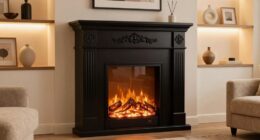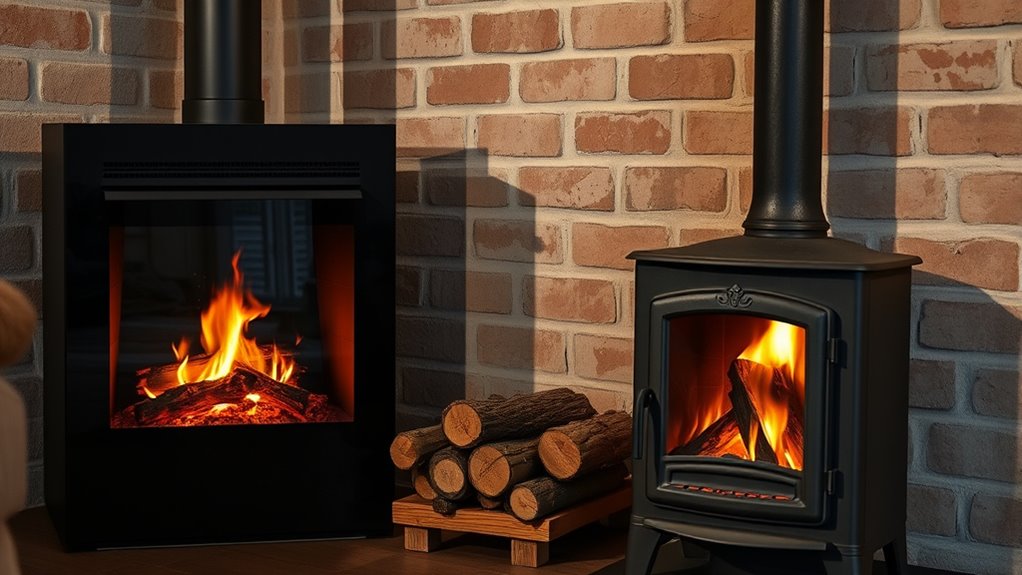
Electric fireplaces pose fewer fire hazards since they don’t produce creosote, ash, or smoke, reducing risks like chimney fires and toxic fumes. However, they come with electrical concerns, such as malfunctions or faulty wiring, which can cause shocks or fires if not properly maintained. Wood-burning fireplaces require regular cleaning and inspections to prevent creosote buildup and blockages. Understanding these differences helps you guarantee your home’s safety—stick around to learn more precautionary tips that protect your space.
Key Takeaways
- Wood-burning fireplaces pose fire risks from creosote buildup, cracks, and ash, requiring regular maintenance and inspections.
- Electric fireplaces eliminate ash and creosote hazards but can cause electrical malfunctions if not properly maintained.
- Wood fires produce smoke and particulate matter, while electric models do not emit emissions, affecting indoor air quality differently.
- Proper safety measures for wood fireplaces include chimney cleaning and ash removal; electric units need electrical safety checks.
- Both types require proper placement, accessibility of fire extinguishers, and adherence to safety protocols to minimize overall risk.

Have you ever considered how safe your fireplace really is? Many homeowners overlook the importance of proper maintenance and safety measures, which can turn a cozy feature into a potential hazard. One of the most critical steps in ensuring safety is regular chimney maintenance. A clean chimney reduces the risk of dangerous creosote buildup, which is a common cause of chimney fires. When you neglect chimney upkeep, you risk allowing blockages or cracks to develop, making it easier for sparks or smoke to escape into your home. Scheduling annual inspections and cleanings with professionals helps catch problems early and keeps your chimney functioning safely. Incorporating mindfulness techniques such as visualization can help homeowners stay attentive to potential hazards around their fireplace.
Another essential safety consideration involves fire extinguisher placement. Whether you have an electric fireplace or a wood-burning stove, having a fire extinguisher nearby is necessary. Keep one within easy reach—preferably in the same room as your fireplace—and ensure everyone in your household knows how to use it. A properly positioned fire extinguisher can make the difference between containing a small blaze and facing a house fire. Remember, it’s not just about having one; it’s about knowing its location and how to operate it effectively.
When it comes to wood-burning fireplaces, safety becomes even more important. The open flames and combustible materials demand diligent attention to chimney maintenance and fire safety protocols. Regularly removing ash and ensuring the damper functions correctly can prevent smoke from entering your home. Additionally, never leave a fire unattended, especially if the chimney isn’t inspected recently. Proper placement of your fire extinguisher is equally important—keep it close enough to access quickly but away from the fireplace to prevent accidental activation during use.
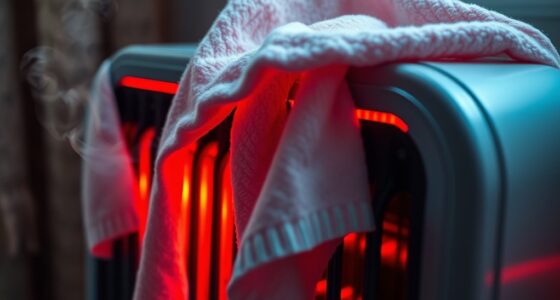
Electric fireplaces, while often considered safer, still require vigilance. They don’t produce ash or creosote, but electrical malfunctions can pose risks. Keep the area around the electric unit free of clutter and ensure cords are in good condition. For both types, having a fire extinguisher nearby and maintaining your smoke detectors adds layers of protection. Remember that fire safety can be enhanced by mindfulness practices such as focused breathing to stay calm and clear-headed during emergencies.

EUHOMY 50 Inch Electric Fireplace Wall Recessed and Wall Mounted with Adjustable Flame Color, Fireplace Heater with Remote Control, Linear Fireplace with Timer, Touch Screen, Log & Crystal, 750/1500W
Package Inclusions & 2-Year Technical Support: : The EUHOMY electric fireplace is equipped with 1* carbon log, 1*...
As an affiliate, we earn on qualifying purchases.
Frequently Asked Questions
Are Electric Fireplaces Safer for Children Than Wood-Burning Fireplaces?
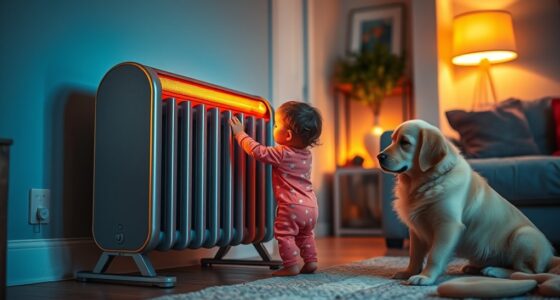
Electric fireplaces are safer for children because they eliminate open flames and hot surfaces, reducing burn risks. You should implement childproofing measures like safety barriers and keep remote controls out of reach. Always supervise your kids around any fireplace, but electric models let you relax more knowing the risk of burns or accidental fires is lower. Parental supervision combined with safety features makes electric fireplaces a better choice for homes with children.
Do Electric Fireplaces Emit Harmful Fumes or Chemicals?
Electric fireplaces don’t emit harmful fumes or chemicals, so they don’t negatively impact your indoor air quality. Unlike wood-burning fireplaces, which can release smoke, particulate matter, and other chemical emissions, electric models operate cleanly using electricity. You can enjoy the ambiance without worrying about indoor air pollution or health risks from chemical emissions, making electric fireplaces a safer choice for maintaining good indoor air quality in your home.
How Often Should Electric Fireplaces Be Inspected for Safety?
You should inspect your electric fireplace annually to keep safety in check. Think of maintenance frequency as tending a garden—regular care keeps everything flourishing. During inspection procedures, check for frayed wires, loose connections, and proper operation of safety features. By staying vigilant, you prevent potential hazards and ensure your fireplace remains a cozy, worry-free centerpiece. Don’t wait for a problem to flare up—routine inspections are your best safeguard.
Can Electric Fireplaces Cause Electrical Fires if Not Maintained Properly?
Yes, electric fireplaces can cause electrical fires if you don’t perform proper maintenance and overlook electrical malfunctions. Regularly inspecting your unit and ensuring it’s free of dust, frayed cords, or damaged parts reduces this risk. Follow the manufacturer’s recommended maintenance frequency, typically annually, to catch issues early. Proper upkeep keeps your electric fireplace operating safely, preventing potential electrical fires caused by neglected malfunctions.
What Are the Fire Risks Associated With Using Outdoor Electric Fireplaces?
Outdoor electric fireplaces pose minimal fire risks, but outdoor sparks can still ignite nearby flammable materials if you’re not careful. Weather damage is another concern; rain or snow might compromise the electrical components, increasing malfunction risks. You need to make certain of proper weatherproofing and keep the area clear of debris. Regular inspections help prevent accidents, so you can enjoy outdoor warmth safely without worrying about sparks or weather-related hazards.
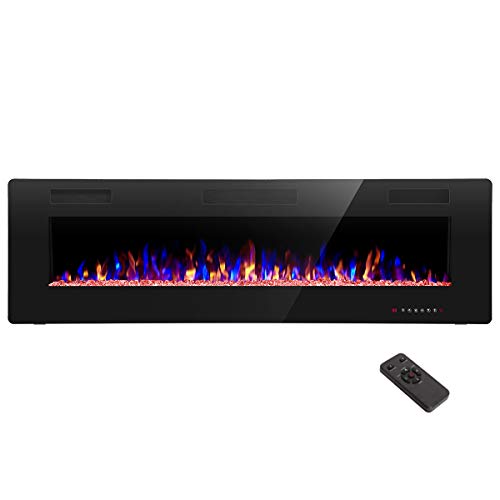
R.W.FLAME 60" Recessed and Wall Mounted Electric Fireplace, Low Noise, Fit for 2 x 6 Stud, Remote Control with Timer, Touch Screen, Adjustable Flame Color and Speed, 750-1500W
Attractive and Practical Design: 3.86"D x 60"W x 18.11"H,The thickness of the new style is only 3.86 inches...
As an affiliate, we earn on qualifying purchases.
Conclusion
When choosing between electric and wood-burning fireplaces, prioritize safety to prevent mishaps, much like a vigilant watchman guarding a castle. Remember, electric models eliminate the risk of sparks and smoke, making them a safer bet for modern hearths. Just don’t forget—no matter your choice, stay attentive and keep safety tools at the ready, because in this day and age, a simple oversight can turn your cozy fire into a fiery dragon.

Touchstone Smart Electric Fireplace-The Sideline 50" Wide-in Wall Recessed - 30 Realistic Ember Color/Flame Options - 1,500W Heater w/Thermostat - Log & Crystal Hearth Options - Alexa/WiFi Enabled
APPEARANCE: The Sideline electric fireplace is designed for recessed in-wall mounting. Creating a cozy atmosphere of a traditional...
As an affiliate, we earn on qualifying purchases.

Westinghouse 60 Inch Electric Fireplace Heater, Compatible with Alexa & Google Home, Wall Mount or in-Wall Recessed Fireplace Insert, 24 Hour Timer, Color Changing Flames, 750W/1500W Indoor Heater
CUSTOMIZE APPEARANCE: Up to 144 total color combinations for flames and embers, 5 independent brightness levels, and 5...
As an affiliate, we earn on qualifying purchases.