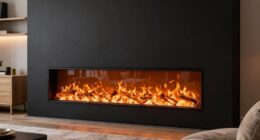
You should know that electric fireplaces pose fewer risks, as they generate no smoke, fumes, or open flames, making them safer in general. Wood-burning fireplaces, however, require regular chimney inspections, ash removal, and attention to ventilation to prevent fires, gas buildup, and smoke exposure. Proper maintenance of both types is essential to reduce hazards. Staying aware of these differences is key—if you keep exploring, you’ll discover how to minimize risks effectively.
Key Takeaways
- Wood-burning fireplaces pose higher risks of smoke, gases, and chimney fires without proper ventilation and regular maintenance.
- Electric fireplaces eliminate smoke, fumes, and chimney fire risks but require proper electrical safety and clearance.
- Both types need routine inspections; wood units require chimney cleaning, while electric units need vent and cord checks.
- Wood fires demand physical safety measures like non-combustible hearths and screens, unlike electric models which are generally safer.
- Proper maintenance and safety practices reduce fire hazards and ensure safe operation for both electric and wood-burning fireplaces.
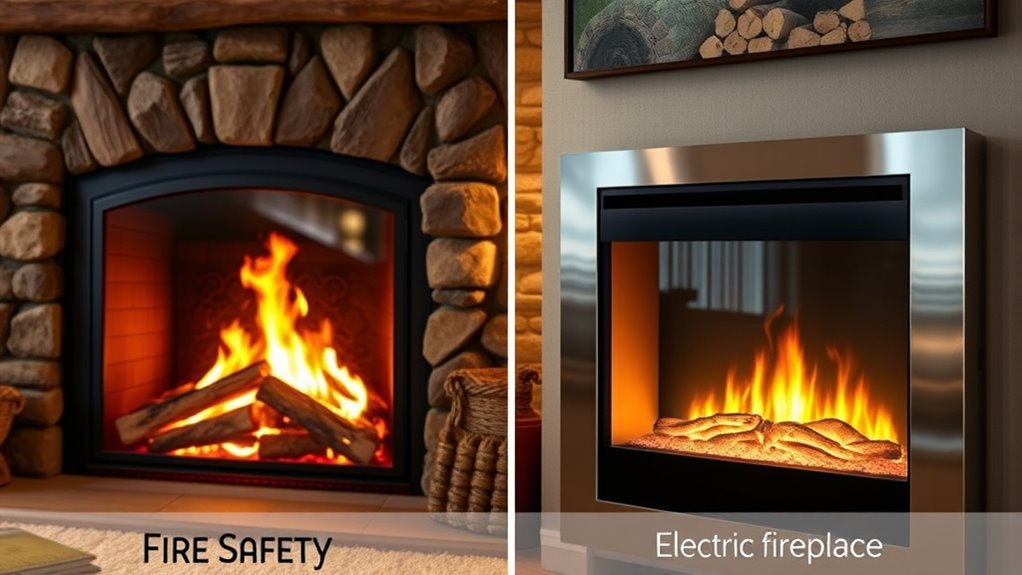
A fireplace can add warmth and ambiance to your home, but it also comes with safety risks that you shouldn’t overlook. Whether you choose an electric or a wood-burning fireplace, understanding these risks helps you enjoy your fireplace safely. One major concern is ventilation. Proper ventilation is vital to prevent dangerous buildup of smoke, gases, or carbon monoxide. With wood-burning fireplaces, you must ensure the chimney and flues are clear and functioning correctly. Blockages or creosote buildup can cause smoke to spill into your living space or lead to dangerous chimney fires. Regular inspections and cleanings are essential maintenance tips to keep your ventilation system in top shape and reduce these risks.
Proper ventilation is essential to prevent smoke, gases, and carbon monoxide buildup.
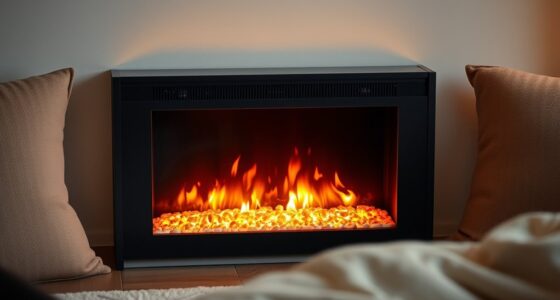
For electric fireplaces, ventilation concerns are less prominent since they don’t produce smoke or fumes. However, it’s still important to keep the area around the unit clear and ensure proper airflow to prevent overheating. Electric models are generally safer in terms of emissions, but neglecting maintenance can cause electrical issues or damage, which may pose fire hazards.
When it comes to maintenance tips, wood-burning fireplaces require more attention. You should schedule annual chimney inspections by professionals, especially if you use your fireplace frequently. Regularly remove ashes and debris to keep air flowing freely. Additionally, check for cracks or damage in the firebox and chimney structure, as these can compromise safety. For electric fireplaces, maintenance mainly involves cleaning the glass and vents to prevent dust buildup that could affect performance or cause overheating. Ensuring proper insulation and safety features are in place further minimizes risks.
Another safety concern is the risk of fire. Wood fires require a safe, non-combustible hearth and a sturdy screen to contain sparks. Never leave a burning fire unattended, and make sure the fire is fully extinguished before leaving the room or going to bed. Electric fireplaces eliminate the sparks and open flames, but you still need to keep combustible materials away from the unit and avoid overloading electrical circuits.
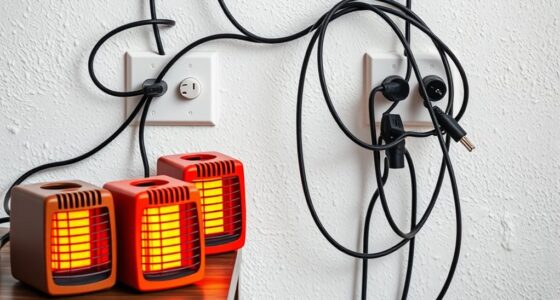
Both types of fireplaces can pose electrical or fire hazards if not properly maintained. Regularly inspecting cords, outlets, and the appliance itself helps catch potential issues early. For wood-burning fireplaces, keeping flammable materials away from the hearth and ensuring your chimney is clear reduces the risk of accidental fires. Electric models should be plugged into grounded outlets and never used with damaged cords or plugs.

EUHOMY 50 Inch Electric Fireplace Wall Recessed and Wall Mounted with Adjustable Flame Color, Fireplace Heater with Remote Control, Linear Fireplace with Timer, Touch Screen, Log & Crystal, 750/1500W
Package Inclusions & 2-Year Technical Support: : The EUHOMY electric fireplace is equipped with 1* carbon log, 1*...
As an affiliate, we earn on qualifying purchases.
Frequently Asked Questions
Are Electric Fireplaces More Energy-Efficient Than Wood-Burning Ones?
Electric fireplaces are generally more energy-efficient than wood-burning ones because they use less energy for the same heat output, leading to significant cost savings over time. You’ll notice lower energy consumption since electric models convert nearly all electrical energy into heat, unlike wood-burning fireplaces that lose heat through the chimney. This efficiency means you can enjoy cozy warmth without wasting energy, making electric fireplaces a smarter, more economical choice for your home.
Can Electric Fireplaces Cause Electrical Fires?
You should know that electric fireplaces can cause electrical fires, with faulty units responsible for over 25% of home fire hazards involving electrical appliances. While they’re generally safe, poor wiring, damaged cords, or improper installation increase risks. To guarantee electrical safety, always follow manufacturer guidelines, keep vents clear, and regularly inspect your unit. Staying vigilant helps prevent potential electrical fires and keeps your home safe.
What Is the Lifespan of Electric Versus Wood-Burning Fireplaces?
Electric fireplaces generally have a longer lifespan, often lasting 20-30 years with proper maintenance, thanks to their durable electrical components. In contrast, wood-burning fireplaces typically last 15-25 years but require regular chimney and firebox upkeep to guarantee safety and efficiency. Your choice depends on your preference for durability and maintenance; electric fireplaces offer greater electric fireplace resilience, while wood-burning options may need more frequent repairs over their lifespan.
Are There Health Risks Associated With Electric Fireplaces?
Electric fireplaces generally pose minimal health risks, but you should still be mindful of air quality and electrical hazards. They don’t produce smoke or fumes, so air quality remains safe indoors. However, faulty wiring or damaged cords can cause electrical hazards, potentially leading to shocks or fires. Always make certain your electric fireplace is properly maintained, installed correctly, and used according to the manufacturer’s instructions to keep your home safe.
How Often Should Chimney Inspections Be Performed for Wood-Burning Fireplaces?
You should schedule chimney inspections annually to guarantee safety and proper chimney maintenance. Regular inspections help identify creosote buildup, blockages, or damage that could lead to fires or carbon monoxide leaks. By maintaining a consistent inspection frequency, you keep your fireplace functioning efficiently and safely. Think of it as routine checkups for your home’s heart—preventing problems before they start and keeping your family safe during cozy winter nights.
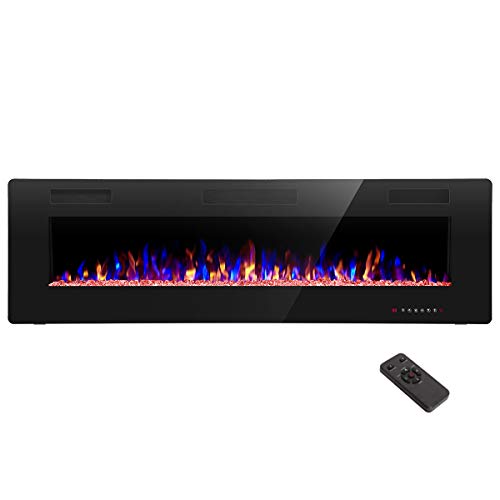
R.W.FLAME 60" Recessed and Wall Mounted Electric Fireplace, Low Noise, Fit for 2 x 6 Stud, Remote Control with Timer, Touch Screen, Adjustable Flame Color and Speed, 750-1500W
Attractive and Practical Design: 3.86"D x 60"W x 18.11"H,The thickness of the new style is only 3.86 inches...
As an affiliate, we earn on qualifying purchases.
Conclusion
Whether you choose electric or wood-burning, safety should always come first. An electric fireplace offers convenience and peace of mind, with no sparks or smoke to worry about. In contrast, a wood-burning fireplace creates cozy warmth but carries risks like burns and fire hazards. The choice isn’t just about ambiance—it’s about protecting your home and loved ones. So, weigh the dangers carefully, and enjoy your fireplace responsibly, knowing safety is the true key to cozy comfort.

Westinghouse 60 Inch Electric Fireplace Heater, Compatible with Alexa & Google Home, Wall Mount or in-Wall Recessed Fireplace Insert, 24 Hour Timer, Color Changing Flames, 750W/1500W Indoor Heater
CUSTOMIZE APPEARANCE: Up to 144 total color combinations for flames and embers, 5 independent brightness levels, and 5...
As an affiliate, we earn on qualifying purchases.

Touchstone Smart Electric Fireplace-The Sideline 50" Wide-in Wall Recessed - 30 Realistic Ember Color/Flame Options - 1,500W Heater w/Thermostat - Log & Crystal Hearth Options - Alexa/WiFi Enabled
APPEARANCE: The Sideline electric fireplace is designed for recessed in-wall mounting. Creating a cozy atmosphere of a traditional...
As an affiliate, we earn on qualifying purchases.