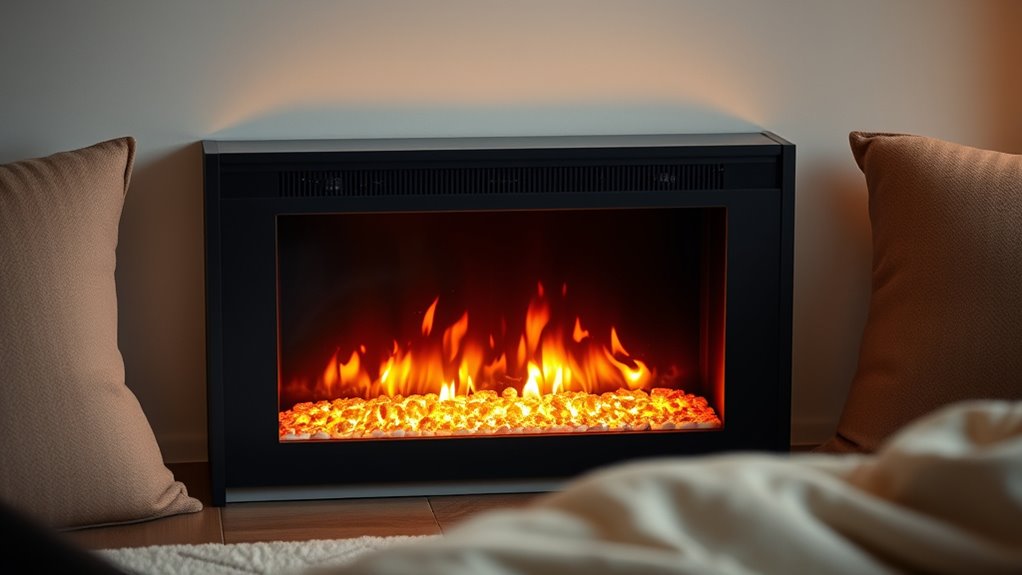

Leaving your electric fireplace on overnight can be safe if it has proper safety features, is well-maintained, and you follow the manufacturer’s instructions. Make sure it’s plugged into a grounded outlet, keeps vents clear, and is free of dust or debris. Always check that safety mechanisms like automatic shut-off are active. Taking these precautions can help ensure safe, comfortable overnight use—if you want to learn more about best practices, keep exploring further.
Key Takeaways
- Modern electric fireplaces have safety features like automatic shut-off for overheating and timed operation.
- Proper maintenance, including checking safety functions and keeping vents clear, enhances overnight safety.
- Always verify the unit is certified and used according to manufacturer instructions before overnight use.
- Keep flammable objects away and ensure proper grounding to prevent electrical hazards.
- Many manufacturers recommend turning off the fireplace when not actively in use overnight for safety reasons.
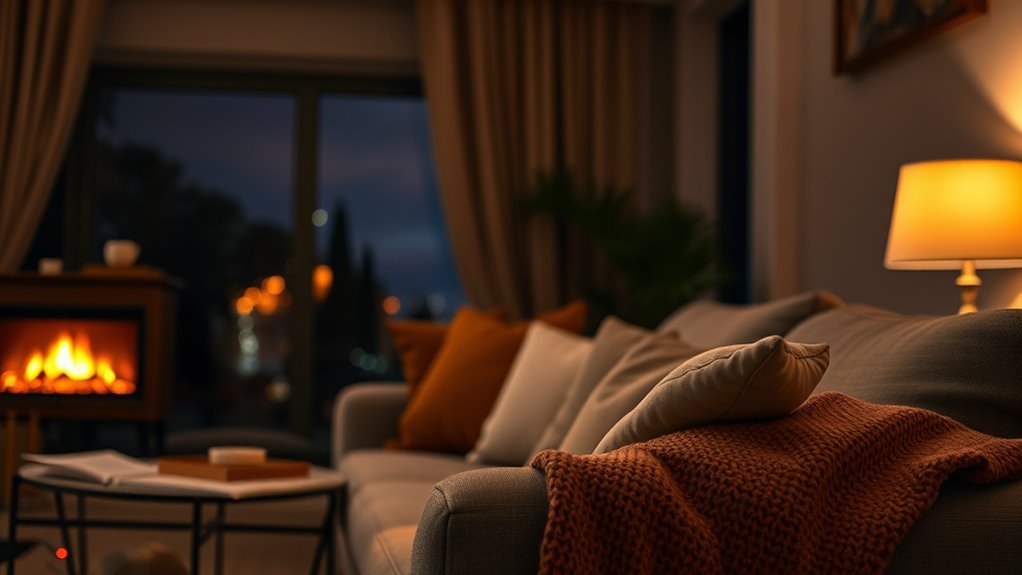
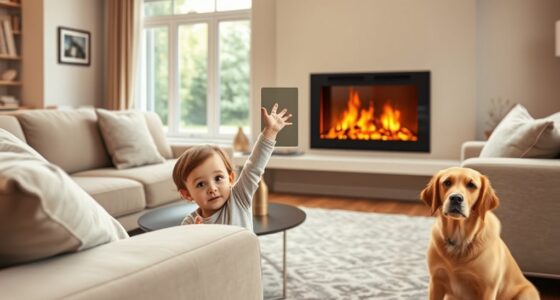
Many people wonder whether it’s safe to leave an electric fireplace on overnight. It’s a common concern, especially when you want to enjoy cozy warmth without worrying about safety hazards. The truth is, electric fireplaces are designed with safety features that make them a reliable option for heating your space, even while you sleep. However, it’s essential to understand the key factors involved, such as fire safety and energy consumption, to make an informed decision.
Regarding fire safety, electric fireplaces are generally much safer than traditional fireplaces that use real flames or combustible fuels. They don’t produce sparks, smoke, or embers, considerably reducing the risk of accidental fires. Most models come equipped with automatic shut-off features that turn the unit off after a certain period or if they detect overheating. These safety mechanisms are vital in preventing any fire hazards, especially if you plan to leave the device on overnight. Still, it’s wise to verify your electric fireplace is well-maintained, properly plugged into a grounded outlet, and free of dust or debris that could interfere with its safety features. Additionally, the design safety features of modern electric fireplaces are continually improving, making them even safer for overnight use. When it comes to energy consumption, electric fireplaces are quite efficient, but they do draw power continuously when turned on. If you’re considering leaving it on overnight, you should think about the impact on your energy bills. Modern models tend to be energy-efficient, using LED technology and adjustable heat settings to minimize electricity use. You can often set the thermostat at a comfortable level and use the flame effect without heat to save energy. Keep in mind that leaving it on for extended periods may increase your electricity costs, so it’s a good idea to weigh the comfort benefits against the potential expense.
Many manufacturers recommend turning off the electric fireplace when not in use for extended periods, but if you choose to leave it on overnight, verify it’s a high-quality, certified unit with all safety features active. It’s also important to follow the manufacturer’s instructions, avoid blocking vents, and keep flammable objects away from the unit.
Frequently Asked Questions
Can Leaving an Electric Fireplace on Overnight Cause Electrical Fires?
Leaving an electric fireplace on overnight can pose a fire hazard if it’s not properly maintained or has faulty wiring. While most modern models prioritize electrical safety, old or damaged units increase the risk of electrical fires. Always guarantee your fireplace is in good condition, follow the manufacturer’s safety guidelines, and never leave it unattended for long periods. Regular inspections reduce the risk and help maintain a safe environment.
Do Electric Fireplaces Have Automatic Shut-Off Features?
Think of your electric fireplace like a cautious guardian; many models do have automatic shut-off features to enhance fire safety and appliance safety. These safety mechanisms turn off the unit after a certain period or if overheating is detected, reducing fire risks. Always check your specific model’s features and follow manufacturer guidelines. Using these safety features properly helps prevent potential hazards, letting you enjoy cozy nights without worry.
How Energy-Efficient Are Electric Fireplaces When Used Overnight?
Electric fireplaces are generally energy-efficient when used overnight, thanks to their low energy consumption. They convert electricity directly into heat, which results in consistent warmth without wasting power. By using features like thermostats and automatic shut-off, you can maximize power savings and reduce energy costs. Just make sure you set the temperature appropriately and use timers if available, to avoid unnecessary energy use and keep your space cozy all night.
Are There Specific Safety Certifications for Electric Fireplaces?
Yes, electric fireplaces have specific safety certifications. You should look for certification labels like UL, ETL, or CSA, which indicate compliance with safety standards. These labels guarantee the product has been tested for electrical safety and reliable operation. Always verify that your electric fireplace has these certifications before use, especially if you plan to leave it on overnight, to reduce risks and ensure safe operation.
What Maintenance Is Required to Ensure Safe Overnight Operation?
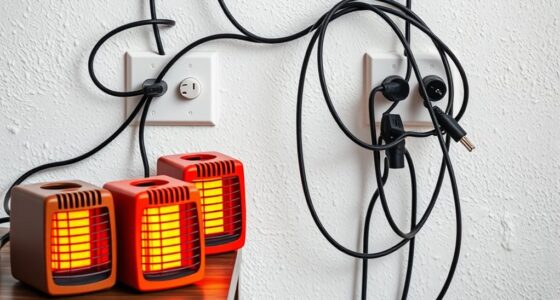
Sure, you can leave your electric fireplace on overnight—just don’t forget the glamorous routine of fireplace cleaning and cord safety. Regularly clean dust and debris to prevent overheating and make certain all vents are clear. Check the cord for frays or damage, and keep it away from high-traffic areas. This way, your cozy night doesn’t turn into a fiery drama, because safety’s the real showstopper.
Conclusion
So, is it safe to leave your electric fireplace on overnight? While modern models often have safety features, it’s still wise to turn it off when you’re not around. Ignoring safety precautions could lead to unnecessary risks. Ask yourself: is the cozy warmth worth potential hazards? Ultimately, staying cautious and turning it off guarantees peace of mind. After all, isn’t your safety and home’s security more important than a warm night?