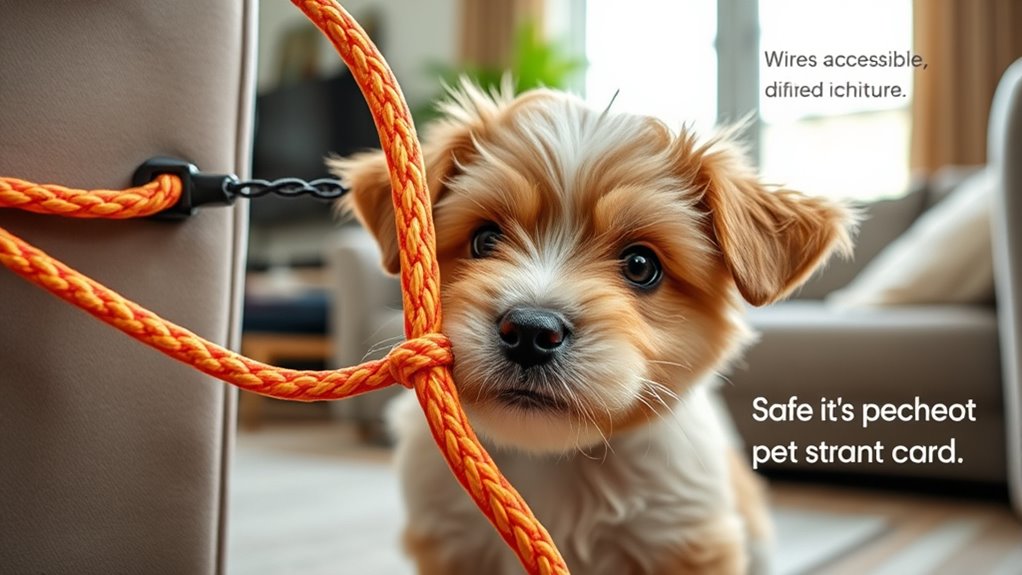

To prevent your pet from chewing on cords, organize and secure all electrical wires out of reach, using cord covers or hiding them behind furniture. Provide safe, durable chew toys to redirect their biting instincts and reinforce positive habits. Regularly inspect toys for damage and replace if needed. Consistent training and supervision help your pet understand what’s off-limits. Ensuring a safe environment reduces the risk of injuries—continue exploring ways to keep your pet safe around cords.
Key Takeaways
- Organize and secure all electrical cords using covers or hiding them behind furniture.
- Provide pets with durable, safe chew toys to redirect their biting instincts.
- Train pets to avoid cords by redirecting and rewarding positive behavior consistently.
- Keep cords out of reach and regularly inspect for damage or wear.
- Create a safe environment by maintaining routines and ensuring toys and surroundings are hazard-free.

Keeping your pets safe is essential for their well-being and your peace of mind. One of the most common hazards in households with curious pets, especially puppies and kittens, is the risk of chewing on cords. Electrical cords are tempting targets because they’re easy to access and often resemble toys to pets exploring their environment. To prevent accidents, it’s crucial to implement pet proofing tips that keep cords out of reach and discourage unsafe chewing behaviors. Start by organizing and securing all electrical cords, using cord protectors or covers that make them less appealing to chew. You can also tuck cords behind furniture or use cord management systems to keep them hidden and inaccessible. This simple step reduces the chances of your pet biting into live wires, which can cause electrical shocks or burns.
In addition to securing cords, providing your pet with safe chew toys is a vital part of pet proofing. Safe chew toys help redirect your pet’s natural chewing instincts away from dangerous items like electrical cords, furniture, or shoes. Look for durable, non-toxic toys designed specifically for your pet’s size and chewing strength. Chewing is a normal behavior for pets, especially puppies teething or kittens exploring new objects, so offering appropriate alternatives can save you money and prevent injury. When selecting safe chew toys, avoid those with small parts that could be swallowed or pieces that break off easily, creating a choking hazard. Regularly inspect toys for wear and tear, replacing damaged ones promptly to maintain safety.
Creating a designated space filled with safe chew toys also helps establish boundaries and routines, making it easier for your pet to understand what’s acceptable to chew. Training your pet to recognize when they’re near cords and reinforcing positive behaviors with treats or praise can go a long way. Consistency is key; whenever you catch your pet attempting to chew on cords, gently redirect them to their toys. This not only keeps them safe but also reduces frustration or confusion about what’s off-limits. Additionally, understanding the importance of vacuum cleaner performance metrics can help you maintain a clean environment, reducing the dust and debris that might encourage your pet to chew on unfamiliar objects. Remember, patience and positive reinforcement are more effective than punishment.
Frequently Asked Questions
What Are the Best Pet-Safe Cord Covers Available?
You should consider cord cover options made from pet-safe materials like silicone, fabric, or flexible plastic. Brands like D-Line, J channel, or Jool Baby Safety Cord Cover offer durable, chew-resistant options that keep your cords protected. These covers are easy to install, flexible for different setups, and made with non-toxic, pet-safe materials, ensuring your furry friend stays safe while preventing them from chewing on electrical cords.
How Can I Train My Pet to Avoid Cords?
Think of your pet as a curious student enthusiastic to learn pet obedience. Start crate training to create a safe space, and use positive reinforcement when they avoid cords. Redirect their attention to toys or chews, rewarding good behavior. Consistency is key; over time, they’ll associate cords with something off-limits. Patience and gentle guidance turn training into a bonding experience, helping your pet understand what’s safe and what’s not.
Are There Natural Deterrents to Keep Pets Away From Cords?
You can use natural repellents like citrus peels or vinegar, which pets dislike, to keep them away from cords. Household deterrents such as aluminum foil or double-sided tape also work well because pets tend to avoid unfamiliar textures. Apply these around cords to create a safe barrier, and combine with training. These natural repellents and household deterrents help protect your pet without harsh chemicals.
What Signs Indicate My Pet Has Chewed on a Dangerous Cord?
Did you know that 30% of pet-related electrical hazards involve chewing cords? If your pet has chewed on a dangerous cord, look for behavioral signs like trembling, drooling, or sudden aggression. You might also notice visible damage or exposed wires. These signs indicate potential electrical hazards, so act quickly—unplug the device, check your pet for injuries, and consult your vet to guarantee safety and health.
How Can I Pet-Proof My Home for Multiple Pets?
To pet-proof your home for multiple pets, implement supervision strategies and monitor their behavior closely. Use baby gates or playpens to restrict access to certain areas, and keep cords and small objects out of reach. Invest in pet-proof furniture with chew-resistant materials, and provide plenty of toys to redirect their chewing instinct. Regular training helps reinforce boundaries, ensuring your pets stay safe and your home remains protected.
Conclusion
Keeping cords out of your pet’s reach is essential for their safety. Did you know that 1 in 3 pet injuries are caused by chewing on electrical cords? By taking simple steps like hiding cords or using protective covers, you reduce this risk considerably. Stay vigilant and proactive to prevent accidents. Remember, a safe environment keeps your furry friend happy and healthy, giving you peace of mind every day.