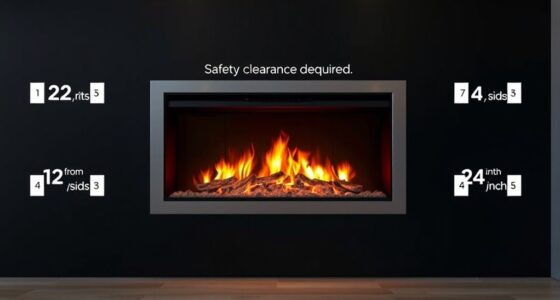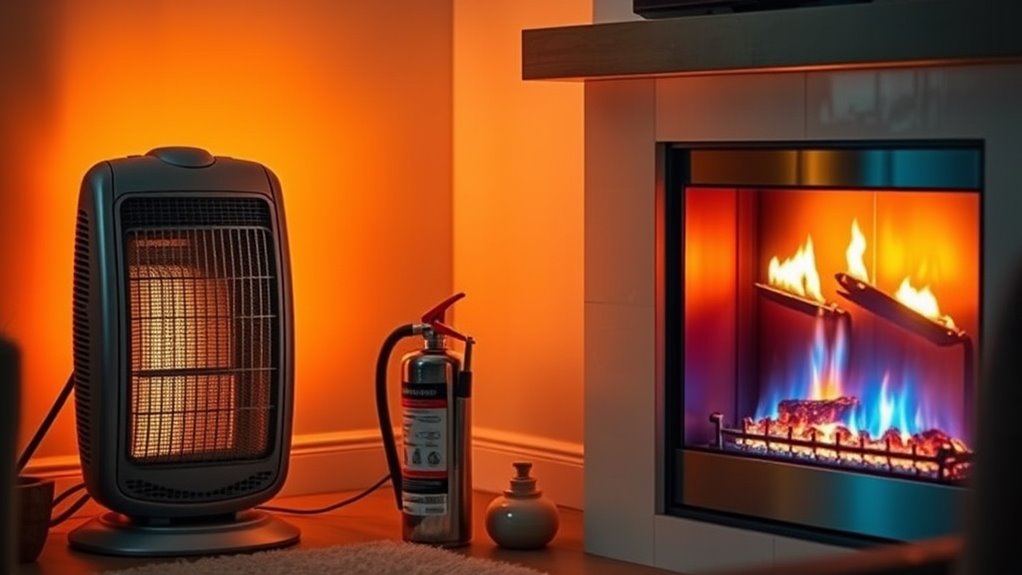
When comparing space heaters and electric fireplaces for safety, space heaters pose higher fire risks because of exposed heating elements and their portability, which makes them easier to accidentally tip or place near combustibles. Electric fireplaces are safer since they have enclosed heating parts and built-in safety features like automatic shut-off. If you explore further, you’ll discover how to maximize safety in your home with either heating option.
Key Takeaways
- Electric fireplaces eliminate open flames and exposed heating elements, reducing burn and fire hazards compared to space heaters.
- Space heaters pose a higher fire risk if placed near flammable materials or used improperly.
- Electric fireplaces often include built-in safety features like tip-over and automatic shut-off, enhancing safety.
- Space heaters require careful supervision around children and pets due to exposed heating elements and higher burn risks.
- Electric fireplaces are generally safer for households with children or pets because of enclosed heating mechanisms.

When choosing between a space heater and an electric fireplace, understanding their differences can help you make the right decision for your heating needs. Safety is a key factor, and it’s important to compare how each option performs in that regard. Space heaters are portable and can be placed almost anywhere, but they require careful attention to safety precautions. Many models generate significant heat, which can pose fire hazards if they’re placed too close to curtains, furniture, or other combustible materials. Additionally, space heaters often have exposed heating elements, which increases the risk of burns if touched accidentally. To mitigate these risks, you need to follow strict safety guidelines, such as never leaving them unattended and ensuring they’re on stable surfaces. Essential oils are sometimes used for aromatherapy but should be kept away from space heaters to prevent fire hazards.
Electric fireplaces, on the other hand, tend to be safer because they don’t have exposed heating elements. They often come with built-in safety features like automatic shut-off if they overheat or tip over. This makes them a safer choice for homes with children or pets. Since electric fireplaces are typically fixed units or semi-permanent, installation requirements are generally more straightforward. They usually require a standard electrical outlet, and many models can be plugged in without special wiring. This ease of installation means you don’t have to worry about complex setup procedures or professional installation unless you’re opting for a built-in or custom model.
Energy efficiency is another critical consideration. Space heaters tend to be less energy-efficient because they heat a small area quickly but can waste energy if left on longer than necessary. They often generate a lot of heat rapidly, but that heat can be lost if the room isn’t well insulated. Electric fireplaces, meanwhile, are designed to provide consistent, focused heat, often with adjustable settings that help you control energy consumption. They convert electricity directly into heat without wasting energy through venting or combustion, making them more efficient overall. Plus, many models feature thermostats and timers, allowing you to optimize usage and reduce energy waste.
Frequently Asked Questions
Are Space Heaters More Prone to Electrical Fires Than Electric Fireplaces?
Yes, space heaters are generally more prone to fire hazards than electric fireplaces because they often have exposed heating elements and require closer placement to flammable objects. This increases the risk of electrical safety issues if not used properly. Always follow safety guidelines and keep space heaters away from curtains, furniture, and other combustibles to minimize the chance of electrical fires. Electric fireplaces tend to have built-in safety features that reduce this risk.
Do Electric Fireplaces Emit Harmful Emissions or Pollutants?
Electric fireplaces do not emit harmful emissions or pollutants, so they don’t affect your air quality. Unlike traditional fireplaces, they generate heat without releasing smoke, gases, or particulates. This means you avoid emission levels that could compromise indoor air quality or pose health risks. With electric fireplaces, you enjoy cozy warmth safely, without worrying about harmful emissions or pollutants, making them a cleaner, healthier heating option for your home.
Can Both Devices Cause Carbon Monoxide Buildup?
Both devices generally don’t cause carbon monoxide buildup if used correctly. Electric fireplaces don’t use fuel, so ventilation requirements aren’t an issue, and fuel source safety isn’t a concern. Space heaters that run on fuel, like gas, do need proper ventilation to prevent CO buildup. Always follow manufacturer instructions and make certain your space has adequate ventilation to keep your home safe and avoid dangerous emissions.
Which Safety Features Are Standard in Modern Space Heaters?
Modern space heaters are like safety vaults, equipped with standard features that keep you secure. You’ll find thermal insulation to prevent overheating and overheat protection that automatically shuts the device off if it gets too hot. These features act like vigilant guards, ensuring safe operation. Always check for automatic shut-off, tip-over protection, and secure wiring, so you stay warm without worry.
Are Electric Fireplaces Safer for Children and Pets?
Electric fireplaces are generally safer for children and pets because they often come with childproofing measures like safety locks and automatic shut-off features. Pet safety features, such as cool-to-touch surfaces, help prevent burns. You should still supervise your kids and pets around any heating device, but electric fireplaces reduce risks associated with open flames or hot surfaces, making them a safer choice for families.
Conclusion
Now that you’ve seen the safety differences between space heaters and electric fireplaces, the choice isn’t as simple as it seems. Both have their perks and risks, but what if a hidden danger awaits just around the corner? Before you make your decision, consider which option truly keeps your home safe—and your loved ones protected. The final verdict might surprise you. Are you ready to choose the safer path? The answer could change everything.