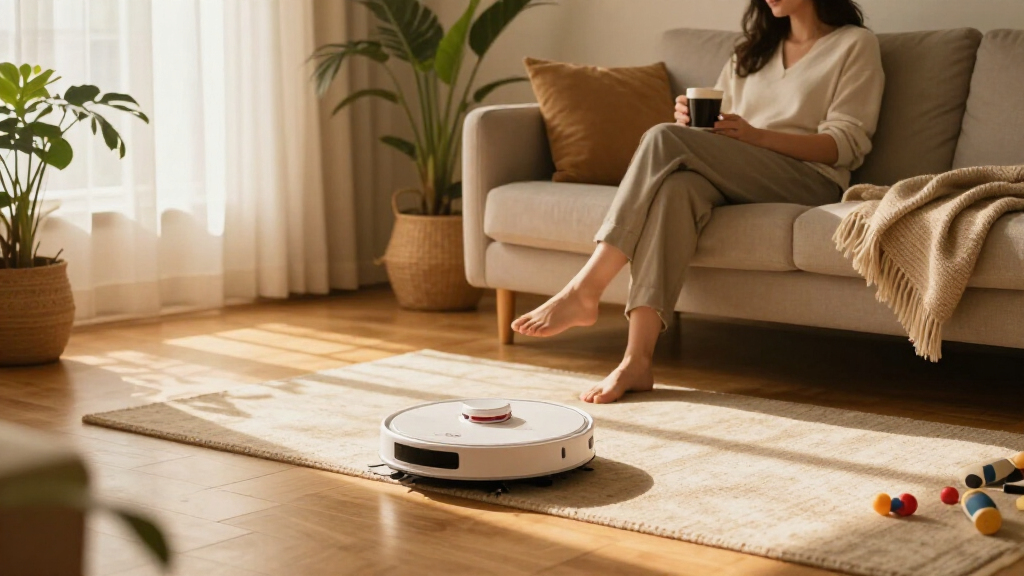
Robotic vacuum cleaners have quietly split into two very different markets: basic bumper-navigation bots under $150 that bounce around small apartments, and LiDAR-mapped, self-emptying vacuum-mop hybrids that clean entire floors with almost no human input. The Roborock Qrevo S Pro earns my best overall pick for combining intelligent obstacle avoidance, a self-washing mop dock, and strong suction in one package. For value hunters, the Tikom G8000 Max delivers LiDAR mapping and mopping at a fraction of the flagship price, while the eufy 11S Max remains the quiet, dead-simple choice for pet-hair pickup in small homes. The main tradeoff you’ll face is dock complexity and long-term cost versus cleaning autonomy: the more the robot does for itself, the more you pay upfront and in consumables. Read on for the full breakdown of all 15 models and which one fits your floors, budget, and patience for maintenance.

Get home appliances delivered free — and shop member deals
- Fast, free delivery on millions of items
- Access to Prime Big Deal Days deals on October 6–7
- Prime Video, Amazon Music and more included
Complete the kit


Key Takeaways
- LiDAR navigation was the biggest quality dividing line in this lineup — the Roborock Qrevo S Pro, Q7 M5+, Q7 L5, and both Tikom models map systematically, while the Lefant M210, eufy 11S Max, and ILIFE V2 still use random or gyro navigation and clean far less efficiently in larger homes.
- Self-emptying docks (Roomba 115 Combo, Shark AV2501S, H6 Pro, Tikom self-empty model) shift work from you to the robot, but they add ongoing bag costs and bulk — they only make sense above roughly 1,000 square feet of carpet.
- Budget vacuum-mop combos like the E8S and ROPVACNIC S1 genuinely mop, but their small tanks and flat mopping pads suit light maintenance on hard floors, not replacing a real mop for sticky or dried messes.
- Suction numbers (5,200 Pa to 8,000 Pa) matter far less than navigation quality and brush design — an 8,000 Pa robot with poor mapping still cleans worse than a well-mapped 4,000 Pa model.
- Pet owners get the best results from rubber brush-roll designs like the Roomba 115 Combo and Shark AI Ultra, which resist hair tangles far better than bristle brushes on cheaper models.
| Tikom G8000 Max Robot Vacuum and Mop Combo |  | Best Value Vac-and-Mop | Suction Power: 5000 Pa | Dustbin Capacity: 450 ml | Water Tank Capacity: 300 ml | VIEW LATEST PRICE | See Our Full Breakdown |
| Roborock Qrevo S Pro Robot Vacuum and Mop |  | Best Premium, Lowest Maintenance | Suction Power: 18,500 Pa | Dust Bag Capacity: 2.7 L | Dust Bag Duration: 7–9 weeks | VIEW LATEST PRICE | See Our Full Breakdown |
| Lefant M210 Robot Vacuum Cleaner |  | Best Budget Pick for Pet Hair | Diameter: 11 in | Height: 2.99 in | Runtime: Up to 120 minutes (low suction mode) | VIEW LATEST PRICE | See Our Full Breakdown |
| iRobot Roomba 115 Combo Robot Vacuum and Mop with AutoEmpty Dock |  | Best Smart Navigation | Suction Power: 15,000 Pa | Coverage per Charge: Up to 900 sq ft | Dock Bag Capacity: 2.5 L | VIEW LATEST PRICE | See Our Full Breakdown |
| ILIFE V2 Robot Vacuum |  | Best Basic Starter Robot | Color: White | Cleaning Modes: Auto, spot, and edge | Sensors: Infrared anti-collision and anti-fall | VIEW LATEST PRICE | See Our Full Breakdown |
| E8S Robot Vacuum and Mop with 6500Pa Suction |  | Best Budget Vacuum-Mop Hybrid | Suction power: Up to 6500Pa | Battery capacity: 2600mAh | Maximum runtime: 200 minutes in Eco mode | VIEW LATEST PRICE | See Our Full Breakdown |
| iRobot Roomba 105 Vac Robot Vacuum |  | Best LiDAR Mapping for the Price | Navigation: ClearView LiDAR | Cleaning system: Three-stage with multi-surface and edge-sweeping brushes | Suction levels: 4 | VIEW LATEST PRICE | See Our Full Breakdown |
| eufy 11S Max Robot Vacuum Cleaner | 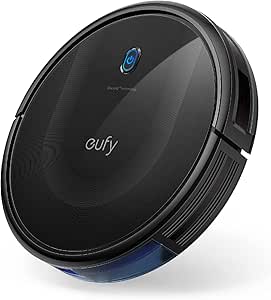 | Best No-App Pick for Low-Maintenance Cleaning | Profile height: 2.85 inches | Runtime: Up to 100 minutes on hardwood floors | Suction adjustment: BoostIQ, adjusts within 1.5 seconds | VIEW LATEST PRICE | See Our Full Breakdown |
| Shark AV2501S AI Ultra Robot Vacuum with Matrix Clean and Self-Empty Base |  | Best for Allergy Sufferers | Model: AV2501S | Navigation: Matrix Clean with 360° LiDAR home mapping | Self-empty base capacity: Up to 30 days | VIEW LATEST PRICE | See Our Full Breakdown |
| Roborock Q7 M5+ Robot Vacuum and Mop |  | Best Low-Maintenance Combo | Suction power: 10,000 Pa | Dust bag capacity: 2.7 L | Self-emptying interval: Up to 7–9 weeks | VIEW LATEST PRICE | See Our Full Breakdown |
| Shark AI Ultra Robot Vacuum with 60-Day Self-Emptying Base |  | Best for Carpet-Heavy Homes | Model: AV2511AE | Runtime: Up to 90 minutes | Self-emptying capacity: Up to 60 days of dirt and debris | VIEW LATEST PRICE | See Our Full Breakdown |
| H6 Pro Robot Vacuum and Mop with Self-Emptying Station |  | Best for Long Hands-Free Intervals | Suction power: 6000 Pa | Station capacity: 3 L | Dustbin capacity: 250 ml | VIEW LATEST PRICE | See Our Full Breakdown |
| ROPVACNIC Robot S1 Vacuum and Mop Combo, 5200 Pa Suction |  | Best Budget Hybrid Pick | Suction power: 5200 Pa | Cleaning functions: Vacuuming and mopping | Water adjustment: Four-stage | VIEW LATEST PRICE | See Our Full Breakdown |
| Tikom Robot Vacuum and Mop with Self-Emptying Base |  | Best for Multi-Floor Households | Maximum suction: 6000 Pa | Dustbag capacity: 3 L | Navigation: 360° LiDAR | VIEW LATEST PRICE | See Our Full Breakdown |
| Roborock Q7 L5 Robot Vacuum and Mop Combo, 8,000 Pa Suction |  | Best Suction Power | Suction power: 8,000 Pa | Water tank capacity: 270 ml | Battery life: 150 minutes | VIEW LATEST PRICE | See Our Full Breakdown |
| robotic vacuum cleaner | Navigation | Suction Power |
|---|---|---|
| Tikom G8000 Max Robot Vacuum a | — | 5000 Pa |
| Roborock Qrevo S Pro Robot Vac | — | 18,500 Pa |
| Lefant M210 Robot Vacuum Clean | — | — |
| iRobot Roomba 115 Combo Robot | ClearView LiDAR | 15,000 Pa |
| ILIFE V2 Robot Vacuum | — | — |
| E8S Robot Vacuum and Mop with | Gyro inertial navigation | Up to 6500Pa |
| iRobot Roomba 105 Vac Robot Va | ClearView LiDAR | — |
| eufy 11S Max Robot Vacuum Clea | — | — |
| Shark AV2501S AI Ultra Robot V | Matrix Clean with 360° LiDAR home mapping | — |
| Roborock Q7 M5+ Robot Vacuum a | PreciSense LiDAR | 10,000 Pa |
| Shark AI Ultra Robot Vacuum wi | 360° LiDAR mapping | — |
| H6 Pro Robot Vacuum and Mop wi | 360° LiDAR with multi-level mapping | 6000 Pa |
| ROPVACNIC Robot S1 Vacuum and | — | 5200 Pa |
| Tikom Robot Vacuum and Mop wit | 360° LiDAR | — |
| Roborock Q7 L5 Robot Vacuum an | LiDAR | 8,000 Pa |
More Details on Our Top Picks
Tikom G8000 Max Robot Vacuum and Mop Combo
Buyers who want simultaneous vacuuming and mopping without paying for a self-cleaning dock get the most practical package here. The 5000 Pa suction handles pet hair and everyday debris well for this price tier, and the 2.99-inch profile slides under beds and sofas that block taller machines like the Roborock Qrevo S Pro at 3.8 inches. Four cleaning modes plus app, remote, voice, and button control give it flexibility the simpler ILIFE V2 can’t match. The tradeoff is maintenance: unlike the Roomba 115 Combo, there’s no self-emptying dock, so you’ll be emptying the 450 ml dustbin yourself, and the 300 ml water tank needs refilling on larger homes. Also note the 150-minute runtime figure applies to quiet mode — expect less in practice.
Pros:- Vacuums and mops simultaneously in a single pass
- Slim 2.99-inch body cleans under most furniture
- Four control methods including app and voice
- Anti-collision and anti-fall sensors protect furniture and stairs
Cons:- No self-emptying dock means manual dustbin emptying
- Advertised 150-minute runtime applies to quiet mode only
- 300 ml water tank requires refilling for larger spaces
Best for: Budget-conscious pet owners in small-to-medium homes who want mopping capability and a low-profile body
Not ideal for: Large homes or anyone who hates manual bin emptying — no self-emptying dock and a small water tank mean frequent hands-on maintenance
- Suction Power:5000 Pa
- Dustbin Capacity:450 ml
- Water Tank Capacity:300 ml
- Battery Life:Up to 150 minutes (quiet mode)
- Height:2.99 inches
- Noise Level:45 dB
- Filter Type:HEPA
- Cleaning Modes:Spot, edge, zig-zag, and manual
Our verdict“A well-rounded vac-and-mop combo for small homes that keeps costs down by skipping the convenience of a dock.”
Roborock Qrevo S Pro Robot Vacuum and Mop
This is the set-and-forget option of the lineup. With 18,500 Pa suction — nearly four times the Tikom G8000 Max — plus a dock that empties dust, washes mops in hot water, and dries them with warm air, it demands almost nothing from you for weeks. The 2.7 L dust bag lasts 7–9 weeks, beating the Roomba 115 Combo’s three-month claim in washing convenience since that model doesn’t clean its own mop pads. Anti-tangle brushes and 10 mm mop lift make it the strongest pick here for shedding pets and mixed carpet. The compromises are real though: it’s the priciest approach in this batch, the 3.8-inch height won’t fit under low clearance furniture, and it’s limited to 2.4 GHz Wi-Fi, which can complicate setup on modern mesh networks.
Pros:- Dock self-empties, washes mops at 167°F, and warm-air dries them
- 18,500 Pa suction tops everything else in this lineup
- Anti-tangle brushes reduce hair wrap for pet households
- Carpet-specific suction and mop settings adapt automatically
Cons:- 2.4 GHz-only Wi-Fi support can clash with newer routers
- Tall 3.8-inch body limits access under low furniture
- Premium feature set comes at the top of the price range
Best for: Busy households with pets, carpets, and hard floors who want maximum suction and near-zero upkeep
Not ideal for: Buyers on a budget or homes with low-clearance furniture — at 3.8 inches tall, it can’t reach where slimmer robots clean
- Suction Power:18,500 Pa
- Dust Bag Capacity:2.7 L
- Dust Bag Duration:7–9 weeks
- Mop Washing Temperature:167°F
- Mop Drying Temperature:113°F
- Mop Lift:10 mm
- Robot Height:3.8 in
- Noise Level:55 dB
Our verdict“The pick for buyers who’d rather never touch their robot than save money — unmatched automation at a premium.”
Lefant M210 Robot Vacuum Cleaner
Not everyone needs mopping, and the M210 proves a vacuum-only robot can excel by doing less. Its brushless suction port is the standout: with no bristle brush to tangle, pet hair passes straight into the bin — a persistent pain point for brush-based models like the Roomba 115 Combo. The 2.99-inch height matches the Tikom G8000 Max for under-furniture access, and six cleaning modes with Alexa and Google Assistant support put it far ahead of the bare-bones ILIFE V2 in flexibility. The lithium iron phosphate battery is also a longevity plus over standard lithium-ion. Be realistic about limits: the 120-minute runtime is a low-suction figure, and the zigzag cleaning mode isn’t recommended for carpet, so deep-pile homes should look at stronger options like the Roborock Q7 L5.
Pros:- Brushless suction port eliminates hair tangles at the source
- Slim 2.99-inch body fits under beds and sofas
- Six cleaning modes with app scheduling and voice control
- Lithium iron phosphate battery offers strong cycle longevity
Cons:- 120-minute runtime is only achieved in low suction mode
- No mopping capability at all
- Zigzag mode underperforms on carpet
Best for: Apartment dwellers with shedding pets and mostly hard floors who want tangle-free cleaning on a budget
Not ideal for: Carpeted homes — the tangle-resistant design trades brush agitation for weaker pickup, and zigzag mode isn’t recommended for carpet
- Diameter:11 in
- Height:2.99 in
- Runtime:Up to 120 minutes (low suction mode)
- Cleaning Modes:Zigzag, random, spot, edge, scheduled, and manual
- Battery:Lithium iron phosphate
- Controls:Lefant app, Alexa, and Google Assistant
- Sensors:6D anti-collision infrared sensors
Our verdict“A focused, tangle-free vacuum for hard-floor pet homes where mopping was never on the shopping list.”
iRobot Roomba 115 Combo Robot Vacuum and Mop with AutoEmpty Dock
The Roomba 115 Combo earns its spot through ClearView LiDAR mapping, which builds a room-by-room map that the sensor-guided Lefant M210 and ILIFE V2 simply can’t replicate — you get systematic multi-room routes and No Mop Zones to keep rugs dry, a genuinely useful feature the Tikom G8000 Max lacks. The self-emptying dock holds 2.5 L in a sealed bag trapping 99% of pollen and mold, a strong choice for allergy sufferers, though unlike the Roborock Qrevo S Pro it doesn’t wash or dry its mop pads, so those stay manual chores. At 15,000 Pa, suction sits near the top of this lineup. Two limits shape who should buy: coverage maxes out at 900 sq ft per charge, so larger homes face mid-clean recharges, and filters and brushes need replacing every 3–6 months.
Pros:- LiDAR mapping enables systematic room-by-room cleaning
- Sealed dock bag traps 99% of pollen and mold for allergy relief
- No Mop Zones keep carpets and rugs dry
- SmartScrub and adjustable suction and mop settings
Cons:- Coverage capped at 900 sq ft per charge
- Filters and brushes require replacement every 3–6 months
- Dock doesn’t wash or dry the mop pads
Best for: Allergy-sensitive households in medium homes who want mapped, targeted cleaning and a sealed self-emptying dock
Not ideal for: Homes over 900 sq ft per floor — the per-charge coverage limit forces recharge interruptions, and ongoing filter costs add up
- Suction Power:15,000 Pa
- Coverage per Charge:Up to 900 sq ft
- Dock Bag Capacity:2.5 L
- Dock Bag Filtration:Traps 99% of pollen and mold
- Self-Emptying Duration:Up to 3 months
- Navigation:ClearView LiDAR
- Mop Pad:Washable microfiber
- Connectivity:2.4 GHz Wi-Fi required for setup
Our verdict“The smart-navigation choice for medium, allergy-conscious homes that value mapped precision over dock-side mop care.”
ILIFE V2 Robot Vacuum
Simplicity is the entire point here. The V2 offers auto, spot, and edge modes with infrared sensors for obstacle avoidance and stair protection, and nothing else — no app to configure, no Wi-Fi to wrestle with, no dock to maintain. That makes it the easiest entry point in this roundup for anyone intimidated by the app ecosystems of the Roomba 115 Combo or Lefant M210, or as a first robot for an older relative who just wants a button press. The honest tradeoffs matter, though: no suction rating is published, so performance expectations should stay modest, and there’s no scheduling, mopping, or self-emptying. Compared with everything else on this list, it’s the least capable — but also the least complicated and least expensive way to find out whether a robot vacuum fits your life at all.
Pros:- No app, Wi-Fi, or account setup required
- Infrared sensors prevent collisions and stair falls
- Auto, spot, and edge modes cover basic cleaning routines
- Simplest way to try a robot vacuum before committing
Cons:- No published suction power or performance specs
- No scheduling, app control, or voice commands
- No mopping capability
Best for: First-time robot vacuum buyers or anyone who wants a press-and-go cleaner with zero app or Wi-Fi setup
Not ideal for: Anyone who cares about performance or scheduling — no suction specs are published, and there’s no mopping or app control
- Color:White
- Cleaning Modes:Auto, spot, and edge
- Sensors:Infrared anti-collision and anti-fall
Our verdict“A bare-minimum starter robot best treated as a low-risk trial run rather than a long-term cleaning solution.”
E8S Robot Vacuum and Mop with 6500Pa Suction
The E8S stands out for squeezing vacuuming and mopping into a package that undercuts most combo rivals. Its 6500Pa suction sits below the Roborock Q7 M5+’s 10,000Pa, but the E8S counters with a 200-minute Eco runtime — nearly double what many pricier robots manage — and flexible control via app, remote, or Google Assistant, which the app-free eufy 11S Max can’t match. The tradeoff is gyro navigation instead of LiDAR, so mapping is less precise than the Roomba 105’s, and the runtime drops to roughly 70 minutes in Max mode. It’s a smart pick for buyers who want two functions in one device without paying for a self-emptying dock.
Pros:- Vacuum and mop functions in a single budget-friendly device
- Up to 200 minutes of runtime in Eco mode covers large spaces in one pass
- Four suction levels with zigzag, spot, and edge cleaning modes
- Multiple control options including app, remote, and Google Assistant
Cons:- Gyro navigation maps less accurately than LiDAR systems
- Runtime falls to around 70 minutes in Max suction mode
- App requires a 2.4GHz Wi-Fi network only
Best for: Budget-conscious buyers in small-to-medium homes who want mopping and vacuuming from one affordable device
Not ideal for: Households wanting precise room mapping and zone cleaning — gyro navigation can’t match LiDAR-based rivals like the Roomba 105
- Suction power:Up to 6500Pa
- Battery capacity:2600mAh
- Maximum runtime:200 minutes in Eco mode
- Maximum coverage:1290 sq. ft.
- Navigation:Gyro inertial navigation
- Controls:Tuya Smart app, remote control, Google Assistant
- Water tank capacity:200ml
Our verdict“A capable two-in-one option for price-sensitive buyers who value long runtime over mapping precision.”
iRobot Roomba 105 Vac Robot Vacuum
Compared with the gyro-guided E8S, the Roomba 105’s ClearView LiDAR delivers genuinely smarter cleaning: it maps rooms, plans coverage, and supports targeted room, zone, and spot cleaning — features usually reserved for pricier models. The three-stage cleaning system with edge-sweeping brushes gives it an edge on debris pickup along walls, and recharge-and-resume means a big home gets finished in one scheduled session rather than left half-done. It doesn’t mop like the E8S or empty itself like the Shark AV2501S, so it sits deliberately in the middle: more navigation intelligence than budget picks, less automation than premium ones. Setup demands a 2.4GHz network, which is worth confirming before ordering.
Pros:- ClearView LiDAR enables room mapping, zone cleaning, and obstacle avoidance
- Three-stage cleaning system with edge-sweeping brushes handles debris along walls
- Recharge and resume completes large cleaning jobs automatically
- Works with app, voice assistants (Alexa, Siri, Google), or onboard buttons
Cons:- Requires a 2.4 GHz Wi-Fi network for setup and operation
- No self-emptying base or mopping functionality
- Suction comparison figures are based on the older Roomba 600 series
Best for: Buyers who want precise LiDAR mapping, room targeting, and reliable brand support without paying for a self-emptying base
Not ideal for: Anyone wanting mopping or self-emptying — this is a vacuum-only model with a manual dustbin
- Navigation:ClearView LiDAR
- Cleaning system:Three-stage with multi-surface and edge-sweeping brushes
- Suction levels:4
- Connectivity:2.4 GHz Wi-Fi
- Recharge and resume:Yes
- Voice assistants:Alexa, Siri, Google Assistant
Our verdict“The pick for vacuum-focused buyers who want smarter navigation than budget models offer but don’t need a dock or mop.”
eufy 11S Max Robot Vacuum Cleaner
In a roundup full of app-dependent robots, the eufy 11S Max takes the opposite approach: no Wi-Fi, no account setup, no connectivity headaches. That makes it refreshingly simple next to the Roomba 105 or E8S — you press a button (or use the remote) and it cleans. Its 2.85-inch slim profile glides under couches and beds where taller robots get stuck, and quiet operation means it can run during dinner without anyone noticing. BoostIQ adjusts suction within 1.5 seconds when it hits carpet, keeping cleaning consistent. The tradeoffs are real: no mapping means no room targeting or no-go zones, and there’s no mopping or self-emptying. It’s for buyers who want a set-and-forget helper, not a smart-home hub on wheels.
Pros:- No app, Wi-Fi, or account required — works out of the box
- Slim 2.85-inch profile cleans under low furniture
- Quiet enough to run while people are home
- BoostIQ automatically boosts suction on carpet within 1.5 seconds
Cons:- No Wi-Fi, app, scheduling, or voice control at all
- Random navigation means less efficient coverage than LiDAR models like the Roomba 105
- Runtime figures only confirmed for hardwood floors
Best for: Anyone who wants a simple, quiet robot with zero app setup — ideal for guest rooms, rentals, or tech-averse households
Not ideal for: Smart-home enthusiasts who want scheduling from their phone, room maps, or voice control — none of that exists here
- Profile height:2.85 inches
- Runtime:Up to 100 minutes on hardwood floors
- Suction adjustment:BoostIQ, adjusts within 1.5 seconds
- Connectivity:None (no Wi-Fi or app)
- Controls:Remote control and onboard buttons
- Charging:Self-recharging
Our verdict“The best choice for buyers who deliberately want an app-free, whisper-quiet robot rather than a connected one.”
Shark AV2501S AI Ultra Robot Vacuum with Matrix Clean and Self-Empty Base
What separates the Shark AV2501S from the Roborock Q7 M5+ is filtration: its HEPA base captures 99.97% of dust and allergens down to 0.3 microns, a genuine differentiator for pet owners and allergy sufferers. The bagless self-empty base holds up to 30 days of debris, so daily vacuuming doesn’t mean daily maintenance. Matrix Clean navigation with 360° LiDAR maps the home and passes over floors in a systematic grid rather than wandering, while object detection keeps it from swallowing charging cables. Compared with the Roomba 105, you get the self-emptying convenience the iRobot lacks — but unlike the E8S or Q7 M5+, there’s no mopping, and the 120-minute runtime needs recharge-and-resume for very large homes.
Pros:- HEPA filtration captures 99.97% of dust and allergens down to 0.3 microns
- Bagless self-empty base stores up to 30 days of debris
- Matrix Clean with 360° LiDAR maps and cleans systematically
- Object detection avoids cords and clutter, with recharge and resume built in
Cons:- No mopping functionality despite the premium feature set
- 120-minute runtime may require mid-job recharges in larger homes
- Bagless base means direct contact with dust when emptying
Best for: Allergy sufferers and pet owners who want HEPA filtration plus weeks of hands-off debris storage
Not ideal for: Buyers wanting mopping — this is vacuum-only, so combo models like the E8S or Q7 M5+ cover more ground
- Model:AV2501S
- Navigation:Matrix Clean with 360° LiDAR home mapping
- Self-empty base capacity:Up to 30 days
- Filtration:HEPA, 99.97% at 0.3 microns
- Runtime:Up to 120 minutes
- Voice control:Amazon Alexa, Google Assistant
Our verdict“The clear pick for allergy-conscious households that prioritize filtration and self-emptying over mopping.”
Roborock Q7 M5+ Robot Vacuum and Mop
The Roborock Q7 M5+ is the most automation for the least fuss in this batch. Its 2.7L self-emptying dust bag stretches maintenance to 7–9 weeks, well beyond the Shark AV2501S’s 30-day base, while 10,000Pa suction outmuscles both the E8S (6500Pa) and the standard Q7 L5 (8,000Pa). PreciSense LiDAR enables the full smart toolkit: no-go zones, spot cleaning, scheduling, and three adjustable mopping water levels the Shark can’t offer at all. The anti-tangle brush design targets pet hair, a practical touch for shedding households. The main compromise is Wi-Fi limited to 2.4GHz, and its mopping is basic drag-along wetting — no heated washing or mop lifting like pricier Roborock models such as the Qrevo S Pro.
Pros:- 10,000Pa suction leads this batch for deep-cleaning power
- 2.7L self-emptying bag extends emptying intervals to 7–9 weeks
- LiDAR mapping with no-go zones, scheduling, and spot cleaning
- Three adjustable water flow settings for tailored mopping
Cons:- Mopping is basic — no mop washing or carpet avoidance features
- App requires a 2.4GHz-only Wi-Fi network
- Dock adds bulk compared with standalone robots like the eufy 11S Max
Best for: Busy households and pet owners who want maximum suction, mopping, and near-monthly-only maintenance from one dock
Not ideal for: Buyers expecting advanced mopping — there’s no mop washing, drying, or carpet-lifting like the Roborock Qrevo S Pro
- Suction power:10,000 Pa
- Dust bag capacity:2.7 L
- Self-emptying interval:Up to 7–9 weeks
- Navigation:PreciSense LiDAR
- Mopping:Three adjustable water flow settings
- Wi-Fi compatibility:2.4 GHz only
- Controls:Roborock app
Our verdict“The strongest all-round combo here for buyers who want high suction, mopping, and the longest gap between maintenance chores.”
Shark AI Ultra Robot Vacuum with 60-Day Self-Emptying Base
This Shark stands out for buyers whose priority is carpet cleaning and hair management rather than mopping. The self-cleaning brushroll actively fights hair wrap, which is a real advantage over combo units like the ROPVACNIC Robot S1, whose no-entanglement claim relies on brush design rather than an actively self-cleaning mechanism. The bagless 60-day base also means no replacement dustbags — an ongoing cost the Tikom Robot Vacuum and Mop and its 3L bag system carry.
The tradeoff is flexibility. This is a vacuum first, with conflicting information about mopping capability, so shoppers who want genuine two-in-one cleaning should look at the Roborock Q7 L5 instead. The 90-minute runtime is also shorter than the 150 minutes several combo rivals offer, though recharge-and-resume softens that limitation.
Pros:- Self-cleaning brushroll actively prevents hair wrap on carpets
- Bagless self-emptying base avoids recurring dustbag costs for up to 60 days
- 360° LiDAR mapping supports methodical grid-pattern cleaning
- Recharge-and-resume lets it finish large homes across multiple runs
Cons:- 90-minute runtime trails the 150-minute runtimes of combo rivals
- Mopping capability is described inconsistently, so it can’t be counted on as a hybrid
Best for: Pet owners with mostly carpeted floors who want a low-maintenance, bagless setup
Not ideal for: Buyers who want reliable simultaneous vacuuming and mopping — the mopping capability is unclear on this model
- Model:AV2511AE
- Runtime:Up to 90 minutes
- Self-emptying capacity:Up to 60 days of dirt and debris
- Navigation:360° LiDAR mapping
- Controls:SharkClean app, Amazon Alexa, Google Assistant
- Brushroll:Self-cleaning
Our verdict“A strong pick if deep carpet cleaning and pet-hair control matter more than mopping.”
H6 Pro Robot Vacuum and Mop with Self-Emptying Station
The H6 Pro’s headline strength is stretching time between maintenance sessions: its self-emptying station is rated for up to 90 days of hands-free debris storage, a step beyond the 60-day bagless base on the Shark AI Ultra. With 6000 Pa suction and true three-in-one sweeping, vacuuming, and mopping, it competes directly with the Tikom Robot Vacuum and Mop on power while adding a longer emptying interval.
The compromise lives in the onboard capacity. A 250 ml dustbin and 310 ml water tank mean the robot leans heavily on its station, and during mopping runs on larger floors you may need to refill or intervene mid-job. The 150-minute runtime and multi-floor LiDAR mapping make it well suited to multi-story households, but buyers with very large single-floor open plans should weigh those small onboard tanks before committing.
Pros:- Up to 90 days of hands-free cleaning via the self-emptying station
- Sweeps, vacuums, and mops in a single pass
- Multi-level LiDAR mapping suits multi-story homes
- 150-minute runtime outlasts the Shark AI Ultra by an hour
Cons:- Small 250 ml dustbin and 310 ml water tank limit unattended mopping on big jobs
- 3L station uses bags, adding a recurring cost the Shark’s bagless design avoids
Best for: Multi-story homeowners who want months between emptying and a single robot for every floor
Not ideal for: Large single-floor homes with heavy daily debris — the small onboard dustbin fills fast between station visits
- Suction power:6000 Pa
- Station capacity:3 L
- Dustbin capacity:250 ml
- Water tank capacity:310 ml
- Runtime:Up to 150 minutes
- Navigation:360° LiDAR with multi-level mapping
- Controls:App, Alexa, Google Assistant
- Warranty:2 years
Our verdict“The pick for set-and-forget households that want the longest possible gap between touch-ups.”
ROPVACNIC Robot S1 Vacuum and Mop Combo, 5200 Pa Suction
The ROPVACNIC S1 makes the most sense for buyers who want vacuum-plus-mop capability without paying for a self-emptying station. Both the H6 Pro and the Tikom bundle stations that drive up cost; the S1 skips that hardware entirely, which suits smaller homes where walking the bin to the trash once a week isn’t a burden.
Its four-stage water adjustment is actually finer-grained than the Tikom’s three settings, giving more control over how wet floors get on hardwood versus tile. The 5200 Pa suction sits below the 6000–8000 Pa class of the Roborock Q7 L5, so deep-carpet extraction is weaker, and the S1 is explicitly rated only for low-pile carpet. For mostly hard-floor apartments, that limitation barely matters; for plush rugs, it disqualifies it.
Pros:- Vacuum and mop functions in one affordable package
- Four-stage water adjustment offers precise wetness control
- Dual rotating side brushes with no-entanglement design handle pet hair
- App, voice control, scheduling, and auto-recharge included
Cons:- No self-emptying base, so bin maintenance is manual and frequent
- Only suitable for low-pile carpet, ruling out plush rugs
Best for: Apartment dwellers with mostly hard floors who want mopping flexibility at a lower price point
Not ideal for: Homes with thick or high-pile carpet — suction power and carpet rating are both limited
- Suction power:5200 Pa
- Cleaning functions:Vacuuming and mopping
- Water adjustment:Four-stage
- Suction levels:3
- Voice assistants:Alexa and Google Assistant
- Brush design:No-entanglement with dual rotating side brushes
- Surfaces:Wood, hard floors, low-pile carpet
Our verdict“A sensible entry hybrid for hard-floor apartments where a self-emptying station would be overkill.”
Tikom Robot Vacuum and Mop with Self-Emptying Base
Where most rivals store one or two maps, the Tikom saves up to five floor plans, which is the standout feature for anyone moving a single robot between a main house, basement, and guest level. Combined with a 3L self-emptying dustbag and 6000 Pa suction, it matches the H6 Pro nearly spec for spec while offering broader router compatibility thanks to dual-band 2.4 GHz and 5 GHz Wi-Fi — something the Roborock Q7 L5, limited to 2.4 GHz, can’t claim.
The catch is mop management. Unlike systems that lift pads automatically, here you must either set a no-go zone around carpets or physically remove the mop holder, so homes with rugs scattered across hard floors require planning. Also note the 150-minute runtime figure applies to gentle suction mode only; running at maximum power will cut that considerably, narrowing its edge over the Shark AI Ultra.
Pros:- Stores up to five floor maps for multi-level cleaning
- 3L self-emptying dustbag reduces maintenance frequency
- Dual-band Wi-Fi support improves connectivity compatibility
- No-go zones and scheduling via app and Alexa
Cons:- Mop must be manually removed or zoned away from carpets
- 150-minute runtime only applies to gentle suction mode
Best for: Owners of three-to-five level properties who want one robot to map and clean every floor
Not ideal for: Homes with rugs mixed into carpeted areas — manual mop removal or no-go zones get tedious
- Maximum suction:6000 Pa
- Dustbag capacity:3 L
- Navigation:360° LiDAR
- Saved floor maps:Up to 5
- Maximum runtime:Up to 150 minutes (gentle mode)
- Connectivity:2.4 GHz and 5 GHz Wi-Fi
- Voice control:Alexa compatible
Our verdict“The map-capacity leader for multi-floor homes, provided you don’t mind managing the mop around carpet.”
Roborock Q7 L5 Robot Vacuum and Mop Combo, 8,000 Pa Suction
At 8,000 Pa, the Q7 L5 out-pulls everything else in this batch — the Tikom and H6 Pro top out at 6000 Pa and the ROPVACNIC S1 at 5200 Pa. For embedded debris in carpet and heavy pet-hair loads, that extra suction is the difference between a robot that maintains floors and one that genuinely deep-cleans them. Anti-tangle brushes and simultaneous vacuum-plus-mop operation round out a strong daily-driver package.
Two quirks hold it back from an easy top ranking. It connects only over 2.4 GHz Wi-Fi, a hassle on modern routers that favor 5 GHz networks — the Tikom handles both bands. And the integrated dustbin-and-water-tank combo part means switching between vacuum-only and mop modes involves swapping components rather than toggling a setting, which is less convenient for homes that only occasionally mop. The 270 ml tank is also modest for whole-home mopping days.
Pros:- 8,000 Pa suction leads this lineup for carpet and pet-hair extraction
- Vacuum and mop can run simultaneously
- Anti-tangle brushes reduce hair-wrap maintenance
- Quiet 60 dB operation with washable filter cuts consumable costs
Cons:- 2.4 GHz-only Wi-Fi can complicate setup on newer routers
- Combined dustbin/water tank design makes mode switching less convenient
Best for: Pet households and carpeted homes that need maximum extraction power in one pass
Not ideal for: Homes on 5 GHz-only networks, or frequent moppers who’d find the combo tank swap annoying
- Suction power:8,000 Pa
- Water tank capacity:270 ml
- Battery life:150 minutes
- Navigation:LiDAR
- Noise level:60 dB
- Filter:Washable
- Control:App, buttons, voice
- Surfaces:Carpet, laminate, tile, vinyl, wood, marble
Our verdict“The most powerful cleaner here — buy it for suction, not for convenience features.”

How We Picked
My ranking logic starts with navigation and mapping quality, because this single factor determines whether a robot cleans systematically or wanders randomly and misses zones. LiDAR-based models earned higher placement than gyro or infrared models of similar price. Next I weighed cleaning performance per floor type: carpet suction, brush-roll design for hair, and whether the mopping function is a genuine feature or a damp-pad afterthought.
Dock autonomy was the third criterion — self-emptying, mop washing, and water refill separate hands-off flagships from robots that still need daily attention. Finally, I factored usability, app quality, and total cost of ownership, including consumables like bags, brushes, and pads. Models were ranked against direct competitors in their own price band, which is why a cheaper robot can outrank a pricier one: the question was never “which is fanciest” but “which delivers the most cleaning value for what it costs.”
Factors to Consider When Choosing Robotic Vacuum Cleaners
Before matching a specific model to your home, it helps to understand the structural choices in the robotic vacuum market — a few decisions made now will affect your satisfaction far more than any spec sheet.Navigation Type Determines Everything Else
The single biggest mistake buyers make is comparing suction numbers while ignoring how the robot finds its way around. Random-navigation and gyro bots (the Lefant M210, eufy 11S Max, ILIFE V2 in this lineup) work fine in a single small room but cross the same floor repeatedly and drain the battery inefficiently in larger spaces. LiDAR models like the Roborocks and Tikoms build a floor plan, clean in efficient straight lines, and let you send them to specific rooms or set no-go zones. The practical difference is time-to-clean and coverage: a mapped robot finishes a 1,200-square-foot floor once; an unmapped one may leave patches untouched. If your home is larger than a one-bedroom apartment, treat LiDAR as non-negotiable. If it’s a studio or a single room, paying for mapping is wasted money better spent elsewhere.
Do You Actually Need a Self-Emptying Dock?
Self-emptying bases are marketed as luxury, but the honest math depends on how much debris your floors generate and how big your home is. A dock that holds 60 days of debris (like the Shark and Roomba self-empty models) only stays hands-off that long if the robot runs frequently and your floors are moderately dirty — heavy pet households will fill it faster. Docks also consume floor space, need proprietary bags that add real annual cost, and add a failure point. My rule of thumb: below roughly 1,000 square feet, a bagless robot you empty every few days is simpler and cheaper. Above that, or with shedding pets and allergy sufferers, the dock pays for itself in consistency — because a robot you never have to empty actually gets run every day, and frequency matters more than raw suction for maintaining clean floors.
Mopping: Real Feature or Marketing Checkbox?
Most “vacuum and mop combos” in the budget tier use a passive damp pad dragged behind the vacuum, which is fine for daily dust maintenance on hard floors but cannot loosen dried spills or grout grime. Models with pressurized or vibrating mop systems and dedicated water tanks (the Roborock Qrevo line being the standout here) do meaningfully better work. Also check whether the robot lifts its mop over carpet — if it doesn’t, you’ll drag a wet pad across rugs on every run, which eventually causes odor and damage. A common mistake is buying a combo expecting it to replace mopping entirely; treat budget mopping as a supplement, and let a monthly manual mop handle the deep work.
Suction Power Claims Are Mostly Noise
Pa ratings have become an arms race — 5,200 here, 8,000 there — but lab-style suction figures translate loosely to real carpet pickup. What matters more is brush-roll design, sealing, and how long the robot maintains contact with the floor. A dual rubber roller (Roomba and Shark style) pulls embedded pet hair from carpet far better than a bristle brush with the same Pa number, and it doesn’t tangle. On hard floors, nearly every robot in this lineup performs adequately regardless of suction claims. Reserve high suction as a tiebreaker for thick carpet and deep-pile rugs only, and prioritize navigation and brush design first.
Total Cost of Ownership Beyond the Sticker Price
Robotic vacuum cleaners have a running cost that budget shoppers consistently underestimate. Self-emptying docks need replacement bags every one to two months, mop pads wear out, filters need replacing, and main brushes are consumables on a six-to-twelve-month cycle. Across a year, that can rival a mid-range robot’s purchase price. Also consider replacement-part availability: iRobot, Roborock, Shark, and eufy have mature parts ecosystems, while lesser-known brands may leave you hunting for compatible brushes two years in. If you’re buying at the entry tier, choosing a brand with a track record of supported consumables protects your investment more than any single feature does.
Match the Robot to Your Household, Not the Other Way Around
A robot that’s wrong for your home gets disabled within a month, no matter how good its reviews are. Pet households should prioritize tangle-resistant rubber brushes and strong obstacle avoidance so toys and accidents aren’t smeared across the floor. Homes with lots of dark rugs or black flooring should verify the robot’s cliff sensors don’t treat dark surfaces as stairs — a known quirk that disables cheaper models mid-room. Multi-story homes need a robot that supports multiple saved maps, which most LiDAR models here do and most budget models don’t. And if there are toddlers or cables everywhere, AI obstacle avoidance (Shark AI Ultra, Roborock Qrevo S Pro) is worth paying for; a bumper bot will happily shred a charging cable.
Frequently Asked Questions
Is it worth paying extra for a self-emptying base, or is it a gimmick?
It depends almost entirely on floor area and how often the robot runs. In a small apartment, emptying a dustbin every two or three days takes seconds, and a dock adds cost, bulk, and ongoing bag expenses for little benefit. In a larger home — especially one with pets or carpet that traps hair — a dock changes behavior, because a robot that never needs emptying actually gets scheduled daily, and daily frequency keeps floors cleaner than any single powerful deep-clean run. The Roomba 115 Combo and Shark AV2501S make the most sense when you’d otherwise skip runs due to the mess factor. Just budget for bags as a recurring cost, since a “60-day” capacity assumes light daily debris, not heavy shedding.
Can a budget robotic vacuum and mop combo really replace mopping?
Honestly, no — and going in with that expectation is the fastest route to disappointment. Budget combos like the E8S and ROPVACNIC S1 use a damp pad with gravity-fed water, which is excellent at maintaining already-decent hard floors and picking up fine dust a vacuum leaves behind. What they can’t do is break down dried-on food, mud tracks, or bathroom grime the way a scrubbing mop or a pressurized mopping system can. The Roborock Qrevo S Pro’s actively washed and pressurized mop pads come closest to genuine mopping among this lineup. My recommendation: treat budget mopping as a daily maintenance layer and keep a manual mop for a thorough pass every few weeks.
Do robotic vacuums work on carpet, and how much suction do I actually need?
They do, but performance varies more by brush design than by the Pa number on the box. Hard floors are nearly universal territory — even the cheapest models here handle them. Low and medium pile carpet needs a brush roll that agitates fibers, and embedded pet hair comes out best with rubber rollers like those on the Roomba and Shark models rather than bristle brushes that tangle. Thick, deep-pile rug is where most robots struggle regardless of suction, often riding up on the pile and losing contact. If your home is mostly hard floor, ignore suction specs entirely; if you have carpet throughout, prioritize brush quality and a model that auto-boosts suction when it detects carpet, which both Roborocks and the Shark AI Ultra do.
In a single room, surprisingly little — a random bot will eventually cover the space by repetition. The gap opens in multi-room homes. A LiDAR robot builds a floor plan, cleans in organized lanes, finishes in a predictable time, and lets you do things like send it to the kitchen only, block the pet bowl area, or schedule room-specific runs. A random or gyro bot wanders, may clean some areas three times and others not at all, and offers no zoning at all. There’s also a battery efficiency angle: a mapped 1,200-square-foot clean might take 45 minutes where a random bot needs 90 and still misses spots. If you own more than a one-bedroom, LiDAR — as on the Roborocks, Tikoms, and H6 Pro — is the upgrade that changes daily life, more than suction or suction-adjacent specs ever will.
Which robotic vacuum is safest around pets and their messes?
Two features matter here: brush design and obstacle avoidance. Rubber or tangle-free brush rolls (Roomba 115 Combo, Shark AI Ultra) prevent long pet hair from wrapping around the axle, which is the number one maintenance complaint in shedding households. AI obstacle avoidance matters even more for the worst-case scenario: a robot without it can smear a pet accident across the entire floor, which is the experience that turns people off robot vacuums permanently. The Roborock Qrevo S Pro and Shark AI Ultra handle clutter and small objects best in this lineup. Also check dustbin and filter size — pets fill small bins fast, so either choose a larger-bin model or accept that a self-emptying dock effectively becomes a pet-owner necessity rather than a luxury.
Conclusion
After comparing all fifteen models, the right choice comes down to who you are as a buyer rather than which spec sheet is longest. For best overall, the Roborock Qrevo S Pro stands out for combining intelligent navigation, serious mopping, and a self-washing dock — the closest thing to a genuinely hands-off robot in this lineup. For best value, the Tikom G8000 Max brings LiDAR mapping and mopping to a mid-range price where competitors still offer random navigation, with the Roborock Q7 M5+ as the stronger pick if you can stretch the budget for the self-emptying dock.
For best premium with self-emptying, the Roomba 115 Combo and Shark AV2501S AI Ultra justify their cost through rubber brush design and dock autonomy — ideal for carpeted, pet-heavy homes. For beginners and small spaces, the eufy 11S Max keeps things simple and quiet, while the Lefant M210 and ILIFE V2 suit anyone wanting a first robot without app complexity. For specific needs: the E8S and ROPVACNIC S1 cover budget hard-floor maintenance, the H6 Pro and Tikom self-empty model deliver dock autonomy at a lower price than the brand-name flagships, and the Roborock Q7 L5 with 8,000 Pa suits deep-carpet homes that still want mopping. Whatever your floor plan, buy for navigation and your household’s mess profile first — suction figures and feature checklists will never matter as much as a robot that fits how you actually live.
Fall Picks
fall essentials
As an affiliate, we earn on qualifying purchases.