Smart plugs for Christmas lights can automate a single tree or a whole outdoor display, but the right choice depends on where the lights are plugged in and how you want to control them. My best overall pick is the Kasa Smart Plug Mini EP10 for its straightforward scheduling and compact indoor design. For outdoor setups, the Kasa EP40 offers two independently controlled outlets, while the BN-LINK remote outlet kit suits shoppers who want simple remote control without app setup. The main tradeoffs are indoor versus weather-ready construction, app and voice features versus a dedicated remote, and single outlets versus multi-outlet coverage. Read on for the full breakdown of all 15 options and how to choose for your lights.

Get home appliances delivered free with Prime
- Fast, free delivery on millions of items
- Prime Video, Amazon Music and more included
- Member-only deals all year
Complete the kit



Key Takeaways
- The lineup splits clearly by location: most options are indoor Wi-Fi plugs, while the HBN power stake and Kasa EP40 are the dedicated outdoor choices.
- The Kasa EP40 stands apart for outdoor control: its two outlets operate independently, which helps separate a tree, roofline, or other lighting zone without adding another smart plug.
- Not every Christmas-light setup needs Wi-Fi: the BN-LINK kit uses a remote, making it a simpler fit when app control or voice assistants are unnecessary.
- Pack size changes the value equation: GHome, Linkind, Tapo, Govee, and EIGHTREE offer multi-plug packs, while single and two-plug options suit smaller displays or room-by-room expansion.
- Extra features solve different problems: Tapo adds energy monitoring, Linkind uses Matter, and the Amazon Smart Plug targets Alexa households; these benefits matter only if they match your setup.
| GHome Smart Wi-Fi Plug with Alexa and Google Home Compatibility, 2-Pack |  | Best for Mixed Indoor Setups | Model: WP3 | Quantity: 2 plugs | Connectivity: 2.4 GHz Wi-Fi and Bluetooth | VIEW LATEST PRICE | See Our Full Breakdown |
| GHome Smart Wi-Fi Plug, 4-Pack | 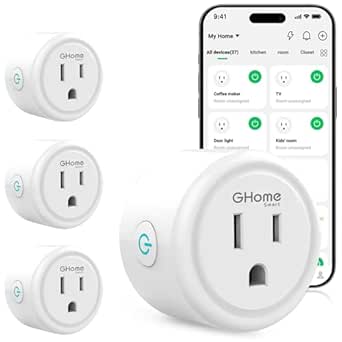 | Best Value for Multiple Displays | Model: WP3 | Quantity: 4 plugs | Connectivity: 2.4 GHz Wi-Fi and Bluetooth | VIEW LATEST PRICE | See Our Full Breakdown |
| Kasa Smart Plug HS103P2, Wi-Fi Outlet, 2-Pack |  | Best for a Higher-Rated Indoor Plug | Model: HS103P2 | Pack size: 2 | Connectivity: 2.4 GHz Wi-Fi | VIEW LATEST PRICE | See Our Full Breakdown |
| GHome Smart Plug Mini, Wi-Fi Outlet with Alexa and Google Home Compatibility, App Control and Timer, 2.4 GHz, 4-Pack, White | 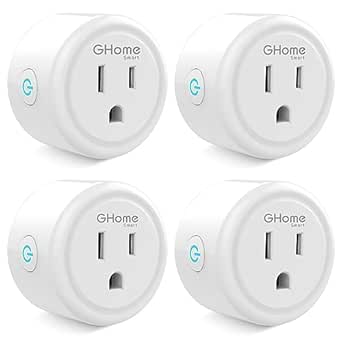 | Best Compact Four-Pack | Model: WP3 | Quantity: 4 plugs | Connectivity: 2.4 GHz Wi-Fi; does not support 5 GHz | VIEW LATEST PRICE | See Our Full Breakdown |
| BN-LINK Wireless Remote Control Outlet Kit, 3 Outlets and 1 Remote |  | Best Without Wi-Fi | Model: ES1513-3-1 | Outlets: 3 | Remote controls: 1 | VIEW LATEST PRICE | See Our Full Breakdown |
| Kasa Smart Wi-Fi Plug Mini EP10, 15A, 1-Pack |  | Best Single-Plug Pick | Model: EP10 | Package quantity: 1 plug | Operating voltage: 120 V AC | VIEW LATEST PRICE | See Our Full Breakdown |
| Amazon Smart Plug with Alexa |  | Best for Alexa-Only Homes | Dimensions: 3.2 × 1.5 × 2.2 in | Weight: 3.1 oz | Input: 120 VAC, 60 Hz | VIEW LATEST PRICE | See Our Full Breakdown |
| Linkind Matter Smart Plug, 15A, 4-Pack | 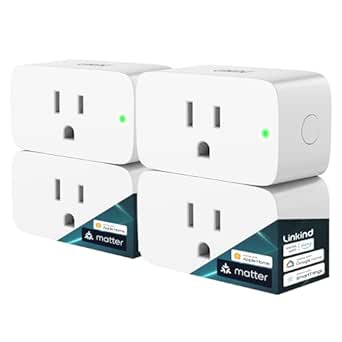 | Best for Matter Smart Homes | Model: LC09003256 | Pack size: 4 plugs | Connectivity: Matter, 2.4 GHz Wi-Fi | VIEW LATEST PRICE | See Our Full Breakdown |
| Kasa Smart Plug Mini, 15A, 2-Pack (EP10P2) |  | Best Two-Plug Bundle | Model: EP10P2 | Quantity: 2 plugs | Operating voltage: 120 V AC | VIEW LATEST PRICE | See Our Full Breakdown |
| Govee Smart Plugs, Wi-Fi and Bluetooth, 4-Pack |  | Best for Grouping Several Displays | Model: B5081 | Quantity: 4 plugs | Connectivity: Bluetooth and 2.4 GHz Wi-Fi | VIEW LATEST PRICE | See Our Full Breakdown |
| Tapo P115 Wi-Fi Smart Plug with Energy Monitoring, 4-Pack, 15A |  | Best for Tracking Holiday Electricity Use | Model: Tapo P115 | Package quantity: 4 plugs | Operating voltage: 110 V AC | VIEW LATEST PRICE | See Our Full Breakdown |
| GHome Wi-Fi Smart Plug with Alexa and Google Assistant Support | 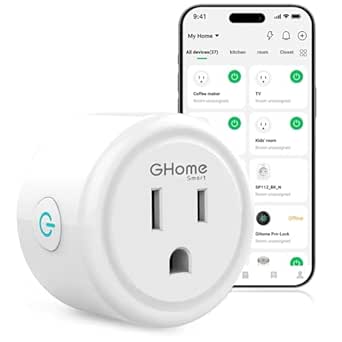 | Best for Flexible App Control | Model: WP3 | Connectivity: Bluetooth, Wi-Fi | Wi-Fi band: 2.4 GHz only | VIEW LATEST PRICE | See Our Full Breakdown |
| HBN Outdoor Wi-Fi Power Stake Timer with 6 Outlets |  | Best for Multi-Display Yard Setups | Number of outlets: 6 grounded outlets | Voltage: 125 V | Maximum current: 15 A | VIEW LATEST PRICE | See Our Full Breakdown |
| Kasa EP40 Outdoor Smart Plug with Two Independently Controlled Outlets |  | Best for Separately Scheduled Outdoor Displays | Model: EP40 | Outlets: 2 independently controlled AC outlets | Maximum load: 15 A / 1875 W per outlet | VIEW LATEST PRICE | See Our Full Breakdown |
| EIGHTREE Wi-Fi Smart Plugs with Alexa and Google Assistant Compatibility, 4-Pack |  | Best No-Hub Four-Pack | Model: ET01B-4 | Quantity: 4 plugs | Wi-Fi: 2.4 GHz only | VIEW LATEST PRICE | See Our Full Breakdown |
| smart plugs for Christmas light | Model | Connectivity | Operating voltage | Certifications |
|---|---|---|---|---|
| GHome Smart Wi-Fi Plug with Al | WP3 | 2.4 GHz Wi-Fi and Bluetooth | 120 V | ETL and FCC |
| GHome Smart Wi-Fi Plug | WP3 | 2.4 GHz Wi-Fi and Bluetooth | 120 V | ETL and FCC |
| Kasa Smart Plug HS103P2 | HS103P2 | 2.4 GHz Wi-Fi | 120 V | — |
| GHome Smart Plug Mini | WP3 | 2.4 GHz Wi-Fi; does not support 5 GHz | — | ETL and FCC |
| BN-LINK Wireless Remote Contro | ES1513-3-1 | — | 120 V | ETL and FCC |
| Kasa Smart Wi-Fi Plug Mini EP1 | EP10 | 2.4 GHz Wi-Fi | 120 V AC | — |
| Amazon Smart Plug with Alexa | — | — | — | — |
| Linkind Matter Smart Plug | LC09003256 | Matter, 2.4 GHz Wi-Fi | — | FCC, ETL |
| Kasa Smart Plug Mini | EP10P2 | 2.4 GHz Wi-Fi | 120 V AC | UL, FCC, IC, RoHS |
| Govee Smart Plugs | B5081 | Bluetooth and 2.4 GHz Wi-Fi | — | ETL, FCC |
| Tapo P115 Wi-Fi Smart Plug wit | Tapo P115 | 2.4 GHz Wi-Fi | 110 V AC | — |
| GHome Wi-Fi Smart Plug with Al | WP3 | Bluetooth, Wi-Fi | 120 V | ETL, FCC |
| HBN Outdoor Wi-Fi Power Stake | — | — | — | — |
| Kasa EP40 Outdoor Smart Plug w | EP40 | 2.4 GHz Wi-Fi | — | — |
| EIGHTREE Wi-Fi Smart Plugs wit | ET01B-4 | — | — | — |
More Details on Our Top Picks
GHome Smart Wi-Fi Plug with Alexa and Google Home Compatibility, 2-Pack
For a few indoor Christmas-light displays, this two-pack gives you app scheduling and voice control without requiring a hub. You can set recurring routines or randomized on/off times, a useful choice if you want lights to follow a pattern or vary their timing while you are away. It works with Alexa and Google Assistant, though setup must begin in the GHome app before linking either assistant. Compared with the GHome Smart Wi-Fi Plug, 4-Pack, this smaller set suits a home with just a couple of displays rather than several rooms. The tradeoff is that it still depends on 2.4 GHz Wi-Fi, and its 1200 W maximum means buyers should check the combined load before connecting more than a modest light setup.
Pros:- Two plugs can automate separate light displays
- Recurring and randomized schedules offer flexible timing
- Works with Alexa and Google Assistant after app setup
- No hub required
Cons:- Requires a 2.4 GHz Wi-Fi network
- Alexa and Google Assistant linking requires initial GHome app setup
- 1200 W maximum may limit higher-load connected devices
Best for: Households automating one or two indoor Christmas-light displays that want recurring or randomized schedules and Alexa or Google Assistant control.
Not ideal for: People decorating several rooms who need more outlets, or anyone whose Wi-Fi network does not support 2.4 GHz.
- Model:WP3
- Quantity:2 plugs
- Connectivity:2.4 GHz Wi-Fi and Bluetooth
- Compatible assistants:Amazon Alexa and Google Assistant
- Compatible apps:GHome, Smart Life, and Tuya
- Operating voltage:120 V
- Maximum wattage:1200 W
- Certifications:ETL and FCC
Our verdict“Choose this two-pack for a couple of indoor light displays you want to schedule or control by voice without adding a hub.”
GHome Smart Wi-Fi Plug, 4-Pack
If your Christmas lights are spread across several indoor displays, this four-pack makes it easier to schedule them as a group or manage them individually through an app. Group control and family sharing are useful when more than one person handles the lights, while Alexa and Google Assistant add voice control once setup is complete. Compared with the GHome two-pack, this set covers more locations without changing the basic 1200 W per-plug rating or requiring a hub. The tradeoff is a longer initial setup: each plug needs a 2.4 GHz network connection, and assistant linking starts in the GHome app. These are indoor-style plug-in units, so I would not choose them for exposed outdoor decorations; for that, a dedicated outdoor option in this roundup is a better fit.
Pros:- Four plugs can cover multiple indoor displays
- Supports schedules, timers, and group control
- Family sharing lets other household members manage the lights
- Works with Alexa and Google Assistant without a hub
Cons:- Requires a 2.4 GHz Wi-Fi network
- GHome app setup is required before linking a voice assistant
- 1200 W maximum per plug calls for checking the connected load
Best for: Families with several indoor Christmas-light displays who want shared app access, grouped control, and voice commands.
Not ideal for: Decorators who need outdoor-rated plugs, or buyers who only need to automate one or two displays.
- Model:WP3
- Quantity:4 plugs
- Connectivity:2.4 GHz Wi-Fi and Bluetooth
- Compatible assistants:Amazon Alexa and Google Assistant
- Compatible apps:GHome, Smart Life, and Tuya
- Operating voltage:120 V
- Maximum wattage:1200 W
- Hub required:No
- Certifications:ETL and FCC
Our verdict“Pick this set when you want four app-controlled indoor outlets and shared control for a household’s Christmas displays.”
Kasa Smart Plug HS103P2, Wi-Fi Outlet, 2-Pack
The Kasa HS103P2 is a strong fit for buyers who want a straightforward schedule for indoor Christmas lights and value a 15 A maximum current rating. Its Kasa app handles remote control, timers, and schedules; Alexa and Google Assistant add voice operation, while a side button gives you a physical way to switch the lights. Compared with the GHome two-pack, it has a higher stated current rating and a two-year warranty, but it lacks the randomized scheduling described for that GHome model. Both require 2.4 GHz Wi-Fi and neither needs a hub, so the choice is less about setup type than which controls matter to you. These are not outdoor-rated plugs, and the supplied operating voltage is 120 V, so they are meant for compatible indoor outlets and loads.
Pros:- 15 A maximum current rating
- Kasa app supports remote control, timers, and schedules
- Alexa and Google Assistant voice control
- Side button and two-year warranty
Cons:- Requires a 2.4 GHz Wi-Fi connection
- No randomized scheduling is listed
- Not specified as an outdoor-rated plug
Best for: Indoor decorators who want scheduled Christmas lights, physical on-plug control, and a 15 A-rated smart plug.
Not ideal for: People automating outdoor lights or shoppers who specifically want randomized schedules or multi-plug family sharing.
- Model:HS103P2
- Pack size:2
- Connectivity:2.4 GHz Wi-Fi
- Voice assistants:Amazon Alexa and Google Assistant
- Maximum current:15 A
- Operating voltage:120 V
- Safety certification:UL certified
- Warranty:2 years
Our verdict“Choose the Kasa HS103P2 for indoor lights when a 15 A rating and physical button matter more than randomized schedules.”
GHome Smart Plug Mini, Wi-Fi Outlet with Alexa and Google Home Compatibility, App Control and Timer, 2.4 GHz, 4-Pack, White
When outlets are crowded behind a tree, console, or furniture, this four-pack’s compact 2 × 2 × 1-inch body can be easier to fit than a bulkier plug. It supports app control, recurring schedules, auto-off timers, and group control, giving several indoor Christmas displays a simple shared routine. Compared with the GHome Smart Wi-Fi Plug, 4-Pack, its listed rating is lower at 10 A rather than 1200 W, so it is the more space-conscious choice, not the one I would select for a higher-load appliance. It works with Alexa and Google Home, but setup starts in the GHome app and the plug only supports 2.4 GHz Wi-Fi. Its compact shape and ETL/FCC listings suit indoor seasonal use; the product data does not identify it as outdoor-rated.
Pros:- Compact dimensions help in crowded outlet areas
- Four plugs support several displays
- Schedules, auto-off timers, and group control
- ETL- and FCC-listed
Cons:- Rated for 10 A at 120 V
- Requires 2.4 GHz Wi-Fi and does not support 5 GHz
- Must be set up in the GHome app before linking a voice assistant
Best for: Decorators with crowded indoor outlets who need four compact plugs for low-load Christmas-light displays.
Not ideal for: Buyers connecting higher-load devices, using 5 GHz-only Wi-Fi, or controlling lights exposed to outdoor weather.
- Model:WP3
- Quantity:4 plugs
- Connectivity:2.4 GHz Wi-Fi; does not support 5 GHz
- Voice assistants:Amazon Alexa and Google Home
- Voltage:120 V
- Amperage:10 A
- Dimensions:2 × 2 × 1 in
- Certifications:ETL and FCC
- Material:Polycarbonate
Our verdict“Pick this four-pack when compact size matters for indoor lights and the 10 A rating suits your connected load.”
BN-LINK Wireless Remote Control Outlet Kit, 3 Outlets and 1 Remote
This BN-LINK kit takes a different approach from the app-based GHome and Kasa plugs: a handheld remote switches three outlets on or off without Wi-Fi, app setup, or voice-assistant linking. Its RF signal is listed for up to 100 feet in line of sight and can work through doors and walls, which can help when a Christmas-light outlet is hard to reach. Another useful distinction is its off-after-power-outage behavior; the outlets do not automatically resume running when power returns. Compared with the Kasa HS103P2, it gives up schedules and remote phone control in exchange for simpler remote operation. The 10 A, 1200 W limit also calls for checking the lights’ load, and the kit is not compatible with shop vacs. It is best for manual seasonal control, not hands-off automation.
Pros:- Three outlets are controlled with one included remote
- RF signal can work through doors and walls
- No Wi-Fi or app setup required
- Outlets stay off after a power outage
Cons:- No app, voice-assistant, or scheduling control is listed
- Maximum rating is 10 A and 1200 W
- Not compatible with shop vacs
Best for: People who want to switch up to three indoor Christmas-light displays with a physical remote and do not want to rely on Wi-Fi.
Not ideal for: Buyers who want scheduled on/off routines, phone control, voice commands, or automatic restoration after an outage.
- Model:ES1513-3-1
- Outlets:3
- Remote controls:1
- Wireless range:Up to 100 ft in line of sight
- Operating voltage:120 V
- Maximum wattage:1200 W
- Maximum current:10 A
- Connectivity protocol:X-10
- Certifications:ETL and FCC
Our verdict“Choose this kit for simple remote switching of several compatible light displays when Wi-Fi automation is not a priority.”
Kasa Smart Wi-Fi Plug Mini EP10, 15A, 1-Pack
For a single strand or one small indoor Christmas display, the Kasa EP10 keeps setup simple: connect over 2.4 GHz Wi-Fi, then use app control, schedules, timers, or supported voice assistants without adding a hub. Its compact shape leaves the neighboring outlet available, which helps when a tree or window display shares a wall socket with another device. Compared with the Kasa EP10P2 two-pack, this is the better fit when you only need to automate one location; buying multiple EP10s, though, means managing separate plugs rather than starting with a pair. Alexa, Google Assistant, and SmartThings compatibility also make it more flexible than the Alexa-only Amazon Smart Plug. The tradeoff is a 15 A, 1,800 W ceiling and dependence on 2.4 GHz Wi-Fi, so check the connected load and your network before use.
Pros:- Compact body leaves the second outlet on a standard wall socket accessible.
- Supports schedules, timers, Away Mode, app control, and voice control.
- Works with Alexa, Google Assistant, and Samsung SmartThings.
- UL certified and operates without a separate hub.
Cons:- Includes only one plug, so it is less convenient for several holiday displays than a multi-pack.
- Requires a 2.4 GHz Wi-Fi connection.
- Maximum load is 15 A or 1,800 W.
Best for: Shoppers automating one indoor Christmas tree or light display who want app and voice control across common smart home platforms.
Not ideal for: People outfitting several displays at once, or anyone whose Wi-Fi setup does not support 2.4 GHz.
- Model:EP10
- Package quantity:1 plug
- Operating voltage:120 V AC
- Maximum load:15 A; 1,800 W
- Connectivity:2.4 GHz Wi-Fi
- Compatible platforms:Amazon Alexa, Google Assistant, Samsung SmartThings
- Operating temperature:32°F to 104°F
- Certification:UL, RoHS, FCC, IC
Our verdict“Choose the EP10 for one indoor Christmas-light setup when compact size and broad assistant compatibility matter more than getting multiple plugs in one package.”
Amazon Smart Plug with Alexa
The Amazon Smart Plug makes the most sense when Alexa already runs your home and you want to add a straightforward schedule for indoor Christmas lights. Setup and routines are managed through the Alexa app, and a physical on/off switch offers a direct control point when you do not want to use a voice command. It reconnects to Alexa after power or Wi-Fi outages, a useful feature for a plug that may be left on a seasonal schedule. Compared with the Kasa EP10, however, this model gives up Google Assistant and SmartThings support; the Kasa is the more adaptable choice if your setup spans platforms. The Amazon plug also works indoors only and needs 2.4 GHz Wi-Fi. Its compact design leaves the second outlet free, but its single-socket format and Alexa-specific control make it a focused pick rather than a versatile one.
Pros:- Alexa app routines and voice control can automate indoor holiday lights.
- Physical on/off switch provides a direct manual control option.
- Automatically reconnects to Alexa after power or Wi-Fi outages.
- Compact design leaves the second outlet available and requires no hub.
Cons:- Does not support voice assistants or smart hubs beyond Alexa.
- Indoor use only, so it is not suited to outdoor Christmas decorations.
- Requires 2.4 GHz Wi-Fi.
Best for: Alexa households that want to schedule one indoor Christmas tree or window display through the Alexa app and voice control.
Not ideal for: Homes using Google Assistant, SmartThings, or a mixed smart home platform, and anyone needing an outdoor-rated plug.
- Dimensions:3.2 × 1.5 × 2.2 in
- Weight:3.1 oz
- Input:120 VAC, 60 Hz
- Maximum output:15 A
- Wi-Fi:2.4 GHz, 802.11 b/g/n
- Use:Indoor only
- Compatibility:Alexa and the Alexa app
- Warranty:1-year limited warranty
Our verdict“Pick this plug for a single indoor display if Alexa is your only smart home platform; choose the Kasa EP10 instead for broader compatibility.”
Linkind Matter Smart Plug, 15A, 4-Pack
For households building a shared smart home setup, the Linkind four-pack brings Matter compatibility to several indoor Christmas-light locations. It supports Apple Home, Siri, Alexa, Google Assistant, and SmartThings, so you are less tied to one assistant than you would be with the Amazon Smart Plug. A further distinction is local LAN control when the internet is offline, which can keep compatible local control available during an internet outage. The four-plug bundle suits a tree, window lights, and other indoor displays, while schedules and timers handle regular on-and-off routines. The setup is not as simple as a basic Wi-Fi plug for every household: it requires 2.4 GHz Wi-Fi and IPv6, and some platforms need a Matter-certified controller or hub. At 15 A and 1,800 W maximum, it shares the same stated load ceiling as the Kasa EP10.
Pros:- Four plugs cover multiple indoor Christmas-light locations.
- Matter support works with Apple Home, Siri, Alexa, Google Assistant, and SmartThings.
- Local LAN control can remain available when the internet is offline.
- Includes short-circuit and overload protection in a fire-resistant design.
Cons:- Requires both 2.4 GHz Wi-Fi and IPv6.
- Some platforms require a Matter-certified hub or controller.
- Maximum power is 1,800 W, so connected loads must stay within the stated limit.
Best for: Matter-enabled households that want to automate several indoor holiday displays across different assistant platforms.
Not ideal for: Buyers seeking plug-and-play setup without network requirements, or users whose router does not support IPv6 or 2.4 GHz Wi-Fi.
- Model:LC09003256
- Pack size:4 plugs
- Connectivity:Matter, 2.4 GHz Wi-Fi
- Network requirement:IPv6
- Maximum load:15 A; 1,800 W
- Plug type:Type A
- Material:Copper and fire-resistant materials
- Certifications:FCC, ETL
Our verdict“Choose Linkind if you want four plugs for a Matter-based home and can meet its network requirements; the Amazon Smart Plug is simpler for Alexa-only households.”
Kasa Smart Plug Mini, 15A, 2-Pack (EP10P2)
The Kasa EP10P2 is a practical match for buyers who have two indoor Christmas-light spots to automate, such as a tree and a mantel display. Both plugs support schedules, timers, Away Mode, app control, and voice control, so each can follow its own routine without needing a hub. Its compact design helps keep neighboring outlets usable, while Alexa, Google Assistant, and SmartThings support gives it more platform flexibility than the Amazon Smart Plug. Compared with the Linkind Matter four-pack, this bundle is simpler for a Kasa- or Tapo-app household but offers fewer plugs and no stated Matter or offline LAN control. The key limitation is familiar: these plugs require 2.4 GHz Wi-Fi and are rated for up to 15 A or 1,800 W. They are intended for indoor use, not exterior holiday lighting.
Pros:- Two compact plugs can automate separate indoor light displays.
- Supports app control, voice control, schedules, timers, and Away Mode.
- Works with Alexa, Google Assistant, and Samsung SmartThings without a hub.
- UL certified and made with flame-retardant materials.
Cons:- Requires a 2.4 GHz Wi-Fi network.
- Two plugs may not cover larger displays as well as the Linkind four-pack.
- The 15 A, 1,800 W maximum applies to connected loads.
Best for: Households that want to schedule two indoor Christmas displays using Kasa or Tapo, with Alexa, Google Assistant, or SmartThings control.
Not ideal for: People automating more than two locations, needing Matter-based local control, or looking for a plug for outdoor decorations.
- Model:EP10P2
- Quantity:2 plugs
- Operating voltage:120 V AC
- Maximum load:15 A; 1,800 W
- Connectivity:2.4 GHz Wi-Fi
- Compatible assistants:Amazon Alexa, Google Assistant, Samsung SmartThings
- Control features:App, voice, on/off, schedules, timers, Away Mode
- Warranty:2 years
- Certifications:UL, FCC, IC, RoHS
Our verdict“Choose the EP10P2 when two indoor displays need reliable scheduling and broad assistant support without moving to a Matter setup.”
Govee Smart Plugs, Wi-Fi and Bluetooth, 4-Pack
Govee’s four-pack is aimed at people who want to switch or schedule several indoor Christmas-light setups from one app. Group control can make a tree, window display, and other plugged-in decorations easier to manage together, while Bluetooth offers an additional connection option alongside 2.4 GHz Wi-Fi. Alexa and Google Assistant support covers common voice-control setups, and no hub is required. Compared with the Kasa EP10P2, Govee includes more plugs for spreading control across a room or home; the Kasa pack, however, lists SmartThings compatibility and a 15 A capacity. Govee’s stated rating is 120 V and 10 A, so it is the lower-capacity choice in this lineup and buyers should check the load rather than assume the 15 A limit found on the Kasa models. It also does not support 5 GHz Wi-Fi.
Pros:- Four plugs provide control for multiple indoor light displays.
- App schedules and group control simplify coordinated routines.
- Supports Alexa and Google Assistant voice control.
- Offers both Bluetooth and 2.4 GHz Wi-Fi connectivity without a hub.
Cons:- Rated capacity is 10 A, lower than the 15 A Kasa EP10 models.
- Does not support 5 GHz Wi-Fi.
- SmartThings compatibility is not listed.
Best for: Alexa or Google Assistant households that want to group and schedule several indoor Christmas-light displays through one app.
Not ideal for: Buyers needing a 15 A-rated plug, SmartThings compatibility, or 5 GHz Wi-Fi support.
- Model:B5081
- Quantity:4 plugs
- Connectivity:Bluetooth and 2.4 GHz Wi-Fi
- Voice assistants:Amazon Alexa, Google Assistant
- Hub required:No
- Certifications:ETL, FCC
Our verdict“Pick Govee for coordinating several indoor displays if its 10 A rating suits your connected lights; choose the Kasa EP10P2 for a stated 15 A capacity.”
Tapo P115 Wi-Fi Smart Plug with Energy Monitoring, 4-Pack, 15A
For a Christmas-light setup where you want to track more than on and off times, the Tapo P115 four-pack adds energy monitoring to everyday scheduling. Its app reports usage and cost estimates, which can help you compare how much different displays draw across the season. The 15A, 1800W capacity also gives it a higher stated load limit than the GHome WP3, listed at 1200W. Unlike the outdoor HBN power stake, though, these are indoor plug-in units: use them for window lights or a tree, not exposed yard decorations. Remote control, supported voice assistants, overload shutoff, and a compact shape round out the package. The tradeoff is a required 2.4 GHz network, and cost estimates depend on the electricity tariff settings you enter.
Pros:- Four plugs let you automate multiple indoor displays.
- Energy charts and cost estimates help track seasonal electricity use.
- 15A / 1800W stated capacity is higher than the GHome WP3’s 1200W rating.
- Compact design helps preserve access to neighboring outlets.
Cons:- Indoor plug-in design is not suited to outdoor Christmas lights.
- Requires a 2.4 GHz Wi-Fi connection.
- Cost estimates depend on accurate tariff settings.
Best for: People who want to schedule several indoor Christmas-light displays and compare their energy use in the Tapo app.
Not ideal for: Shoppers controlling lights outdoors or anyone whose Wi-Fi network lacks 2.4 GHz support.
- Model:Tapo P115
- Package quantity:4 plugs
- Operating voltage:110 V AC
- Maximum wattage:1800 W
- Connectivity:2.4 GHz Wi-Fi
- Control methods:Tapo app, Amazon Alexa, Google Assistant, SmartThings
- Features:Energy monitoring, scheduling, charge management, overload auto-shutoff
- Mounting type:Plug-in
Our verdict“Choose the Tapo P115 if energy tracking for several indoor light displays matters more than outdoor protection.”
GHome Wi-Fi Smart Plug with Alexa and Google Assistant Support
The GHome WP3 suits people who want a simple way to schedule indoor Christmas lights and prefer having several app options. It works with the GHome, Smart Life, or Tuya app, and supports grouping and sharing, so household members can control a collection of plugs together. That flexibility sets it apart from the Tapo P115, whose energy-monitoring tools are more useful for tracking consumption but whose controls are centered on Tapo. The WP3 also lists Bluetooth alongside Wi-Fi, though 2.4 GHz Wi-Fi is still required for its connected setup and remote functions. Its stated 1200W limit is lower than the Tapo’s 1800W, so check the total load before connecting a large arrangement. This is an indoor plug, not a weather-resistant choice like the Kasa EP40.
Pros:- Works with GHome, Smart Life, or Tuya app control.
- Schedules, timers, grouping, and app sharing support shared holiday routines.
- Supports Alexa, Google Assistant, and SmartThings.
- Bluetooth is listed alongside Wi-Fi connectivity.
Cons:- 1200W stated limit is lower than the Tapo P115’s 1800W capacity.
- Requires a stable 2.4 GHz Wi-Fi network.
- Must be set up through the GHome app before Alexa or Google Home control.
Best for: Households that want app-based schedules, shared control, and Alexa or Google Assistant support for indoor lights.
Not ideal for: People with high-load displays, outdoor lighting, or a Wi-Fi network without 2.4 GHz.
- Model:WP3
- Connectivity:Bluetooth, Wi-Fi
- Wi-Fi band:2.4 GHz only
- Operating voltage:120 V
- Wattage:1200 W
- Dimensions:2.1 × 2.1 × 1.1 in
- Compatibility:Amazon Alexa, Google Assistant, SmartThings
- Certifications:ETL, FCC
Our verdict“Pick the GHome WP3 for app flexibility and shared indoor schedules, but choose a higher-capacity or outdoor-rated model if your setup calls for it.”
HBN Outdoor Wi-Fi Power Stake Timer with 6 Outlets
When one outdoor outlet needs to serve several holiday displays, the HBN stake combines six grounded outlets with a 6-foot cord and a stake for lawn placement. That makes it a more natural fit for yard lights than the indoor four-packs from Tapo and EIGHTREE, while its Smart Life scheduling and compatible voice control add remote operation. IP44 weather resistance and outlet covers offer protection for outdoor use, but they do not make this a product to leave unprotected from every weather condition; follow the product guidance for placement and use. Compared with the Kasa EP40, the HBN offers more outlets in one outdoor unit, while the Kasa provides two independently controlled outlets and a higher IP64 rating. The HBN also depends on 2.4 GHz Wi-Fi, and some Android users may face Smart Life app availability issues during upgrades.
Pros:- Six grounded outlets can serve several outdoor decorations from one unit.
- Stake and 6-foot cord support placement near lawn displays.
- IP44 weather resistance, outlet covers, and overload protection are specified.
- Smart Life schedules, timers, and compatible voice controls support remote operation.
Cons:- IP44 weather resistance is lower than the Kasa EP40’s IP64 rating.
- Requires a 2.4 GHz Wi-Fi network.
- Smart Life app availability may be affected for some Android users during app upgrades.
Best for: People with several lawn or garden light strings who want a single outdoor stake with scheduled control.
Not ideal for: Buyers who need stronger listed weather resistance, separate control for each outlet, or a setup without 2.4 GHz Wi-Fi.
- Number of outlets:6 grounded outlets
- Voltage:125 V
- Maximum current:15 A
- Cord length:6 ft
- Stake height:12 in
- Wi-Fi:2.4 GHz only
- Weather resistance:IP44
- App and voice compatibility:Smart Life; Amazon Alexa and Google Assistant
Our verdict“Choose the HBN stake when a yard display needs many outlets in one outdoor unit, and favor the Kasa EP40 when its higher IP rating and independent outlet control matter more.”
Kasa EP40 Outdoor Smart Plug with Two Independently Controlled Outlets
The Kasa EP40 is a strong match for a porch or patio with two distinct light displays: its outlets operate independently, so a wreath and a window outline can follow different schedules rather than switching together. Its IP64 weather resistance gives it a higher listed rating than the HBN stake’s IP44, though the HBN is the better fit when you need six outlets in one lawn unit. The EP40 supports remote control, timers, and schedules through Kasa or Tapo apps, plus Alexa and Google Assistant. At 15A / 1875W per outlet, it has a clear stated load limit, so check the combined requirements of each connected display. It uses 2.4 GHz Wi-Fi, and its two-outlet format may not suit a sprawling yard installation without additional outlets.
Pros:- Two outlets can be scheduled and controlled independently.
- IP64 weather resistance is a higher listed rating than the HBN stake’s IP44.
- Kasa and Tapo app control, schedules, timers, and compatible voice assistants are supported.
- 15A / 1875W maximum load is specified per outlet.
Cons:- Only two outlets are provided, fewer than the HBN stake’s six.
- Requires a 2.4 GHz Wi-Fi connection.
- Each outlet has a stated 15A / 1875W load limit.
Best for: People with two outdoor Christmas-light zones who want separate schedules and a higher listed weather-resistance rating.
Not ideal for: Shoppers needing six outlets at one lawn location or using a Wi-Fi network without 2.4 GHz.
- Model:EP40
- Outlets:2 independently controlled AC outlets
- Maximum load:15 A / 1875 W per outlet
- Weather resistance:IP64
- Connectivity:2.4 GHz Wi-Fi
- Voice assistants:Amazon Alexa, Google Assistant
- Dimensions:4.9 × 2.38 × 2.29 in
- Warranty:2 years
Our verdict“Choose the Kasa EP40 for two outdoor displays that need separate schedules and IP64 protection, rather than a single high-outlet-count yard hub.”
EIGHTREE Wi-Fi Smart Plugs with Alexa and Google Assistant Compatibility, 4-Pack
For buyers who want several indoor lights on schedules without adding a hub, the EIGHTREE four-pack offers straightforward app, voice, and timer control through Smart Life. No hub is required, and compatibility with Alexa, Google Assistant, and SmartThings gives it more assistant options than the GHome WP3, which also supports SmartThings but requires initial setup through its GHome app before voice control. EIGHTREE likewise needs Smart Life setup before voice commands work, so it is not a plug-in-and-speak shortcut. The supplied details list a compact design and a two-year warranty, but give no electrical load rating; I would not choose it for a high-load display without confirming that limit. Like the Tapo P115, it is an indoor plug rather than an outdoor-rated controller, and it only connects to 2.4 GHz Wi-Fi.
Pros:- Four plugs provide control for multiple indoor displays.
- No hub is required.
- Works with Alexa, Google Assistant, and SmartThings.
- Supports remote control, timers, and schedules through Smart Life.
Cons:- Requires Smart Life setup before voice control is available.
- Supports 2.4 GHz Wi-Fi only.
- The supplied product data does not state a maximum load rating.
Best for: People who want four indoor Christmas-light plugs, use Smart Life or compatible voice assistants, and do not want a hub.
Not ideal for: Outdoor-lighting buyers or anyone who needs a clearly stated electrical load rating before choosing a plug.
- Model:ET01B-4
- Quantity:4 plugs
- Wi-Fi:2.4 GHz only
- Compatibility:Alexa, Google Assistant, SmartThings
- Setup app:Smart Life
- Hub required:No
- Dimensions:4.06 × 4.06 × 2.28 in
- Warranty:2 years
Our verdict“Choose EIGHTREE for a hub-free four-pack of indoor lights if Smart Life setup suits you and you can verify the load rating for your display.”
How We Picked
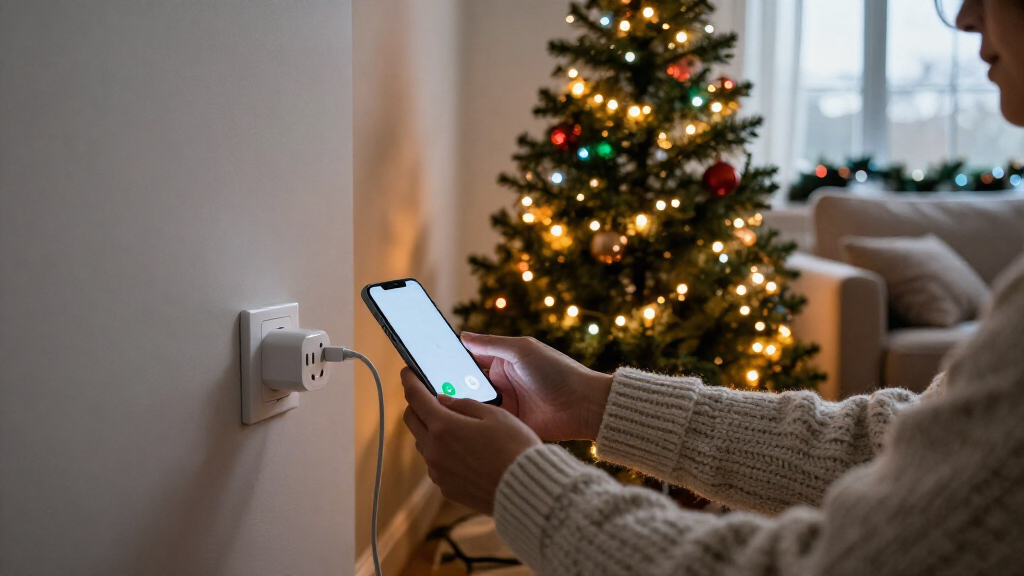
I ranked these plugs around the job Christmas lights ask them to do: switch reliably on a schedule, fit the outlet and location, and remain manageable when a display grows. I compared whether each model is intended for indoor or outdoor use, how many outlets it controls, whether outlets can be controlled separately, and what control methods it supports, including apps, voice assistants, Matter, and a dedicated remote. I also weighed pack size, setup demands, outlet bulk, and useful extras such as energy monitoring.
The order favors practical fit over feature count. The Kasa EP10 leads as a straightforward indoor scheduling choice, while the Kasa EP40 and HBN stake rank higher for outdoor displays because outdoor suitability matters more there than indoor app extras. Multi-packs rank well for buyers wiring several indoor zones, but they are not automatically better: a remote-only kit or a single-plug model can be the more sensible choice for a small, simple setup. I treated compatibility and stated use as buying criteria, not as proof that every plug suits every light load or weather exposure.
| smart plugs for Christmas light | Certifications |
|---|---|
| GHome Smart Wi-Fi Plug with Al | ETL and FCC |
| GHome Smart Wi-Fi Plug | ETL and FCC |
| Kasa Smart Plug HS103P2 | — |
| GHome Smart Plug Mini | ETL and FCC |
| BN-LINK Wireless Remote Contro | ETL and FCC |
| Kasa Smart Wi-Fi Plug Mini EP1 | — |
| Amazon Smart Plug with Alexa | — |
| Linkind Matter Smart Plug | FCC, ETL |
| Kasa Smart Plug Mini | UL, FCC, IC, RoHS |
| Govee Smart Plugs | ETL, FCC |
| Tapo P115 Wi-Fi Smart Plug wit | — |
| GHome Wi-Fi Smart Plug with Al | ETL, FCC |
| HBN Outdoor Wi-Fi Power Stake | — |
| Kasa EP40 Outdoor Smart Plug w | — |
| EIGHTREE Wi-Fi Smart Plugs wit | — |
Factors to Consider When Choosing Smart Plugs For Christmas Lights
Before choosing a model, I would map the lights, outlets, and control zones rather than count plugs alone. A little planning helps avoid buying an indoor plug for a damp location or ending up with one schedule controlling lights that should operate separately.
Match the Plug to the Location
Start by identifying whether each connection is indoors, under a sheltered eave, or fully exposed to weather. An indoor Wi-Fi plug should not be treated as outdoor-safe just because it is connected to lights marketed for outdoor use. For exposed displays, choose a product specifically designed for outdoor use and follow its installation and weather-protection instructions. Also check whether the outlet and plug arrangement leaves room for any covers or neighboring plugs. A stake-style unit can be useful across a yard, while a compact indoor model is usually easier behind a tree or furniture. If you are unsure about the outlet’s exposure, choose a properly rated outdoor option rather than relying on a cover alone.
Plan Lighting Zones Before Buying Multipacks
Count the groups of lights you want to control independently, not just the number of strings. A tree, window display, and porch decorations may need different start and stop times, even if all are indoors. A multi-pack can cover several separate outlets, but it does not make those outlets one coordinated zone automatically; app setup and schedules may still need to be configured. Conversely, a unit with multiple independently controlled outlets can reduce the number of devices needed at one outdoor location. Common mistake: assuming several sockets on one smart device always mean separate schedules. Check the control behavior before choosing based on outlet count.
Choose Control That Fits Your Household
App and voice control are useful when you want to change a schedule from inside or connect lights to an existing smart-home routine. They also bring setup steps, network requirements, and possible compatibility limits, so they may add little for a display that only needs a fixed on-and-off routine. A remote-controlled kit can be easier for someone who prefers a physical button or does not want to depend on an app. Matter support may help in a mixed smart-home setup, but it does not remove the need to check device and platform compatibility. Pick the control method your household will actually use, rather than paying attention to a feature list in isolation.
Check Load, Outlet Layout, and Light Power
Before plugging in a display, compare the total electrical load of the lights with the smart plug’s stated rating and follow the lighting manufacturer’s instructions. Add the load from every string connected through the plug, including any linked sets, instead of judging by how many plugs fit. LED lights often draw less power than older incandescent sets, but the label and combined load still matter. Also inspect the physical outlet layout: bulky adapters, transformer plugs, or neighboring sockets can block access even when the electrical rating is sufficient. Do not use a power strip or extension setup in a way the plug or light manufacturer prohibits. When the load is unclear, check the product documentation or ask a qualified electrician.
Decide Whether Extra Features Earn Their Place
Energy monitoring can help track a display’s use, but it is less valuable if your main goal is simply to run lights on a schedule. Matter can be useful when you want flexibility across supported smart-home platforms, while a brand-specific app may be enough for a single-plug setup. Consider how many devices you will manage: a larger display can benefit from consistent app control, but a handful of lights may be easier with a basic timer or remote. Extra features can also mean more setup and another app to maintain. I would pay more attention to dependable scheduling, location rating, and control-zone fit before choosing based on monitoring or ecosystem features.
Set Schedules Around Real Use
Decide whether the lights should follow a fixed clock schedule, a household routine, or manual control for occasional gatherings. A schedule can reduce the need to remember nightly switching, but check how the plug behaves after a power or network interruption and whether its timer depends on cloud access. For seasonal displays, consider whether you want the same schedule every day or different timing on weekends and holidays. If several plugs are involved, give each one a clear name and test the schedule before leaving the display unattended. Do not assume a smart plug replaces safe installation practices or supervision of damaged cords and connections.
Frequently Asked Questions
Can I use an indoor smart plug for Christmas lights on a covered porch?
Only use a plug in a location allowed by its product documentation; an indoor model should not be assumed safe outdoors just because a porch has a roof. Wind-driven rain, condensation, and temperature changes can still reach a sheltered outlet. Check the plug’s location rating and follow its instructions for covers and placement. If the connection may be exposed to moisture, choose a product specifically intended for outdoor use. Also confirm that the receptacle and any extension cord are suitable for the same conditions.
Do smart plugs work if my Christmas lights are already on a timer?
They can, but two timers controlling the same lights may conflict. If the light set has a built-in timer, check whether it retains its setting after power is cut and restored by the smart plug. A plug schedule that switches power off can reset some light controllers or cause them to restart in an unexpected mode. For predictable results, use one timing system where possible and test the combination for several cycles before relying on it. If you want the smart plug to control the schedule, set the light controller to remain on when powered.
Should I choose one outdoor smart plug with two outlets or several single plugs?
Choose based on how many lighting zones need separate schedules and where the outlets are located. A two-outlet model with independent control can be convenient when two groups are close together but should run on different schedules. Several single plugs offer more placement flexibility if the lights are spread around the house, though they may require more setup and devices. If both groups can share a schedule, one controlled outlet may be enough, subject to the plug’s load rating and outlet layout. Check whether the multi-outlet device supports independent control rather than assuming each socket acts separately.
Is a smart plug useful if I only need my lights to turn on at the same time every night?
A smart plug can be a practical way to automate a fixed nightly schedule, especially when the lights do not have a dependable built-in timer. If you do not need app access, voice control, or changing schedules, a remote outlet kit or a basic timer may be simpler. Wi-Fi models can still make sense if you already use their app or want to adjust the schedule remotely. Think about what happens if your network is unavailable, and check whether schedules continue locally according to the product’s documentation. The simplest control method that meets your routine is often the best fit.
Can I connect several Christmas light strings to one smart plug?
That depends on the combined electrical load, the light set’s instructions, and the plug’s rated capacity. Add the power draw of every string and any connected accessories, and do not exceed the limits listed by the plug or lighting manufacturer. The physical fit matters too: multiple transformers or adapters may block adjacent sockets or place strain on a connection. Use only outdoor-rated cords and connections where the display is exposed, and avoid arrangements prohibited by the manufacturers. When the total load is uncertain, do not guess; check the product documentation or consult a qualified electrician.
Conclusion
For most indoor displays, I would choose the Kasa Smart Plug Mini EP10 as the best overall straightforward scheduling option. Shoppers covering several indoor outlets should compare the multi-packs from GHome, Linkind, Tapo, Govee, and EIGHTREE for the mix of control features and device count that suits their setup; the GHome 4-Pack is a strong value-oriented starting point when basic Wi-Fi control is enough. For a best premium-style feature set, the Tapo P115 adds energy monitoring, while Linkind is the pick for buyers who specifically want Matter support. The Amazon Smart Plug is the simplest match for households already centered on Alexa, and the BN-LINK kit is a good fit for buyers who prefer a physical remote. For outdoor lights, focus on the Kasa EP40 for two independently controlled zones or the HBN stake when a multi-outlet yard setup matters more. Choose by location and control needs first, then by pack size.