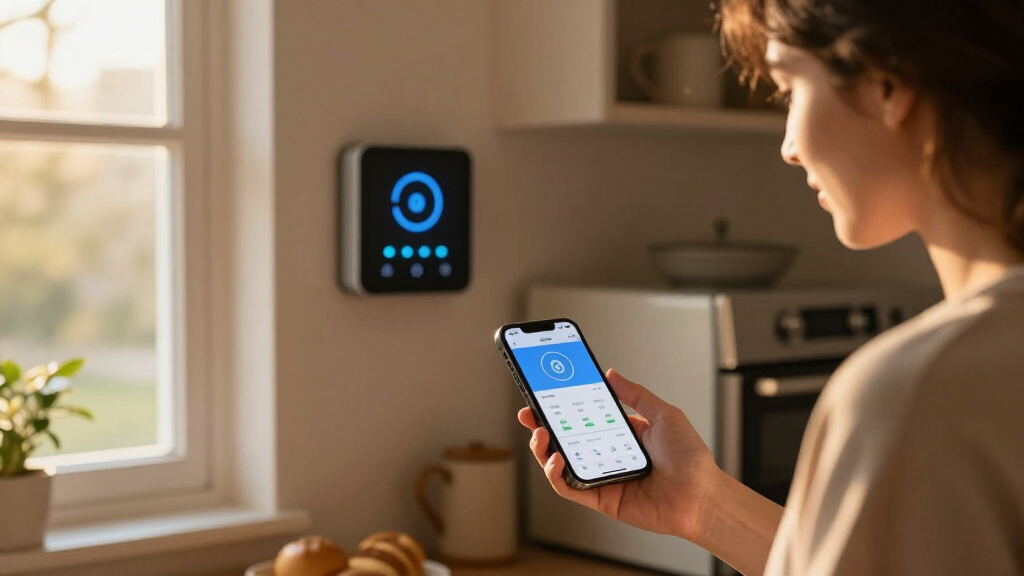

Smart home energy monitors clamp onto your electrical panel and show exactly where every kilowatt-hour goes, and the right one depends on how deeply you want to dig into your circuits. Emporia’s Vue 3 earns my best overall pick for its combination of real-time whole-home data, per-circuit monitoring, smart automation, and an app that stays reliable without a subscription. Refoss’s locally controlled model stands out for Home Assistant users who refuse to depend on a cloud server, while SIEMENS’ Inhab is the premium pick for buyers who want a name-brand panel-grade solution. The main tradeoff in this category is coverage versus simplicity: 16-sensor models reveal the most but demand a crowded panel and more setup time, while two-clamp trackers install in minutes but only show totals. Keep reading for the full breakdown.

Get home appliances delivered free with Prime
- Fast, free delivery on millions of items
- Prime Video, Amazon Music and more included
- Member-only deals all year
Complete the kit



Key Takeaways
- Emporia‘s Vue 3 appears three times in this lineup through different bundles — the differences come down to included sensors and automation modules, so match the bundle to your panel size rather than paying for sensors you won’t use.
- Circuit-level coverage was the single biggest differentiator: 16-sensor models (Refoss, the 16×50A tracker) cost more but exposed appliance-level waste that two-clamp monitors simply cannot see.
- Local control separated the Refoss open-API model from everything else — it is the only option here that keeps working if the manufacturer’s cloud goes down or the company exits the business.
- Budget two-CT monitors (the 2×120A and 2×80A models) delivered accurate whole-home totals at roughly half the price of circuit-level systems, making them the smarter entry point for renters and casual users.
- SIEMENS Inhab sits in a class of its own on price, but its main-plus-circuit sensor design and hardware quality justify it only for owners of larger homes or new construction.
| Emporia Vue 3 Home Energy Monitor |  | Best Overall | Certification: UL Listed, CE Listed | Installation: Single phase, split phase, 2-wire, 3-wire, 3-phase, 4-wire systems | Sensors: Up to 16 branch sensors (sold separately) | VIEW LATEST PRICE | See Our Full Breakdown |
| WiFi Home Energy Monitor with 2 x 120A CTs and Power Tracking |  | Best Value for Whole-Home Basics | CTs Included: 2 x 120A | System Type: Single-phase 3-wire | Connectivity: 2.4 GHz Wi-Fi | VIEW LATEST PRICE | See Our Full Breakdown |
| Smart Home Energy Monitor with App Connectivity and Circuit Sensors |  | Best for Privacy-Minded Beginners | Sensor Capacity: 2 x 200A sensors | Supported Voltages: Single-phase up to 240VAC, split-phase 120/240VAC, three-phase up to 415Y/240VAC | Connectivity: WiFi 2.4GHz, MQTT, LAN mode | VIEW LATEST PRICE | See Our Full Breakdown |
| Smart Home Energy Monitor with 16 50A Circuit Sensors (SEM-Meter) |  | Best for Smart Home Tinkerers | Sensors: 16 x 50A circuit sensors | Supported Voltages: Single-phase up to 240VAC, split-phase 120/240VAC, three-phase up to 415Y/240VAC | Connectivity: WiFi 2.4GHz, MQTT, LAN | VIEW LATEST PRICE | See Our Full Breakdown |
| Refoss Smart Home Energy Monitor with 16 60A Circuit Sensors |  | Best Premium Pick | Number of Sensors: 16 | Sensor Capacity: 60A per sensor | Supported Systems: Single-phase, split-phase, 3-phase 4-wire Wye | VIEW LATEST PRICE | See Our Full Breakdown |
| Emporia Vue 3 Home Energy Monitor – 16 Circuit Sensors |  | Best Overall | Sensors: 16 circuit sensors (50A each) | Compatibility: Smart plugs, EV chargers, home batteries, thermostats, appliances | Supported Systems: Single phase, split phase, 2-wire, 3-wire, 3-phase, 4-wire Wye | VIEW LATEST PRICE | See Our Full Breakdown |
| SIEMENS Inhab Smart Home Energy Monitor with Circuit and Main Sensors |  | Best Brand Trust | Circuit Sensors: 16-50 Amp | Main Sensors: 2-200 Amp | Compatibility: USA and Canada | VIEW LATEST PRICE | See Our Full Breakdown |
| Emporia Vue 3 Home Energy Monitor – 8 Circuit Sensors |  | Best Value Pick | Configuration: Whole home monitor with 8 circuit sensors | Part Number: EMV3A-2P-8 | Generation: Gen 3 | VIEW LATEST PRICE | See Our Full Breakdown |
| Smart Home Energy Monitor 2×80A, Dual-Channel WiFi Electricity Usage Tracker |  | Best for Solar on a Budget | Channels: Dual-channel, 80A each | Measurement Type: Ammeter with bi-directional tracking | Compatible Devices: Tuya devices, Amazon Alexa, Google Home Assistant | VIEW LATEST PRICE | See Our Full Breakdown |
| Meross Smart Home Energy Monitor, Real-Time Power & Cost Tracking |  | Best for Privacy and Smart Home Tinkerers | Certification: ETL, UL 61010 | Max Current: 200A main circuits, 60A branch circuits | Supported Systems: Single-phase 2-wire, single-split phase 3-wire, 3-phase 4-wire Wye | VIEW LATEST PRICE | See Our Full Breakdown |
| WiFi Home Energy Monitor with 3 80A CT Clamps |  | Best for Remote Circuit Control | Model: PW03 | CT Clamps: 3 x 80A | Max Relay Current: 15A | VIEW LATEST PRICE | See Our Full Breakdown |
| Refoss Smart Home Energy Monitor with Open API, Home Assistant, No Cloud |  | Best for Smart Home Tinkerers and Solar Owners | Model: EM16P | Main Circuit Sensors: 2 x 200A | Branch Circuit Sensors: 16 x 1–60A | VIEW LATEST PRICE | See Our Full Breakdown |
| smart home energy monitor | Dimensions | Connectivity | Warranty |
|---|---|---|---|
| Emporia Vue 3 Home Energy Moni | 10 x 5 x 5 inches | 2.4 GHz Wi-Fi required | 1 year |
| WiFi Home Energy Monitor with | — | 2.4 GHz Wi-Fi | — |
| Smart Home Energy Monitor with | 3.1 x 1.2 x 4.2 inches | WiFi 2.4GHz, MQTT, LAN mode | 1 year |
| Smart Home Energy Monitor with | 3.1 x 1.2 x 4.18 inches | WiFi 2.4GHz, MQTT, LAN | 1 year |
| Refoss Smart Home Energy Monit | 4.5 x 3.5 x 1.1 inches | — | 2 years |
| Emporia Vue 3 Home Energy Moni | 10 x 5 x 5 inches | 2.4 GHz Wi-Fi | 1 year |
| SIEMENS Inhab Smart Home Energ | — | — | — |
| Emporia Vue 3 Home Energy Moni | 10 x 5 x 5 inches | — | — |
| Smart Home Energy Monitor 2×80 | — | — | — |
| Meross Smart Home Energy Monit | 4.5 x 3.48 x 1.1 inches | Wi-Fi with external antenna, Open API, web control | 2 years |
| WiFi Home Energy Monitor with | 4.2 x 2.5 x 1.2 inches | WiFi 2.4GHz | — |
| Refoss Smart Home Energy Monit | 4.5 x 3.5 x 1.1 inches | WiFi, Open API, MQTT | 2 years |
More Details on Our Top Picks
Emporia Vue 3 Home Energy Monitor
The Emporia Vue 3 earns the top spot because it balances safety certification, system flexibility, and room to grow better than anything else here. Its UL listing matters more than it might seem — most budget monitors in this roundup ship without any safety certification, which is a real consideration when a device lives inside your breaker panel. Unlike the single-phase-only WiFi Home Energy Monitor with 2 x 120A CTs, the Vue 3 handles split-phase, 3-phase, and 4-wire systems out of the box, making it viable for a much wider range of homes. Solar and net-metering support is built in rather than an afterthought.
The tradeoff is cost structure: branch-level appliance monitoring requires up to 16 sensors sold separately, so the detailed picture the Refoss 16-sensor unit gives you upfront will cost extra here. The Vue 3 is also cloud-dependent, unlike the locally-run SEM-Meter.
Pros:- UL Listed and CE certified for panel safety
- Broad system compatibility including 3-phase and solar net metering
- Expandable up to 16 branch sensors for appliance-level detail
- Mature mobile app with real-time data and automation
Cons:- Branch sensors sold separately, raising total cost for detailed monitoring
- Requires 2.4 GHz Wi-Fi with no true offline mode
Best for: Homeowners — especially those with solar — who want a safe, certified whole-home monitor they can expand over time
Not ideal for: Buyers who want complete circuit-level monitoring on day one without buying add-on sensors, or anyone avoiding cloud-connected devices
- Certification:UL Listed, CE Listed
- Installation:Single phase, split phase, 2-wire, 3-wire, 3-phase, 4-wire systems
- Sensors:Up to 16 branch sensors (sold separately)
- Connectivity:2.4 GHz Wi-Fi required
- Dimensions:10 x 5 x 5 inches
- Warranty:1 year
Our verdict“The safest long-term pick for most homeowners, provided you’re willing to buy sensors incrementally and accept a cloud-based app.”
WiFi Home Energy Monitor with 2 x 120A CTs and Power Tracking
This no-name monitor takes the Best Value slot for one simple reason: it ships with two 120A CT clamps in the box, so you get whole-home tracking immediately — something the Emporia Vue 3 charges extra to achieve. Its bi-directional measurement also means solar owners can track export as well as consumption at a fraction of the price of premium units. Compared with the SEM-Meter with 16 sensors, it gives up circuit-level granularity entirely; you see the whole picture but not which appliance is drawing what.
That limitation defines who it’s for. If your goal is spotting that your HVAC spikes at 3 p.m., you’ll need per-circuit hardware. The bigger caveat is single-phase-only support, and brand-name app support is thinner than Emporia’s polished ecosystem.
Pros:- Includes both 120A CTs in the box — no add-on purchases
- Bi-directional tracking works for solar export monitoring
- Split-core CTs and pluggable terminals simplify installation
- Smartphone app integration for live power data
Cons:- Limited to single-phase 3-wire systems only
- No circuit-level or appliance-level monitoring capability
Best for: Budget-conscious homeowners on single-phase service who want total consumption and solar export numbers without per-circuit detail
Not ideal for: Anyone on split-phase or 3-phase service, or buyers who want appliance-level breakdowns — this unit can’t do either
- CTs Included:2 x 120A
- System Type:Single-phase 3-wire
- Connectivity:2.4 GHz Wi-Fi
- Control Method:Smartphone app
- Energy Monitoring:Live energy use, bi-directional tracking
- Power Source:Battery powered
Our verdict“The cheapest credible way to answer ‘how much power is my home using right now’ — as long as your electrical system is single-phase.”
Smart Home Energy Monitor with App Connectivity and Circuit Sensors
This monitor carves out a niche between the cloud-dependent Emporia Vue 3 and the technically demanding SEM-Meter: it runs locally via LAN mode or MQTT, so your energy data never has to touch a cloud server, yet it still offers a straightforward app for Android and iOS. The two included 200A sensors cover main-panel monitoring for most homes, with support to add more sensors for appliance tracking later — a similar grow-as-you-go model to the Vue 3, minus the recurring privacy concerns.
Where it falls short of the Refoss 16-sensor unit is depth: out of the box you get whole-home data, not a circuit map of your house. And unlike Emporia, this is a lesser-known brand, so long-term app support and firmware updates are less certain. Some electrical familiarity is needed for panel installation, as with every monitor here.
Pros:- Runs locally without cloud or internet access for full data privacy
- Two 200A main sensors included for whole-home coverage
- MQTT and LAN support for smart home integration
- Broad voltage support including three-phase up to 415Y/240VAC
Cons:- Appliance-level monitoring requires buying additional sensors
- Smaller brand with less certain long-term app support than Emporia
Best for: Privacy-conscious homeowners who want local, no-cloud energy monitoring without wading into Home Assistant configuration
Not ideal for: Hands-off buyers expecting plug-and-play setup — panel installation and initial configuration require basic electrical comfort
- Sensor Capacity:2 x 200A sensors
- Supported Voltages:Single-phase up to 240VAC, split-phase 120/240VAC, three-phase up to 415Y/240VAC
- Connectivity:WiFi 2.4GHz, MQTT, LAN mode
- Dimensions:3.1 x 1.2 x 4.2 inches
- Weight:1.54 pounds
- Warranty:1 year
Our verdict“The easiest entry point into no-cloud energy monitoring — just know you’ll need sensors and a screwdriver to get there.”
Smart Home Energy Monitor with 16 50A Circuit Sensors (SEM-Meter)
The SEM-Meter is the clear pick for Home Assistant enthusiasts. With 16 included 50A circuit sensors, it delivers per-circuit, per-appliance granularity that the basic WiFi monitor with 2 x 120A CTs simply cannot touch — and it does so with full MQTT and LAN operation, meaning no cloud account, no subscriptions, and no data leaving your network. Its electricity rate templates translate raw watts into actual dollars per circuit, which is what renters splitting bills or homeowners hunting energy vampires actually care about.
The price of that power is setup effort. Where Emporia’s app works in minutes, this unit expects you to configure MQTT, wire 16 CTs, and maintain your own automation stack. The absence of any cloud option — a pro for privacy — also means no quick remote check-in from your phone unless you build it yourself.
Pros:- 16 circuit sensors included for appliance-level cost tracking
- Full MQTT and LAN support with zero cloud dependency
- Customizable electricity rate templates for accurate billing estimates
- Particularly well suited to rentals and shared living spaces
Cons:- Requires technical setup with MQTT and Home Assistant
- No cloud access limits remote monitoring unless self-configured
- 16-sensor installation is complex for non-technical users
Best for: Home Assistant and MQTT users who want 16 circuits of local, cloud-free monitoring with real cost tracking
Not ideal for: Non-technical buyers who want a polished app experience out of the box — the DIY setup curve is steep and unforgiving
- Sensors:16 x 50A circuit sensors
- Supported Voltages:Single-phase up to 240VAC, split-phase 120/240VAC, three-phase up to 415Y/240VAC
- Connectivity:WiFi 2.4GHz, MQTT, LAN
- Model Number:SEM-Meter
- Dimensions:3.1 x 1.2 x 4.18 inches
- Weight:4.09 pounds
- Warranty:1 year
Our verdict“If you already run Home Assistant, this is the most capable monitor per dollar — if you don’t, choose something friendlier.”
Refoss Smart Home Energy Monitor with 16 60A Circuit Sensors
The Refoss sits at the top of the feature stack and earns the premium label through sheer completeness: 18-circuit monitoring, higher-capacity 60A sensors than the comparable SEM-Meter’s 50A clamps, and a 2-year warranty that doubles the coverage every other monitor in this lineup offers. Its 5 years of local data storage stands out for anyone doing long-term solar optimization — you can actually see seasonal trends rather than a rolling month of history. Local control via Web UI, Open API, and MQTT gives tinkerers everything the SEM-Meter does, but with a friendlier interface on top.
That said, it isn’t flawless: the , and installation with 16 CTs is no simpler than the SEM-Meter’s. Compared with the Emporia Vue 3, you trade UL certification and app polish for raw capability and data ownership.
Pros:- Monitors up to 18 circuits with higher-capacity 60A sensors
- 5 years of stored data for long-term trend analysis
- Local Web UI, Open API, and MQTT support without cloud reliance
- 2-year warranty — the longest in this lineup
Cons:- Complex installation likely requiring technical knowledge
- Premium feature set means a higher investment than basic units
Best for: Data-driven homeowners and solar users who want multi-year analytics, deep circuit coverage, and local control with API access
Not ideal for: Casual users who just want a phone app showing total usage — this much hardware and configuration is overkill for that job
- Number of Sensors:16
- Sensor Capacity:60A per sensor
- Supported Systems:Single-phase, split-phase, 3-phase 4-wire Wye
- Data Storage:5 years
- Local Control:Web UI, Open API, MQTT
- Dimensions:4.5 x 3.5 x 1.1 inches
- Weight:4.27 pounds
- Warranty:2 years
Our verdict“The most complete monitoring package here for serious energy optimizers, provided you’re comfortable with a more involved install.”
Emporia Vue 3 Home Energy Monitor – 16 Circuit Sensors
This option stands out for whole-home coverage at a competitive price, with sixteen 50A circuit sensors that let you see exactly which appliances drive your bill. Compared with the Meross monitor, it matches circuit-level detail but adds broad electrical panel compatibility — split phase, 3-phase, and 4-wire Wye systems are all supported, which matters if your home has non-standard wiring. The UL certification also gives peace of mind that cheaper dual-channel trackers like the 2×80A model can’t offer. The tradeoff: real-time data retention is measured in hours, and some 3-phase setups need an extra sensor sold separately. Still, for most homeowners this pick makes the most sense as a complete first energy monitor.
Pros:- Sixteen 50A sensors cover most household circuits out of the box
- UL and CE certified for safe, reliable panel installation
- Works with single phase, split phase, and 3-phase Wye systems
- App supports automation with smart plugs, EV chargers, and batteries
Cons:- Real-time data retention limited to a few hours without the app active
- Some 3-phase installations require an additional sensor sold separately
- Dependent on 2.4 GHz Wi-Fi for full functionality
Best for: Homeowners who want full circuit-by-circuit visibility across a standard or complex electrical panel without paying a premium
Not ideal for: Renters or apartment dwellers — it installs inside the circuit panel and assumes you own the electrical system
- Sensors:16 circuit sensors (50A each)
- Compatibility:Smart plugs, EV chargers, home batteries, thermostats, appliances
- Supported Systems:Single phase, split phase, 2-wire, 3-wire, 3-phase, 4-wire Wye
- Connectivity:2.4 GHz Wi-Fi
- Safety Certifications:UL, CE
- Dimensions:10 x 5 x 5 inches
- Warranty:1 year
Our verdict“If you want the most complete picture of your home’s electricity use in one purchase, this is the one to buy.”
SIEMENS Inhab Smart Home Energy Monitor with Circuit and Main Sensors
Compared with the Emporia Vue 3, this model leans on Siemens’ engineering pedigree — a meaningful distinction for buyers who prioritize a name they trust inside their electrical panel. The 200A main sensors handle whole-home totals while the 16-50A circuit sensors track individual loads, and personalized alerts push notifications when usage patterns drift. This option is better suited to homeowners planning long-term energy management than casual bill-watchers, because the value comes from its advanced management features rather than raw sensor count. The drawbacks are real: app functionality stops at the US and Canadian border, and panel installation realistically calls for an electrician. Compared with the Meross unit, it offers a more polished app experience but less flexibility for Home Assistant tinkerers.
Pros:- Backed by Siemens with UL Listed and CE marked components
- 200A main sensors plus circuit-level sensors for layered insight
- Personalized alerts catch unusual usage automatically
- Installs in existing electrical panels without rewiring
Cons:- App functionality limited to the USA and Canada
- Professional installation likely needed for panel mounting
- Smaller ecosystem of integrations than open-platform rivals
Best for: Homeowners who value an established electrical brand and want guided alerts rather than DIY analytics
Not ideal for: Tinkerers and Home Assistant users — the closed ecosystem offers less integration flexibility than Meross or Refoss alternatives
- Circuit Sensors:16-50 Amp
- Main Sensors:2-200 Amp
- Compatibility:USA and Canada
- Standards:CE marked, UL Listed
- Installation:Electrical panel mount
- App:Mobile app with personalized alerts
Our verdict“A dependable, low-drama choice for North American homeowners who prefer a major electrical brand over an open platform.”
Emporia Vue 3 Home Energy Monitor – 8 Circuit Sensors
This is essentially the same Emporia platform with half the sensors, and that makes it the smart play for smaller homes. Eight circuit slots cover the usual suspects — HVAC, water heater, dryer, EV charger — which is where most of the money goes anyway. Compared with the 16-sensor Vue 3, you give up granular tracking of minor circuits, but you keep solar and net metering support, the same app, and the same UL Listed safety profile for less money. Against the dual-channel 2×80A tracker, it offers far better whole-home insight at similar effort to install, since two channels only monitor two things. The compromise: 3-phase systems need an extra sensor, and short data retention means you’ll want to check the app regularly.
Pros:- Eight sensors target the highest-cost circuits most homes care about
- UL Listed with the same app and solar/net metering support as the 16-sensor version
- Works across iPhone, Android, and web apps
- Straightforward installation in most residential panels
Cons:- Half the circuit coverage of its sibling, so mid-size circuits go unmonitored
- 3-phase systems require an additional sensor
- Limited data retention when the app isn’t active
Best for: Budget-conscious homeowners who mainly want to track their biggest energy loads plus whole-home totals
Not ideal for: Owners of large homes or solar setups with many monitored circuits — eight sensors fill up fast
- Configuration:Whole home monitor with 8 circuit sensors
- Part Number:EMV3A-2P-8
- Generation:Gen 3
- Certification:CE, UL
- Dimensions:10 x 5 x 5 inches
- Weight:3.36 pounds
- App Support:iPhone, Android, web
Our verdict“The best price-to-insight ratio in the lineup for typical homes that only need to watch their heavy hitters.”
Smart Home Energy Monitor 2×80A, Dual-Channel WiFi Electricity Usage Tracker
This model takes a different approach from whole-panel systems like the Emporia Vue 3: instead of mapping every circuit, it watches two loads precisely — an EV charger and a solar inverter, say, or a well pump and a hot tub. The standout capability is bi-directional tracking, meaning it measures energy flowing out as well as in, which most budget trackers can’t do and which solar owners genuinely need for production monitoring. The clamp-on sensors require no wire modifications, making it the least invasive install here. Tradeoffs are obvious compared with the Meross or Siemens units: two channels is two channels, there’s no long-term data history, and the Tuya app ecosystem feels less polished. But for a targeted monitoring job, this pick makes the most sense.
Pros:- Bi-directional tracking supports solar production and backup power monitoring
- Clamp-style sensors install without modifying wiring
- Works with Tuya, Smart Life, Alexa, and Google Home
- 80A per channel handles most high-power household appliances
Cons:- Only two monitored channels — no whole-home picture
- Dependent on the Tuya app ecosystem, which is less refined than Emporia’s
- Minimal historical data reporting compared with panel-level systems
Best for: Solar owners or EV drivers who want precise monitoring of two specific high-power circuits at low cost
Not ideal for: Homeowners seeking whole-home or circuit-by-circuit insight — two channels can’t deliver that picture
- Channels:Dual-channel, 80A each
- Measurement Type:Ammeter with bi-directional tracking
- Compatible Devices:Tuya devices, Amazon Alexa, Google Home Assistant
- Minimum Operating Voltage:110 volts
- Power Source:Corded electric
- Installation:Clamp-on sensors, no wire modification
Our verdict“A focused, low-effort tracker for two important circuits rather than a whole-home solution.”
Meross Smart Home Energy Monitor, Real-Time Power & Cost Tracking
Where the Emporia Vue 3 keeps you tied to its cloud, this option stores up to five years of data locally — a real advantage if you’re privacy-conscious or simply don’t want your energy history dependent on a company’s servers. It’s also the strongest pick here for Home Assistant integration thanks to its open API, which the Siemens Inhab can’t match. Coverage is solid: 200A mains plus 60A branch circuits across the common US wiring configurations, with an ETL and UL 61010 safety listing. The catch is that realizing its full potential takes technical setup — automations and solar management require configuration effort casual users may not want. Some users also report Wi-Fi connectivity hiccups. This model is better suited to enthusiasts than to set-and-forget buyers.
Pros:- Local data storage up to 5 years with no cloud dependency
- Open API and Home Assistant integration enable deep automation
- Monitors 200A mains plus 60A branch circuits
- 2-year warranty — double the Emporia Vue 3’s coverage
Cons:- Requires technical know-how for smart home integrations
- Some users report Wi-Fi connectivity issues
- Limited to US single-phase and Wye electrical systems
Best for: Smart home hobbyists and privacy-focused users who run Home Assistant and want local, cloud-free data
Not ideal for: Non-technical buyers who just want an app that works — the integration setup will feel like a chore
- Certification:ETL, UL 61010
- Max Current:200A main circuits, 60A branch circuits
- Supported Systems:Single-phase 2-wire, single-split phase 3-wire, 3-phase 4-wire Wye
- Data Storage:Up to 5 years, local
- Connectivity:Wi-Fi with external antenna, Open API, web control
- Warranty:2 years
- Dimensions:4.5 x 3.48 x 1.1 inches
Our verdict“The clear choice for Home Assistant users who prize local control and privacy over plug-and-play simplicity.”
WiFi Home Energy Monitor with 3 80A CT Clamps
Most monitors in this roundup stop at watching your power draw, but the PW03 goes a step further by letting you switch circuits ON and OFF remotely through the Smart Life or Tuya app. That control capability is what separates it from watch-only units like the Meross Smart Home Energy Monitor, which tracks power and cost but can’t act on what it sees. With three 80A CT clamps, it covers a small set of priority circuits — a water heater, an EV charger, an HVAC compressor — rather than the whole panel, so buyers wanting whole-home visibility will be better served by the Refoss EM16P’s 16 circuit sensors. The high-temperature alerts add a genuine safety layer that budget trackers skip entirely. The tradeoff: the 15A relay limit means remote control only works on lighter loads, and wiring it safely inside the panel usually means hiring an electrician.
Pros:- Remote ON/OFF circuit control, not just monitoring
- Real-time and historical data for three circuits in one app
- High-temperature alerts add a safety layer most monitors lack
- Works with the widely supported Smart Life / Tuya ecosystem
Cons:- Only three monitored circuits — far less coverage than 16-channel competitors
- 15A relay limit restricts remote control to lighter loads
- Panel wiring typically requires a qualified electrician
Best for: Homeowners who want to remotely shut off specific high-attention circuits and get temperature alerts, not just view usage charts
Not ideal for: Whole-home analyzers — three channels can’t cover a full panel, and the 15A relay can’t switch heavy loads like dryers or HVAC
- Model:PW03
- CT Clamps:3 x 80A
- Max Relay Current:15A
- Connectivity:WiFi 2.4GHz
- Supported App:Smart Life / Tuya
- Input Voltage:AC 100–240V
- Dimensions:4.2 x 2.5 x 1.2 inches
- Weight:13.4 ounces
Our verdict“This pick makes the most sense for buyers who want to act on their energy data — remotely cutting power to specific circuits — rather than just observe it.”
Refoss Smart Home Energy Monitor with Open API, Home Assistant, No Cloud
Where most monitors in this lineup — including the Emporia Vue 3 and the similar Refoss 16-channel 60A model — funnel your data through a manufacturer’s cloud, the EM16P keeps everything local. For Home Assistant users and privacy-minded buyers, that distinction matters: your energy data never leaves the house, and automations keep running even if the internet drops. With two 200A main sensors plus 16 branch circuit channels and ±1% accuracy, it out-specs app-only trackers like the dual-channel 80A WiFi monitor for granularity, and its open API and MQTT support open the door to AI-driven load shifting that closed platforms simply can’t match. The price of that power is setup effort. Compared with plug-and-play options such as the Meross, expect technical configuration for API access, and panel compatibility is not universal — check your breaker layout before committing.
Pros:- Fully local control — no cloud dependency and full data privacy
- Open API, MQTT, and native Home Assistant integration
- ±1% accuracy with 2 main (200A) and 16 branch circuit sensors
- Purpose-built automation support for maximizing solar self-consumption
- 2-year warranty
Cons:- API and automation configuration requires real technical skill
- Installation is more involved than app-only competitors
- Limited compatibility with certain circuit panel configurations
Best for: Home Assistant users and solar homeowners who want local, private, automation-ready circuit-level monitoring
Not ideal for: Non-technical buyers who just want a simple app with usage graphs — the API and MQTT setup will feel like a chore, and panel fit isn’t guaranteed
- Model:EM16P
- Main Circuit Sensors:2 x 200A
- Branch Circuit Sensors:16 x 1–60A
- Accuracy:±1%
- Connectivity:WiFi, Open API, MQTT
- Installation:Clamp-on, most home circuit panels
- Cloud Requirement:None — local control
- Warranty:2 years
- Dimensions:4.5 x 3.5 x 1.1 inches
Our verdict“This model is better suited to tinkerers running Home Assistant with solar panels than to anyone who wants a no-fuss app experience out of the box.”
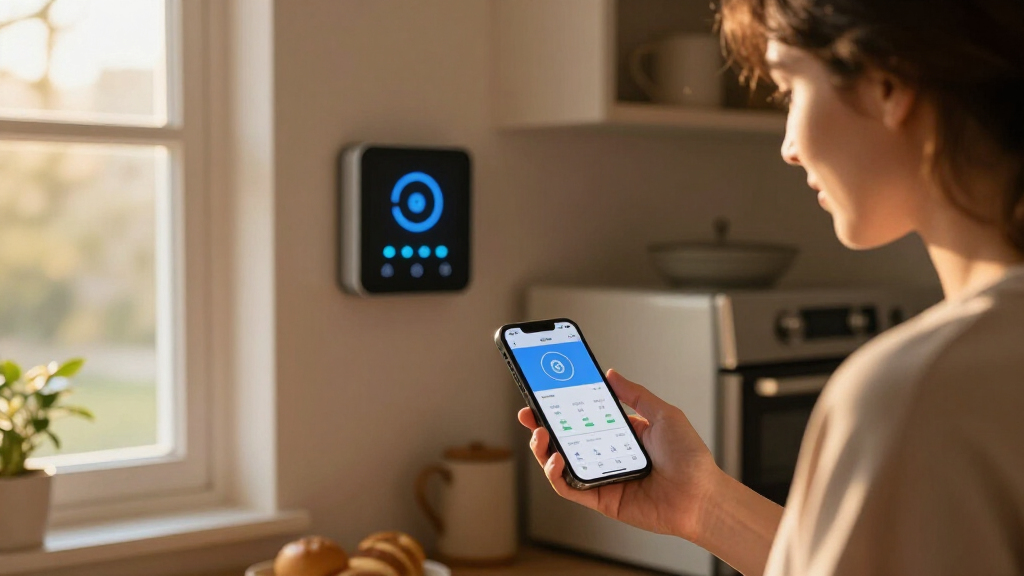
How We Picked
My ranking logic starts with what the monitor can actually see. A two-clamp system gives you one number — whole-home consumption — while 16-circuit systems attribute usage to individual breakers, which is where real savings get found. I weighted circuit coverage heavily, but only when the accompanying app could present that data clearly, because a wall of raw sensor readings helps nobody.
From there I evaluated app quality and ecosystem fit, including HomeKit, Alexa, and Google Home compatibility plus Home Assistant support, which mattered a great deal for several models in this set. Cloud dependency was a tiebreaker: monitors that keep functioning locally ranked above equally capable ones that go dark without an internet connection. Finally, I weighed install complexity, sensor amp ratings against typical household loads, and price-per-circuit to separate genuine value from bundles that pad the box with sensors most panels can’t accommodate.
Factors to Consider When Choosing Smart Home Energy Monitors
Before choosing a monitor, it helps to understand the decisions that shape long-term satisfaction — the ones that aren’t obvious from a product page.Whole-Home Versus Circuit-Level Monitoring
The first decision is granularity, and it drives everything else about the purchase. A two-clamp whole-home monitor attaches to your main feeder cables and reports one aggregate number — great for spotting trends, confirming that a solar quote is accurate, or catching a failing appliance that never stops drawing power. A circuit-level system uses individual current transformers on breakers, letting you see that your garage freezer costs $14 a month or that your HVAC is running twice as often as it should. The common mistake is buying circuit-level hardware without checking panel space first: many older panels have no physical room for 16 CT clamps bundled alongside the wiring. My advice is to count your breakers and look inside the panel before ordering anything with more than a handful of sensors.
Cloud Dependence and Local Control
Most consumer monitors route every reading through the manufacturer’s servers, which means the app dies if the company has an outage — or worse, shuts down entirely, as has happened with several energy startups. Local control via Home Assistant or an open API keeps your data flowing regardless of anyone’s business model, which is why locally operated models ranked higher in this roundup when performance was close. The tradeoff is real, though: locally controlled systems demand more technical comfort and typically lack the polished charts and push notifications of cloud apps. If you would never actually open Home Assistant, a cloud-based monitor you enjoy using beats a local one you ignore. Buyers should also check whether historical data is exportable, because a monitor that traps years of your usage data in a proprietary app holds your history hostage.
Sensor Amp Ratings and Panel Compatibility
Current transformer ratings determine what each sensor can safely measure, and mismatched ratings produce silently wrong data. 50A sensors suit lighting and general-purpose circuits, 80A to 120A clamps handle high-draw circuits like dryers, ovens, EV chargers, and main feeders. Undersizing a clamp doesn’t just clip peaks — it can distort everyday readings enough to make cost estimates meaningless. A second compatibility issue is panel type: some CTs physically won’t fit around bus bars or split-phase mains in certain panel brands, and one-tall-sensor designs vary enough that returns are common. Always confirm both the amp rating and the clamp jaw opening against your actual circuits before buying, not after.
App Quality and Data Retention
The hardware is only half the product — the app determines whether you actually change your energy habits. Look for second-by-second or minute-level resolution, cost estimates based on your real utility rate (ideally time-of-use aware), and history that goes back at least a year so seasonal patterns are visible. Some budget monitors only retain 30 days of data in the cloud, which undercuts their value for spotting annual trends. Notification quality matters too: alerts for devices left running or abnormal draw are among the most practical features in the entire category. Reading recent app-store reviews before buying reveals far more about day-to-day reliability than any spec sheet, because connectivity bugs and abandoned apps are recurring complaints across this market.
Installation: DIY or Electrician
Nearly every monitor in this category installs inside the electrical panel, which means opening the box that feeds your entire house. The physical work — routing clamp wires and snapping CTs onto cables — is not difficult, but it happens inches from live bus bars that never get switched off at the breaker. Many homeowners handle two-sensor installs themselves in under an hour; 16-circuit installs are a different project, often taking several hours of careful wire management. Budget $100–$250 for an electrician if you have any hesitation, have a crowded panel, or need a sub-panel wired in — it’s cheap insurance. Some jurisdictions also require a licensed electrician for any work inside a panel, which is worth a quick check before you plan a weekend install.
Subscription Traps and Long-Term Cost
The sticker price rarely tells the whole story in this category. A few platforms gate historical data, advanced analytics, or even appliance-level breakdowns behind monthly fees, which can quietly double the cost of ownership over three years. Before buying, confirm which features are free forever and which are premium — and remember that the total cost of a monitor includes its subscription, electrician fees, and any expansion sensors you add later. A more expensive monitor with no recurring fees frequently beats a cheap one that charges monthly for the data it already collected. Conversely, don’t overpay upfront for 16 circuits if a base model plus expansion sensors gets you the same coverage for less once you know which circuits matter.
Frequently Asked Questions
Do I need circuit-level monitoring, or is a whole-home monitor enough?
Whole-home monitoring answers how much electricity you use; circuit-level monitoring answers where it goes. If your goal is cutting a specific bill — a pool pump, an aging fridge, an EV charger — only per-circuit data will find the culprit, and most homeowners discover at least one surprise worth fixing. If you mainly want to track total consumption, verify solar production, or watch for phantom loads at the meter level, a two-clamp monitor delivers that for far less money and effort. A reasonable middle path is starting with whole-home data and upgrading later, though not every brand supports adding circuit sensors after the fact, so check expandability before committing.
Can I install one of these myself, or do I need an electrician?
Legally and practically, it depends on your jurisdiction and your panel. The install itself involves clamping sensors around cables inside the panel, and the danger is that the main lugs and bus bars remain energized even when every breaker is off — there is no way to de-energize your service without the utility pulling the meter. Confident DIYers with two or three sensors routinely complete the job in an hour, but a 16-sensor install in a crowded panel is genuinely fiddly work. An electrician typically charges $100–$250, and it’s the right call if your panel is older, tightly packed, or you feel any hesitation at all. Some locales require licensed work for anything inside a panel, so a quick local check is worthwhile either way.
What happens if the monitor’s cloud service shuts down?
For cloud-dependent monitors, the honest answer is that the hardware becomes a paperweight unless the manufacturer releases a local-control option. This isn’t theoretical — several energy monitor companies have shut down and bricked their devices, leaving customers with installed hardware and no data. Locally controlled models, like the Refoss with open API and Home Assistant support, are immune to this because the intelligence lives on your network, not a distant server. My suggestion is to treat cloud dependence as a real risk factor: if a monitor’s value depends on years of collected data, that data should be exportable, and ideally the device should retain basic local function. Buyers who plan to keep a monitor for a decade should weight local control heavily.
How accurate are smart energy monitors compared to my utility meter?
Quality CT-based monitors typically land within 1–2% of your utility meter under normal conditions, which is accurate enough for every practical savings decision. Accuracy degrades in predictable ways: undersized clamps on high-draw circuits clip peaks, cheap sensors drift over time, and installs where a CT sits at an angle or picks up interference from adjacent cables introduce error. Time-of-use customers should verify their monitor supports tiered rates, because a monitor computing costs at a flat 12¢/kWh rate will disagree wildly with a time-of-use bill even when its wattage readings are correct. If you notice a consistent gap, recalibrating the monitor against your utility bill for a month usually closes it.
Why does Emporia’s Vue 3 appear multiple times in this roundup?
Emporia sells the same Vue 3 base unit in different retail bundles, and listings for those bundles vary in included sensors and accessories rather than in the core hardware. In practice, the differences that matter are how many CT clamps ship in the box and whether the smart-home automation module is included, so the right choice depends on your panel and plans rather than one bundle being universally superior. I treated the bundles as a single product family with distinct purchase recommendations, since paying for sensors you can’t physically install wastes money, while buying the minimal bundle and expanding later can be the smarter path. If you’re comparing Emporia against Refoss or SIEMENS, judge the platform as a whole — its app, automation features, and no-subscription policy — rather than the bundle differences.
Conclusion
For most homeowners, the Emporia Vue 3 family is my best overall pick — it balances real-time whole-home data, per-circuit expandability, automation hooks, and a mature app without a subscription, and the bundle variety lets you match hardware to your panel. Best value goes to the two-clamp WiFi monitors (the 2×120A and 2×80A trackers), which deliver trustworthy totals at a fraction of circuit-level pricing for renters and first-time buyers. Best premium is the SIEMENS Inhab, whose main-plus-circuit sensing and industrial-grade hardware make sense for large homes, new builds, and buyers who want hardware from a company that also makes the panel itself. For beginners, the Meross offers the gentlest setup and app experience in the lineup, ideal if you want answers this weekend without touching more than two clamps. Finally, for the tech-minded, the Refoss with open API and no cloud requirement is the clear choice — the same goes for the 16-sensor Refoss if you want that local-first philosophy applied to full circuit coverage. Match the monitor to your panel, your patience for installation, and your tolerance for cloud dependence, and the right pick from this list becomes obvious.
Halloween Picks
halloween
As an affiliate, we earn on qualifying purchases.