
TL;DR
Electric fireplaces create a Halloween-ready flickering focal point without real flames, smoke, or a chimney, and many models let you run the flame effect with the heater off. Decorate the mantel and surrounding wall—not the firebox or vents—and follow the manufacturer’s clearance and electrical instructions.
A Halloween fireplace can glow like a haunted-house hearth without burning a single log. An electric fireplace gives you a flickering focal point, and many models let you switch off the heater while keeping the flame effect on.

Get home appliances delivered free with Prime
- Fast, free delivery on millions of items
- Prime Video, Amazon Music and more included
- Member-only deals all year
That flexibility makes it easier to build a spooky display in a warm living room, apartment, or family room where a real fireplace isn’t available. You’ll find practical ideas for mantel styling, flame colors, and model types, plus clear safety guidance for keeping fabric, paper, cords, kids, and pets away from heat outlets.
Think of the fireplace as the glowing center of a stage: the props create the story, but the working parts need breathing room. These key facts for Halloween decorating can help your scene feel eerie and inviting, rather than crowded or risky.
Use flame-only mode when you want Halloween atmosphere without adding heater warmth, if your model supports it.
Decorate the mantel and nearby wall, never the firebox, vents, outlets, or hot surfaces.
Choose one main color mood—amber, purple, red, or green—and check it after dark.
Compare the exact unit’s clearance, outlet, control, and installation instructions before decorating or mounting it.
Inspect cords and plugs, keep children and pets clear, and switch the fireplace off before moving or cleaning it.
Why electric fireplaces make spooky decor easier
Electric fireplaces make spooky decor easier because they provide flickering light without a real flame, smoke, fuel, or chimney. Depending on the model, LEDs and reflective elements create the flame effect, while some units add adjustable brightness, ember-bed lighting, color choices, or sound. That gives you a seasonal focal point without needing to build or maintain a wood fire.
For a small apartment living room, a freestanding stove-style unit can suggest an old inn’s hearth beneath a crooked-looking vintage frame. In a larger family room, a wall-mounted fireplace can anchor a row of dark frames and a few battery-powered candles. These are different looks, but both work because the fireplace’s moving light draws your eye like a campfire story draws a crowd.
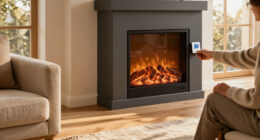
Electric fireplaces for a Halloween setup also offer a useful bit of control: many models run the flame effect without heat. If the room already feels warm from cooking, guests, or autumn sunshine through the windows, you can keep the amber glow and skip extra warmth. Check the manual and product specifications, since features vary by model.
The effect is theatrical, not identical to a wood-burning fire. Some flames look more detailed than others, and a quiet LED display may feel less convincing than a model with ember effects or sound. Still, the difference can suit Halloween: a slightly artificial shimmer can feel like a ghostly, bittersweet echo of a real hearth.
Products Worth Considering

Sonos One (Gen 2) Two-Room Set Smart Speakers with Amazon Alexa, 2-Pack, Black

Levoit Core 300S-P Smart WiFi Air Purifier

Samsung 48-Inch S90F OLED 4K Smart TV (2025)
As an affiliate, we earn on qualifying purchases.
How to build a Halloween mantel without blocking heat
Build a Halloween mantel by decorating the mantel and surrounding wall while leaving the firebox, air inlets, outlets, and hot surfaces clear. A strong display has layers: a few larger pieces at the back, smaller details in front, and open space around the fireplace’s working parts. The manual sets the clearances; your decorations should never overrule them.
- Check the manual first. Find the required spacing around vents, the top, sides, and front of your unit.
- Choose a theme. Try a haunted manor with black frames and dusty-looking faux cobwebs, or a playful pumpkin scene with orange and purple accents.
- Layer safely. Place decorations on the mantel or well outside the listed clearances; keep fabric, paper, and plastic away from the firebox and heater outlets.
- Test the display. Run the flame effect and, if you plan to use it, the heater. Confirm that nothing blocks airflow or sits where it can touch a hot surface.
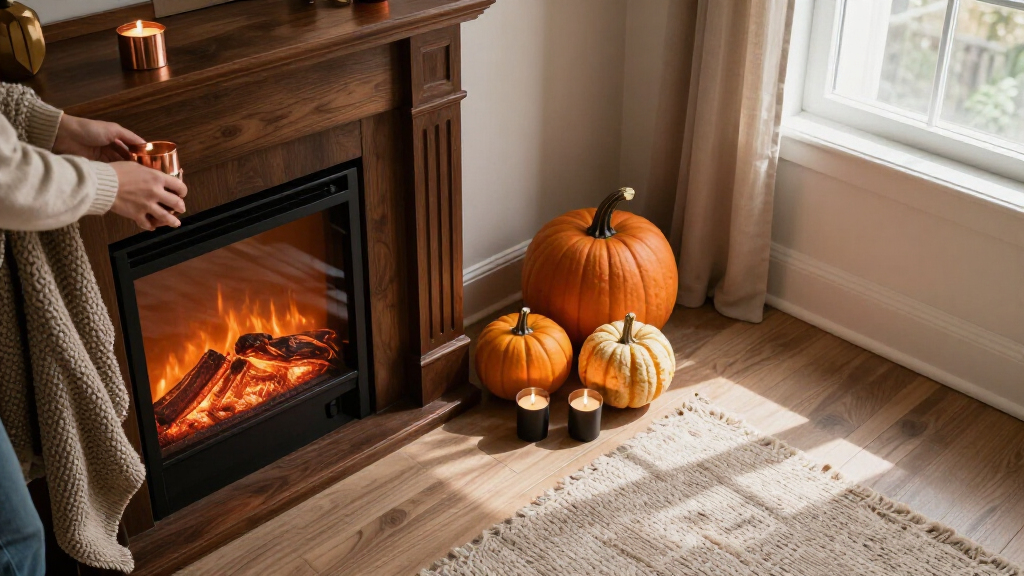
For example, you might arrange three pumpkins of different sizes beside a vintage-style frame, then drape a lightweight garland across the mantel—not over the air outlet. Battery-powered LED candles can add a low glow without an open flame. Never put decorations inside the firebox or use the heater to dry a costume, blanket, or garland.
Which flame colors and lighting create the best haunted mood?
The best Halloween flame color depends on the mood you want: amber feels like a traditional hearth, while purple, red, or green reads as more theatrical. If your model offers color selection, test the effect after dark rather than judging it in bright daytime light. A color that looks rich at noon can cast an unexpectedly harsh glow across a pale wall at night.
Here’s a useful comparison for planning your scene:
| Effect | What it suggests | Works well with |
|---|---|---|
| Amber or orange | Old hearth, candlelit cottage | Pumpkins, antique frames, dark wood |
| Purple | Dreamlike, theatrical haunt | Black garlands, silver accents, LED candles |
| Red | Bold, dramatic focal point | Dark stone-look surrounds and sparse props |
| Green | Uncanny, storybook mood | Muted props and low-level accent lighting |
Keep the rest of the lighting simple. A dim room with a purple flame effect and one or two low LED candles often looks more deliberate than a room packed with blinking decorations. If your fireplace only offers a standard flame, you can still change the mood with colored accent lights placed safely away from the unit.
As a real-world test, switch off the overhead light and view the setup from the doorway, where guests will first see it. If the fireplace’s color washes out the pumpkins or makes the room feel too bright, reduce the flame brightness or use fewer accent lights. One clear color story usually feels more eerie than a jumble of competing reds, greens, and purples.
How to choose a fireplace style that fits your room
The right fireplace style depends on your room, available space, and the kind of Halloween display you want; freestanding stoves, wall-mounted units, inserts, and console fireplaces each create a different backdrop. A compact freestanding stove can make a reading nook feel like a haunted cabin, while a wall-mounted unit gives a small room a cleaner, modern focal point.
Picture a narrow apartment where a deep mantel would crowd the walkway. A wall-mounted model may preserve floor space, with framed portraits and a short black garland nearby. In a living room with an existing fireplace opening, an insert can fill the opening with a flame effect, while a furniture-style console may provide a broad surface for pumpkins and framed Halloween art.
- Freestanding stove: A strong fit for a cabin, cottage, or old-world theme; plan room around the unit and its clearance requirements.
- Wall-mounted fireplace: A space-saving choice with a crisp silhouette; check mounting instructions and wall requirements before installation.
- Insert: Designed to sit within a suitable opening; follow the model’s fit and electrical directions.
- Console: Adds a furniture surface for decor, but keep decorations away from vents and hot areas.
Controls vary too. Some models include a remote, thermostat, timer, flame-brightness settings, app control, or voice control; others keep things simple. Compare the specifications rather than assuming every feature comes with every unit. If installation involves structural changes or electrical work beyond plugging in as directed, use a qualified professional and check local requirements.
How to keep Halloween decorations and guests safe
Keep Halloween decor safe by following the fireplace manual, leaving required clearances, and keeping cords and decorations away from air inlets and outlets. An electric unit has no combustion flame, but its heater can still produce warm surfaces and needs unobstructed airflow. No real flame does not mean no heat risk.
Before guests arrive, inspect the cord and plug for cuts, fraying, looseness, or other damage. Plug the unit into a suitable outlet as directed by its manufacturer; don’t overload an extension cord or power strip. If the instructions call for a direct wall connection, follow them. A heater can draw substantial power, so electrical improvisation isn’t a good Halloween shortcut.
Keep children and pets from leaning on or playing near hot surfaces. For example, if a toddler’s trick-or-treat bucket tends to land wherever there’s floor space, set a clear boundary around a freestanding unit and keep costume fabric well away. Turn off the heater when you don’t need warmth, and use flame-only mode if your model offers it. Switch the fireplace off before moving or cleaning it.
Safety rule: Keep paper, fabric, plastic webs, cords, and costumes out of the firebox and away from heater outlets. Never cover the unit or use it to warm or dry decorations.
Electric fireplaces don’t create chimney emissions, smoke, or a combustion flame, but that does not make every installation risk-free. Use the specified outlet and clearances, and ask a licensed electrician about electrical changes. Wall mounting or other building work may call for professional help or local approvals.
How to get a convincing display without overheating the room
You can get a convincing Halloween display without overheating the room by treating the fireplace as lighting first and heat second. Start with flame-only mode if available, then add a dim lamp or battery-powered candles at floor or mantel level. The layered glow can make a black surround look deeper and turn ordinary pumpkins into a theatrical scene.
Consider a living room hosting six guests on a cool October evening. People, closed doors, and a warm kitchen may already raise the temperature; running the fireplace heater just for atmosphere could make the room stuffy. Flame-only operation keeps the visual centerpiece while avoiding unnecessary heater warmth. If you do need heat, set the thermostat or timer according to the manual and keep all vents clear.
There’s a tradeoff between realism and simplicity. A model with adjustable brightness, ember effects, or sound may create more texture, while a basic unit can still work if you control the room lighting and keep the decor focused. Check the specifications for available features rather than relying on photographs or broad product labels. Flame realism and heating performance vary, so match expectations to the specific model.
Electricity use also depends on the unit and whether its heater is running. Check the product label or manual for power information, and compare the flame-only setting with heater operation if the manufacturer provides separate figures. For a seasonal setup, a timer can help limit run time where supported—but don’t leave the display on unattended or overnight unless the manual specifically permits that use.
Frequently Asked Questions
Can I use an electric fireplace just for the flame effect?
Many electric fireplaces offer flame-only operation, which lets you enjoy the visual effect without running the heater. Check your model’s controls and manual, since features vary.
Can I put faux cobwebs or a garland near my fireplace?
You can decorate the mantel or surrounding wall only if the props stay outside the clearances listed in the manual. Keep cobwebs, garlands, paper, and fabric away from the firebox, hot surfaces, and air inlets or outlets.
Are electric fireplaces safe around children and pets?
An electric fireplace has no combustion flame, but heater surfaces can still get hot and cords can create hazards. Keep children and pets away from the unit, secure cords as directed, and follow the manufacturer’s placement and clearance instructions.
Do electric fireplaces need a chimney or vent?
Electric fireplaces don’t produce smoke or combustion emissions, so they don’t need a chimney or combustion vent. They still need a suitable electrical supply, proper clearances, and installation that follows the product instructions.
Can I plug an electric fireplace into an extension cord or power strip?
Follow the manual’s electrical directions rather than assuming an extension cord or power strip is acceptable. Some models require a direct connection to a suitable wall outlet, and heaters can draw substantial power. Ask a licensed electrician if you need help with the outlet or wiring.
Conclusion
Use your electric fireplace as a glowing backdrop, not a shelf for risky props. Check the manual, leave vents and clearances open, and let color, shadows, and a few well-chosen decorations do the spooky work.
When the room goes dim and the flames flicker behind a row of pumpkins, the whole display can feel like a haunted storybook—with the heater off and the safety rules still in view.