
TL;DR

Get home appliances delivered free with Prime
- Fast, free delivery on millions of items
- Prime Video, Amazon Music and more included
- Member-only deals all year
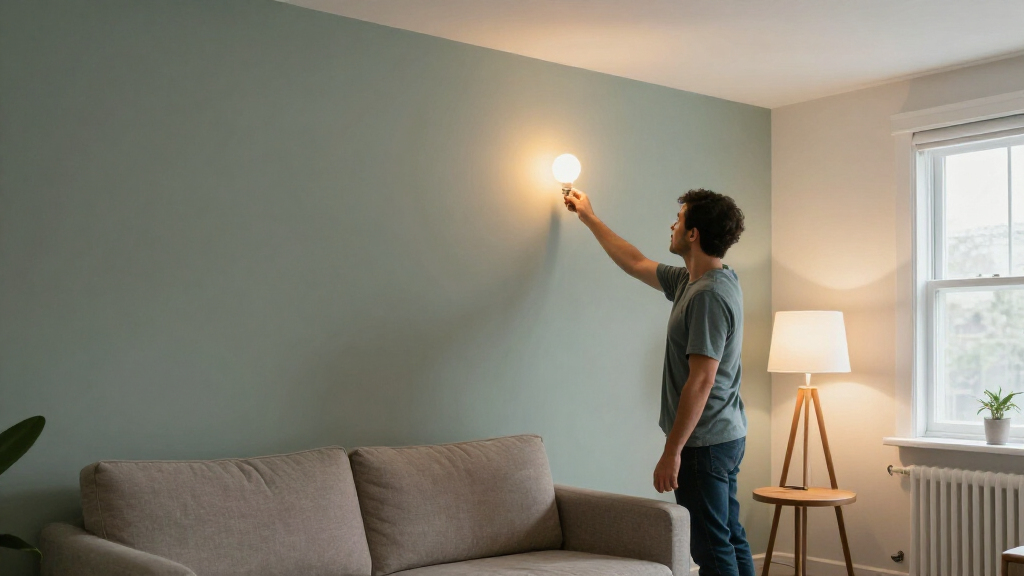
A Livingetc report says common warm-toned home bulbs can make wall paint look different at night than it does in daylight. Designers recommend checking paint under evening lighting and using layered lamps and wall lights rather than relying only on a central ceiling fixture.
A Livingetc report says warm, relatively dim household lighting can make wall paint appear different at night than it does in daylight, potentially changing how homeowners perceive a color they have already chosen. Interior design and lighting experts cited in the report recommend testing colors under a room’s evening conditions and using layered lamps and wall lights to shape the light, rather than relying only on a bright central fixture.
The difference is partly about the light reaching the paint. Interior designer and color consultant Emily Brooks told Livingetc that people see paint color through light refracting from its pigment, so both the light’s color temperature and its strength affect how the shade appears. A wall can therefore look unlike its daytime version when artificial lighting is switched on.
Jo Plant, chief creative officer at lighting company Pooky, told the publication that natural light is around 5,000 Kelvin, while many home bulbs are between 2,500K and 3,000K. The figures describe light color temperature, not brightness. Plant said the warmer evening glow can change how colors read: warm blues may seem warmer, while cooler shades can look muddy or flat.
The report’s practical advice is to assess paint in natural daylight and then consider how the room will be lit after dark. Brooks recommends using a combination of light sources, including lamps and wall lights, and choosing bulb temperatures to suit the desired appearance. She also cautions against depending on a single harsh overhead light, which can create a less balanced effect on the walls.
How Evening Light Changes Wall Color
The advice matters to people choosing paint, planning a room refresh, or trying to work out why a finished room feels different after sunset. Paint, its finish and the light interact, so a color sample viewed only in daylight may not show how the room will look during the hours it is most often used.
The change does not necessarily mean the paint choice was a mistake. As Brooks told Livingetc, a shade that works in daylight can also work at night if the evening lighting is selected with care. That gives residents an option short of repainting: they can adjust the bulb temperature, spread light across the room with multiple fixtures, or change which lights they use in the evening.
The recommendation is not that every room needs cooler bulbs or more fixtures. The desired effect depends on the paint and the atmosphere a resident wants. Brooks described using cooler light to draw out pink or purple tones in terracotta, or warmer light to emphasize its yellow base. These are expert examples, not a guarantee that every paint color will respond in exactly the same way.
smart LED light bulbs with adjustable color temperature
As an affiliate, we earn on qualifying purchases.
As an affiliate, we earn on qualifying purchases.
Daylight Tests Can Miss Evening Conditions
Paint is often selected in daylight, but rooms can be used under artificial lighting for much of the evening. The Livingetc report focuses on this shift between natural daylight and domestic bulbs, particularly their different color temperatures. The reported Kelvin ranges offer a broad comparison; the source does not give measurements for individual products or rooms.
The report also distinguishes the type and placement of lighting from bulb temperature. Downlights, spotlights and a single central ceiling fixture can produce a different effect from lamps and sconces distributed around a room. Brooks recommends diffusing overhead light with larger, non-clear bulbs and using lamps and wall lights as a main source of ambient illumination to create more depth across the walls.
“We actually only see the color in our paint colors due to the light refracting off the pigment.”
— Emily Brooks, interior designer and color consultant, speaking to Livingetc
As an affiliate, we earn on qualifying purchases.
Room Results Depend on the Setup
The source material does not provide controlled tests, measurements of particular bulbs, or a ranking of which paint colors are most affected. Its recommendations are expert guidance reported by Livingetc, not a quantified guarantee of how a specific shade will appear in a specific home.
Results can depend on the paint’s undertone and finish, bulb temperature and strength, fixture design, placement, and other light in the room. The report does not identify one universally suitable bulb temperature or provide product-specific instructions. Homeowners would need to test their own paint and lighting combination to judge the effect.
warm white LED bulbs for living room
As an affiliate, we earn on qualifying purchases.
As an affiliate, we earn on qualifying purchases.
Test the Paint After Sunset
For anyone choosing or reconsidering a wall color, the report points toward a practical next step: view paint samples in the room during daylight and again after dark with the lamps and fixtures normally used there. Compare the result under different bulbs and with different combinations of overhead lights, lamps and sconces before deciding that the paint needs to change.
The source does not announce a formal follow-up or provide a testing protocol. Its advice is to tune the room’s evening lighting to the color and the desired mood, then reassess the walls. If the shade still looks wrong, the report leaves open whether the cause is the bulb, the fixture arrangement, the paint itself, or a combination of those factors.
As an affiliate, we earn on qualifying purchases.
Key Questions
Why can paint look different at night?
Artificial light has a different color temperature and strength from daylight, affecting how light reflects from paint pigments and how people perceive the color.
What bulb temperatures does the report compare?
Livingetc cites natural light at around 5,000 Kelvin and many home bulbs at 2,500K to 3,000K. These are broad ranges given by lighting expert Jo Plant, not measurements for every light source.
Does a paint color that looks wrong at night need to be replaced?
Not necessarily. Emily Brooks told Livingetc that a color can work in both daylight and evening conditions if the bulbs and lighting arrangement are chosen to suit it.
What lighting setup do the experts recommend?
The report recommends layered lighting, such as lamps and wall lights, and cautions against relying only on a harsh central ceiling light. The right bulb temperature depends on the paint and the intended look.
Source: rss
Halloween Picks
halloween
As an affiliate, we earn on qualifying purchases.