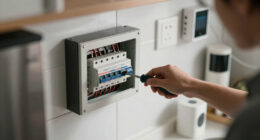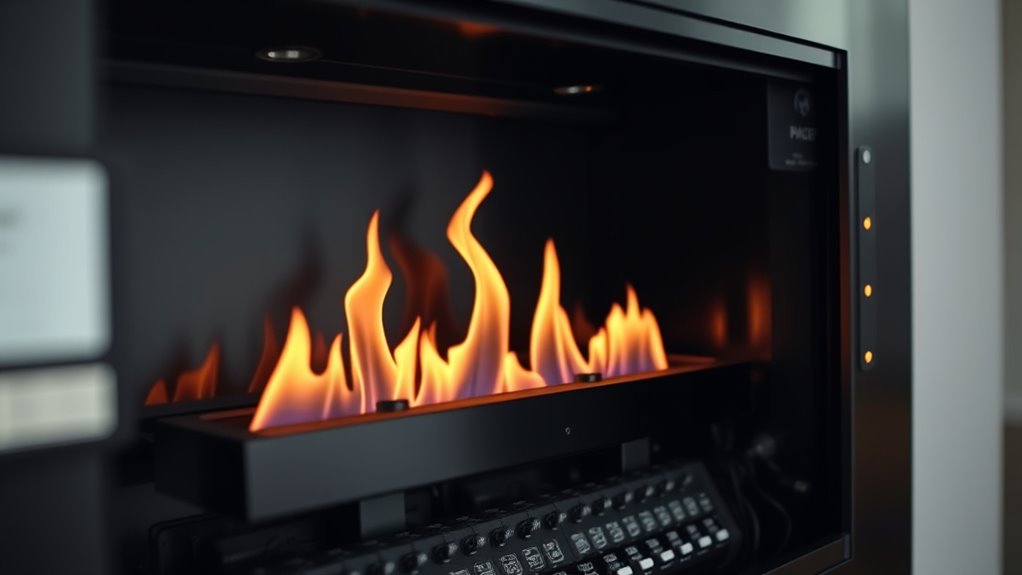
If your flames aren’t igniting, start by checking the ignition system for dirt, corrosion, or damage and guarantee the igniter produces sparks when you turn it on. Verify that the gas supply is fully open and there are no leaks or blockages in the line. Make sure gas valves are properly positioned and the gas line is undamaged. If issues persist, inspecting electronic components or sensors may help, and more detailed steps follow to help you troubleshoot effectively.
Key Takeaways
- Verify the electronic igniter is functioning properly and producing sparks; clean or replace if necessary.
- Ensure the gas valve is fully open and the gas line is free of obstructions or leaks.
- Check for proper alignment of the igniter near the gas source to facilitate ignition.
- Inspect for damage or wear in the igniter, gas line, and related components; replace damaged parts.
- Confirm any electronic sensors or control modules are operating correctly, and seek professional help if issues persist.

If your fireplace or gas appliance isn’t producing a flame, troubleshooting the issue promptly can save you time and frustration. The first thing to check is the ignition system, as it’s often the culprit when flames refuse to ignite. Many modern gas appliances rely on electronic igniters that produce a spark to light the gas. If the ignition system isn’t functioning correctly, you might hear clicking sounds but see no spark, or no sound at all. To troubleshoot, start by inspecting the igniter for dirt, corrosion, or damage. Sometimes, dirt buildup can prevent a proper spark. Clean it gently with a soft brush or cloth. If cleaning doesn’t help, test the igniter with a multimeter to see if it’s receiving power or consider replacing it if it’s faulty. Remember, a weak or absent spark can prevent ignition, so ensuring the system is working best is key.
Next, verify the gas supply. Make sure the gas valve is fully open and that there are no obstructions or leaks in the gas line. Sometimes, a closed or partially closed valve reduces the flow of gas, preventing flames from forming. If you’ve recently turned off or moved the gas line, double-check the valve position. Also, inspect the line for leaks or damage, as a leak not only prevents proper ignition but can also be dangerous. If you suspect a gas supply issue, do not attempt repairs yourself; contact a professional immediately. A consistent and adequate gas supply is essential for flames to stay lit once ignited. Additionally, understanding the importance of projector technology can help in diagnosing related issues with electronic components or sensors involved in modern gas appliances.

BTFO 1pcs Piezo Igniter with Spark Ignition, Grill Igniter Replacement
- Complete Package Included: Includes igniter, wire, nuts, and spacer
- High-Quality Materials: Made of durable metal and ceramic components
- Temperature Resistant: Operates reliably between -20°C and 120°C
As an affiliate, we earn on qualifying purchases.
As an affiliate, we earn on qualifying purchases.
Frequently Asked Questions
Can a Faulty Thermostat Cause the Flame to Not Ignite?
Yes, a faulty thermostat can prevent the flame from igniting. When your thermostat malfunctions, it may not send the proper signal to the ignition sensor, stopping the flame from lighting. Check if your thermostat is working correctly—if it’s unresponsive or showing errors, replace or reset it. Ensuring the thermostat functions properly helps the ignition sensor get the right signals, enabling safe and efficient flame ignition.
Is It Safe to Attempt DIY Repairs on the Flame Effect?
You shouldn’t attempt DIY repairs on the flame effect unless you’re confident in your skills. For DIY safety, always turn off the power and follow manufacturer instructions carefully. If you’re unsure, it’s best to seek professional repair to prevent injury or damage. Flame effects involve electrical components that can be hazardous, so prioritizing professional help guarantees safe and effective repairs.
How Often Should I Clean the Ignition Components?
You should clean the ignition components at least once every three to six months as part of your ignition maintenance routine. Regular cleaning prevents dust, dirt, and debris from building up, ensuring reliable ignition and flame effects. Use a soft brush or compressed air to gently remove any buildup, and avoid harsh chemicals. Setting a consistent cleaning schedule helps keep your system functioning smoothly and reduces the risk of ignition problems.
Could Low Gas Pressure Prevent the Flame From Appearing?
Think of your gas supply as the heartbeat of flame ignition—if the pressure drops, so does the flame. Yes, low gas pressure can prevent the flame from appearing by failing to sustain proper ignition. When gas pressure isn’t consistent or falls below the required level, your appliance won’t produce a visible flame. Check your gas line and regulator, and verify the supply is steady to keep the flame ignition functioning correctly.
What Impact Does Power Surges Have on Flame Failure?
Power surges can cause flame failure by disrupting your appliance’s electrical system. When power fluctuations or electrical interference occur, they may damage the control board or sensors responsible for igniting the flames. This interference can prevent the system from sensing the need to ignite or cause it to shut off unexpectedly. To prevent this, consider installing a surge protector, which can help stabilize voltage and protect your appliance from damage.

ERP IG9998 Universal Gas Range Oven Igniter
- Universal Igniter for Multiple Brands: Replaces GE, Electrolux, Whirlpool, Brown
- UL Listed for Safety: Includes Ceramic Wire Nut
As an affiliate, we earn on qualifying purchases.
As an affiliate, we earn on qualifying purchases.
Conclusion
If your flames refuse to work, don’t just shrug it off like a minor hiccup—you’re facing a fiery rebellion in your fireplace! With a little patience and these troubleshooting tips, you’ll have your flames roaring like a dragon in no time. Remember, a tiny spark has the power to turn your entire room into a cozy, magical haven. So, gear up, follow the steps, and release the fiery spectacle you deserve!

PT520A Natural Gas Detector, Gas Leak Detector with 17-Inch Gooseneck, Locating The Source Like Propane, Methane, and Butane for Home and RV (Includes Battery x3) – Orange
- Effective Gas Leak Detection: Detects methane, propane, and more
- Flexible 17-Inch Gooseneck: Access tight spaces easily
- Fast Visual and Audible Alerts: Responds in 0.5 seconds with alarms
As an affiliate, we earn on qualifying purchases.
As an affiliate, we earn on qualifying purchases.

Gas Dryer Repair Kit Includes 279311 Igniter 279834 Gas Valve Coils 338906 Flame Sensor Replacement for Whirlpool Kenmore Maytag Gas Dryers
- Complete Dryer Repair Kit: Includes igniter, flame sensor, and gas valve coils
- High-Quality Replacement Parts: Durable components for reliable dryer performance
- Real-Time Flame Sensor: Detects igniter temperature instantly for safety
As an affiliate, we earn on qualifying purchases.
As an affiliate, we earn on qualifying purchases.