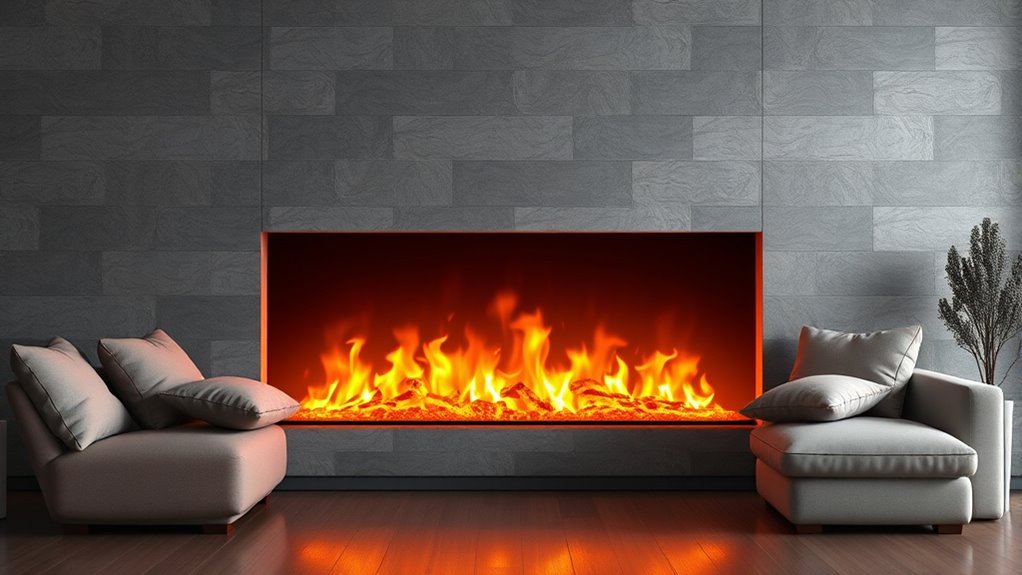

Electric fireplaces don’t use a lot of electricity compared to traditional heating options. Typically, they draw between 750 to 1500 watts, similar to space heaters, making them an energy-efficient and cost-effective choice. You can control their power with adjustable settings, thermostats, and timers to save even more energy. If you want to learn how to maximize their efficiency and reduce your utility bills, continue exploring the smart ways to use your electric fireplace effectively.

Get home appliances delivered free with Prime
- Fast, free delivery on millions of items
- Prime Video, Amazon Music and more included
- Member-only deals all year
Key Takeaways
- Electric fireplaces typically consume 750-1500 watts, similar to space heaters, but their energy use is manageable with proper controls.
- They are energy-efficient and cost-effective, often reducing overall heating costs compared to traditional fireplaces.
- Using features like thermostats and timers helps minimize electricity consumption by controlling operation times and heat levels.
- Since they produce no emissions or venting costs, their operational expenses are generally low.
- Overall, electric fireplaces do not use a lot of electricity when used appropriately and with energy-saving settings.
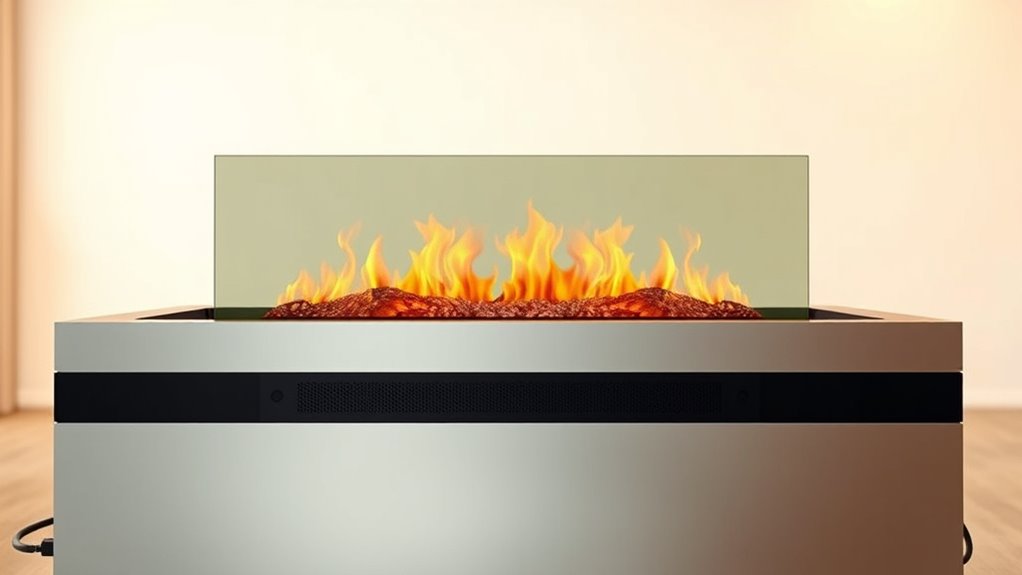
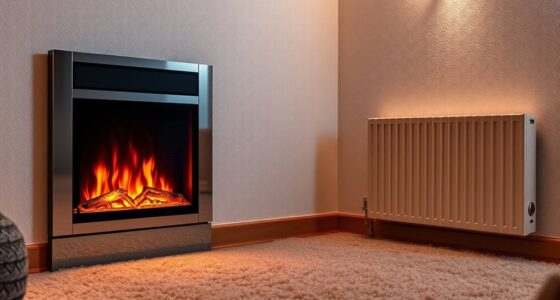
Electric fireplaces have become a popular alternative to traditional wood or gas fireplaces, offering convenience and safety. If you’re wondering whether they use a lot of electricity, it’s important to understand how they work and what that means for your utility bills. Electric fireplaces are generally quite energy-efficient, especially when compared to running a central heater or a traditional fireplace. Their cost efficiency is one of their key advantages, as they allow you to enjoy the ambiance of a fire without the hefty energy costs associated with other heating options.
Electric fireplaces are energy-efficient and cost-effective compared to traditional heating methods.
When it comes to energy consumption, electric fireplaces tend to use relatively modest amounts of electricity. Most models have adjustable settings, so you can control how much power they draw. For example, many units operate between 750 and 1500 watts, similar to a space heater. This means they can heat a room effectively without consuming as much energy as your entire home’s heating system. If you only want to warm a small space or add a cozy atmosphere, using an electric fireplace can be a smart choice that keeps your energy bills in check.
The key to maintaining cost efficiency with an electric fireplace is to use it wisely. If you keep it on for long periods or set it to maximum heat, your electricity usage will increase. However, because they often come with features like thermostats and timers, you can manage their energy consumption more effectively. Setting the fireplace to a lower heat setting or turning it off when not needed helps you save energy. Additionally, many newer models come with energy-saving LED displays and eco-friendly modes, further reducing their overall energy consumption.
It’s also worth noting that electric fireplaces generate no emissions and require no venting, which can translate into additional savings. You don’t need to buy wood, gas, or other fuel sources, and there’s no maintenance like chimney cleaning. These factors contribute to their overall cost efficiency, making them a practical and economical option for supplemental heating. Plus, since electric fireplaces are easy to install and operate, you avoid the costs associated with traditional fireplaces, such as installation or repair expenses. Understanding the energy efficiency of electric fireplaces can help you make a more informed decision about their use and benefits.
Products Worth Considering

LEVOIT Vital 200S-P Smart Air Purifier for Large Rooms

Samsung 85-Inch M70H Series Mini LED 4K Smart TV (2026)

Bose SoundLink Flex Bluetooth Speaker (2nd Gen), Portable Waterproof Speaker, Black
As an affiliate, we earn on qualifying purchases.
Frequently Asked Questions
Do Electric Fireplaces Increase Overall Home Energy Bills Significantly?
Electric fireplaces typically don’t substantially increase your overall home energy bills. They’re energy-efficient, helping you save on heating costs and offering quick, cost-effective warmth. While installation costs vary, they’re usually lower than traditional fireplaces. You’ll enjoy the ambiance and warmth without worrying about high electricity expenses, making them a smart choice for cost savings and convenience in your home.
Are There Energy-Efficient Electric Fireplace Models Available?
Think of energy-efficient electric fireplaces like a well-tuned engine, running smoothly without wasting fuel. Yes, there are models designed to save energy, offering a favorable cost comparison with traditional fireplaces. You’ll find various installation options, from wall-mounted to freestanding units, making them versatile for your space. These models use less electricity, helping you stay cozy while keeping your energy bills in check.
How Does the Size of the Electric Fireplace Impact Electricity Consumption?
The size of your electric fireplace directly impacts its energy consumption. Larger fireplaces with bigger flames and more extensive heating elements tend to use more electricity because they require additional power to operate effectively. Smaller models are generally more energy-efficient, consuming less electricity while still providing cozy warmth. To save energy, choose a fireplace size that matches your room’s size and heating needs, avoiding unnecessary energy use.
Can Electric Fireplaces Be Used as Primary Heat Sources?
Yes, electric fireplaces can serve as primary heat sources, transforming your space into a cozy haven. Imagine a warm glow that gently embraces your room, making chilly mornings more bearable. While they require minimal fireplace maintenance, consider installation costs to guarantee safe setup. Keep in mind, though, they might not replace your main heating system entirely, but they’re perfect for supplemental warmth and ambiance when needed most.
Do Electric Fireplaces Consume Energy Continuously or Only When in Use?
Electric fireplaces only consume energy when you’re actively using them, so they don’t run continuously. This helps with cost savings compared to traditional heating. Since they don’t have complex moving parts, appliance maintenance is minimal, making them convenient and energy-efficient. You can enjoy the cozy ambiance without worrying about high electricity bills or constant upkeep, making electric fireplaces a practical choice for supplemental heating and aesthetic appeal.
Conclusion
Think of your electric fireplace like a cozy lamp—bright, warm, but not draining your entire power bill. When I first got mine, I was worried about the cost, but I quickly realized it’s like a gentle whisper rather than a shout. On average, it uses about 1-2 kilowatt-hours per hour, which is pretty efficient. So, you can enjoy the ambiance without worrying about your electricity bill skyrocketing—it’s a small flame with a big cozy impact.