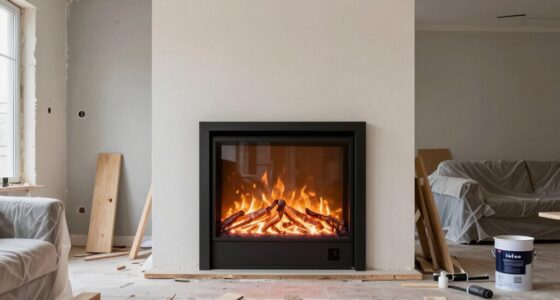
To quiet your electric fireplace fan, start by turning it off and unplugging it. Clean the fan blades gently to remove dust and debris that cause imbalance and noise. Check and lubricate the motor with a small amount of light oil if needed, following the manufacturer’s guidelines. Make certain the fan is mounted securely and inspect for worn or damaged parts to prevent vibrations. Proper maintenance can substantially reduce noise—keep exploring for detailed tips to keep your fan running smoothly.

Get home appliances delivered free — and shop member deals
- Fast, free delivery on millions of items
- Access to Prime Big Deal Days deals on October 6–7
- Prime Video, Amazon Music and more included
Key Takeaways
- Turn off and unplug the fireplace before cleaning or inspecting the fan.
- Clean the fan blades gently to remove dust and debris buildup.
- Lubricate the fan motor with light oil to reduce squeaks and rattles.
- Tighten loose screws or brackets to secure the fan and prevent vibrations.
- Inspect for damaged blades or parts and replace them to minimize noise.
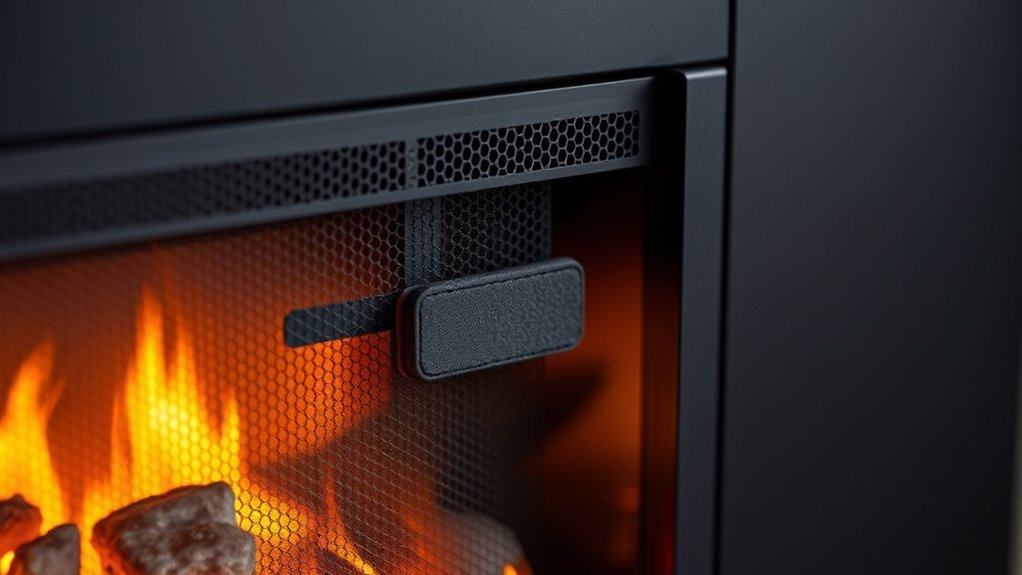
Electric fireplace fans can sometimes be noisy, disrupting the cozy ambiance you want to create. That unwanted noise often comes from the fan itself, but the good news is, you can quiet it down with some simple maintenance. The first step is to focus on fan blade maintenance. Over time, dust, dirt, and debris can accumulate on the blades, causing imbalance and vibration that lead to loud noises. To address this, turn off the fireplace and unplug it for safety. Then, carefully remove the fan cover, if possible, and wipe down the blades with a soft cloth or a brush. Make sure to clear away any buildup, paying close attention to the edges. A clean fan blade spins more smoothly and quietly, reducing noise considerably.
Cleaning fan blades reduces imbalance and noise in your electric fireplace.
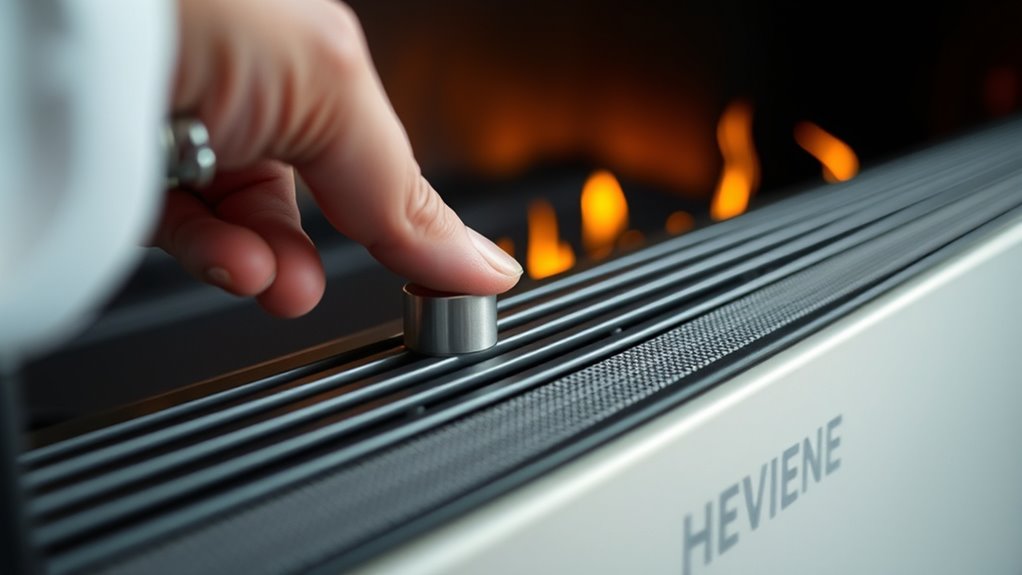
In addition to cleaning, fan motor lubrication plays an essential role in quiet operation. A dry or stiff motor can generate squeaks and rattles, which add to the overall noise. Check your owner’s manual to see if your fan motor requires lubrication—many models do, and some may have sealed bearings that don’t need it. If lubrication is needed, use a few drops of light machine oil or a specialized lubricant designed for small motors. Apply the oil sparingly to the motor shaft or bearing points, and then gently turn the fan blades by hand to distribute the lubricant evenly. This process reduces friction inside the motor, allowing the fan to operate more smoothly and quietly. Additionally, ensuring that your airless paint sprayer is well maintained can help prevent unnecessary vibrations and noise during operation, as proper equipment upkeep is key to overall performance.
Regular maintenance is key to keeping your electric fireplace fan running silently. In addition to fan blade cleaning and motor lubrication, ensure that the fan is mounted securely and not vibrating against other components or surfaces. Loose mounting can amplify noise, so tighten any screws or brackets if necessary. Also, inspect the fan for worn or damaged parts—such as bent blades or broken motor components—and replace them if needed. By giving your fan a little TLC, you’ll prevent excessive noise and help extend its lifespan.
Ultimately, quieting your electric fireplace fan involves a combination of cleaning, lubrication, and proper inspection. When these steps are taken regularly, you’ll enjoy the warm glow of your fireplace without the distraction of loud fan noise. Maintaining your fan not only improves comfort but also ensures it operates efficiently, providing you with a cozy, peaceful environment whenever you want it.
electric fireplace fan noise reduction
As an affiliate, we earn on qualifying purchases.
As an affiliate, we earn on qualifying purchases.
Frequently Asked Questions
Can Replacing the Fan Reduce Noise Levels?
Yes, replacing the fan can reduce noise levels, especially if the current one is worn or damaged. Opt for a fan replacement with a quieter model, and consider lubricating the motor to minimize squeaks and vibrations. Regular motor lubrication keeps the fan running smoothly, further lowering noise. Combining these steps ensures your electric fireplace operates quietly and efficiently, enhancing your comfort and enjoyment.
Is It Safe to Lubricate the Fan Motor?
Think of your fan motor as a delicate ballet dancer gliding smoothly across the stage. Fan lubrication can be safe if you use the right lubricant and follow the manufacturer’s instructions, but improper motor maintenance risks damage. You should check the user manual or consult a professional before applying any lubricant. Proper motor maintenance keeps your fan whisper-quiet and prevents costly repairs, ensuring your cozy fire stays the star of the show.
Do All Electric Fireplace Fans Produce Noise?
Not all electric fireplace fans produce the same level of fan noise. Some fans run quietly, while others generate noticeable noise due to motor vibrations or worn components. If you notice excessive noise, it’s often caused by vibrations or debris hitting the blades. Regular maintenance, like tightening parts or cleaning, can reduce fan noise. If the noise persists, checking the motor and replacing worn parts helps keep your fan running smoothly and quietly.
How Often Should the Fan Be Cleaned?
Did you know that regular fan maintenance can extend your electric fireplace’s lifespan by up to 30%? You should clean your fan at least once every three to six months, depending on usage and dust levels. A consistent cleaning schedule prevents dust buildup, which can cause noise. Keep your fan in top shape by following this routine, ensuring quieter operation and better heat distribution.
Are There Noise-Reducing Fan Models Available?
Yes, there are noise-reducing fan models available that can substantially lower fan sound and improve your fireplace experience. These models often feature quieter motors and better insulation, making them much quieter than standard fans. When comparing noise, look for fans designed specifically for quiet operation. Investing in a high-quality, noise comparison-tested fan can make your electric fireplace much more peaceful, especially if the current fan is loud or disruptive.
fan blade cleaning brush for electric fireplace
As an affiliate, we earn on qualifying purchases.
As an affiliate, we earn on qualifying purchases.
Conclusion
Now that you’ve learned how to quiet your electric fireplace fan, think of it as tuning a delicate instrument—you just need to find the right note. With a few simple tweaks, you’ll restore the peaceful warmth without the constant hum. Silence is the melody you’re after, and with patience, your fireplace will sing softly in the background. Keep these tips in mind, and enjoy the soothing harmony of a quiet, cozy space.
small motor oil for appliance lubrication
As an affiliate, we earn on qualifying purchases.
As an affiliate, we earn on qualifying purchases.
electric fireplace fan replacement parts
As an affiliate, we earn on qualifying purchases.
As an affiliate, we earn on qualifying purchases.
Fall yard work Picks
leaf blowers
As an affiliate, we earn on qualifying purchases.