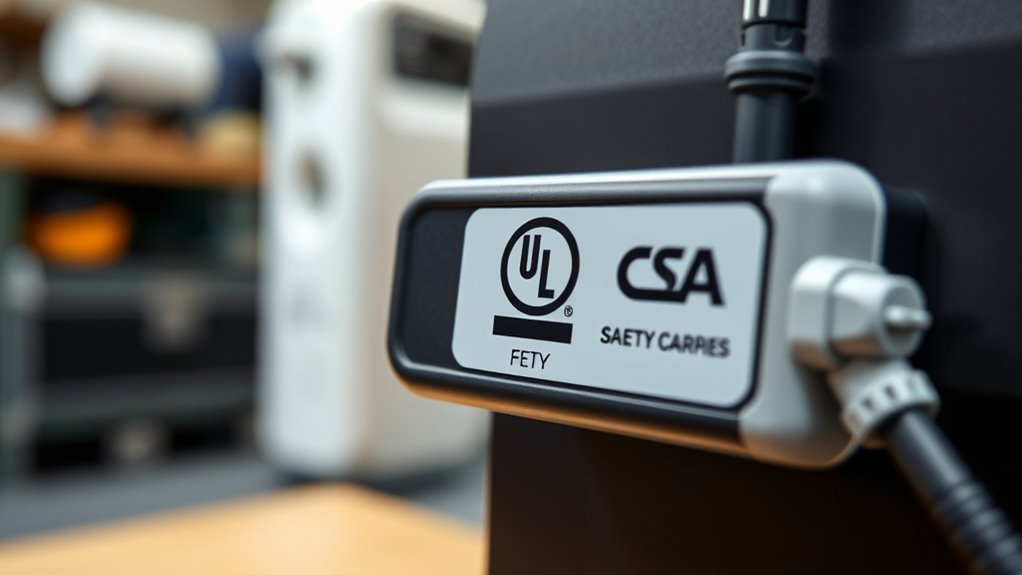
UL and CSA safety certifications prove that your electrical products meet strict safety standards. They involve thorough testing of components, insulation, grounding, and construction to identify potential hazards like shock or fire risks. These marks help you easily recognize safe, reliable devices that have been evaluated by trusted organizations. If you want to understand how these certifications protect you and ensure product safety, there’s more to discover about their significance and processes.

Get home appliances delivered free — and shop member deals
- Fast, free delivery on millions of items
- Access to Prime Big Deal Days deals on October 6–7
- Prime Video, Amazon Music and more included
Key Takeaways
- UL and CSA are recognized safety certification organizations that verify electrical products meet strict safety standards.
- Certification involves rigorous testing of components, insulation, grounding, and construction for safety compliance.
- Products bearing UL or CSA marks have undergone evaluations ensuring they do not pose shock, fire, or hazard risks.
- Certification enhances consumer confidence and is often required by retailers and government regulations.
- Recognizing these marks helps consumers select safe, tested electrical devices and promotes safer electrical environments.

Have you ever wondered what guarantees a product is safe to use? When it comes to electrical devices and appliances, ensuring safety isn’t just about good design or quality materials—it’s also about meeting rigorous safety standards. That’s where electrical safety and certification processes come into play. Certification processes involve testing products to verify they comply with specific safety regulations, giving you confidence that the items you use daily won’t pose electrical hazards. These processes are designed to identify potential risks like electrical shock, short circuits, or fire hazards before products reach the market. When manufacturers seek certifications such as UL (Underwriters Laboratories) or CSA (Canadian Standards Association), they submit their products for thorough testing and evaluation. These tests typically include examining electrical components, insulation, grounding, and overall construction to ensure they meet strict safety criteria. Once a product passes these tests, it receives a certification mark, which acts as a guarantee that the product has met the necessary safety standards.
Understanding the importance of these certifications helps you make informed decisions. For instance, when you see a UL or CSA mark on an appliance, you know it has undergone rigorous testing for electrical safety. This reassurance isn’t just about compliance; it’s about protecting you and your loved ones from potential electrical hazards. Certification processes involve multiple stages, including initial testing, factory inspections, and ongoing compliance checks. These steps ensure that safety isn’t just a one-time achievement but a continuous commitment by manufacturers. Certification bodies also update their standards periodically, reflecting advances in technology and new safety insights, so products bearing these marks are consistently aligned with current safety practices. Additionally, understanding electrical safety and certification processes can help prevent the use of substandard or counterfeit products that may not meet safety requirements.
The significance of UL and CSA certifications extends beyond just meeting legal requirements. They influence consumer trust and market acceptance, as many retailers and governments require products to carry proper safety labels before sale. Moreover, these certifications often reduce liability risks for manufacturers, which ultimately benefits consumers by encouraging manufacturers to prioritize safety throughout the production process. By choosing products with recognized safety marks, you’re opting for devices that have been scrutinized and tested under controlled conditions, minimizing the risk of electrical failure or accidents. In essence, understanding electrical safety and certification processes empowers you to recognize reliable products and avoid potential dangers lurking in untested or uncertified items. It’s a simple but crucial step toward ensuring your safety in an increasingly electrified world.
UL certified electrical power strip
As an affiliate, we earn on qualifying purchases.
As an affiliate, we earn on qualifying purchases.
Frequently Asked Questions
How Long Do UL and CSA Certifications Remain Valid?
UL and CSA certifications typically remain valid for about three years, but you should verify the specific product or certification details. To maintain certification renewal validity, you’ll need to go through the renewal process before the expiration date. This involves submitting updated product information and possibly undergoing testing again. Staying proactive ensures your certifications stay current, helping you meet safety standards and avoid disruptions.
Can Products Be Certified by Both UL and CSA Simultaneously?
Like a double-edged sword, product certification by UL and CSA can overlap, but it’s not automatic. You can get both certifications simultaneously, especially if your product meets the safety standards of each organization. Certification overlap helps guarantee your product adheres to the highest safety standards, boosting consumer confidence. However, you must submit separate applications and meet each organization’s specific requirements, making dual certification a strategic choice for safety and market reach.
What Is the Cost Difference Between UL and CSA Certification?
The cost implications of UL versus CSA certification vary, but generally, UL certification tends to be more expensive due to its extensive testing and global recognition. Certification expenses include testing fees, application costs, and ongoing surveillance. You might find that CSA offers a more budget-friendly option, especially for North American markets. Ultimately, your choice depends on your product’s target market and specific safety requirements, which influence certification expenses.
Do Certifications Ensure Product Safety in All Countries?
Certifications like UL and CSA help verify product safety, but they don’t guarantee safety in all countries. International standards and certification scope vary, so your product may need additional testing or approvals to meet specific regional requirements. You should check the target market’s regulations and consider obtaining internationally recognized certifications to maximize safety compliance and reduce market entry issues. Always verify with local authorities for the most accurate safety assurances.
How Can I Verify the Authenticity of a UL or CSA Label?
To verify a UL or CSA label, start by inspecting the label closely for proper label verification features like holograms or unique serial numbers. Check the manufacturer’s website or contact UL or CSA directly with the serial number to confirm authenticity. Be cautious of counterfeit labels, which may look authentic but lack proper verification details. Always buy from reputable sources to reduce the risk of receiving products with counterfeit labels.
CSA safety certified extension cord
As an affiliate, we earn on qualifying purchases.
As an affiliate, we earn on qualifying purchases.
Conclusion
Understanding UL and CSA safety certifications guarantees you choose products that meet strict safety standards. Did you know that over 20,000 products are tested annually by UL alone? This highlights how committed these organizations are to safety. By paying attention to these certifications, you’re not just protecting yourself and your loved ones — you’re also supporting high-quality, reliable products. Stay informed and always look for UL or CSA marks to make the safest choices possible.
UL listed household circuit breaker
As an affiliate, we earn on qualifying purchases.
As an affiliate, we earn on qualifying purchases.
As an affiliate, we earn on qualifying purchases.
Fall yard work Picks
leaf blowers
As an affiliate, we earn on qualifying purchases.