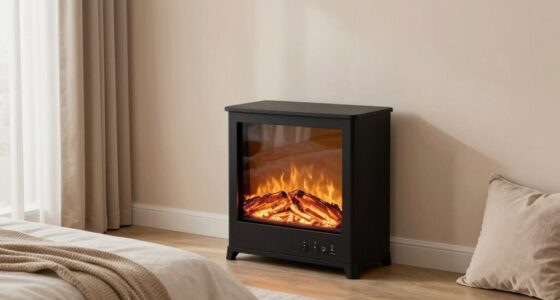
If your electric fireplace turns on by itself, first unplug it immediately to prevent electrical hazards. Check the remote control for stuck buttons or dead batteries, and remove the batteries to see if it still activates. Inspect nearby sensors, switches, and automation settings that might trigger the unit unintentionally. If the issue persists, it could be a faulty thermostat or control board, so consider consulting a professional for safe repair options. More tips to resolve this issue are available below.

Get home appliances delivered free with Prime
- Fast, free delivery on millions of items
- Prime Video, Amazon Music and more included
- Member-only deals all year
Key Takeaways
- Unplug the fireplace immediately to prevent fire hazards and inspect the power cord for damage.
- Check and remove remote batteries, and ensure no nearby devices are triggering the unit.
- Reset the fireplace and verify if sensors or thermostats are malfunctioning or sending false signals.
- Disable any timers or smart controls that may be causing automatic activation.
- Contact a qualified technician for professional diagnosis and repairs if the issue persists.
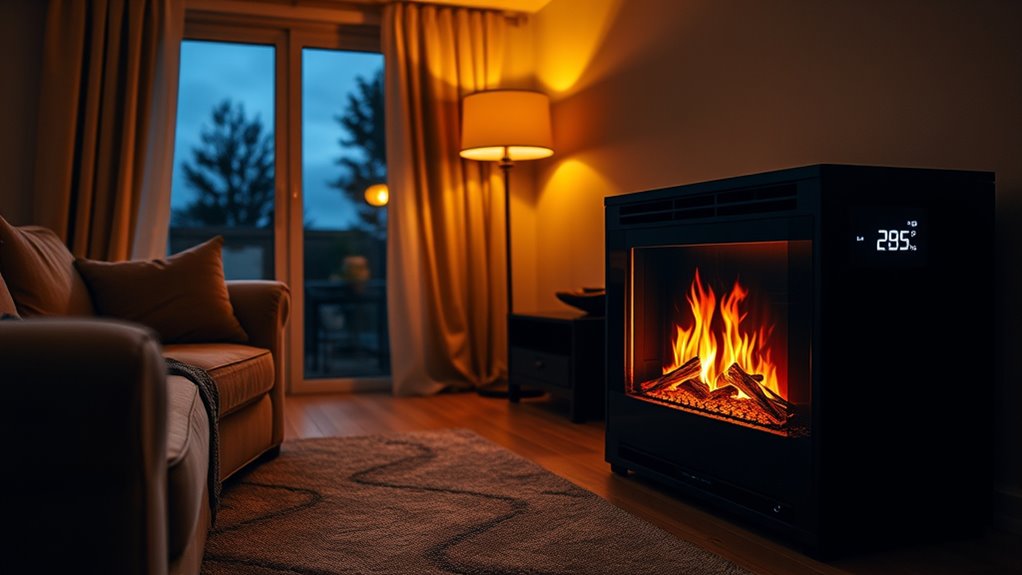
Have you ever come home to find your electric fireplace suddenly turned on without any explanation? It can be unsettling, especially when you’re unsure why it happened. This unexpected activation raises important safety concerns, so it’s essential to address the issue promptly. The first step is understanding what might cause your fireplace to turn on by itself and how to troubleshoot common problems effectively.
Safety concerns should always be your top priority. An electric fireplace that activates randomly might indicate an electrical fault, such as a short circuit or malfunctioning control board. If left unchecked, these issues could pose fire hazards or damage your unit. Before doing anything, unplug the fireplace from the power source to prevent accidental activation or further electrical issues. Once unplugged, inspect the power cord and plug for damage or frayed wires. If you notice any damage, avoid using the unit until repairs are made by a qualified technician.
Troubleshooting tips can help you pinpoint the problem and determine whether it’s something you can fix yourself. Start by checking the remote control or wall switch. Sometimes, buttons may get stuck or be inadvertently pressed, causing the fireplace to turn on. Remove the batteries from the remote and see if the fireplace still activates on its own. If it stops, replace the batteries or consider replacing the remote altogether. Also, check for any nearby devices or sensors that might be triggering the fireplace accidentally.
Another common cause is a faulty thermostat or temperature sensor. If these components malfunction, they might send incorrect signals, prompting the fireplace to turn on unexpectedly. In such cases, you might need to reset the unit or replace the sensor. Consult your owner’s manual for specific troubleshooting steps related to your model. If your fireplace has a programmable timer or smart controls, ensure that no schedules or automation settings are enabled that could be activating it without your knowledge. Additionally, self-watering plant pots utilize similar electrical components and reservoirs, so understanding their operation can sometimes help in diagnosing appliance issues.
If these troubleshooting tips don’t resolve the issue, it’s best to contact a professional technician. Electrical problems are complex and can be dangerous if mishandled. A qualified technician can diagnose underlying issues, such as control board failures or wiring problems, and safely repair your fireplace. Remember, ignoring the problem or attempting repairs beyond your skill level can compromise safety and potentially cause more damage. By taking these steps—unplugging the unit, inspecting for damage, checking remote controls, and consulting professionals—you’ll protect your home while resolving the mystery of your electric fireplace turning on by itself.
electric fireplace remote control replacement
As an affiliate, we earn on qualifying purchases.
As an affiliate, we earn on qualifying purchases.
Frequently Asked Questions
Can a Power Surge Cause My Electric Fireplace to Turn on Spontaneously?
Yes, a power surge or electrical interference can cause your electric fireplace to turn on spontaneously. When a surge occurs, it can send unexpected signals through the electrical system, activating the fireplace’s controls. To prevent this, you should use a surge protector and verify your electrical wiring is properly grounded. Regularly check for loose connections or damaged cords, as these issues can also contribute to accidental activation.
Is It Safe to Unplug My Fireplace if It Turns on Randomly?
Absolutely, unplugging your fireplace is a quick fix, but it’s like putting a band-aid on a leaky pipe. For proper fireplace safety, you should first address possible electrical issues—like faulty wiring or a malfunctioning thermostat—before unplugging. If it keeps turning on, consult an electrician. Ignoring electrical issues can lead to bigger problems later, so don’t just unplug and hope for the best.
Could a Faulty Remote Control Be Triggering the Fireplace to Turn On?
Yes, a faulty remote control could be triggering your fireplace to turn on. Remote interference or signal confusion might cause the fireplace to activate unexpectedly. Check if other devices are causing interference, and try removing or replacing the remote batteries. Also, verify no buttons are stuck. If the issue persists, consider replacing the remote or consulting a professional to prevent accidental activation and ensure safety.
How Do I Reset the Fireplace’s Internal Controls After a Malfunction?
You need to perform an internal control reset to solve the malfunction. First, turn off the fireplace and unplug it, giving it a moment to power down completely. Then, locate the reset button—usually behind a panel or near the power cord—and press it firmly. Wait a few seconds before plugging it back in. This simple step often clears glitches, helping you troubleshoot the malfunction and restore normal operation.
Are There Specific Safety Certifications for Electric Fireplaces to Prevent This Issue?
Yes, there are specific safety certifications for electric fireplaces that help prevent issues like the unit turning on by itself. Look for certification labels such as UL or CSA, which indicate the fireplace meets recognized safety standards. These certifications confirm the product has been tested for electrical safety, reducing risks of malfunction. Always verify the certification labels before purchasing or installing an electric fireplace to ensure it adheres to essential safety standards.
electric fireplace thermostat sensor
As an affiliate, we earn on qualifying purchases.
As an affiliate, we earn on qualifying purchases.
Conclusion
If your electric fireplace keeps turning on by itself, don’t ignore it—think of it like a flickering candle that needs attention. Check the power source, remote controls, and settings carefully. If the problem persists, it’s like a warning sign on a busy road, signaling you to seek professional help. Addressing the issue promptly guarantees your fireplace stays safe and cozy, rather than becoming a mysterious, unpredictable flicker in your home.
electric fireplace control board
As an affiliate, we earn on qualifying purchases.
As an affiliate, we earn on qualifying purchases.
electric fireplace safety switch
As an affiliate, we earn on qualifying purchases.
As an affiliate, we earn on qualifying purchases.
Cold & flu season Picks
humidifiers
As an affiliate, we earn on qualifying purchases.