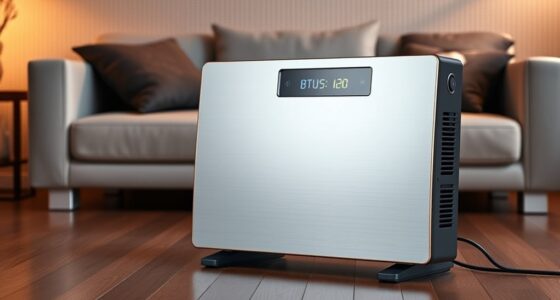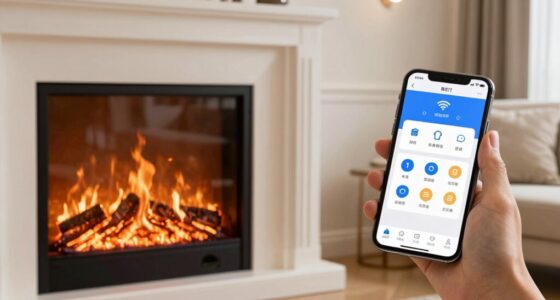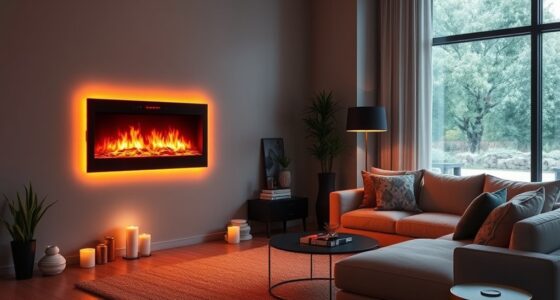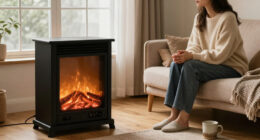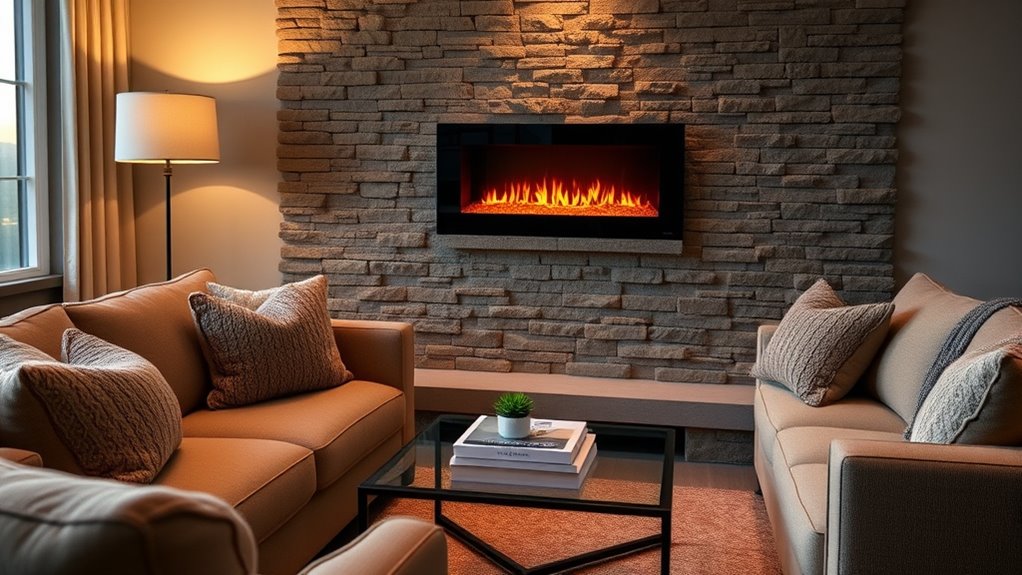
You can use an electric fireplace as your main heat source, especially in small or medium-sized spaces, but keep in mind it works best as supplemental heating. It’s energy-efficient and easy to install, with most units plugging into standard outlets. However, the limited heat output means it might struggle in very cold climates or larger rooms. For more on making it work effectively, there are important factors to contemplate that could help you get the most from your electric fireplace.

Get home appliances delivered free with Prime
- Fast, free delivery on millions of items
- Prime Video, Amazon Music and more included
- Member-only deals all year
Key Takeaways
- Electric fireplaces are energy-efficient but may have limited heat output, making them suitable mainly for small spaces or zone heating.
- They can serve as primary heat sources in mild climates or well-insulated areas, but may struggle in colder conditions.
- Easy to install and operate, electric fireplaces typically plug into standard outlets, with some models requiring dedicated circuits.
- Their limited heating capacity means they are best used as supplemental or primary heat only in specific situations.
- Proper space planning, insulation, and realistic expectations are essential for effective use as a main heat source.
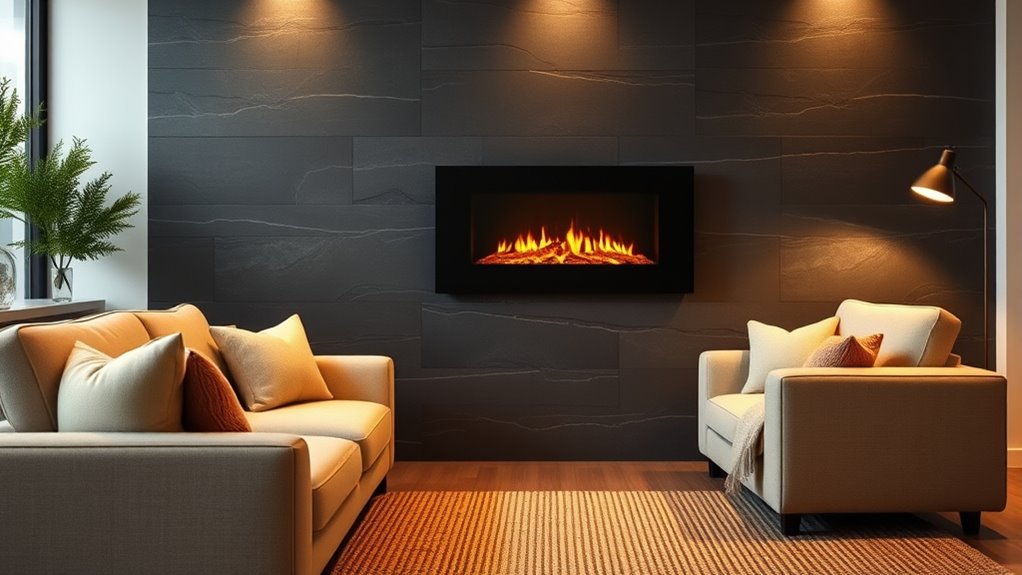
If you’re contemplating replacing traditional heating methods with an electric fireplace, it’s vital to understand how effectively it can serve as your primary heat source. Electric fireplaces are often marketed for their ambiance and aesthetic appeal, but many wonder if they can handle the demands of heating an entire room or home. When evaluating their suitability, one key factor to weigh is energy efficiency. Electric fireplaces convert electricity directly into heat, often with minimal waste, making them generally more efficient than some fossil fuel-based systems. However, their efficiency doesn’t always translate into enough heat output for larger spaces or colder climates. If your goal is to cut energy costs and maximize efficiency, you’ll want to look into models with high efficiency ratings and supplemental features like thermostats that help regulate temperature without wasting electricity.
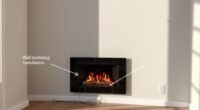
Another vital aspect to take into account is installation requirements. Unlike traditional fireplaces that often need venting and significant structural modifications, electric fireplaces are relatively straightforward to install. Most models can be plugged into standard outlets, eliminating the need for complex wiring or venting systems. This simplicity can be advantageous if you want a quick setup or plan to move your unit later. However, for those intending to use their electric fireplace as a primary heat source, it’s essential to make sure that your electrical system can handle the load, especially if you’re installing a larger or more powerful unit. Some models require dedicated circuits or upgraded wiring to operate safely and efficiently. Ignoring these installation requirements could lead to electrical issues or reduced performance, which defeats the purpose of using an electric fireplace as a primary heating solution.
While electric fireplaces can be a practical option for supplemental or zone heating, relying solely on them as your main heat source demands careful planning. They work best in smaller spaces or rooms where you can contain and direct the heat effectively. If you’re heating a larger area, you might need multiple units or supplementary heating systems. It’s also worth noting that electric fireplaces typically don’t produce the same level of warmth as traditional systems like furnaces or wood-burning fireplaces, especially in extremely cold climates. This is partly due to their limited heat output capacity, which can restrict their effectiveness in very cold environments. Hence, evaluating your home’s insulation, the size of the space, and your heating needs is essential before choosing an electric fireplace as your primary source. Overall, with the right model, proper installation, and realistic expectations regarding heat output, an electric fireplace can serve as an efficient and attractive primary heating option for specific situations.
electric fireplace for small rooms
As an affiliate, we earn on qualifying purchases.
As an affiliate, we earn on qualifying purchases.
Frequently Asked Questions
How Much Does It Cost to Run an Electric Fireplace Daily?
The daily cost of running an electric fireplace varies, but generally it’s affordable. You might spend around $0.50 to $2, depending on usage and your local energy rates. Compared to traditional heating, electric fireplaces offer good energy savings, especially if used selectively. Their cost comparison makes them a budget-friendly option for supplemental heat, helping you stay comfortable without high energy bills.
Are Electric Fireplaces Energy-Efficient Compared to Central Heating?
Electric fireplaces are more energy-efficient than central heating because they target specific areas, reducing unnecessary energy use. While central systems can waste heat, electric fireplaces offer instant warmth with less environmental impact. You’ll save on energy costs and lower your carbon footprint, making them a smart choice for supplemental heating. For energy savings and a greener home, electric fireplaces provide a cozy, eco-friendly alternative without sacrificing comfort.
Can Electric Fireplaces Be Used in Outdoor Spaces?
You can use an electric fireplace in outdoor spaces, but it’s best suited for creating outdoor ambiance rather than full weather resistance. Look for models specifically designed with weather-resistant features, like sealed panels and durable materials, to withstand the elements. These outdoor electric fireplaces add warmth and charm, making your patio or deck cozy, but make certain you select one rated for outdoor use to enjoy it safely and effectively.
What Safety Features Should I Look for in an Electric Fireplace?
You should look for essential safety features like overheat protection, tip-over switches, and child safety locks to guarantee fireplace safety. Check that the unit has proper electrical safety certifications, such as UL listing, to prevent electrical hazards. These features help protect you from potential fire risks or electrical malfunctions, giving you peace of mind while enjoying the ambiance. Always follow the manufacturer’s safety instructions for safe use.
Do Electric Fireplaces Require Professional Installation?
Imagine the warm glow filling your room—electric fireplaces usually don’t require professional installation. You simply follow the installation requirements, like plugging into a grounded outlet and guaranteeing proper clearance. However, safety considerations, like securing cords and preventing overheating, are essential. While DIY setup is common, consulting a professional might be wise if your setup involves complex wiring or if you want to ensure ideal safety and performance.
energy-efficient electric fireplace with thermostat
As an affiliate, we earn on qualifying purchases.
As an affiliate, we earn on qualifying purchases.
Conclusion
So, while it might seem tempting to rely solely on an electric fireplace for your main heat, don’t forget it’s not exactly a powerhouse. Ironically, what’s marketed as a cozy, energy-efficient solution often isn’t enough for those cold winter nights. If you’re hoping it’ll keep your entire home warm, you might be disappointed. Sometimes, sticking to traditional heating systems proves more reliable—after all, you don’t want to be left out in the cold, literally.
electric fireplace with high heat output
As an affiliate, we earn on qualifying purchases.
As an affiliate, we earn on qualifying purchases.
electric fireplace installation kit
As an affiliate, we earn on qualifying purchases.
As an affiliate, we earn on qualifying purchases.
NFL season / tailgating Picks
team gear
As an affiliate, we earn on qualifying purchases.