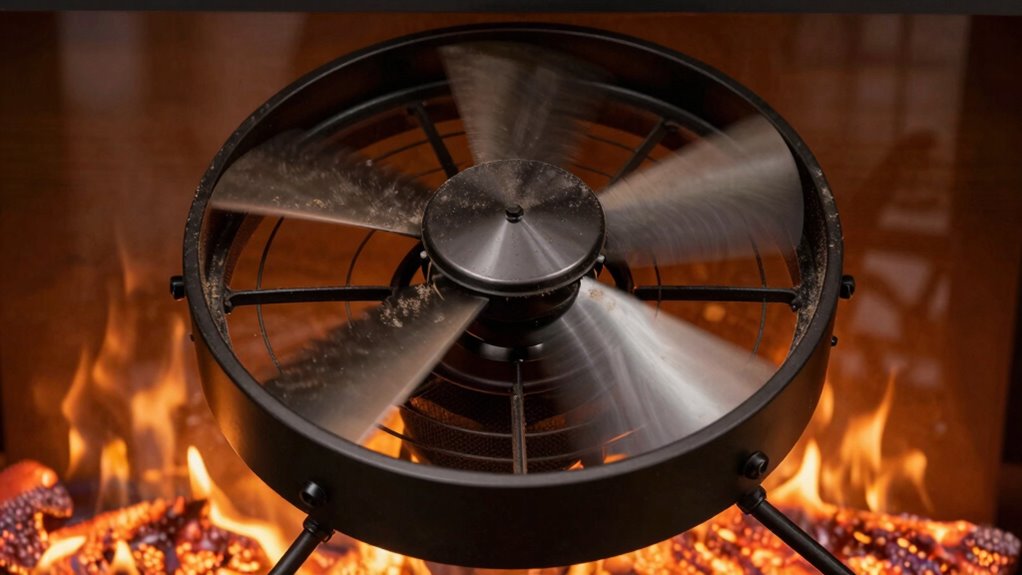
Over time, your electric fireplace fan gets louder mainly because dust, dirt, and debris build up on the blades and motor, causing parts to wear out or become misaligned. This buildup forces the fan to work harder, increasing noise, and may also lead to vibrations or loose components. Worn bearings and lack of lubrication can add to the problem. If you want to find out more about how to fix it, keep exploring the details below.
Key Takeaways
- Dust and debris buildup on fan blades and motor increase resistance, causing louder operation over time.
- Loose or worn components, such as screws or blades, create vibrations and amplify noise.
- Lack of lubrication accelerates motor wear, leading to squeaking or grinding sounds.
- Mechanical wear in the motor or bearings can generate increased noise as the fan ages.
- Electrical faults or motor issues cause irregular operation and louder humming or buzzing sounds.
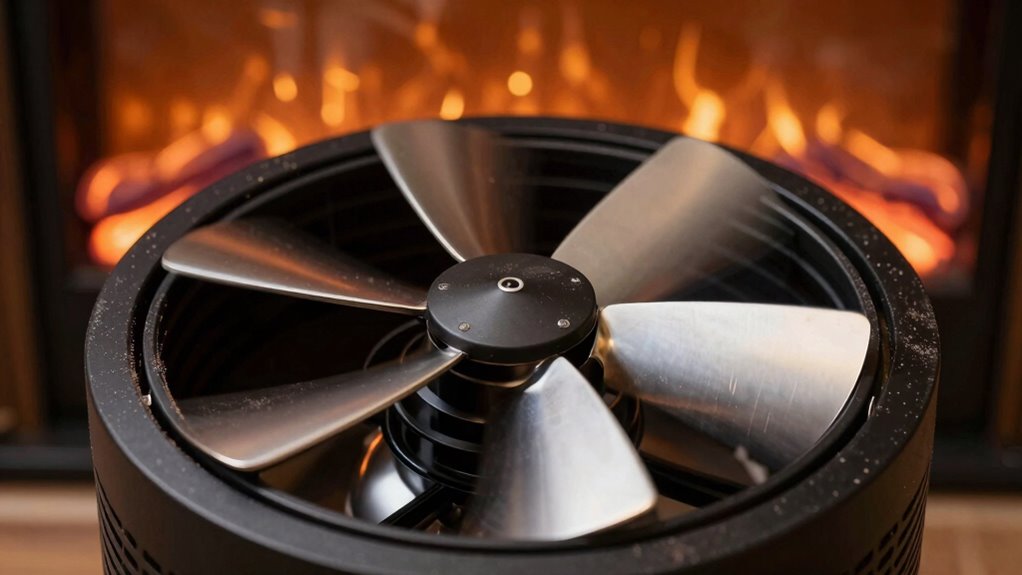
Over time, your electric fireplace fan may start to get louder, and understanding why can help you address the issue before it worsens. Noise increases are often linked to maintenance issues that develop as the fan ages. When fans operate continuously, dust, dirt, and debris can accumulate on the blades and motor, causing imbalance and extra resistance. You might notice the buildup more in ventilation areas, which can significantly impact performance. This buildup can make the fan work harder to spin, leading to louder operation. Regular cleaning and inspection are essential parts of noise troubleshooting. If you notice the fan getting noisier, it’s a good idea to turn off the unit and carefully clean the blades and vents to remove any obstructions. Ignoring these issues can lead to more severe problems, like motor strain or eventual failure. Additionally, a lack of proper lubrication can accelerate wear and noise, making it essential to check the motor’s condition during maintenance.
Another common cause of loudness is worn-out or loose components. Over time, the mounting screws or fan blades may loosen, creating vibrations that amplify noise. You should periodically check these parts to guarantee they’re tightly secured. If a blade is bent or damaged, it can cause imbalance, which results in louder and uneven operation. Replacing damaged blades or tightening loose parts can notably reduce noise levels. Sometimes, the motor itself might be wearing down, especially if it’s been in use for several years. Worn bearings can cause squeaking or grinding sounds, indicating that the motor needs lubrication or replacement. Proper maintenance and timely troubleshooting can prevent these issues from escalating. Additionally, understanding the inner workings of the fan can help in diagnosing unusual noises more accurately. Learning about the fan’s components can also aid in identifying specific parts that may need repair or replacement.
Electrical or mechanical issues can also contribute to increased noise. For example, if the fan’s motor is malfunctioning or has developed internal faults, it may generate more noise than usual. In some cases, electrical components might cause the motor to run irregularly, creating vibrations or humming sounds. If you suspect electrical problems, it’s best to consult a technician to evaluate the fan’s motor and wiring. Attempting repairs without proper knowledge can be dangerous and might void warranties. Additionally, regular maintenance of the fan can help identify potential issues early before they become more serious. Remember, noise troubleshooting isn’t just about making the fan quieter; it’s about identifying and fixing underlying issues to keep your electric fireplace running smoothly.

Holikme Dryer Vent Cleaner Kit – 30Ft Fireplace Chimney Brushes Flexible
- Extended Chimney Cleaning Reach: 30-foot flexible rods with synthetic brushes
- Easy to Use: Operable with or without a power drill
- Professional Cleaning Results: Sealed connections for secure operation
As an affiliate, we earn on qualifying purchases.
As an affiliate, we earn on qualifying purchases.
Frequently Asked Questions
Can Fan Noise Be Reduced Without Replacing Parts?
Yes, you can reduce fan noise without replacing parts. Start by lubricating the fan motor to guarantee smooth operation. Also, check for dust accumulation on the blades and motor; cleaning these can considerably decrease noise. Use a soft brush or compressed air to remove dust. Regular maintenance like this keeps your fan running quietly and efficiently, preventing unnecessary wear and tear over time.
Does Temperature Affect the Fan’s Loudness?
Yes, temperature affects your fan’s loudness. As it warms up, thermal expansion causes metal components to expand slightly, increasing fan vibration. This vibration amplifies noise, making the fan louder over time. When the fan cools, contraction reduces vibrations. You can notice this pattern during operation, as temperature fluctuations directly influence how loudly your fan runs, with heat intensifying vibrations and noise.
How Often Should I Clean the Fan?
You should clean your electric fireplace fan at least every three to six months, depending on usage and dust levels. Regular fan maintenance helps prevent loud noises caused by dust buildup and debris. Follow a consistent cleaning schedule, including unplugging the unit and gently removing dust with a soft cloth or brush. Proper maintenance guarantees your fan runs quietly and efficiently, extending its lifespan and maintaining ideal heat circulation.
Are Louder Fans More Efficient?
Louder fans symbolize a storm brewing within your fireplace. While increased sound may suggest higher fan speed, it doesn’t necessarily mean better efficiency. Sound insulation plays a role—poor insulation amplifies noise, making the fan sound louder, regardless of efficiency. A louder fan at higher speeds can move heat more quickly, but if you prioritize quiet operation, lower speeds with good insulation might serve you better.
Is It Safe to Operate a Noisy Fan?
Yes, it’s generally safe to operate a noisy fan, but you should perform regular fan maintenance to guarantee it runs smoothly. Sometimes, increased noise indicates dust buildup or worn bearings, so comparing the noise levels with similar fans can help assess if it’s normal. If the noise becomes excessive or unusual, turning off the fan and inspecting it is wise to prevent potential damage or safety issues.
electric fireplace fan replacement blades
As an affiliate, we earn on qualifying purchases.
As an affiliate, we earn on qualifying purchases.
Conclusion
Eventually, your electric fireplace fan may get loud, but understanding why helps you take control. Recognize the signs, identify the causes, and address the issues early. Keep it clean, check the bearings, and replace worn parts. By maintaining your fan, you guarantee quiet comfort, reliable warmth, and peace of mind. Because when you care for your fireplace, it cares for you; when you listen to its needs, it continues to serve you well.
electric fireplace fan lubrication kit
As an affiliate, we earn on qualifying purchases.
As an affiliate, we earn on qualifying purchases.
electric fireplace fan repair parts
As an affiliate, we earn on qualifying purchases.
As an affiliate, we earn on qualifying purchases.