When choosing a fireplace insert surround material, prioritize heat-resistant, fireproof options like stone, tile, or fire-resistant drywall. Make sure the material is approved for high temperatures and fits your style while meeting safety standards. Proper installation with secure anchoring and adequate clearance is essential to prevent heat damage or fire hazards. If you keep these safety principles in mind, you’ll find the best material for your fireplace that’s both attractive and secure.
Key Takeaways
- Select heat-resistant, fireproof materials like stone, tile, or fireproof drywall to ensure safety around the fireplace insert.
- Verify that the surround material complies with local building codes and manufacturer guidelines for high-temperature use.
- Ensure proper installation, including secure anchoring and adequate clearance to prevent heat transfer and fire hazards.
- Use fire-resistant sealants at joints to prevent gaps that can trap heat or debris, enhancing safety and durability.
- Consider the fireplace style and aesthetic to choose a surround material that complements your decor while maintaining safety standards.
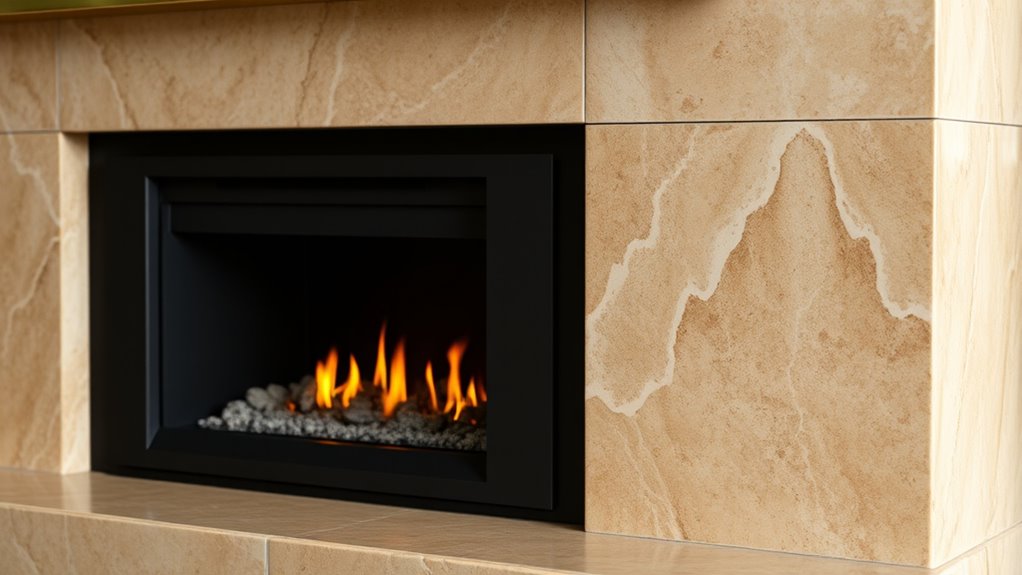
Selecting the right surround material for your fireplace insert is an important decision that impacts both the style and safety of your fireplace. The material you choose influences how well your fireplace performs and how secure it is during operation. When considering fireplace safety, it’s essential to select surround materials that are heat-resistant and compliant with local building codes. Ignoring these safety factors can lead to overheating, damage, or even fire hazards. As you plan your installation, keep in mind that some materials are better suited for certain environments or styles, so choosing the right one ensures both safety and aesthetic appeal.
Choosing heat-resistant, code-compliant surround materials enhances fireplace safety and style.
Installation tips play a key role in making sure your surround material functions properly and remains safe over time. First, verify that the material you select is rated for high temperatures and approved for use around fireplaces. Many manufacturers specify compatible materials, so always review their recommendations before making a purchase. When installing, ensure that the surround is properly anchored and maintains adequate clearance from the heat source. This not only prevents heat transfer that could damage the material but also reduces the risk of accidental fires. Use fire-resistant caulk or sealant where the surround meets the fireplace to prevent gaps that could trap heat or debris.
Your choice of surround material should also consider ease of installation. Some materials, like stone or tile, might require professional help to ensure a secure fit and compliance with safety standards. Others, such as pre-made panels or fireproof drywall, are more straightforward to install if you’re comfortable with DIY projects. Regardless of the material, always follow the manufacturer’s installation tips for spacing and ventilation. Proper clearance around the insert is crucial for preventing heat buildup and ensuring maximum fireplace safety.
Additionally, understanding the different cookie categories and how they affect website functionality can help you find reliable guidance on selecting materials and installation techniques from reputable sources. Remember, the goal is to protect your home and loved ones while creating a stylish focal point. Choosing a fireproof, heat-resistant surround material and following installation tips will help you achieve a safe, functional, and attractive fireplace.
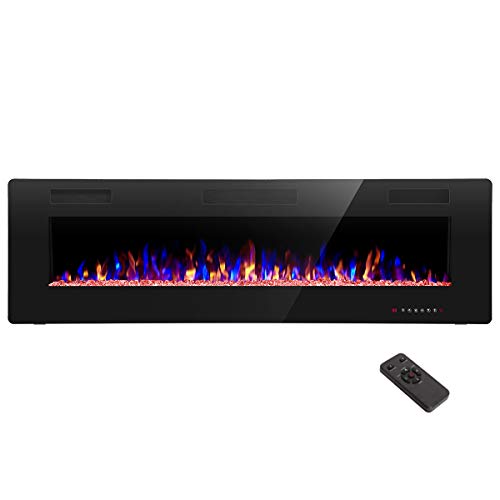
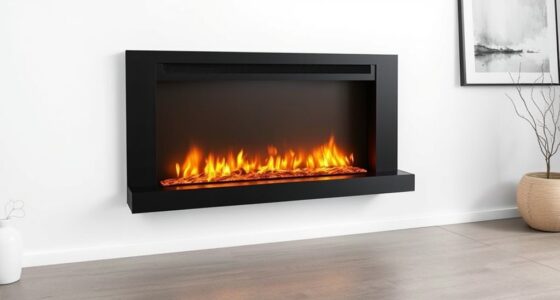
R.W.FLAME 60" Recessed and Wall Mounted Electric Fireplace, Low Noise, Fit for 2 x 6 Stud, Remote Control with Timer, Touch Screen, Adjustable Flame Color and Speed, 750-1500W
Attractive and Practical Design: 3.86"D x 60"W x 18.11"H,The thickness of the new style is only 3.86 inches...
As an affiliate, we earn on qualifying purchases.
Frequently Asked Questions
How Does the Surround Material Affect Fireplace Insulation?
The surround material impacts your fireplace insulation by influencing heat retention and safety. A non-combustible surround, like stone or metal, enhances fireplace safety and prevents heat damage. It also boosts aesthetic appeal, giving your fireplace a polished look. Properly selected surround materials guarantee efficient insulation, reducing heat loss, and protecting surrounding walls. This combination of safety and style makes your fireplace both functional and attractive, creating a cozy, safe environment.
Are There Eco-Friendly Surround Options Available?
You’ll find eco-friendly surround options like reclaimed wood and recycled metal that turn your fireplace into a masterpiece of sustainability. These materials are not only beautiful but also reduce waste and lower environmental impact. Reclaimed wood offers warmth and character, while recycled metal provides sleek, modern appeal. Choosing these options helps you create a cozy, stylish space without harming the planet, making your home both beautiful and eco-conscious.
Can the Surround Material Be Customized or Painted?
Yes, you can customize or paint your surround material. Many surrounds come with a variety of surround color options, so you can match or contrast your décor. Additionally, decorative trim choices allow you to add personal touches or accents that reflect your style. Before painting, verify the surface is suitable for paint, and follow manufacturer instructions to achieve a smooth, durable finish.
What Are the Maintenance Requirements for Different Surround Materials?
Did you know that high-quality materials like marble require regular sealing to maintain their appearance? You’ll find that different surround materials vary in maintenance; for example, tile and stone need periodic cleaning and sealing, while metal surrounds need rust prevention. To guarantee your fireplace’s durability and aesthetic appeal, you should clean surfaces regularly and follow manufacturer instructions. Proper upkeep keeps your fireplace looking great and functioning safely for years.
How Does Surround Material Influence Overall Home Energy Efficiency?
The surround material impacts your home’s energy efficiency by enhancing fireplace aesthetics and ensuring surround durability. A well-chosen material insulates better, reducing heat loss and improving overall warmth. Durable surrounds maintain their appearance and insulation qualities over time, preventing gaps that could lead to energy leaks. By selecting the right material, you optimize your fireplace’s performance, save on energy costs, and enjoy a visually appealing, long-lasting feature in your home.

EUHOMY 50 Inch Electric Fireplace Wall Recessed and Wall Mounted with Adjustable Flame Color, Fireplace Heater with Remote Control, Linear Fireplace with Timer, Touch Screen, Log & Crystal, 750/1500W
Package Inclusions & 2-Year Technical Support: : The EUHOMY electric fireplace is equipped with 1* carbon log, 1*...
As an affiliate, we earn on qualifying purchases.
Conclusion
So, as you pick the perfect surround material, remember that comfort and style often go hand in hand. It’s funny how the right choice can transform your space, making your fireplace a focal point and your home feel warmer. When you find that material that speaks to you, everything else just falls into place. In the end, it’s about creating a cozy, inviting atmosphere you’ll enjoy every day—coincidence or not, it’s the perfect match.

Westinghouse 60 Inch Electric Fireplace Heater, Compatible with Alexa & Google Home, Wall Mount or in-Wall Recessed Fireplace Insert, 24 Hour Timer, Color Changing Flames, 750W/1500W Indoor Heater
CUSTOMIZE APPEARANCE: Up to 144 total color combinations for flames and embers, 5 independent brightness levels, and 5...
As an affiliate, we earn on qualifying purchases.

Real Flame Malie 68" Landscape Electric Fireplace with Mantel for Living Room or Bedroom, Replaceable Fireplace Insert Heater, Realistic Log and Flame Effect, Remote Control, Timer
Includes: Mantel, replaceable electric fireplace heater insert, remote control, 6 foot power cord with lay-flat plug, anti-topple safety...
As an affiliate, we earn on qualifying purchases.