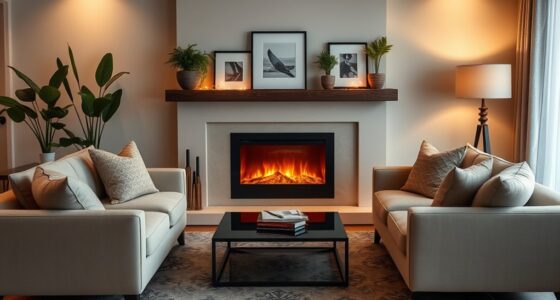
Many people believe bigger is always better for feature walls, but oversized designs can overwhelm your space and disrupt balance. You might also underestimate how vital color coordination is, which can make your walls look disjointed. Using the same material everywhere can get dull, and neglecting proper lighting can hide textures and details. In conclusion, thinking your feature wall needs to match the entire room can flatten the overall look. Keep these tips in mind to create a stunning, balanced focal point.
Key Takeaways
- Believing bigger is always better can overshadow room proportions and create clutter.
- Ignoring color harmony leads to clashing hues that detract from the overall design.
- Using the same material everywhere can make the space feel dull; mixing textures adds interest.
- Overlooking lighting reduces the feature wall’s visual impact and depth.
- Matching the feature wall exactly with the room can diminish its focal effect and personality.
Believing Bigger Is Always Better
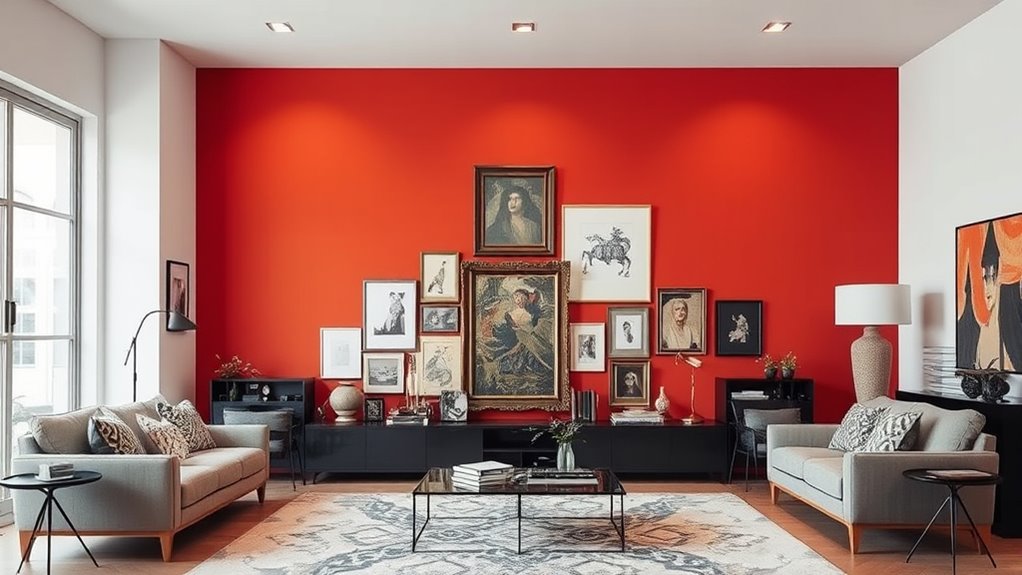
Many believe that bigger is always better when it comes to feature walls, but that’s not necessarily true. When designing your wall, pay attention to scale proportion to guarantee it complements the room without overwhelming it. A large, oversized feature can disrupt the visual balance, making the space feel cluttered or awkward. Instead, aim for a size that enhances the room’s proportions, creating harmony and focus. Smaller walls can still make a bold statement if scaled correctly, drawing attention without overpowering other elements. Remember, the key is to achieve a balanced look where the feature wall stands out but doesn’t dominate the entire room. Thoughtful consideration of visual balance helps you create a visually pleasing, cohesive space.
Underestimating the Power of Color Coordination

Color coordination can make or break the impact of your feature wall, yet it’s often underestimated in the design process. When you focus on color harmony, you create a cohesive look that enhances visual balance in the room. Choosing colors that complement each other ensures your wall doesn’t clash with existing decor. Use the table below to guide your color choices:
| Color Scheme | Example Colors | Effect |
|---|---|---|
| Monochromatic | Light blue, navy blue | Calm, sophisticated |
| Complementary | Blue and orange | Vibrant, energetic |
| Analogous | Green, yellow-green | Harmonious, soothing |
| Triadic | Red, blue, yellow | Dynamic, balanced |
Neglecting this step leads to a disjointed look, so prioritize color coordination for a stunning feature wall. Additionally, understanding the power consumption of heated mattress pads emphasizes the importance of energy-efficient choices in home furnishings.
Choosing the Same Material Everywhere
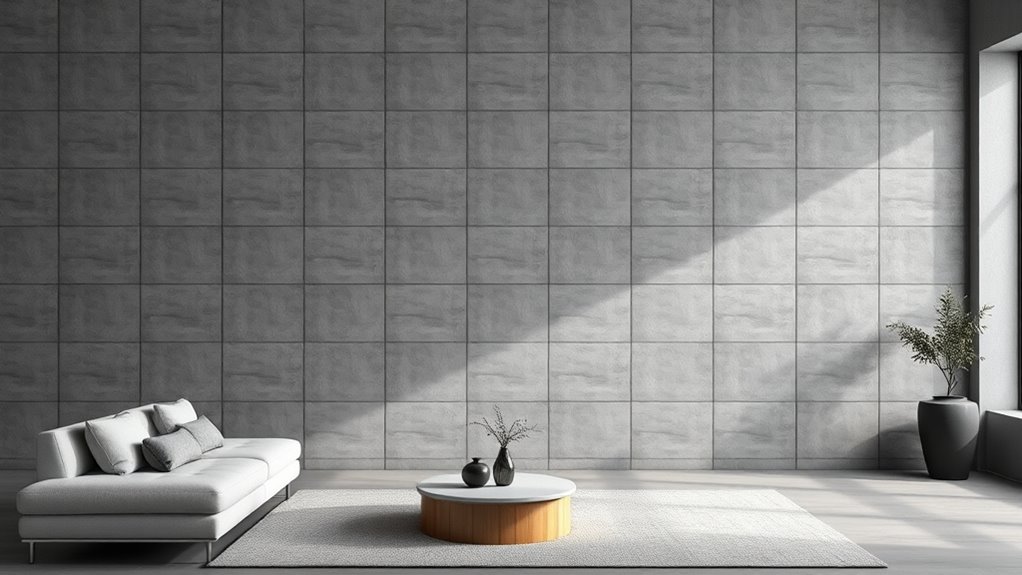
Choosing the same material throughout your feature wall can create a seamless, unified look that emphasizes simplicity and elegance. However, relying solely on one material can make the space feel dull or monotonous. To avoid this, consider adding texture contrast or subtle pattern mixing within the same material.
- Use different finishes (matte vs. gloss) for visual interest
- Incorporate varied textures like wood, fabric, or stone for depth
- Play with pattern mixing through embossed or carved details
- Combine different thicknesses or layers of the same material
- Add accent elements like metallic trims or inlays for subtle contrast
- Consider layout techniques to enhance visual appeal and prevent uniformity
Overlooking the Importance of Lighting
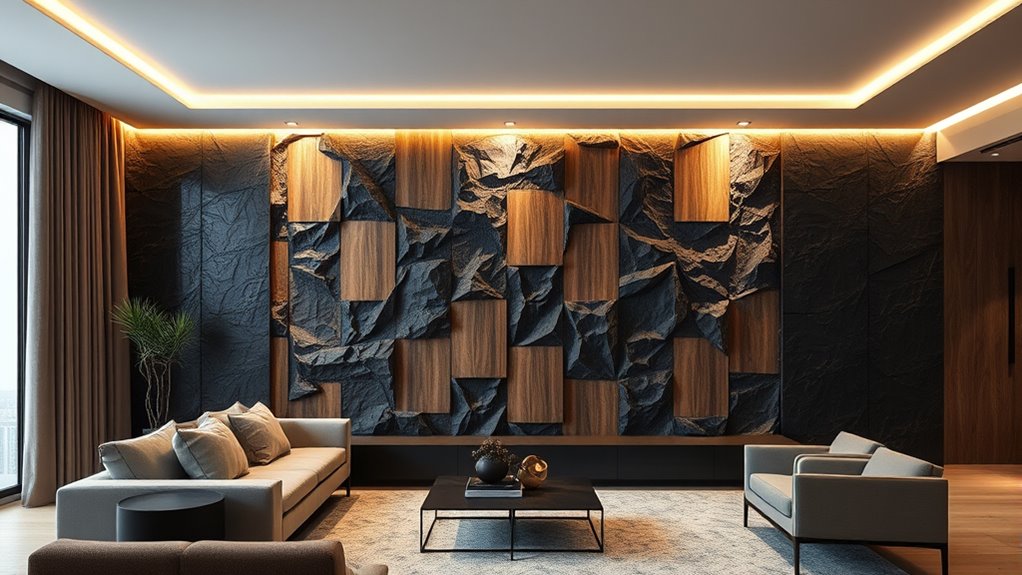
Have you considered how lighting can dramatically transform the appearance of your feature wall? Proper lighting highlights textures, colors, and details that might otherwise go unnoticed. Ambient lighting creates a warm, inviting glow that sets the overall mood, ensuring your wall doesn’t look flat or dull. Accent lighting, on the other hand, draws attention to specific elements, such as artwork, textured surfaces, or unique materials. Neglecting lighting means missing out on these visual enhancements and risking a dull, uninspired look. You should plan your lighting carefully, combining ambient and accent sources to create depth and focus. Thoughtful lighting not only elevates your feature wall’s aesthetic but also enhances the room’s overall ambiance, making your design truly stand out. Incorporating expert voice actors into your project can also help convey your message more effectively.
Assuming a Feature Wall Should Match the Entire Room

While it might seem intuitive to make your feature wall seamlessly match the rest of the room, this approach can actually limit your design’s impact. A feature wall should stand out and add personality, not blend in completely. Instead of matching wallpaper patterns or furniture exactly, use contrast to create visual interest. Consider bold wallpaper patterns or textures that complement, but don’t replicate, your existing decor. Avoid the mistake of integrating furniture that completely matches the wall’s design—this can flatten the aesthetic. Remember, a feature wall is about making a statement. By intentionally contrasting elements, you’ll highlight focal points and add depth. Incorporating design principles like balance and emphasis can help achieve an eye-catching result. Don’t feel compelled to match everything; let your wall be a unique, eye-catching feature that elevates the entire space.
Frequently Asked Questions
Can a Feature Wall Work in Small Spaces Effectively?
Yes, a feature wall can work effectively in a small space by creating a strong visual impact without overwhelming the room. Focus on light, neutral colors or bold patterns that draw attention without making the space feel cramped. Keep other design elements simple to maintain balance. This approach helps you maximize style and personality while making the small space feel more dynamic and inviting.
How Do Texture Choices Influence the Room’s Overall Vibe?
Like a knight’s armor, your texture choices shape your room’s vibe. You’ll want to balance texture contrast and pattern harmony to create depth and interest. Rough textures add warmth, while smooth finishes keep it modern. Mixing textures thoughtfully creates a layered, inviting atmosphere. Avoid cluttering with too many patterns or textures—this keeps the space cohesive, lively, yet calming, making your feature wall an authentic centerpiece that truly reflects your style.
Is It Necessary to Match the Feature Wall With Existing Furniture?
You don’t need to match your furniture exactly with the feature wall. Instead, focus on good color coordination to create harmony. Matching furniture can sometimes make the space feel too uniform, while contrasting or complementing colors add interest. Use your wall as a focal point, and choose furniture that balances or highlights it. This approach guarantees your room looks cohesive without feeling monotonous or overly coordinated.
What Are Common Mistakes When Selecting Wall Art for a Feature Wall?
Did you know that 65% of people struggle with choosing wall art that complements their space? When selecting art for your feature wall, avoid common mistakes like poor color coordination and scale imbalance. Make sure the artwork’s colors harmonize with your room’s palette, and choose pieces that are proportional to your wall size. This creates a balanced, visually appealing focal point that enhances your overall decor.
How Can I Update My Feature Wall Without Major Renovations?
You can update your feature wall easily by trying a paint refresh in a new color or shade to instantly change its vibe. Alternatively, opt for removable wallpaper, which adds pattern and texture without the commitment of permanent changes. Both options are quick, affordable, and reversible, letting you experiment with different styles until you find the perfect look that refreshes your space without major renovations.
Conclusion
Remember, designing a feature wall isn’t about copying the past or following trends blindly. Like Da Vinci’s brushstrokes, your choices should reflect your unique style and vision. Don’t fall into the trap of oversimplification or imitation. Instead, trust your instincts, play with colors, textures, and lighting. When you embrace your creativity, your feature wall becomes a masterpiece—proof that true design magic lies in authenticity, not perfection.