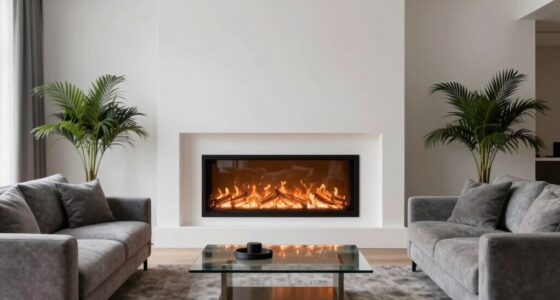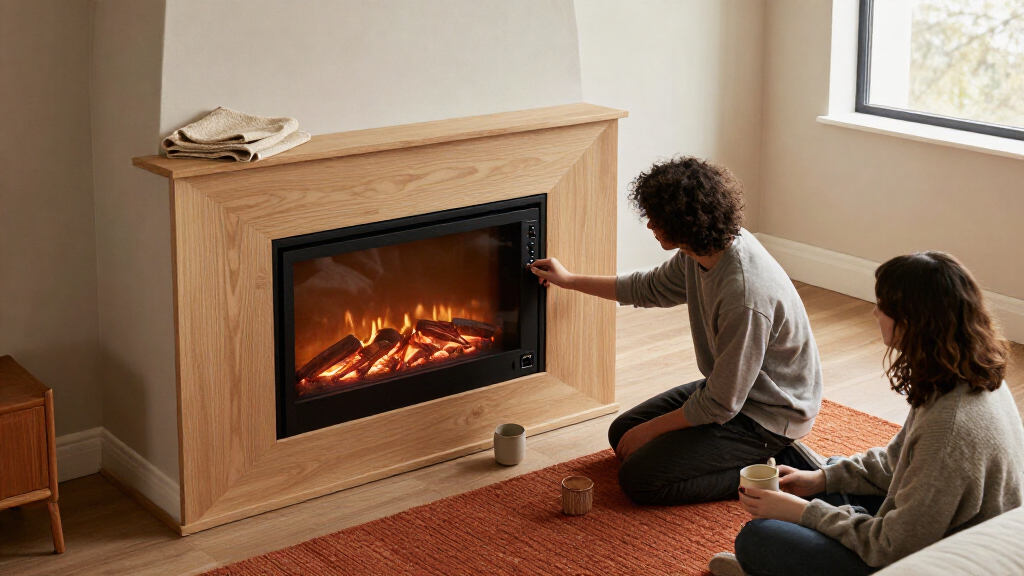

Choose and set up an electric fireplace for your living room by checking the room, comparing suitable models, selecting a safe location, and following the manufacturer’s setup instructions. This guide is for homeowners and renters with basic measuring and household setup skills. Allow about 1-2 hours for research, measuring, and setup; wall mounting or built-in installation may take longer.

Get home appliances delivered free with Prime
- Fast, free delivery on millions of items
- Prime Video, Amazon Music and more included
- Member-only deals all year

HOMCOM 32" Electric Fireplace with Mantel
- ✔ Width: 31.75 in
- ✔ Height: 29.75 in
- ✔ Depth: 8.75 in

Silonn Electric Fireplace Heater, 24-inch Corner Fireplace
- ✔ Model: SLELF01B-24
- ✔ Form: 24-inch freestanding corner fireplace
- ✔ Power: 1400 W

OLIXIS Freestanding Electric Fireplace, 19-inch
- ✔ Dimensions: 14 × 7.8 × 18.9 in
- ✔ Weight: 7.8 lb
- ✔ Heat modes: 750 W and 1500 W
Difficulty: Beginner | Time: 1-2 hours, plus any delivery or installation time
What You’ll Need
Tools & Materials:
- Tape measure
- Phone or camera for recording measurements and outlet locations
- Access to the fireplace manufacturer’s product specifications and manual
Knowledge:
- Basic room measurements
- How to identify a grounded electrical outlet
Check your lease or building rules before mounting or altering a wall. For a recessed or hardwired model, confirm installation requirements with a qualified electrician or installer before purchase.
HOMCOM 32" Electric Fireplace with Mantel
For a living room where the fireplace should look like part of the furniture, HOMCOM’s 32-inch mantel has the clearest advantage in this group. Its 31.75-inch width and 29.75-inch height give it more visual weight than the compact OLIXIS heater or Silonn’s corner-oriented cabinet. The mantel can hold decor or a television, which may help the fireplace feel integrated into the room instead of parked beside the sofa as a standalone heater.Its 1400W heater and stated 323-square-foot coverage also give it the widest stated reach of the three. The Silonn offers app operation and five brightness levels that HOMCOM’s supplied details do not list; choose HOMCOM when room presence and a usable top surface outweigh connected controls. The tradeoff is its 41.9-pound weight and two-person assembly recommendation. It takes more commitment to position than the 7.8-pound OLIXIS, and its depth still needs to fit your floor plan. Treat the stated coverage as a guide, not a promise for every room.As with the other two picks, the flame effect works independently of heat, so the mantel can contribute ambience outside heating season. This is the most complete living-room choice when you want a focal point and supplemental warmth in one unit, but buyers wanting an easy-to-carry heater should look to OLIXIS instead.
Pros:
- Mantel adds display space and helps the unit read as living-room furniture.
- 1400W output with stated coverage up to 323 square feet.
- Flame effect can operate independently of heat.
- Remote control and timer are listed features.
Cons:
- Heavier and larger than the two portable alternatives.
- Assembly is recommended for two people.
- Its 8.75-inch depth and wide body still require a suitable floor location.
Best for: Living rooms that need a furniture-like focal point, a mantel display surface, and supplemental heat.
Not ideal for: Small or frequently rearranged rooms where a 41.9-pound unit and its wide footprint would be cumbersome.
Bottom line: Choose HOMCOM when a mantel and larger room presence matter more than portability or app-based controls.
“Choose HOMCOM when a mantel and larger room presence matter more than portability or app-based controls.”
Silonn Electric Fireplace Heater, 24-inch Corner Fireplace
Silonn makes the most sense when a living room has an awkward open corner or when day-to-day control is a priority. Its 24-inch corner design is more compact than the HOMCOM mantel, while the app and included remote make it more adjustable than the knob-operated OLIXIS. You can set the temperature between 62°F and 82°F, choose among five brightness levels, and schedule operation with a one-to-eight-hour timer.The product details list 1400W and 5300 BTU, but do not give a room-coverage figure. That makes it harder to compare expected reach directly with HOMCOM’s stated 323 square feet or OLIXIS’s 108 square feet. Its strengths are more about placement and control: the flame brightness can be tuned to the room, and the app allows adjustments without reaching for the unit. The 37 dB noise figure is also useful context for a living room where a heater’s sound may compete with conversation or television.Silonn is the best fit for buyers who want a compact, feature-rich alternative to the mantel format. Overheat protection, child lock, and tilt shutdown add listed safety functions. Its more involved control options are unnecessary for someone who prefers two physical knobs, and it does not provide the mantel surface or stated heating coverage that make HOMCOM easier to judge as a larger-room centerpiece.
Pros:
- Corner-oriented 24-inch form can suit a less prominent floor position.
- App and remote control provide flexible adjustments.
- Five flame brightness settings and a separate temperature range.
- Timer, child lock, overheating protection, and tilt shutdown are listed.
Cons:
- No heating coverage figure is provided in the supplied details.
- More controls may be unnecessary for buyers who want a simple knob-operated unit.
- Does not provide the mantel display surface of the HOMCOM.
Best for: Living-room owners with a suitable corner who value app control, adjustable flame brightness, and timed operation.
Not ideal for: Buyers seeking a mantel surface, a published heating coverage figure, or the simplest physical controls.
Bottom line: Pick Silonn when adjustable controls and corner placement are more useful than a mantel or minimalist operation.
“Pick Silonn when adjustable controls and corner placement are more useful than a mantel or minimalist operation.”
OLIXIS Freestanding Electric Fireplace, 19-inch
OLIXIS is the sensible choice when a living room has little spare floor space or the heater needs to move between rooms. At 14 × 7.8 × 18.9 inches and 7.8 pounds, it is much easier to reposition than the HOMCOM mantel. Two mechanical knobs control flame-only, low-heat, or high-heat operation and temperature, so everyday use does not depend on an app or remote.The compact build comes with a clear limitation: OLIXIS lists 108 square feet of heating coverage, less than HOMCOM’s stated coverage. Its 750W and 1500W modes allow a lower setting for milder warmth or a higher one when more output is needed, but this remains the least room-filling option in the lineup. Compared with Silonn, it offers simpler tactile controls and less control over flame brightness; compared with HOMCOM, it is easier to move but contributes less furniture-like presence.Its classic body, tempered glass, glowing-log effect, and flame-only mode make it plausible as a small-room accent, while the listed overheat protection offers a basic safety feature. Setup requires attaching four support legs, and the product instructions call for a stable surface, clearance from flammables and walls, and no extension cord or carpet placement. Choose it for compact convenience, not as the main visual anchor or heat source for a spacious living room.
Pros:
- Lightweight at 7.8 pounds and easy to move between rooms.
- Two heat modes, including a lower 750W setting.
- Simple mechanical knobs and a flame-only mode.
- Compact dimensions suit tighter floor plans.
Cons:
- Stated heating coverage is 108 square feet, the lowest listed here.
- Lacks the mantel presence of HOMCOM and the adjustable app controls of Silonn.
- Requires leg assembly and specific placement clearances.
Best for: People furnishing a small living room or home office who want a lightweight heater with direct, simple controls.
Not ideal for: Large living rooms, buyers wanting a substantial fireplace centerpiece, or anyone who needs app, remote, or timer control.
Bottom line: Choose OLIXIS when compact size and straightforward knobs matter more than room coverage or decorative scale.
“Choose OLIXIS when compact size and straightforward knobs matter more than room coverage or decorative scale.”
As an Amazon Associate we earn from qualifying purchases.
Before You Start
Decide whether you want supplemental heat, flame effects without heat, or both. Electric fireplaces do not replace a home’s primary heating system unless the product is specifically rated and the room conditions support that use. Read the manufacturer’s safety and installation instructions before choosing a location. Keep the unit away from curtains, furniture, walkways, and other items that could block its air intake or warm air outlet.
Do not assume that an outlet or extension cord can safely support the fireplace. Check the manual for voltage, amperage, outlet, and clearance requirements. Plug the unit directly into an outlet if the manufacturer requires it. Have an electrician check any uncertain wiring or a planned hardwired connection.
Step-by-Step Instructions
Step 1: Measure the living room
Measure the room’s length and width, then note the ceiling height and the open floor area where you might place the fireplace. Measure candidate wall sections and the distance to nearby outlets. Record doors, windows, vents, televisions, and furniture that could affect placement or airflow.
Tip:Measure the space the fireplace can occupy, rather than relying on the overall wall width. Include the required clearances listed in the product manual.
Check: You have a short list of locations with enough room for the appliance, required clearances, and an accessible outlet.
Step 2: Set your heating and style needs
Decide how you will use the fireplace: occasional supplemental heat, decorative flame effects, or both. Set a budget that includes delivery and any mounting or electrical work. Choose a style that suits the room, such as a freestanding stove, wall-mounted unit, fireplace insert, or built-in model.
Tip:If you rent or want to avoid permanent changes, focus on freestanding or surface-mounted models and confirm that mounting is allowed before drilling.
Check: You can state the intended use, spending limit, preferred installation type, and any restrictions that affect your choice.
Step 3: Compare models and specifications
Compare the unit’s dimensions, heating output, control options, flame settings, noise information, warranty, and installation requirements. Check the product manual for minimum clearances, electrical load, and whether the unit can operate its flame effect without heat. Confirm that its dimensions fit your measured location.
Tip:Product descriptions may use different terms for heating capacity. Use the manufacturer’s stated specifications and seek clarification from the seller if the room coverage or electrical requirements are unclear.
Check: The chosen model fits the space, supports your intended use, and has electrical and clearance requirements you can meet.
Step 4: Choose a safe location
Mark the proposed position and check it against the manual’s clearance diagram. Keep the fireplace away from curtains, furniture, bedding, and high-traffic paths. Do not place it where a door, cabinet, or television can block airflow or where cords could create a trip hazard. For a wall-mounted unit, locate suitable mounting points and confirm the wall can support its weight.
Tip:Do not mount a fireplace above a television unless both manufacturers allow the arrangement and the specified clearances can be met.
Check: The planned location leaves the required space around the unit, provides stable support, and keeps the outlet and cord accessible.
Step 5: Check the electrical supply
Read the manual’s voltage, current, and outlet instructions, then compare them with the outlet at your chosen location. Use a properly grounded outlet where required. Do not use a damaged outlet, overload a power strip, or connect an extension cord unless the manufacturer explicitly permits it. Ask an electrician to assess uncertain wiring or hardwiring.
Tip:Stop setup if the outlet is loose, discolored, warm, or produces a burning smell. Do not plug in the unit until the issue has been checked.
Check: The outlet meets the manufacturer’s requirements, and the cord can reach it without being pinched, stretched, or routed across a walkway.
Step 6: Assemble or mount the fireplace
Unpack the fireplace and check it for shipping damage before assembly. Follow the supplied instructions in order, using only the listed hardware and support method. Place a freestanding model on a level, stable surface. For wall-mounted or recessed units, follow the specified mounting method or use a qualified installer when the work requires wall alterations or electrical changes.
Tip:Keep packaging and the manual until the unit is assembled and operating correctly. Do not operate a damaged appliance.
Check: The unit is stable, all required parts are installed, and its air openings remain unobstructed.
Step 7: Test the controls and heat
Plug in the fireplace as directed, then turn it on using the manual’s startup procedure. Test the flame effect, heat settings, timer, and remote or app controls if included. Keep people and objects clear of the warm air outlet during operation. Check that the thermostat responds as described in the manual.
Tip:Some new units may produce a brief odor during initial use. Follow the manual’s guidance for first operation and turn the unit off if you notice smoke, sparks, a persistent burning smell, or unusual electrical sounds.
Check: The controls work, the flame effect responds to settings, and the heater starts and stops as instructed without abnormal signs.
Step 8: Set the room for regular use
Move furniture and décor outside the manufacturer’s clearance zone. Route the cord where it will not be stepped on, trapped, or covered. Show other household members how to turn the unit off and identify the warm air outlet. Use the timer or thermostat as directed, and switch off the heater when it is not needed.
Tip:Keep children and pets from touching hot surfaces or pulling on the cord. Follow any supervision guidance in the manual.
Check: The fireplace has a clear operating area, the cord is protected from damage, and household members can use its controls safely.
Common Mistakes to Avoid
- Buying a model before measuring the location and checking its clearance requirements. — Measure the wall or floor area, outlet distance, and nearby obstructions first. Compare those measurements with the manual’s appliance dimensions and clearance diagram.
- Assuming a fireplace will provide enough heat for the whole room or home. — Treat it as supplemental heat unless the manufacturer’s specifications and your room conditions support broader use. Keep your primary heating plan in place.
- Using a power strip or extension cord without checking the instructions. — Follow the manufacturer’s electrical requirements and plug directly into a suitable outlet when directed. Ask an electrician about questionable wiring.
- Blocking the air outlet with furniture or placing the unit near curtains. — Maintain the clearances in the manual and check the room again after arranging furniture.
Troubleshooting
Problem: The fireplace does not turn on.
Solution: Switch the unit off, check that the plug is fully seated, and confirm the outlet works with another suitable device. Check the manual for reset instructions. If the outlet is damaged or the unit still does not work, contact the manufacturer or a qualified electrician.
Problem: The flame effect works, but there is no heat.
Solution: Check whether heat is disabled, the thermostat is set above the room temperature, or a timer or overheating protection has stopped the heater. Follow the manual’s reset and cooling instructions; do not block the vents.
Problem: The room feels colder or warmer than expected.
Solution: Confirm the selected heat setting and thermostat operation, and check that furniture is not blocking airflow. Review the manufacturer’s stated heating coverage; a unit may be intended for supplemental warmth rather than whole-room heating.
Problem: The unit smells unusual or makes an unexpected sound.
Solution: Turn it off and consult the manual’s first-use and maintenance guidance. If smoke, sparks, a persistent burning smell, a hot plug, or an electrical sound occurs, unplug it only if safe and contact the manufacturer or an electrician before using it again.
What Success Looks Like
The fireplace is stable or securely mounted, meets the manufacturer’s clearance and electrical requirements, and has an unobstructed airflow path. Its flame and heat controls respond as described in the manual, the cord is safely routed, and the unit operates without smoke, sparks, persistent unusual odors, or abnormal electrical sounds.
Next Steps
Keep the manual and warranty information in an accessible place. Turn the unit off and unplug it before cleaning, then follow the manufacturer’s instructions for cleaning vents, glass, and surfaces. Check the cord, plug, mounting hardware, and air openings periodically. Arrange service if the unit is damaged or develops an electrical fault.
Frequently Asked Questions
Can I use an electric fireplace without turning on the heat?
Many models have a flame-only setting, but features vary. Check the product specifications and manual before buying, then test the setting during setup.
Can I install an electric fireplace below a television?
Only if the fireplace and television instructions allow that placement and all specified heat and mounting clearances can be met. If either manual advises against it, choose another location.
Can I plug an electric fireplace into an extension cord?
Follow the manufacturer’s instructions. Many units require a direct connection to a suitable outlet. Do not use an extension cord or power strip unless the manual explicitly permits it.
Does an electric fireplace need a chimney or vent?
Most electric models do not need a chimney or combustion vent, but they still need clear airflow around their intake and warm air outlet. Confirm the installation requirements for your specific model.